
All articles
Every guide on MyCryptoStart, newest first — 83 and counting.
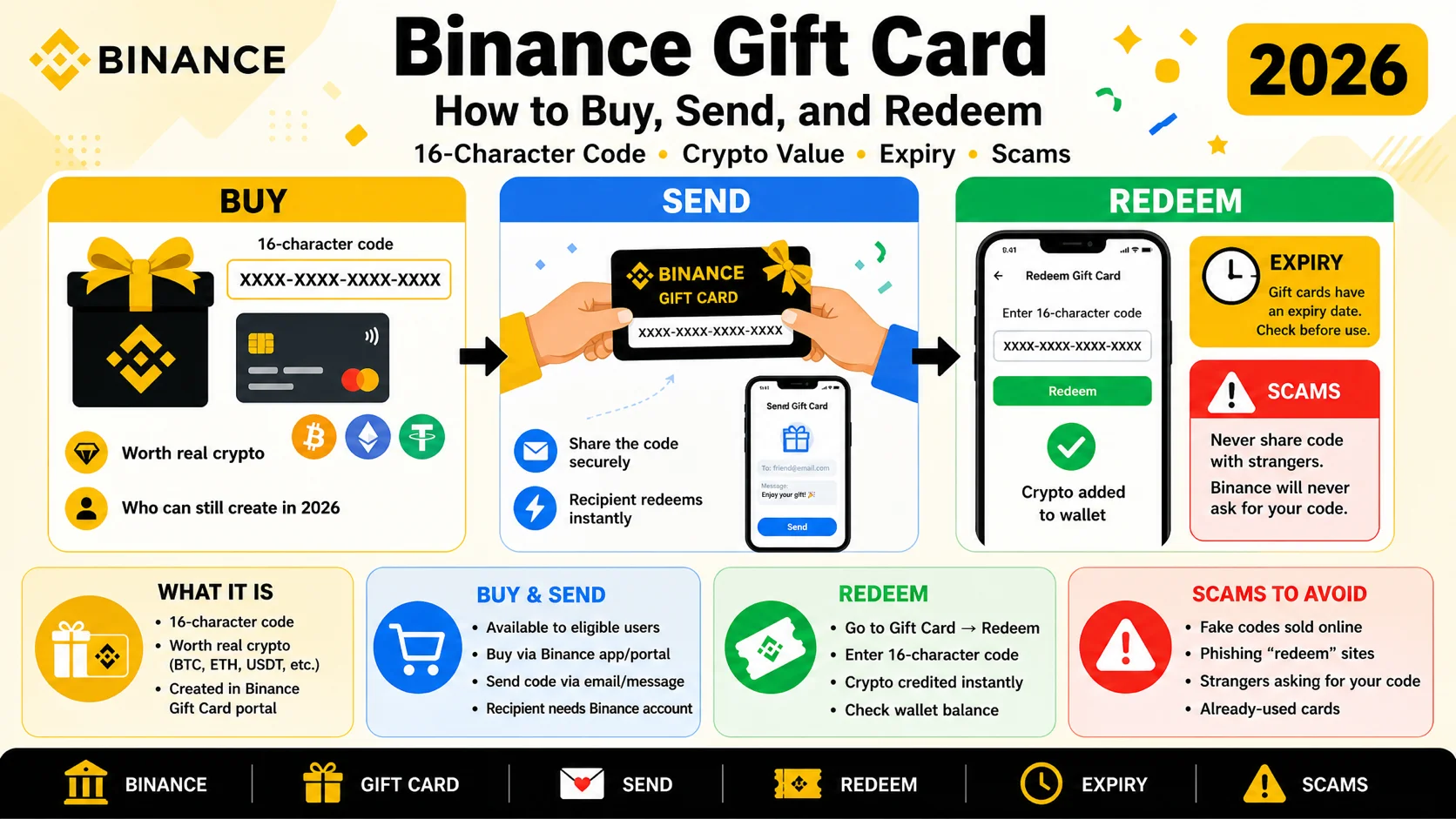
Binance Gift Card: How to Buy, Send, and Redeem (2026)
A Binance Gift Card is a 16-character code worth real crypto. Who can still create one in 2026, where to buy, how to redeem, when it expires, and the scams to avoid.
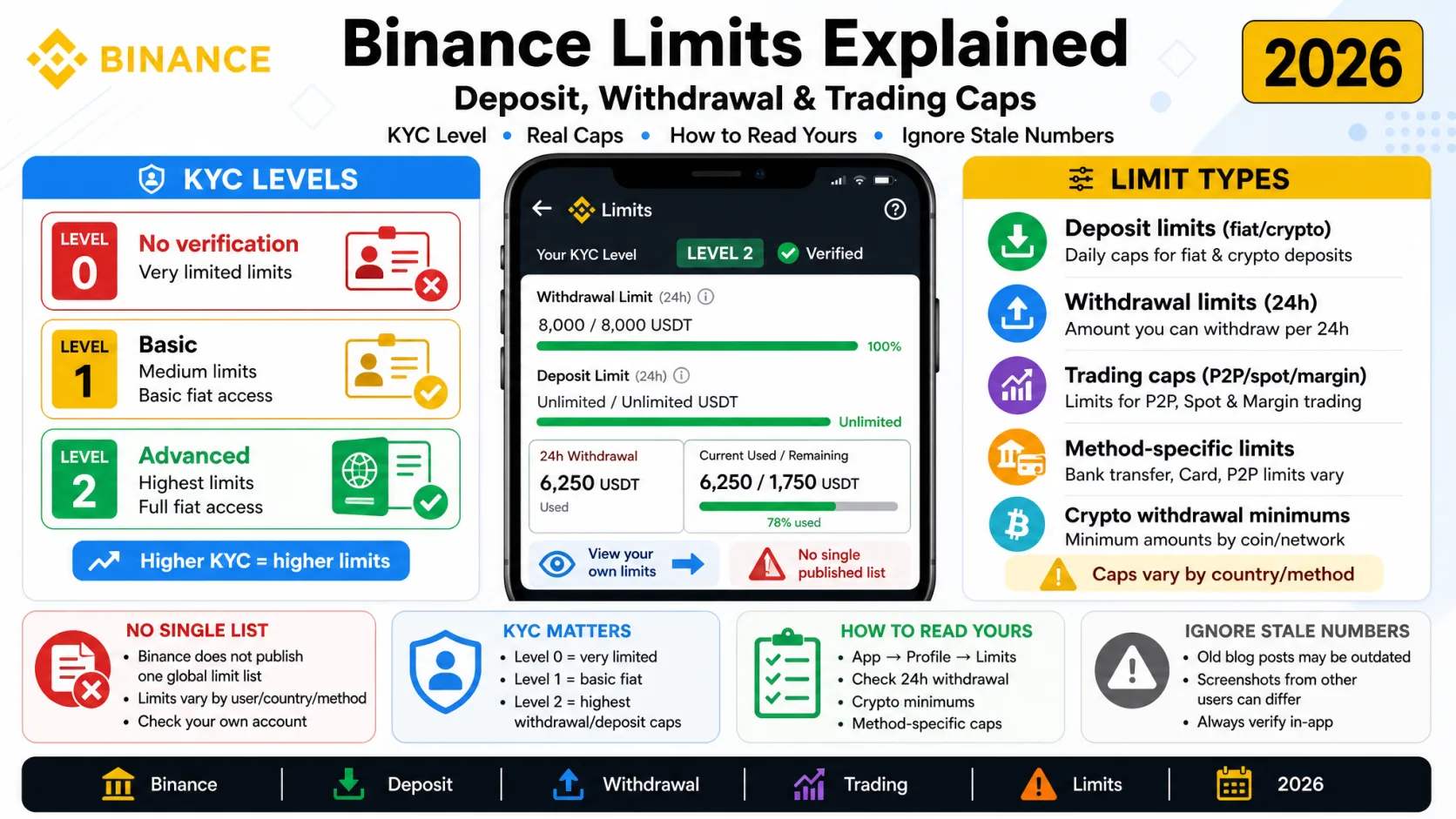
Binance Limits Explained: Deposit, Withdrawal, and Trading Caps (2026)
Binance publishes no single limit list. The real withdrawal, deposit and trading caps by KYC level, how to read your own, and the stale numbers to ignore.
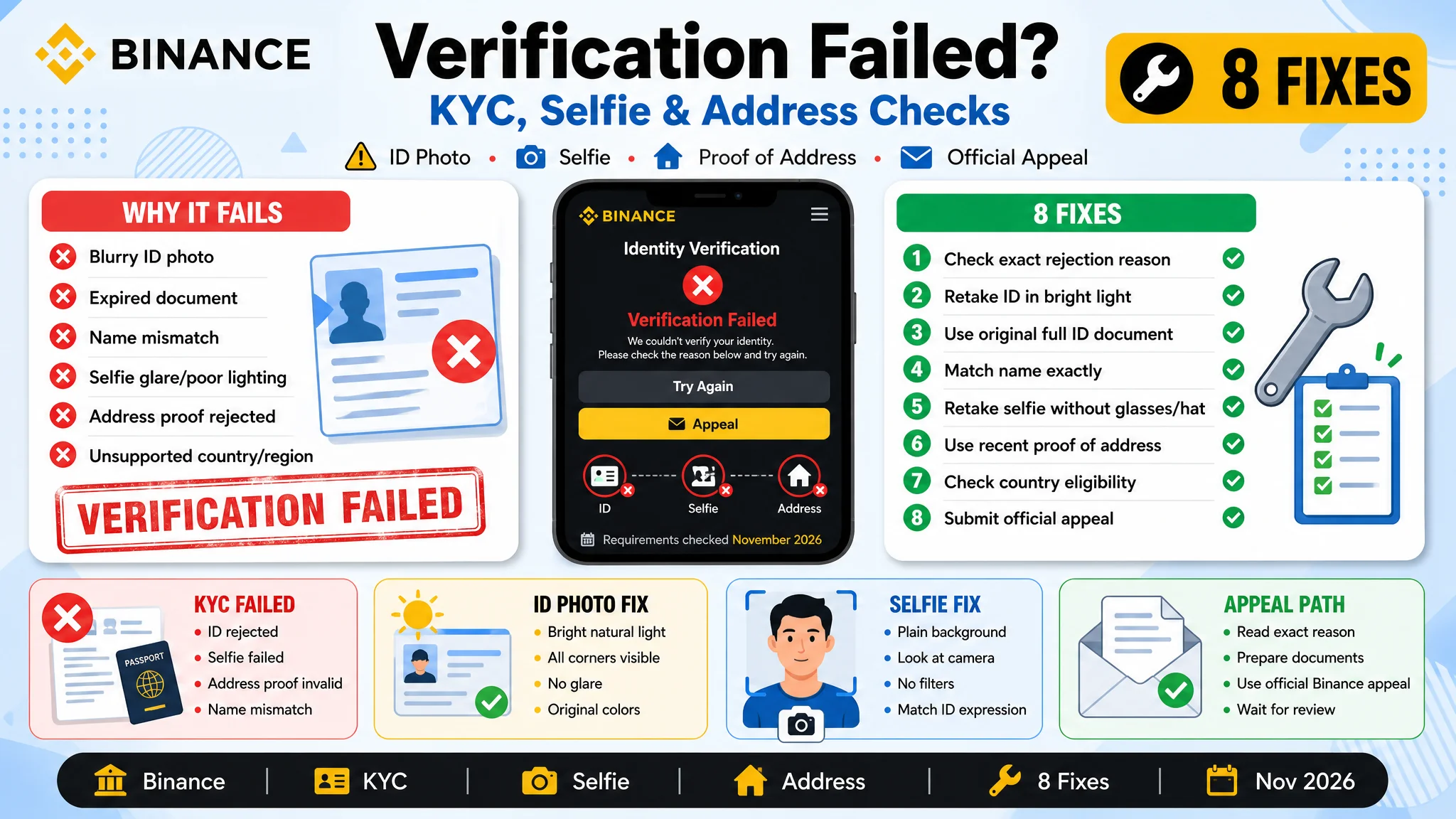
Binance Verification Failed? 8 Fixes for KYC, Selfie, and Address Checks (2026)
Binance verification failed? Find the exact rejection, fix the ID photo, selfie or address proof, and use the official appeal path. Requirements checked November 2026.
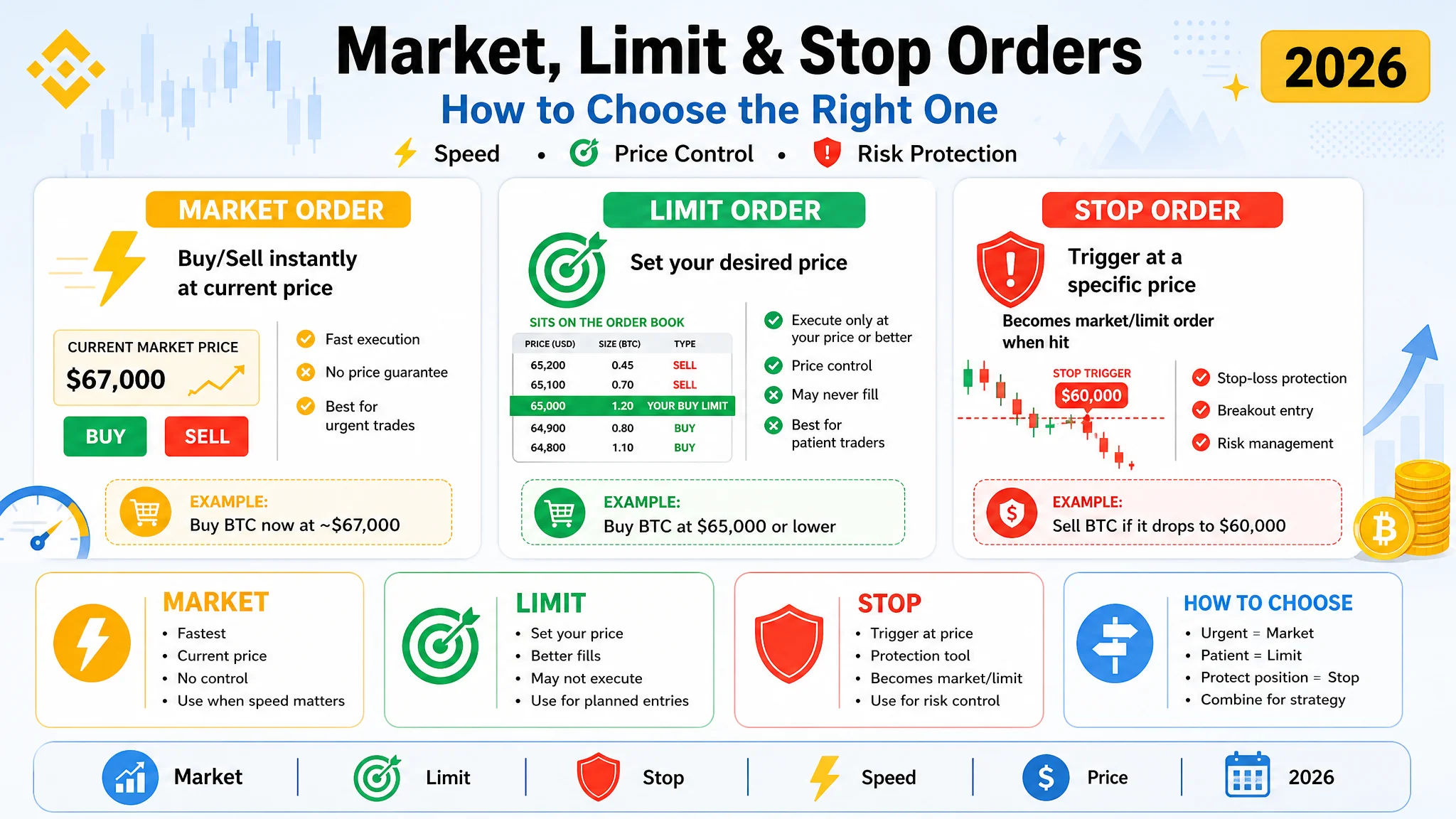
Market, Limit, and Stop Orders Explained: How to Choose the Right One (2026)
Market, limit, stop-limit, stop-market, OCO and post-only orders: what each one actually does, when it fails to fill, and which to use on Binance. Fees and minimums checked November 2026.
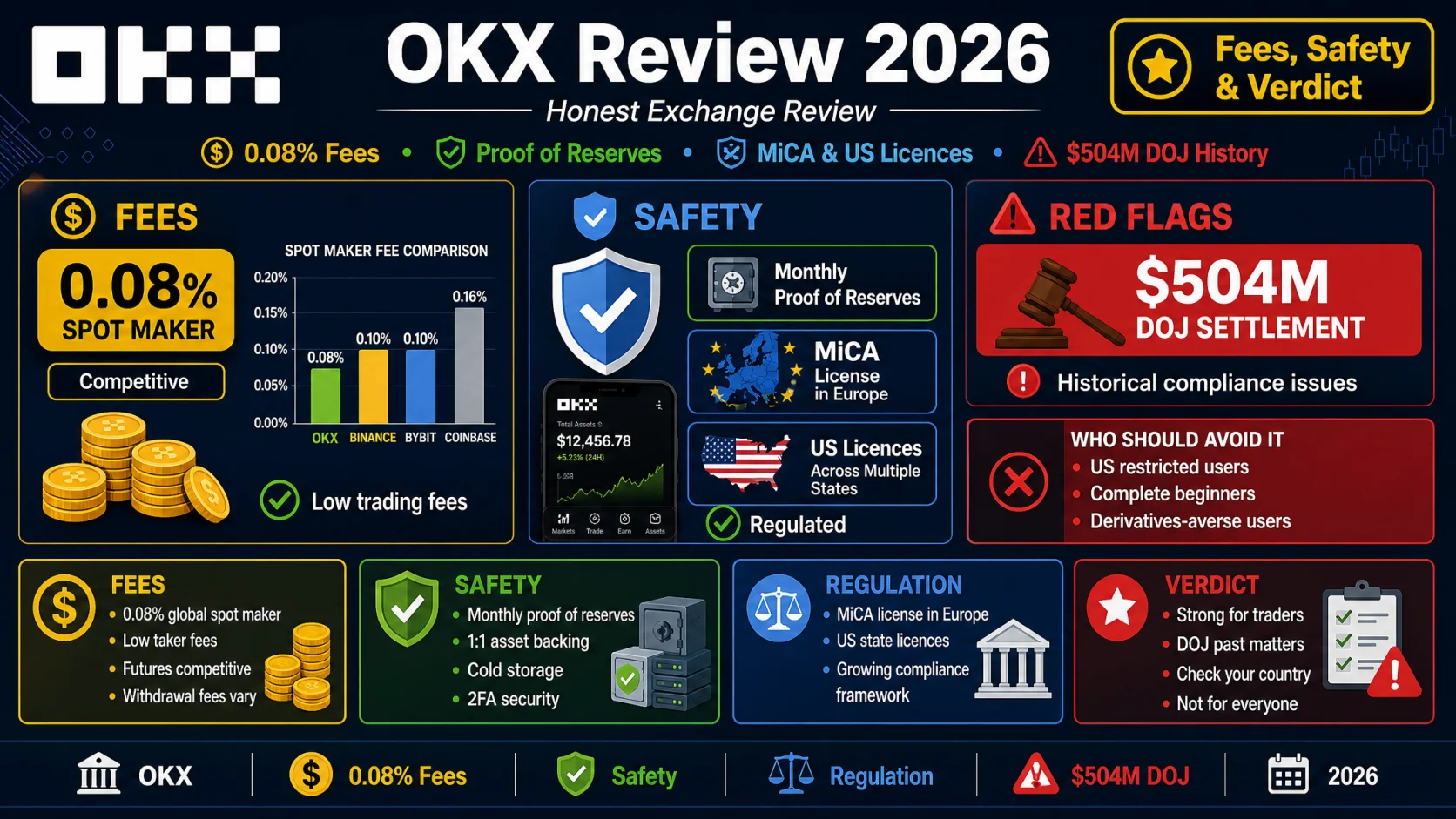
OKX Review 2026: Fees, Safety & Verdict
Honest 2026 OKX review: 0.08% global spot maker fees, monthly proof of reserves, MiCA and US licences — plus the $504M DOJ history and who should avoid it.
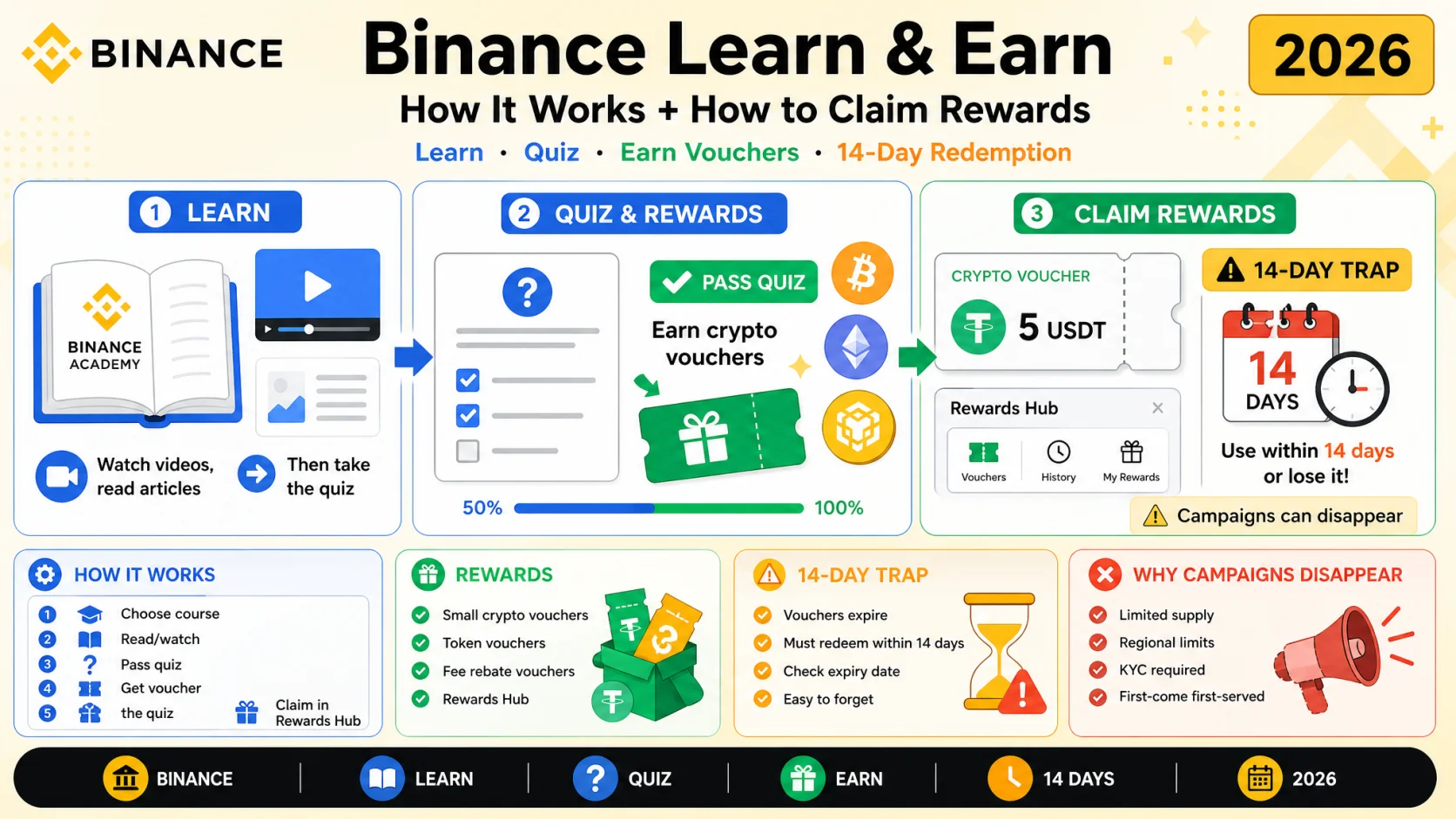
Binance Learn & Earn: How It Works and How to Claim Rewards (2026)
Binance Learn & Earn pays small crypto vouchers for passing short quizzes. Here is how it works, where rewards go, why campaigns disappear, and the 14-day redemption trap.
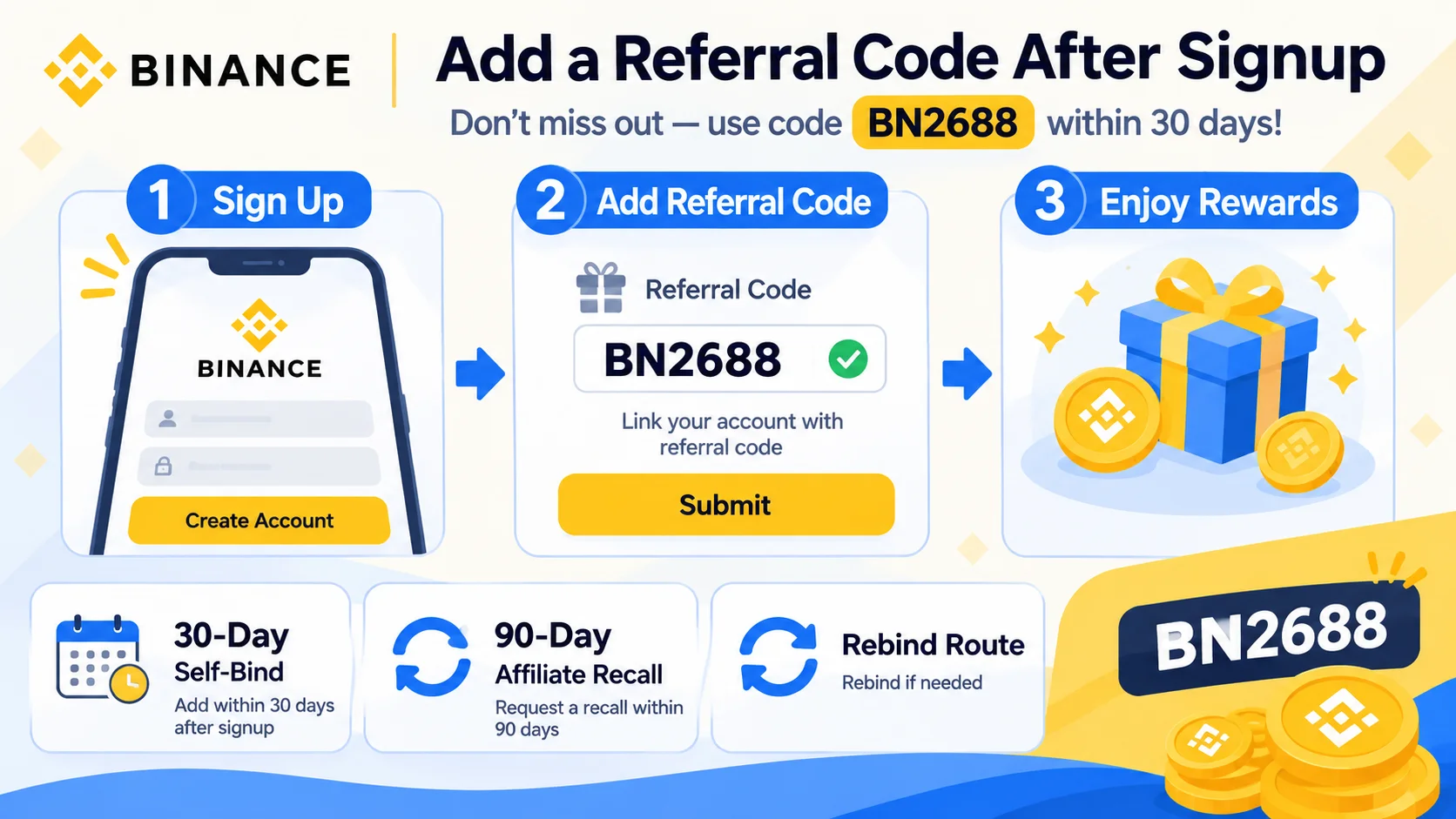
Add a Binance Referral Code After Signup
Missed the code at sign-up? Binance allows a 30-day self-bind, a 90-day affiliate recall, and a rebind route. The exact conditions and steps.
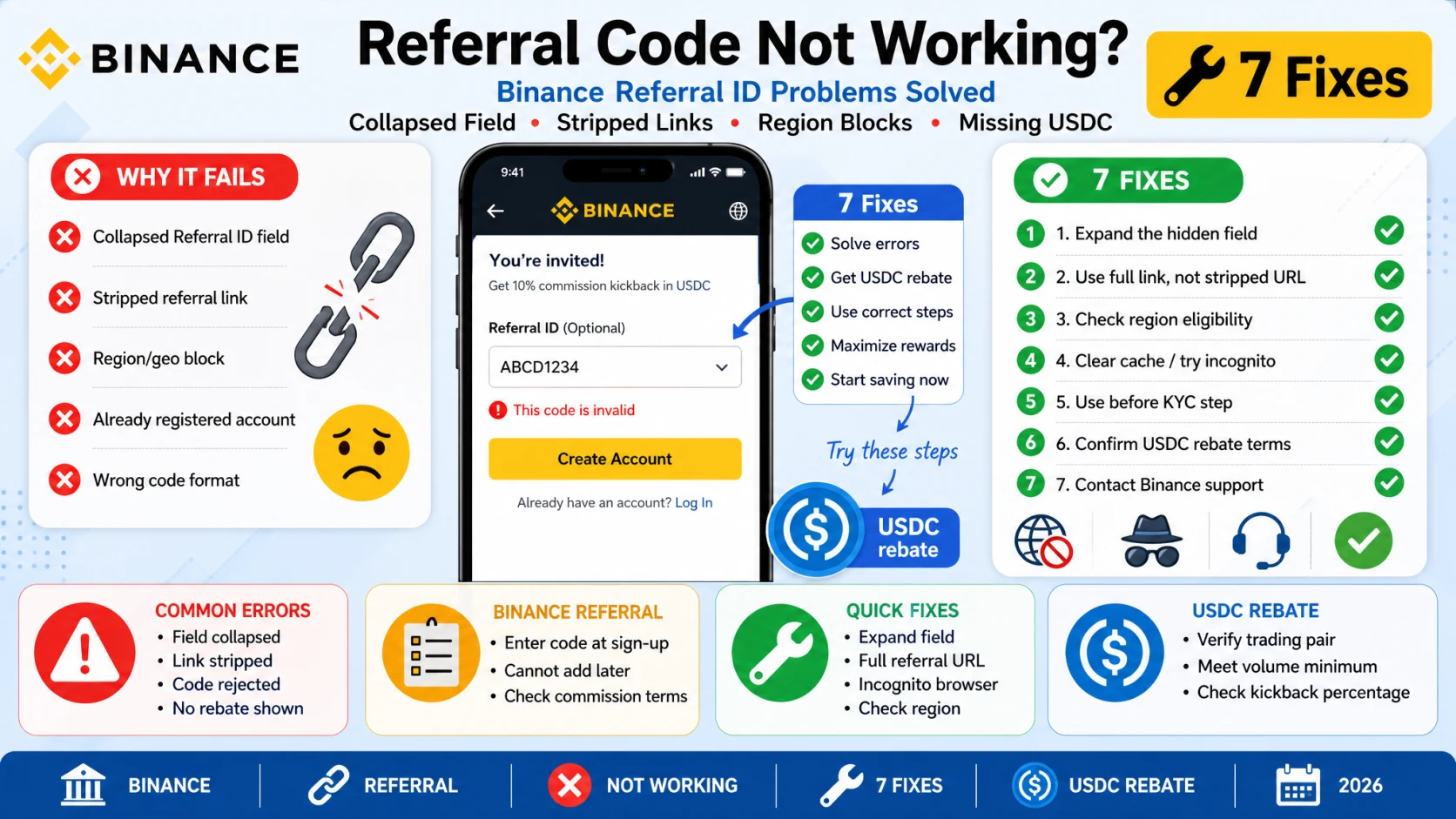
Binance Referral Code Not Working? 7 Fixes
Binance rejects your code or no rebate appears? Seven fixes for the collapsed Referral ID field, stripped links, region blocks, and missing USDC.
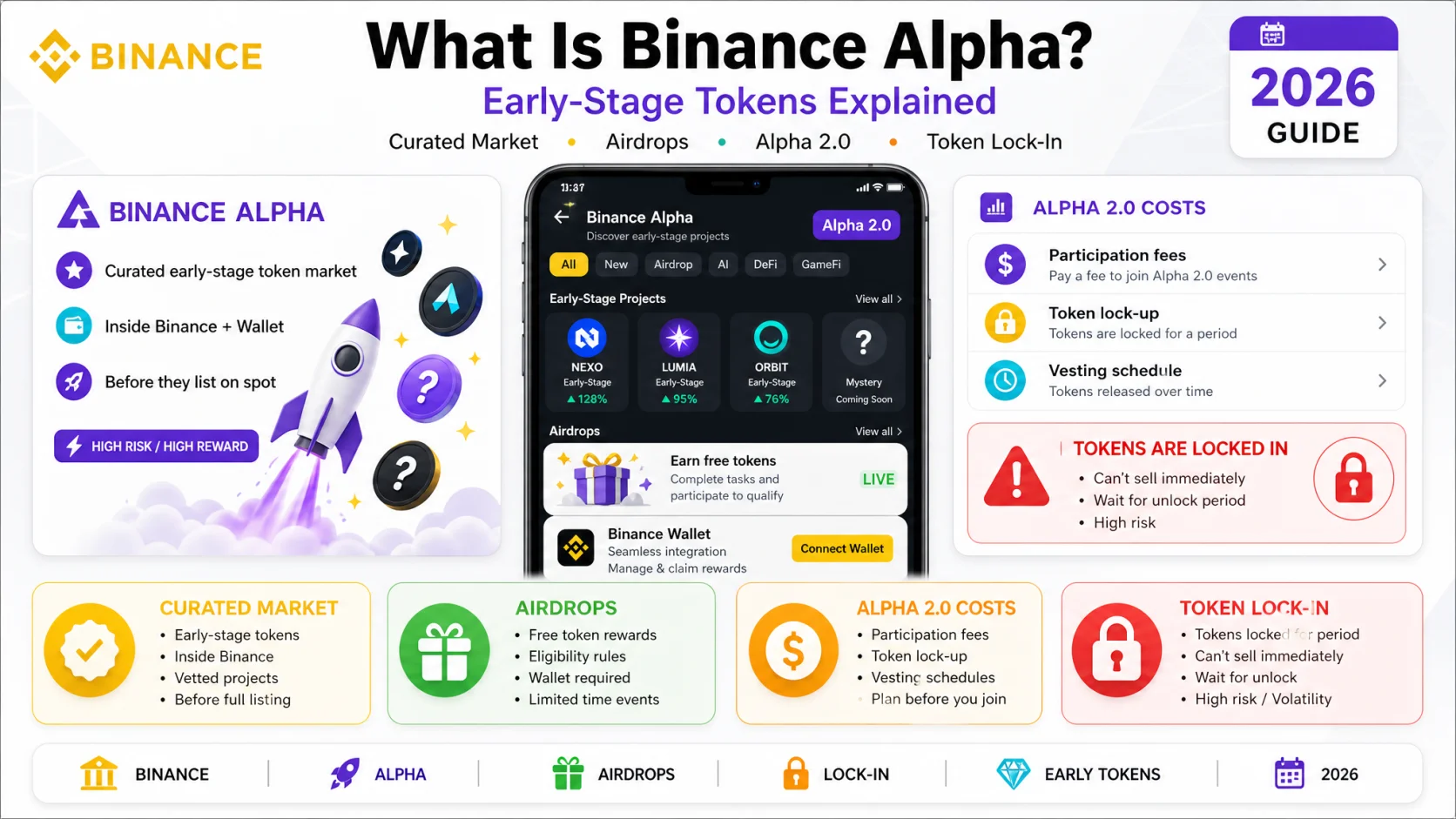
What Is Binance Alpha? Early-Stage Tokens Explained (2026)
Binance Alpha is a curated early-stage token market inside Binance and its Wallet. How airdrops work, what Alpha 2.0 costs, and why tokens are locked in.
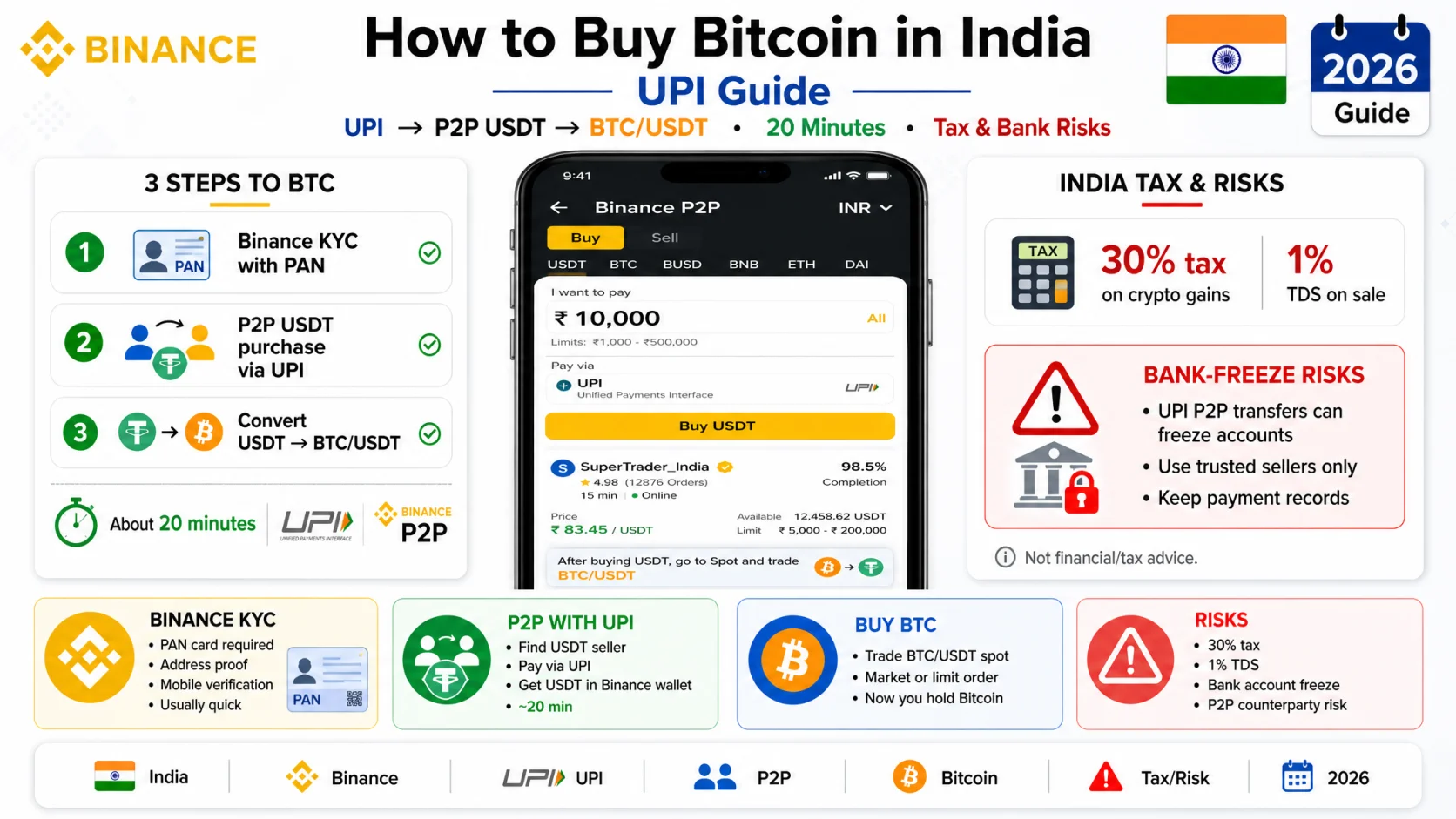
How to Buy Bitcoin in India: UPI Guide (2026)
Buy Bitcoin in India with UPI in about 20 minutes: Binance KYC with PAN, a P2P USDT purchase, then BTC/USDT — plus the 30% tax, 1% TDS and bank-freeze risks.
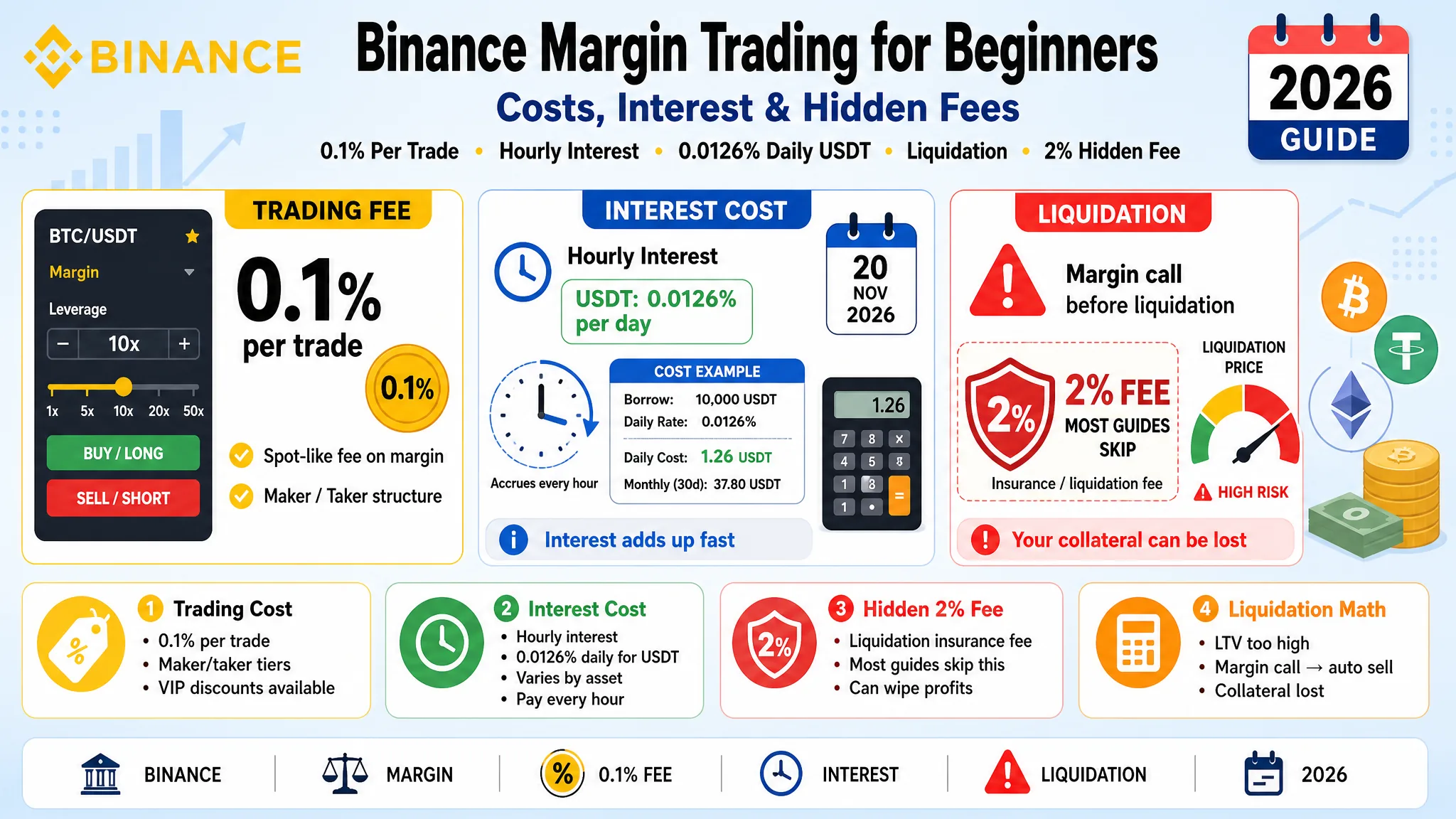
Binance Margin Trading for Beginners: Costs (2026)
Binance margin charges 0.1% per trade plus hourly interest; USDT cost 0.0126% a day on 20 Nov 2026. Liquidation math and the 2% fee most guides skip.
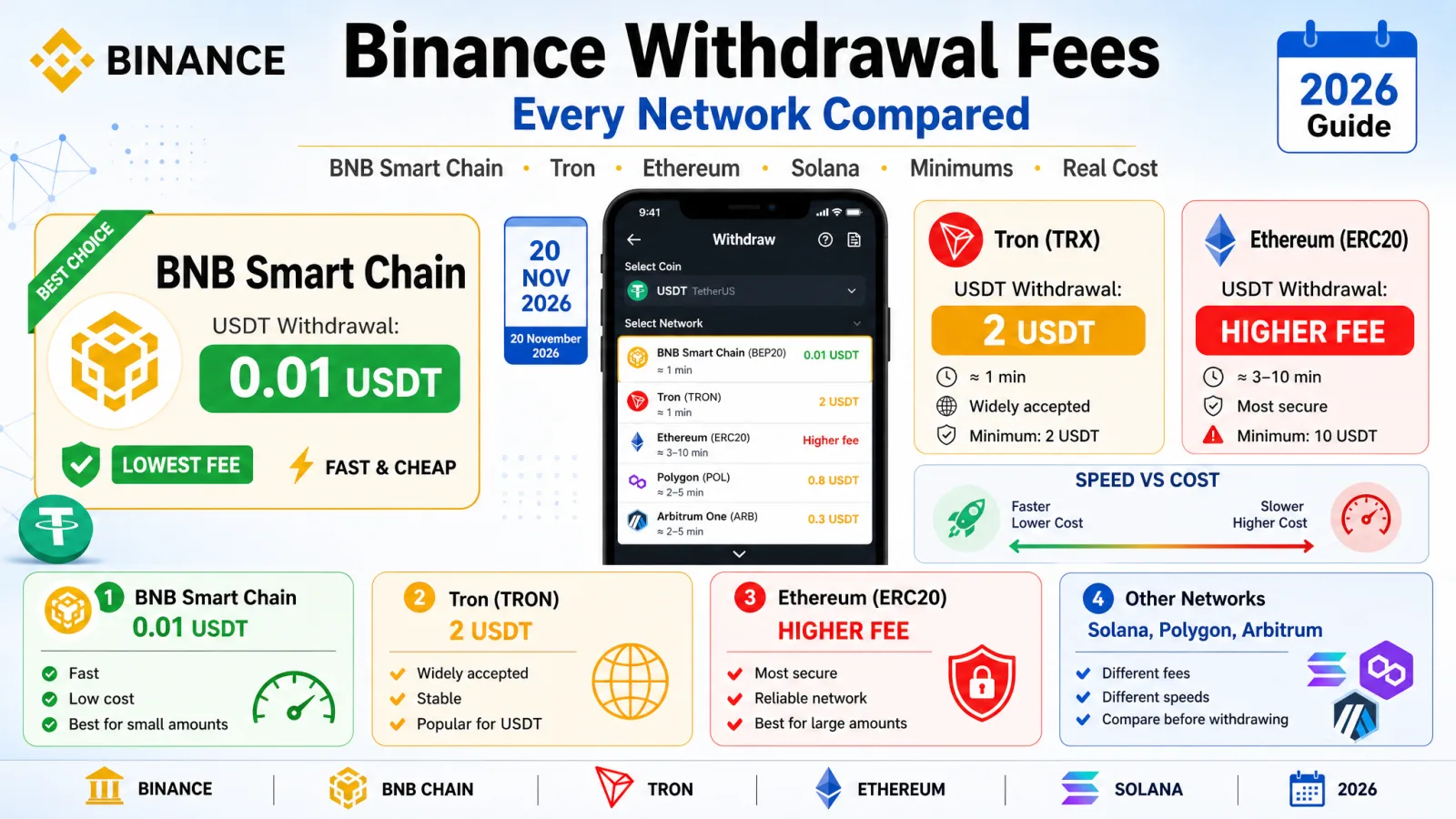
Binance Withdrawal Fees: Every Network Compared (2026)
On 20 November 2026 Binance charged 0.01 USDT to withdraw USDT on BNB Smart Chain and 2 USDT on Tron. Every network, minimum, and real cost.
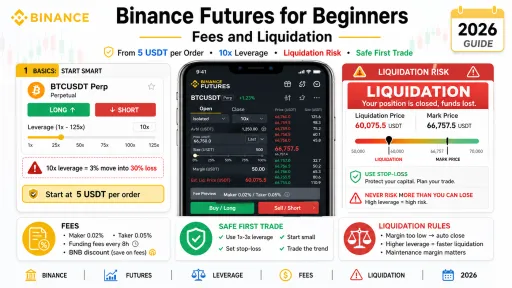
Binance Futures for Beginners: Fees and Liquidation (2026)
Binance futures start at 5 USDT per order, but 10x leverage turns a 3% move into a 30% loss. Real costs, liquidation, and a safe first trade.
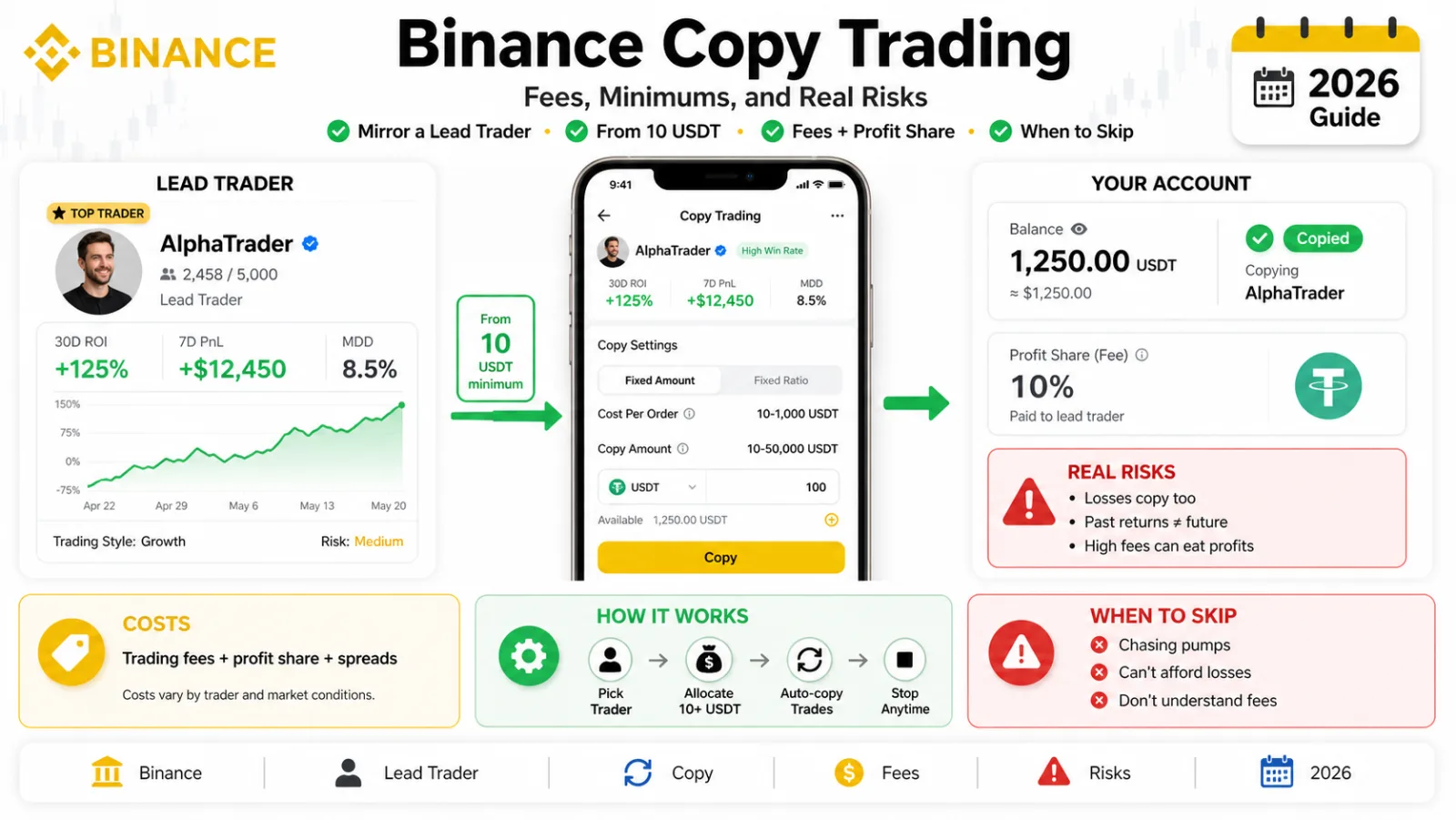
Binance Copy Trading: Fees, Minimums, and Real Risks (2026)
Binance copy trading mirrors a lead trader from 10 USDT, but you pay trading fees plus a profit share. How it works, what it costs, and when to skip it.
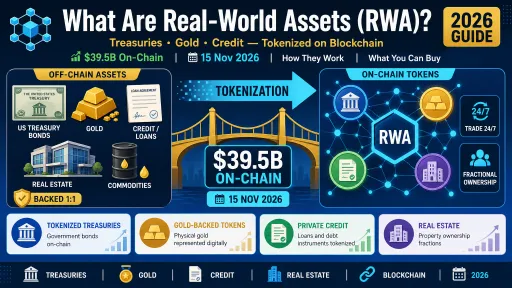
What Are Real-World Assets (RWA)? 2026 Guide
RWAs are blockchain tokens backed by off-chain assets like Treasuries, gold and credit. $39.5B sat on-chain on 15 Nov 2026 — how they work and what you can buy.
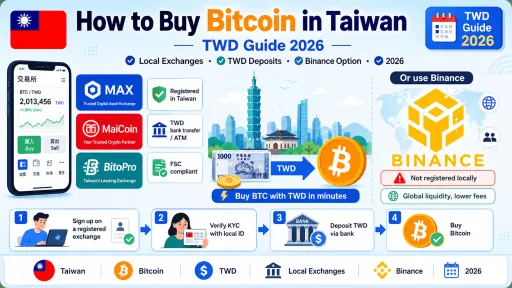
How to Buy Bitcoin in Taiwan: TWD Guide 2026
Buy Bitcoin in Taiwan with TWD in minutes on registered exchanges like MAX, MaiCoin or BitoPro — or through Binance, which is not registered locally.
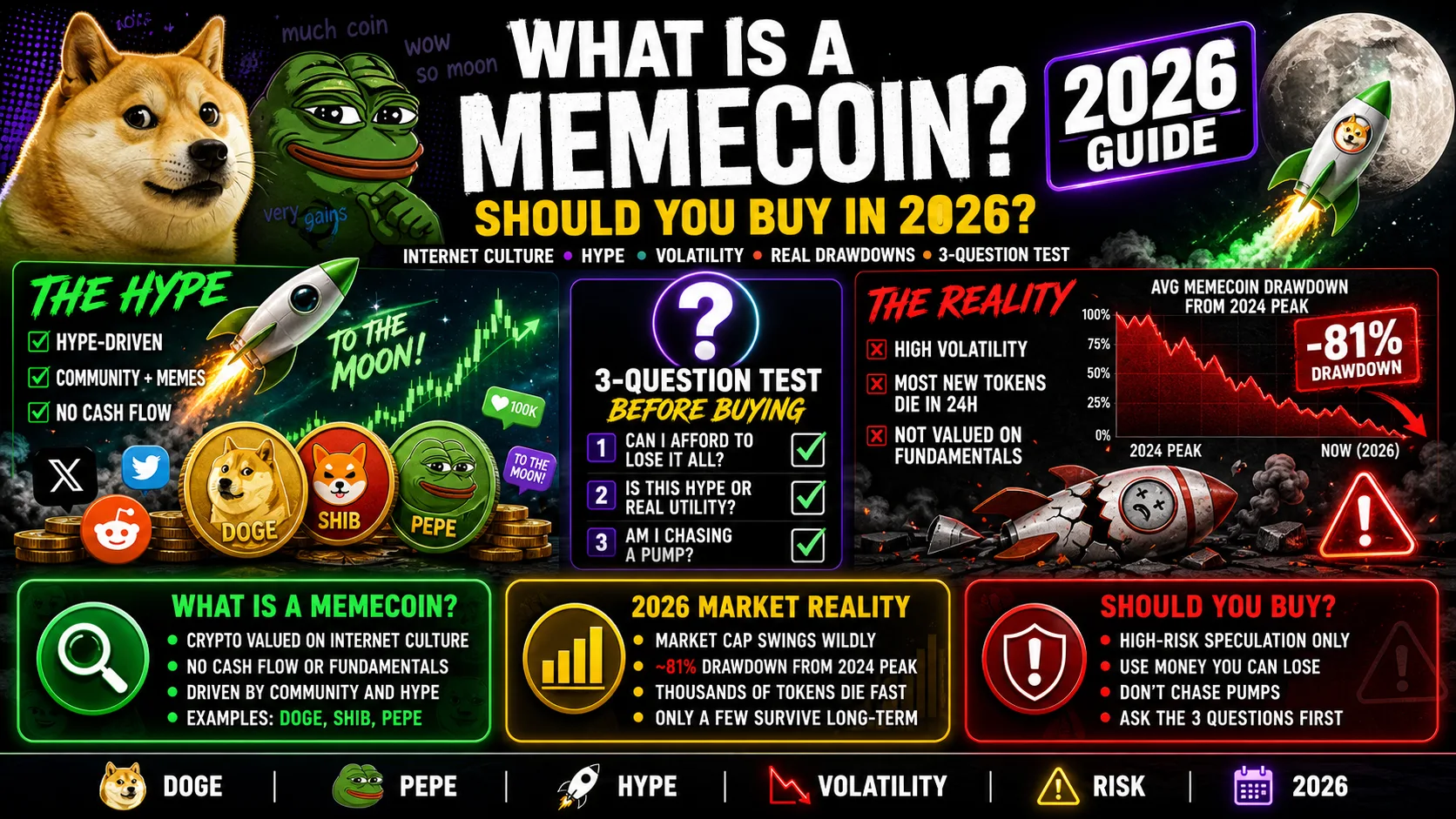
What Is a Memecoin? Should You Buy in 2026?
A memecoin is crypto valued on internet culture, not cash flow. See 2026 market data, real drawdowns, and a three-question test before buying one.
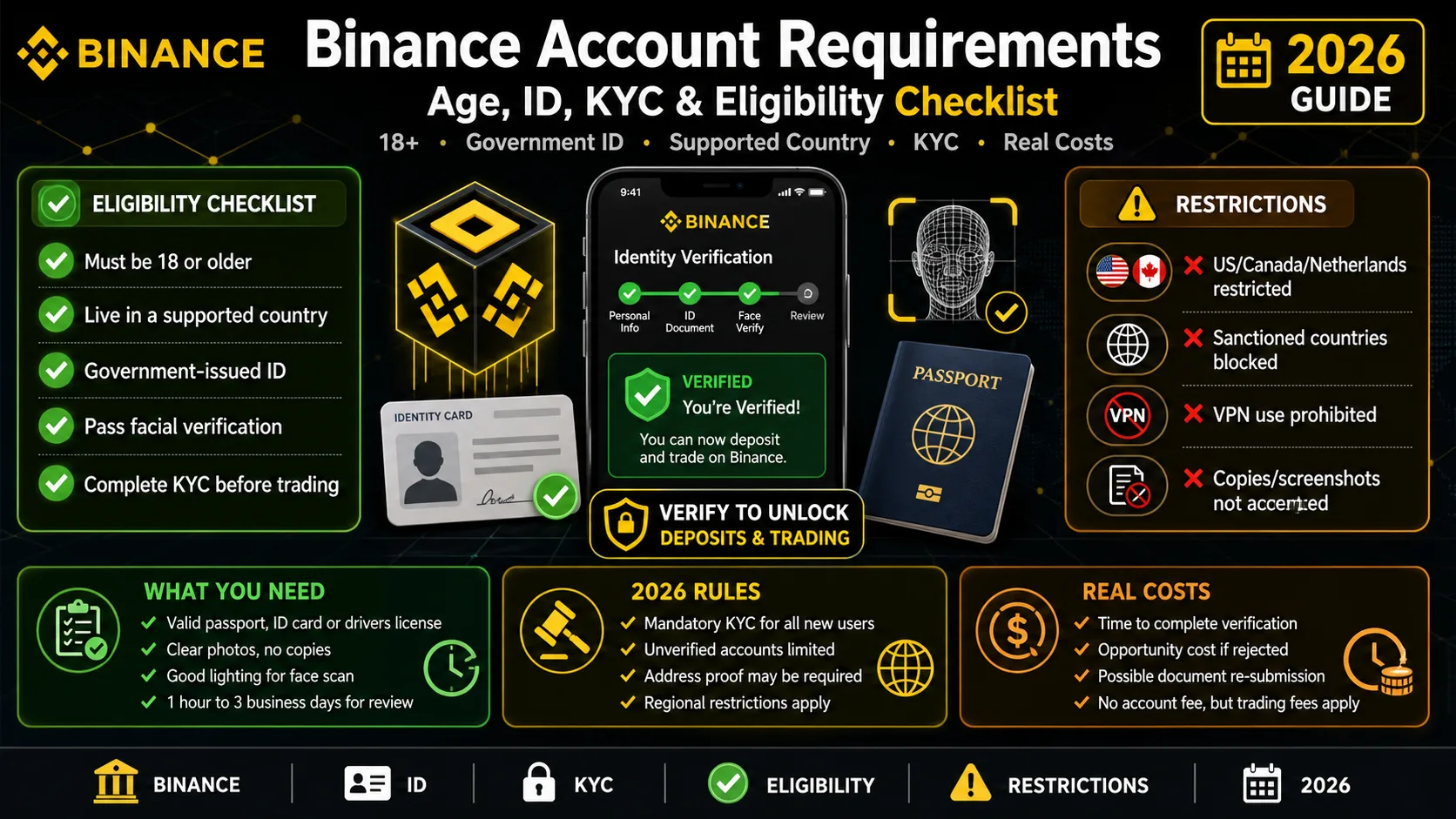
Binance Account Requirements 2026 (Age, ID)
Binance requires 18+, a supported country and KYC with a government ID. The full eligibility checklist, real costs and the rules for 2026.
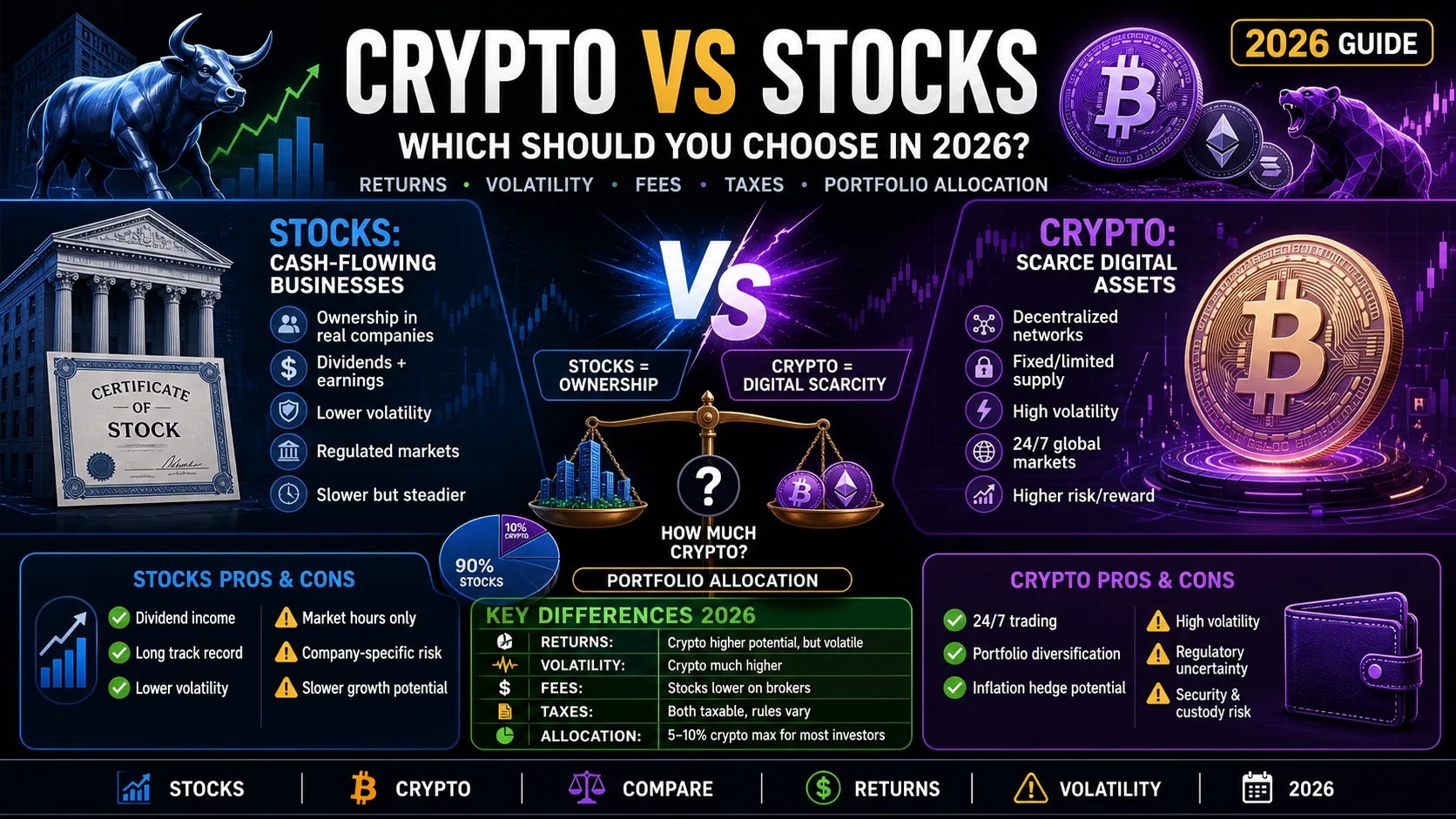
Crypto vs Stocks: Which Should You Choose in 2026?
Stocks are cash-flowing businesses; crypto is a scarce digital asset. Compare returns, volatility, fees, taxes, and how much crypto belongs in a portfolio.
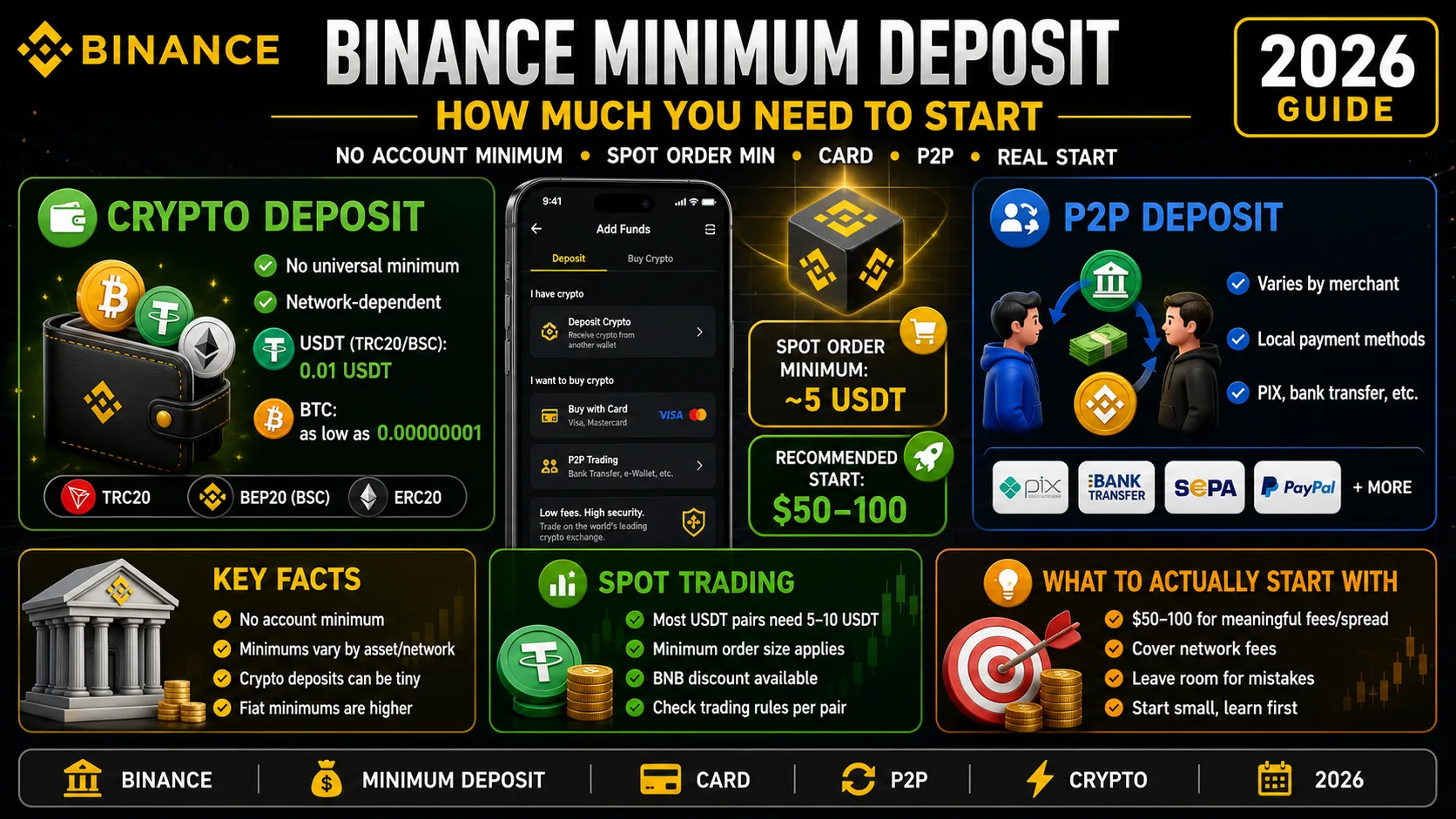
Binance Minimum Deposit: How Much You Need in 2026
Binance has no account minimum, but most spot orders need 5 USDT. The real deposit, card and P2P minimums — and how much to actually start with.
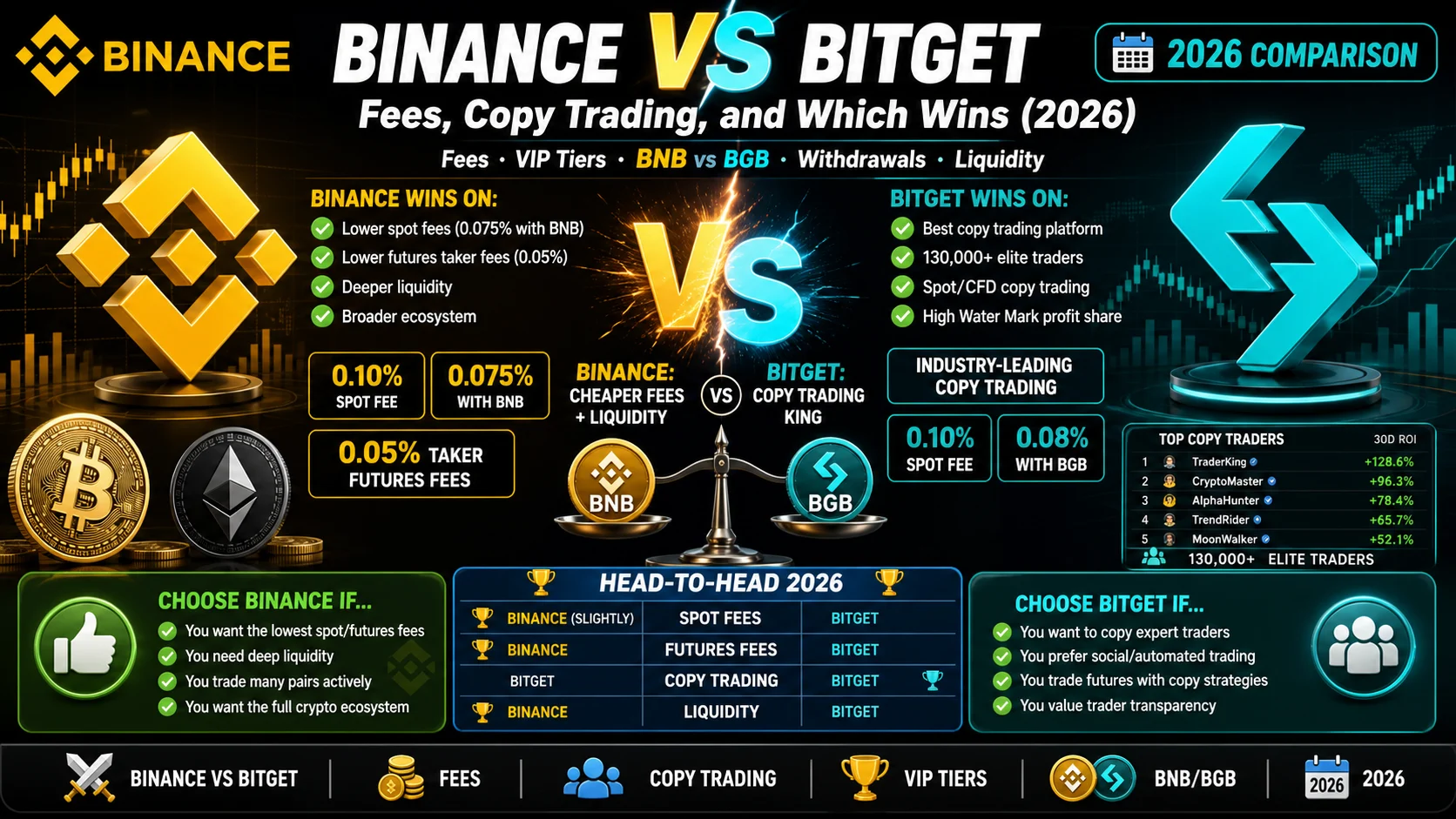
Binance vs Bitget (2026): Fees, Copy Trading, and Which Wins
Binance is cheaper for spot and futures; Bitget wins on copy trading. Compare 2026 fees, VIP tiers, BGB vs BNB discounts, withdrawals, and liquidity.
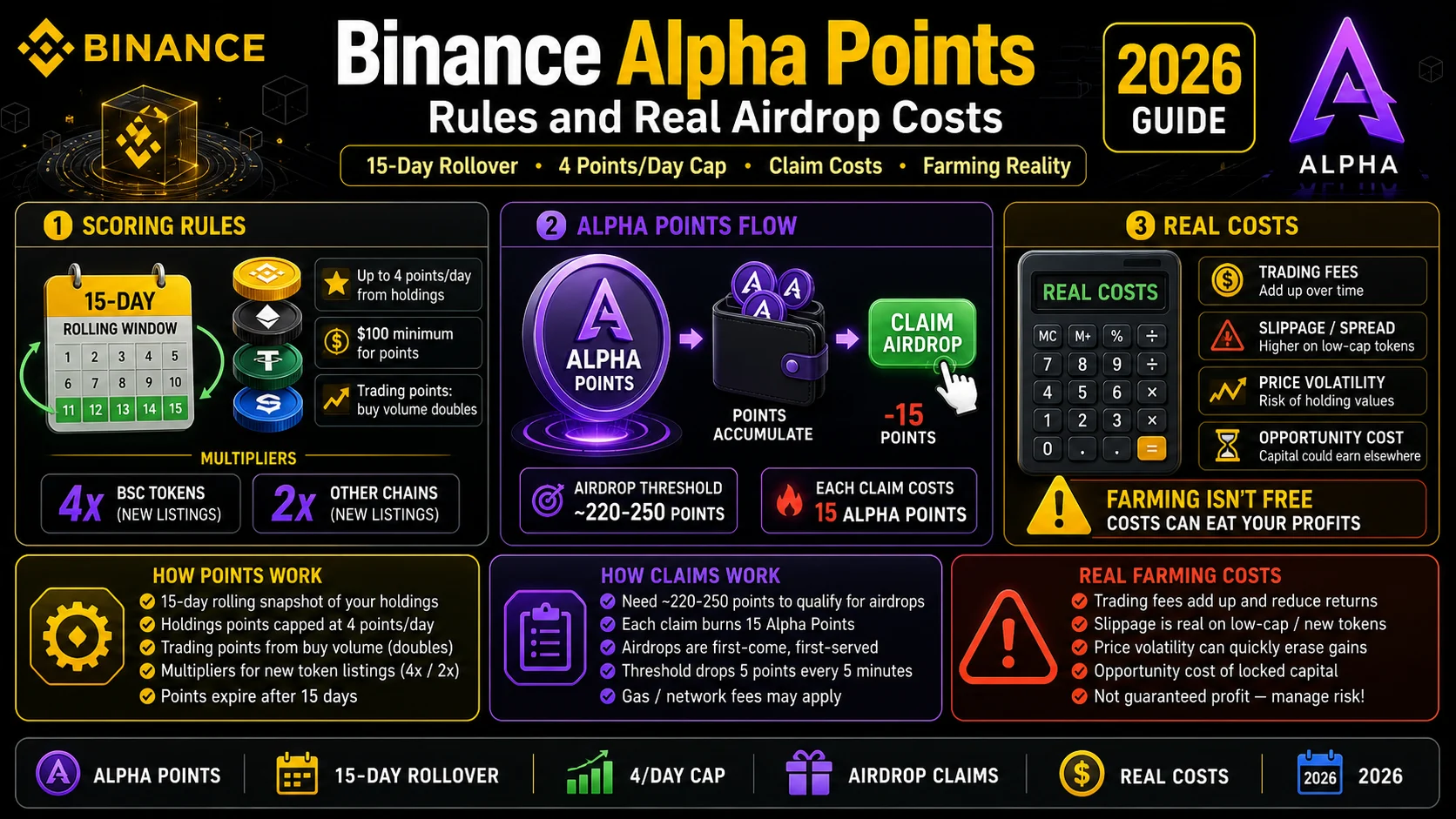
Binance Alpha Points (2026): Rules and Real Airdrop Costs
Alpha Points roll over 15 days and cap at 4 points a day from holdings. Here is how the scoring works, how claims work, and what farming really costs.
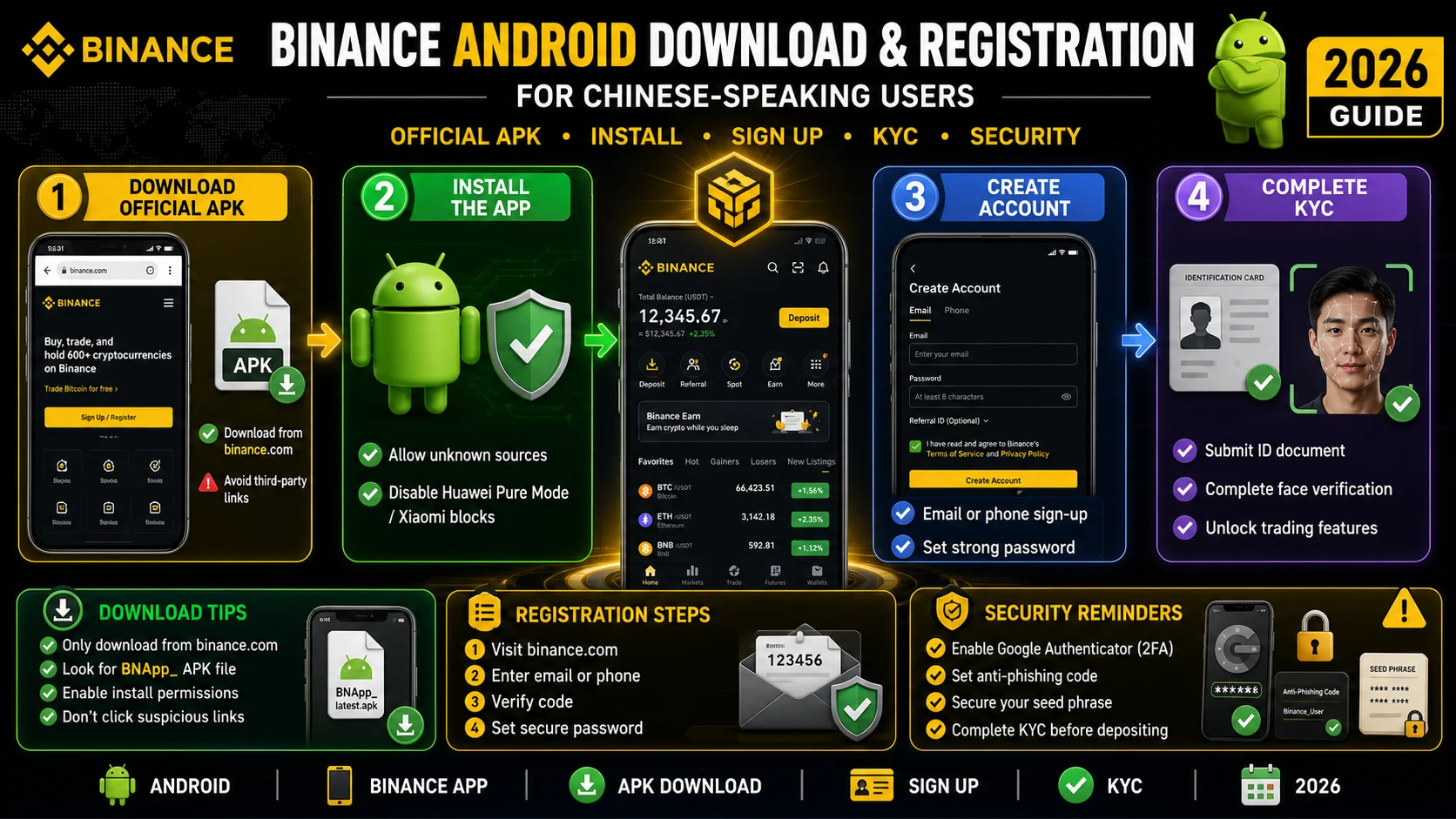
Binance in Chinese: Android Download and Registration (2026)
An Android walkthrough for Chinese speakers: official download sources, OEM install blocks, language settings, registration, KYC, and a first deposit.
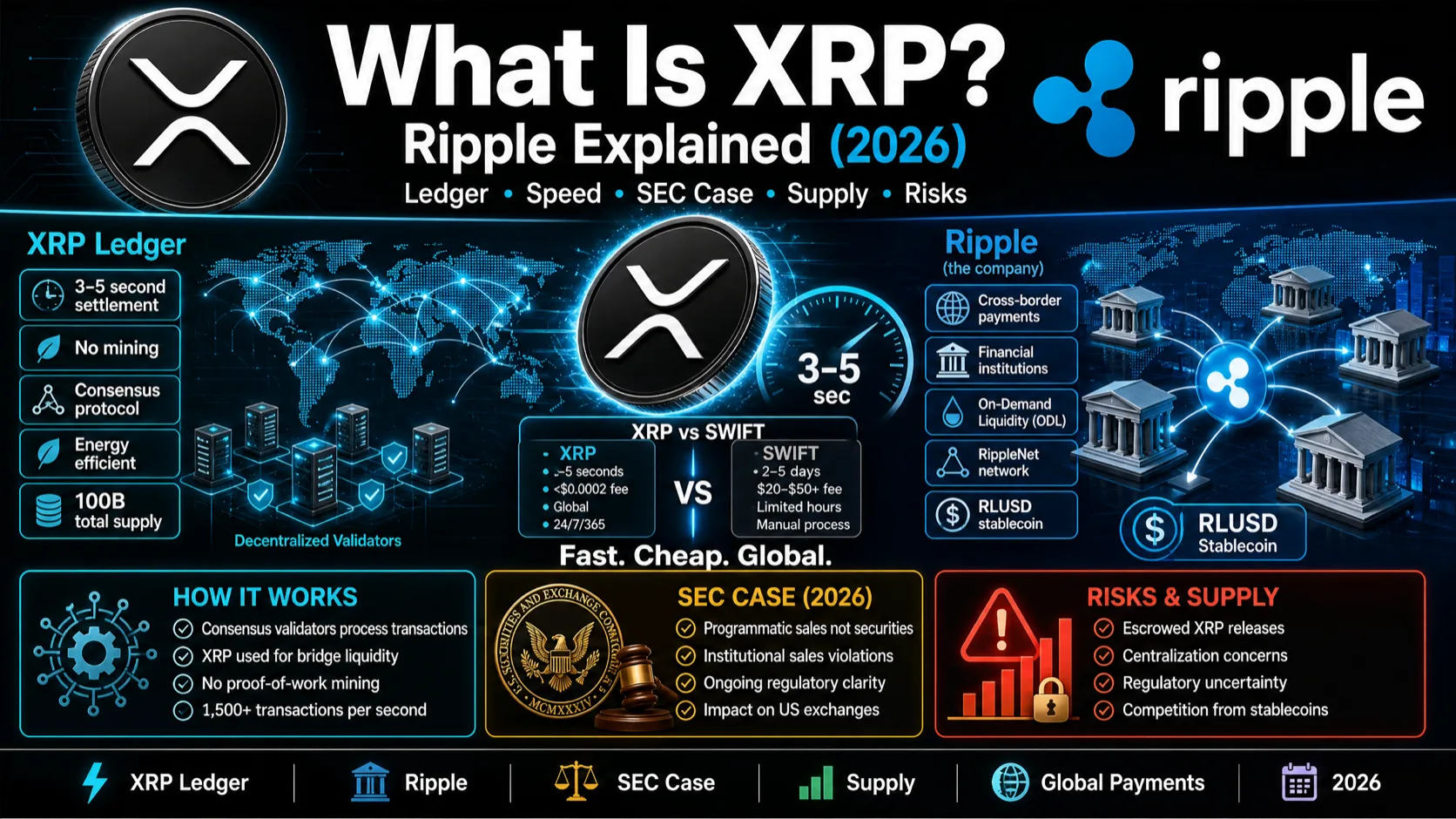
What Is XRP? Ripple Explained (2026)
XRP is the native coin of the XRP Ledger, which settles payments in 3–5 seconds without mining. How it works in 2026, the SEC case, supply, and risks.
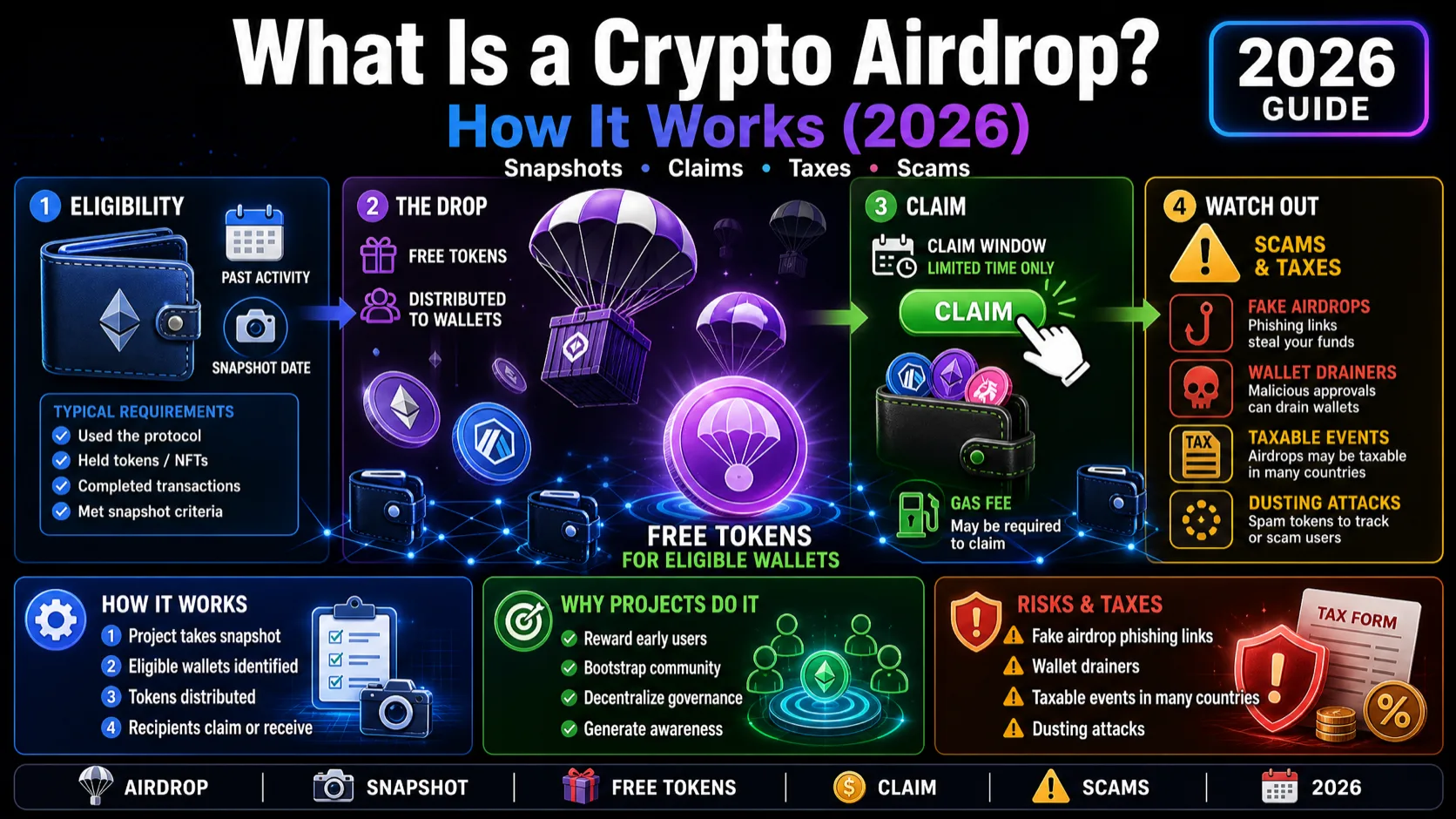
What Is a Crypto Airdrop? How It Works (2026)
A crypto airdrop sends free tokens to eligible wallets, usually for past activity. How snapshots, claims, taxes and airdrop scams actually work in 2026.
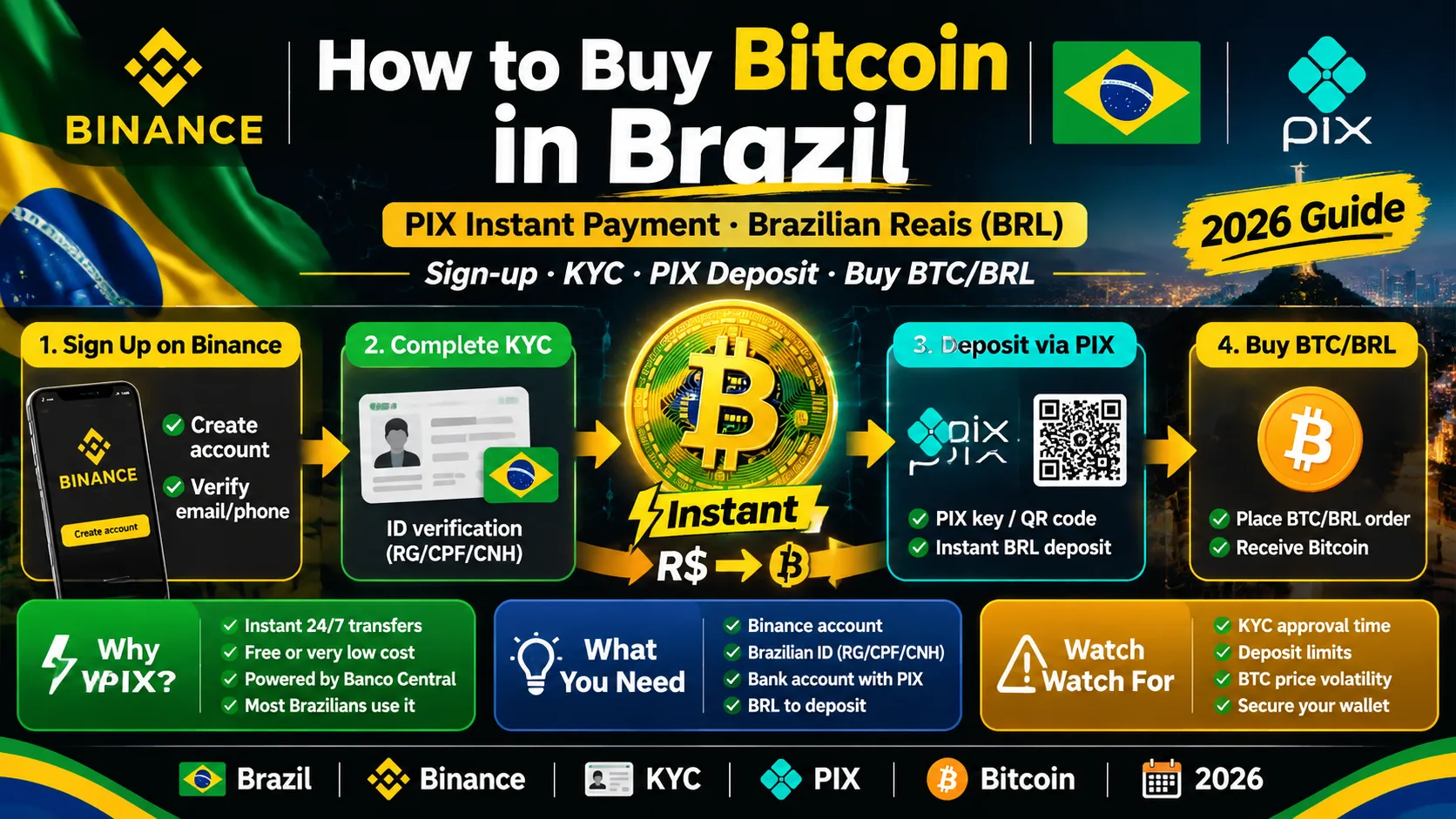
How to Buy Bitcoin in Brazil: PIX Guide (2026)
Buy Bitcoin in Brazil with PIX in about 15 minutes: Binance sign-up with CPF, KYC, a free reais deposit, and a BTC/BRL order — 2026 fees and rules.
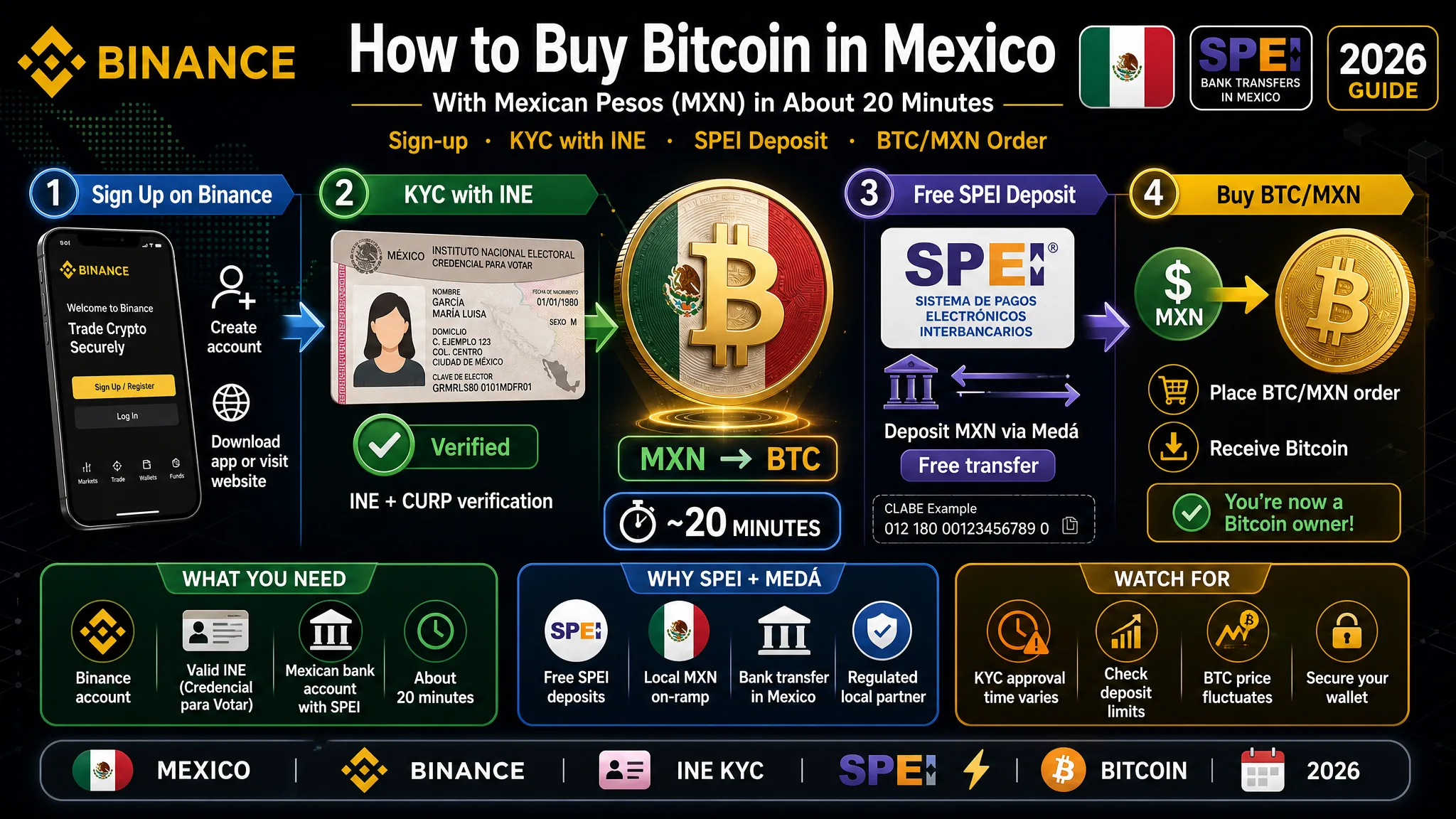
How to Buy Bitcoin in Mexico (SPEI, 2026)
Buy Bitcoin in Mexico with pesos in about 20 minutes: Binance sign-up, KYC with INE, a free SPEI deposit through Medá, and a BTC/MXN order.
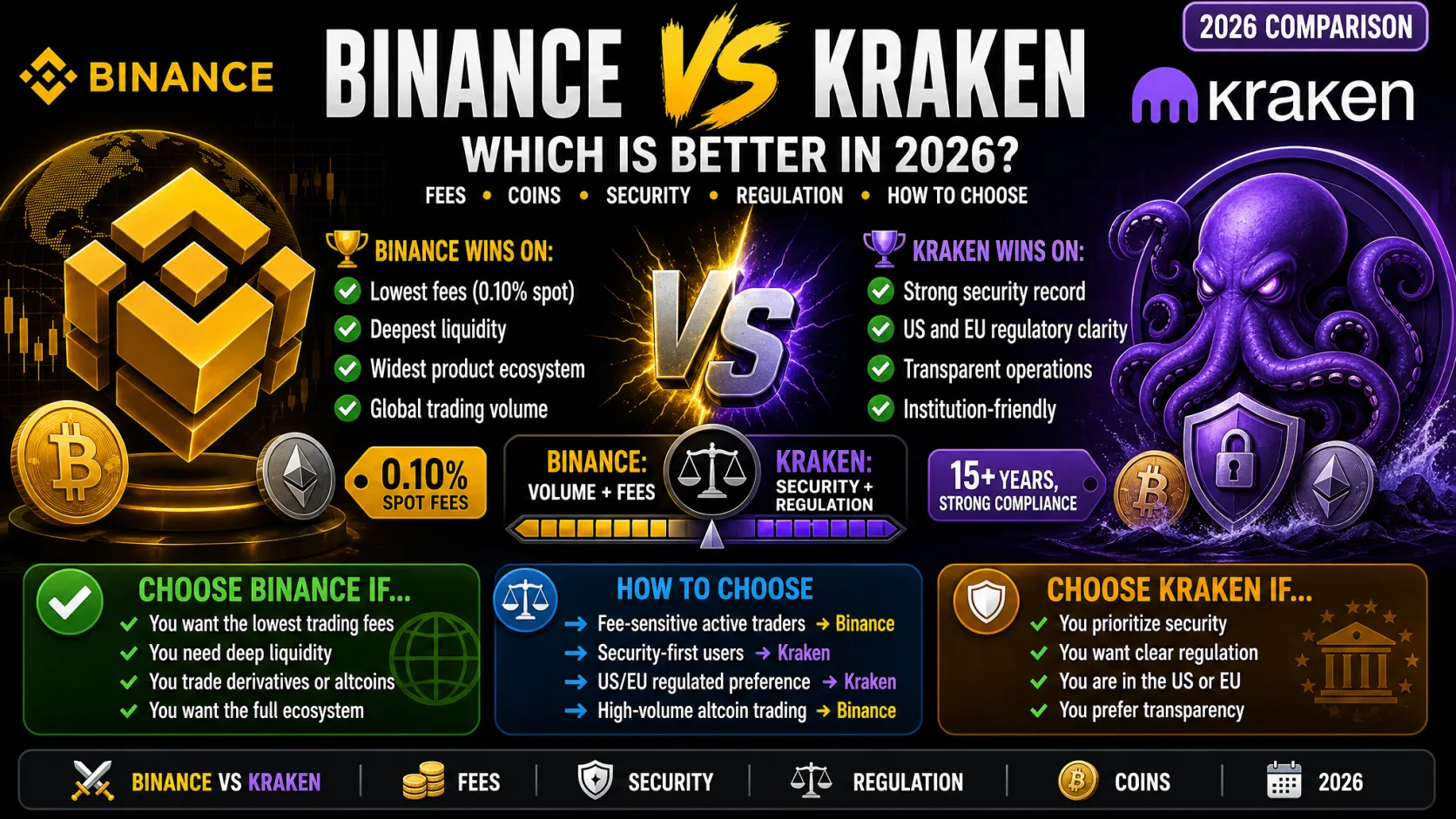
Binance vs Kraken: Which Is Better in 2026?
Binance charges 0.10% spot (0.075% with BNB). Kraken's entry tier is 0.40%/0.80% after its July 2026 rework. Fees, access, safety, and how to choose.
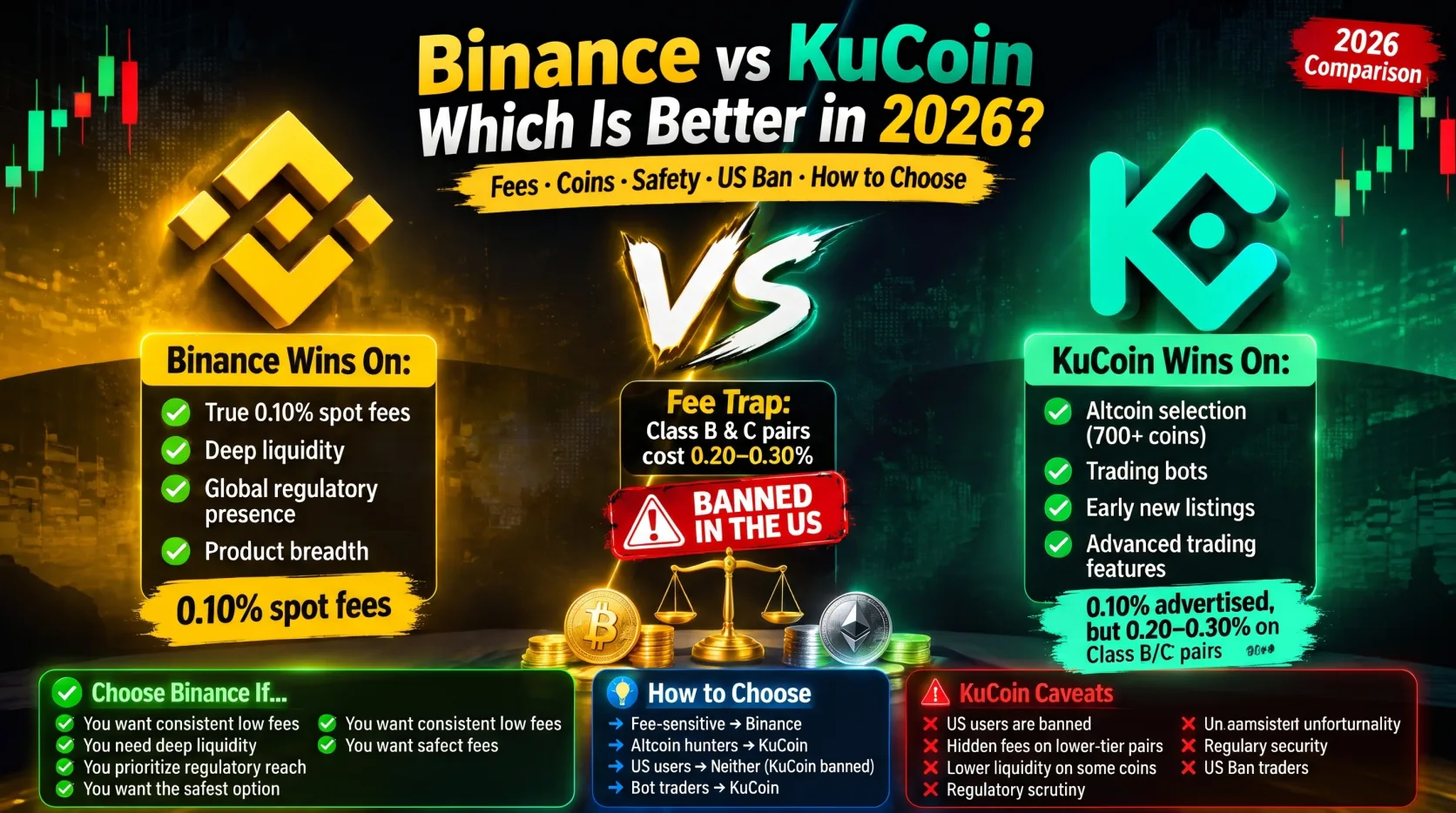
Binance vs KuCoin: Which Is Better in 2026?
Both advertise 0.10% spot, but KuCoin's Class B and C pairs cost 0.20–0.30% and it is banned in the US. Fees, coins, safety, and how to choose.
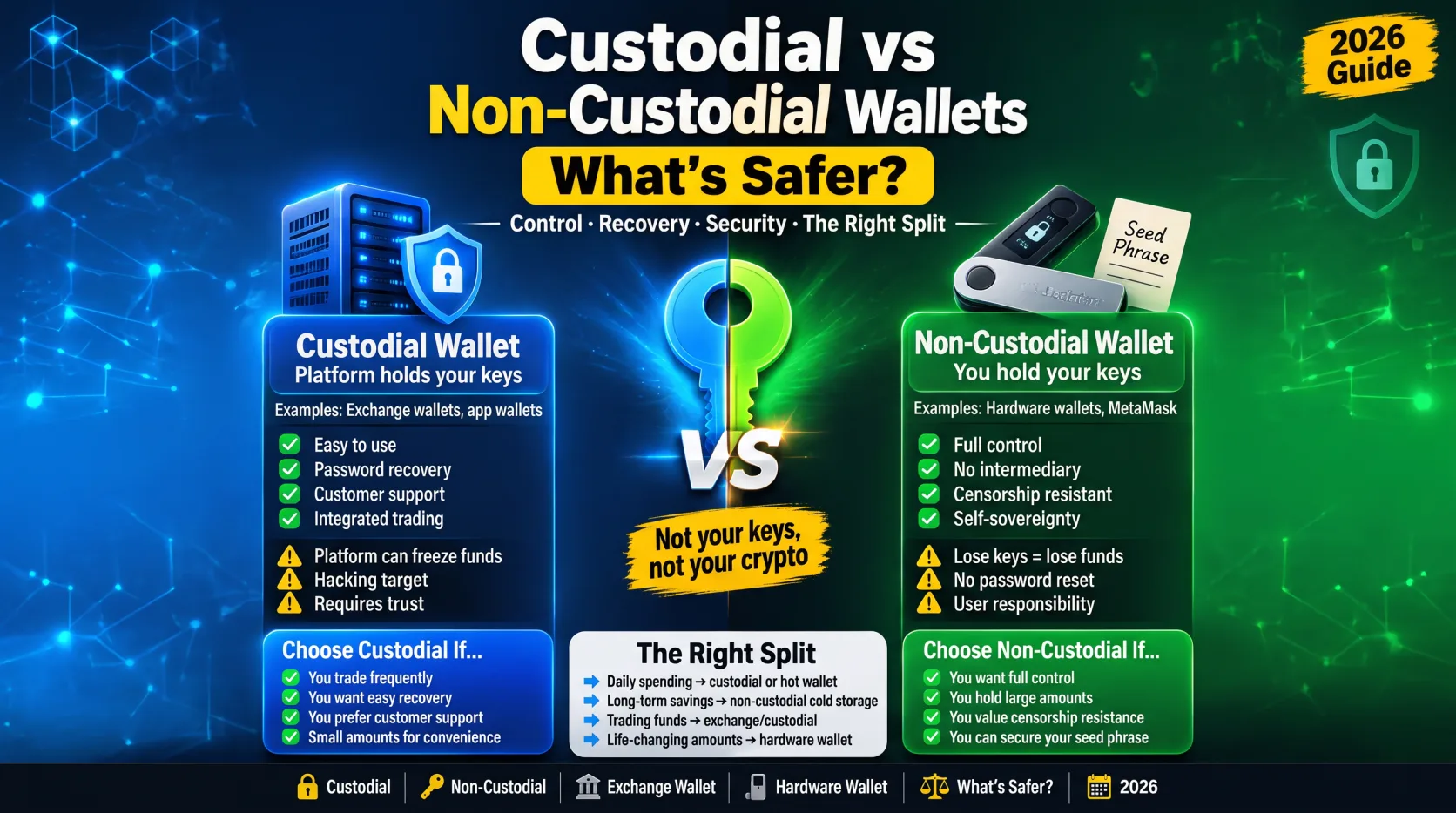
Custodial vs Non-Custodial Wallets: What's Safer?
Custodial wallets let a platform hold your keys; non-custodial wallets make you the bank. Compare control, recovery, security, and the right split.
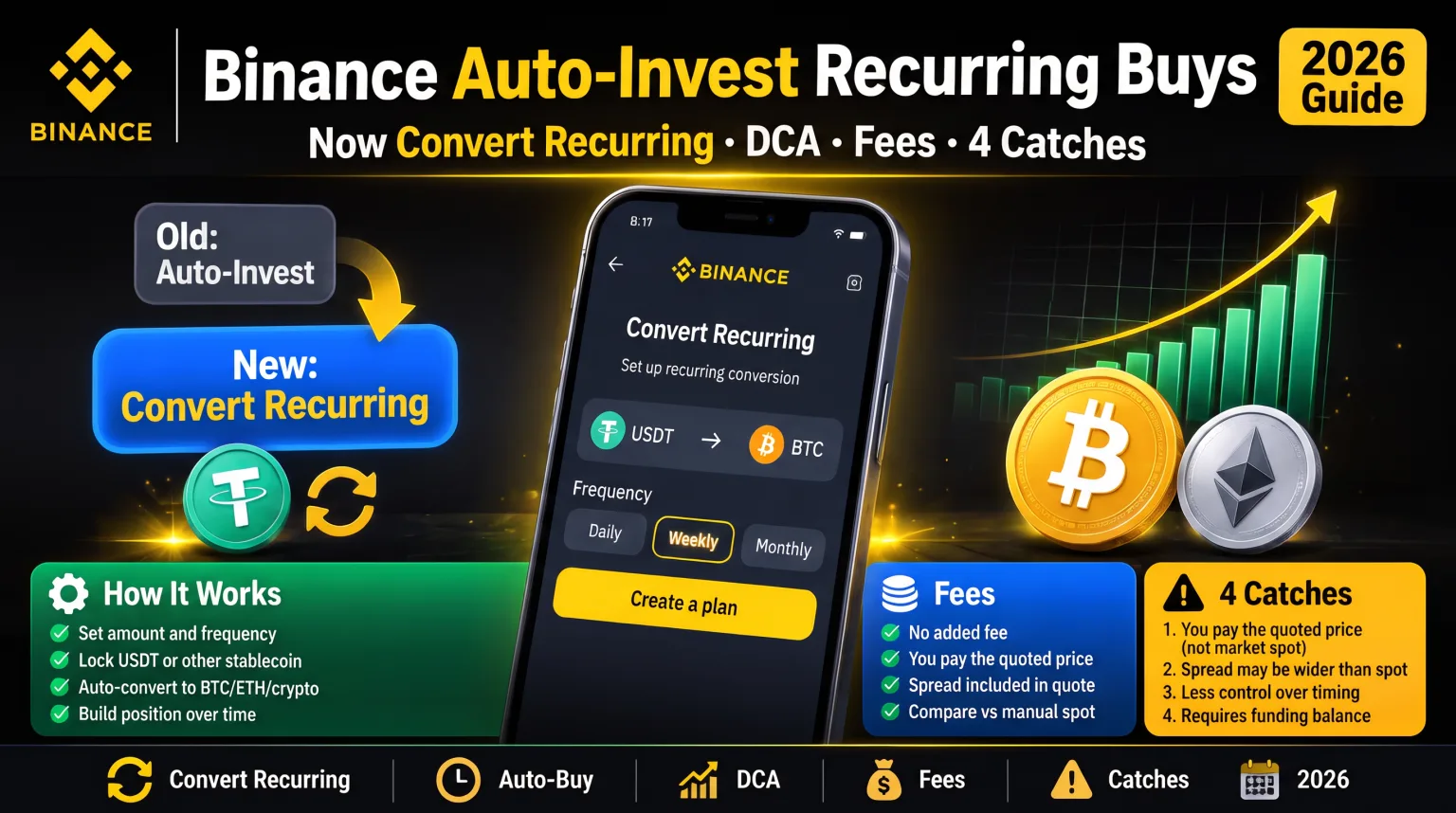
Binance Auto-Invest: Recurring Buys (2026)
Binance Auto-Invest is now Convert Recurring: no added fee, but you pay the quoted price. Set up a DCA plan in 2026, what it costs, and four catches.
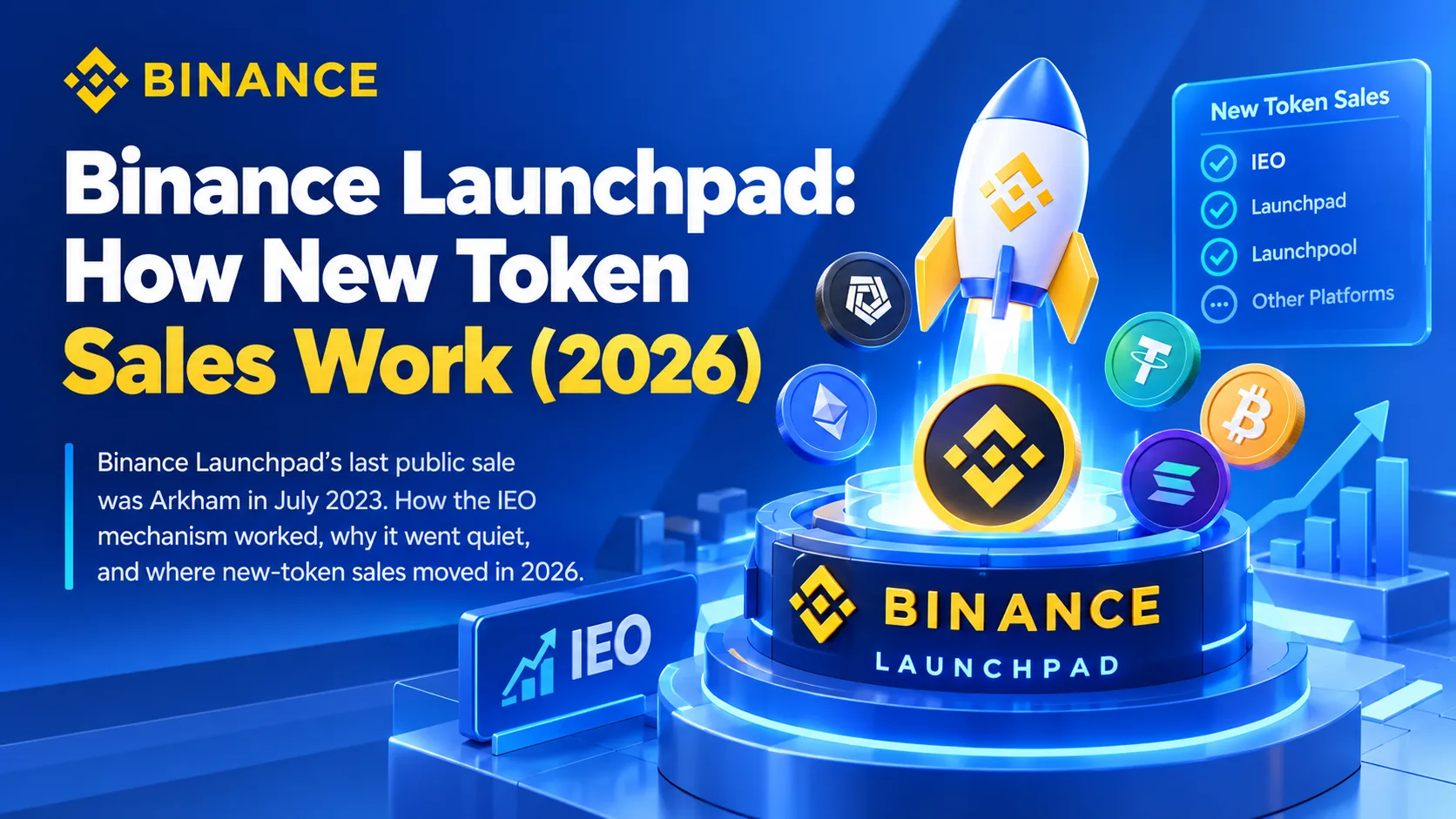
Binance Launchpad: How New Token Sales Work (2026)
Binance Launchpad's last public sale was Arkham in July 2023. How the IEO mechanism worked, why it went quiet, and where new-token sales moved in 2026.
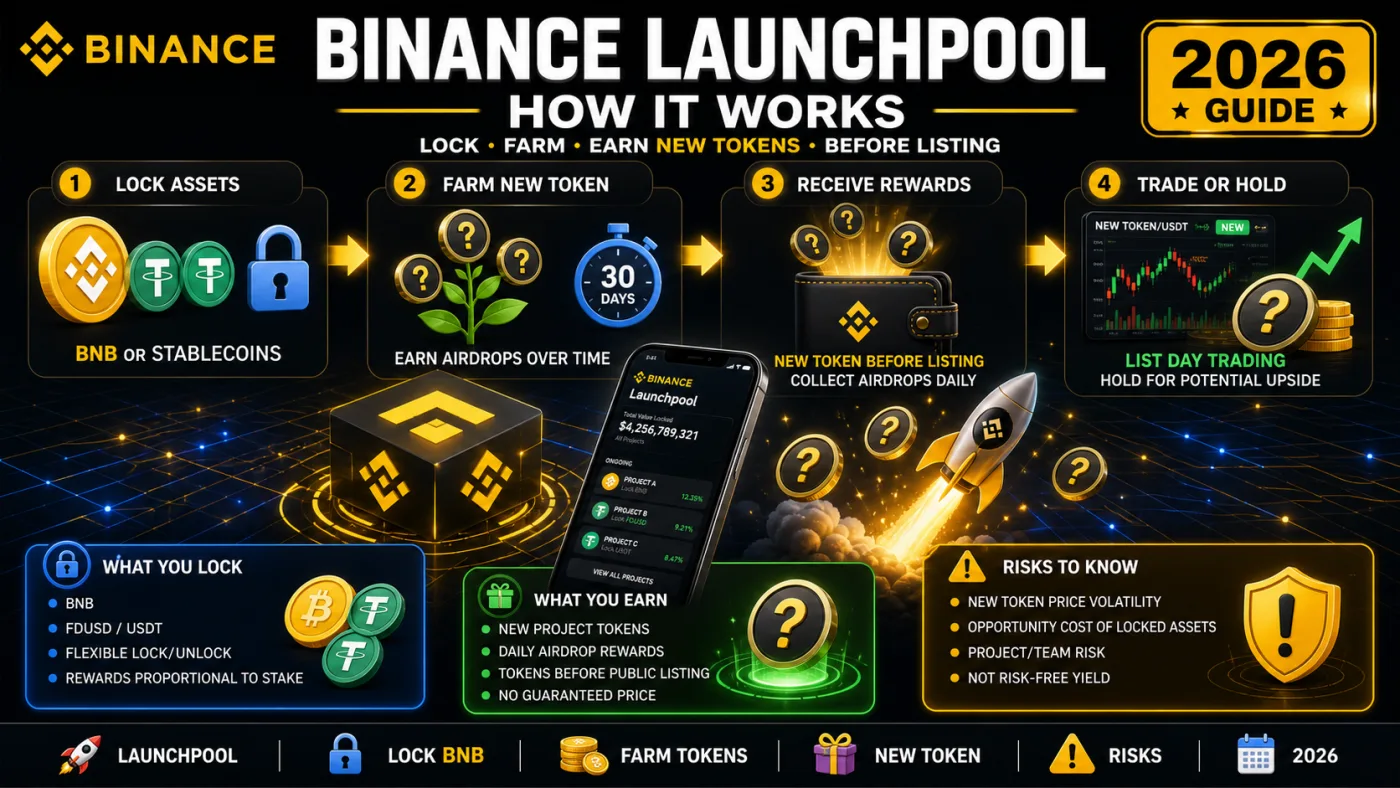
Binance Launchpool: How It Works (2026 Guide)
Binance Launchpool lets you lock BNB or stablecoins to farm a new token before it lists. How it works in 2026, what you really earn, and the risks.
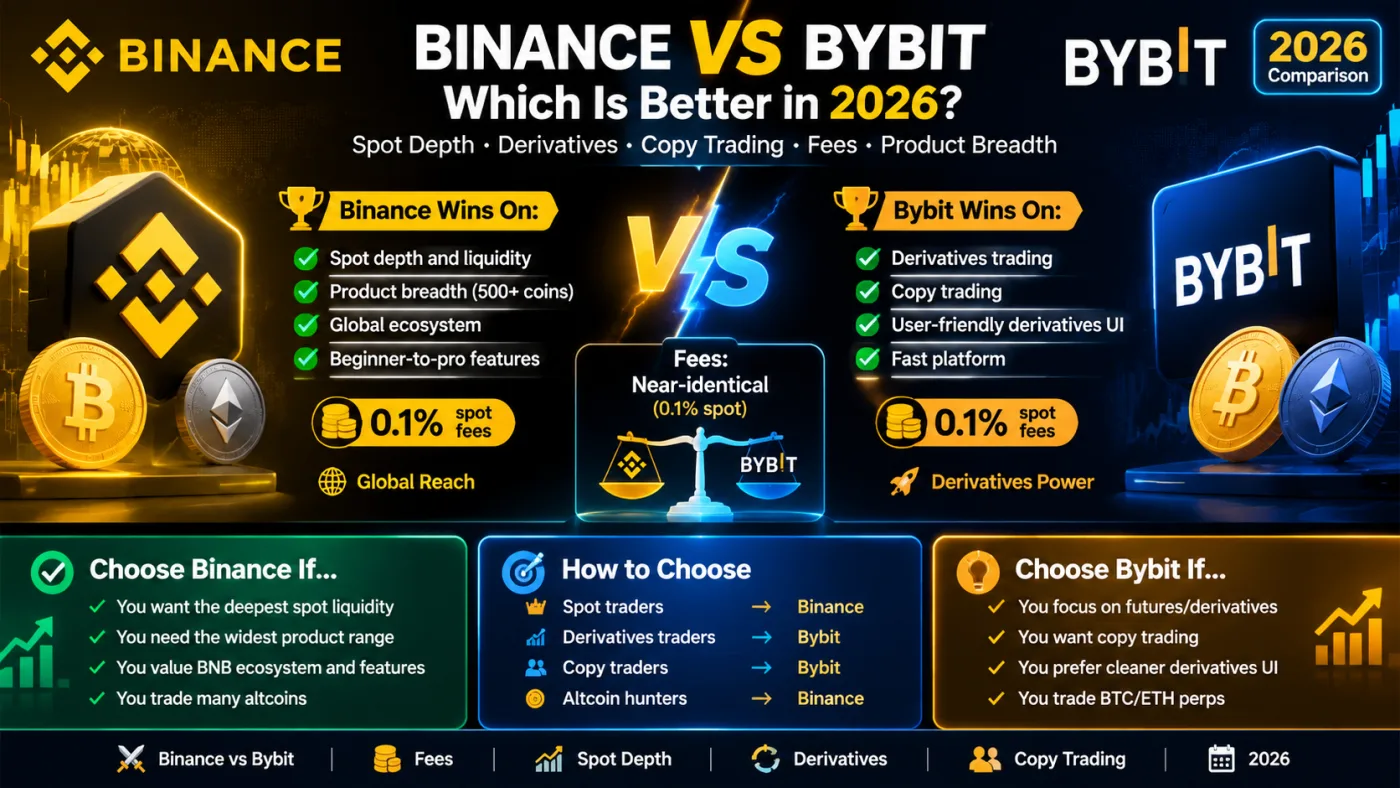
Binance vs Bybit: Which Is Better in 2026?
Binance wins on spot depth and product breadth; Bybit wins on derivatives and copy trading. Fees are near-identical (0.1% spot). Here's how to choose.
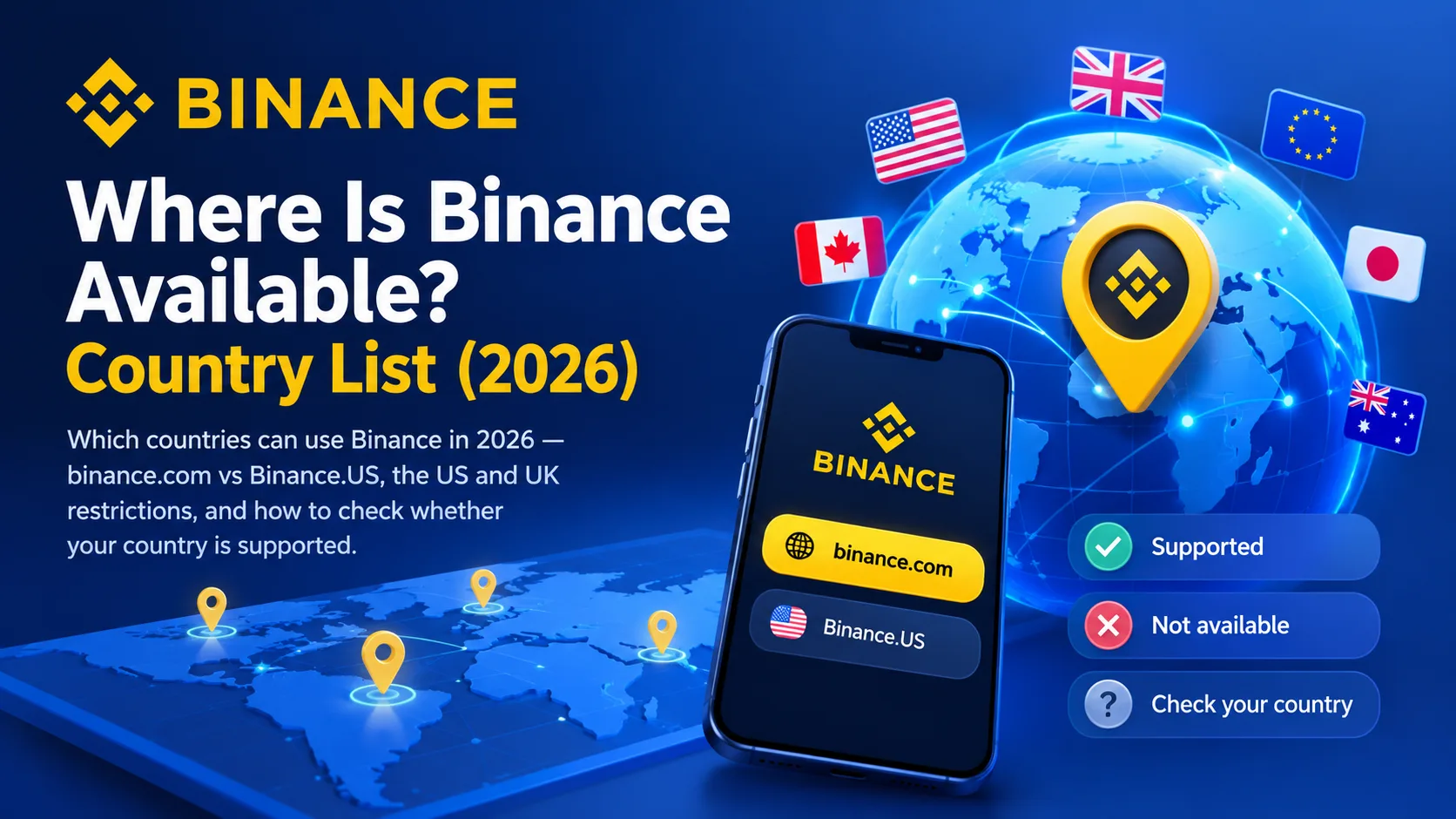
Where Is Binance Available? Country List (2026)
Which countries can use Binance in 2026 — binance.com vs Binance.US, the US and UK restrictions, and how to check whether your country is supported.
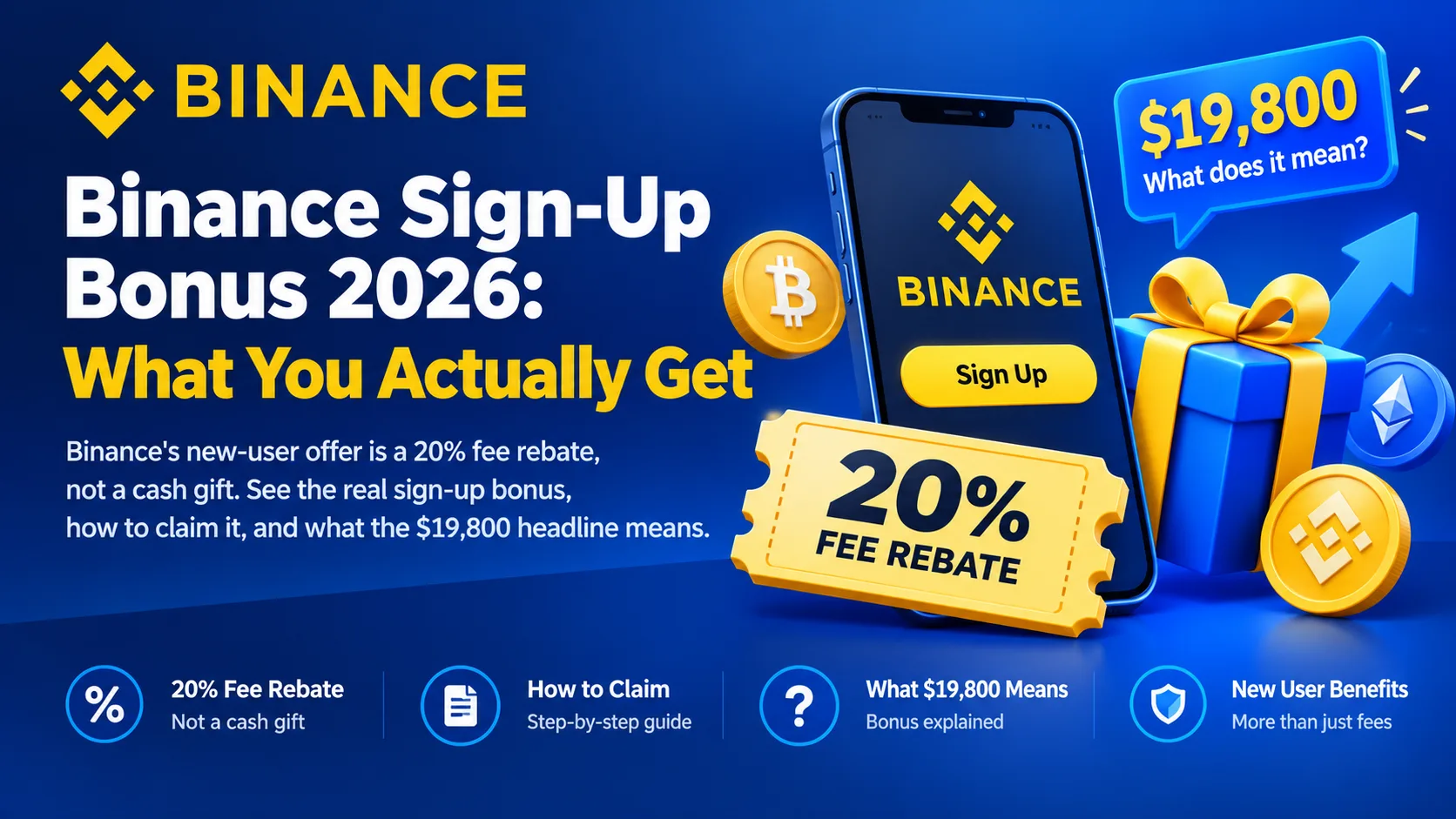
Binance Sign-Up Bonus 2026: What You Actually Get
Binance's new-user offer is a 20% fee rebate, not a cash gift. See the real sign-up bonus, how to claim it, and what the $19,800 headline means.
Crypto Slang & Terms: The Jargon Decoded
Crypto's slang — FOMO, HODL, diamond hands, gas, and more — decoded in plain English. What each term means, and the one mistake beginners make with it.
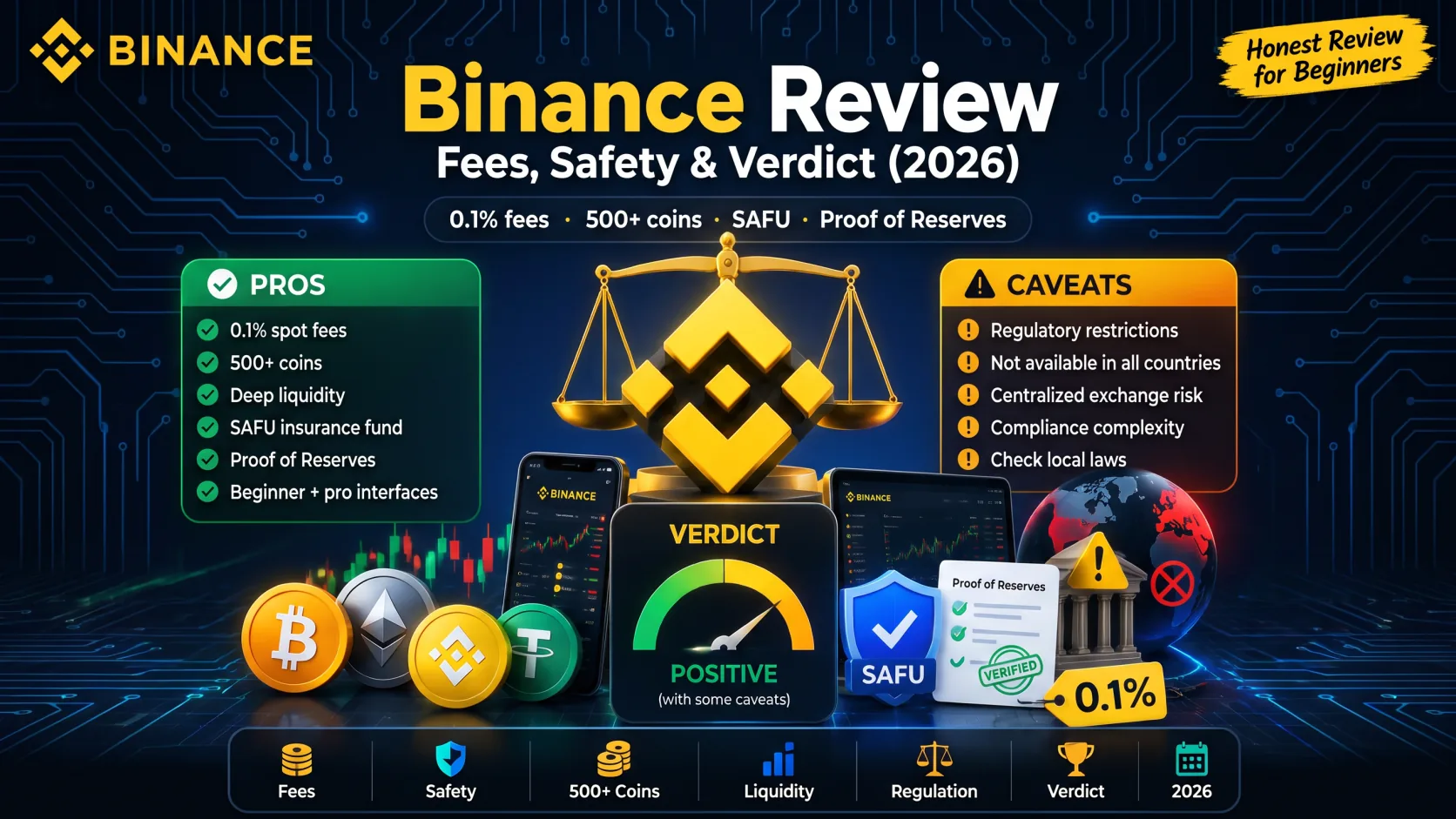
Binance Review: Fees, Safety & Verdict (2026)
An honest Binance review for beginners: fees from 0.1%, 500+ coins, and how it handled the $6.3B October 2026 hack — plus the regulatory caveats before you sign up.
What Is Binance? The World's Largest Crypto Exchange, Explained
What is Binance and how does it work? A plain-English beginner's guide to the world's largest crypto exchange — what it does, what BNB is, fees, safety, and how to get started.
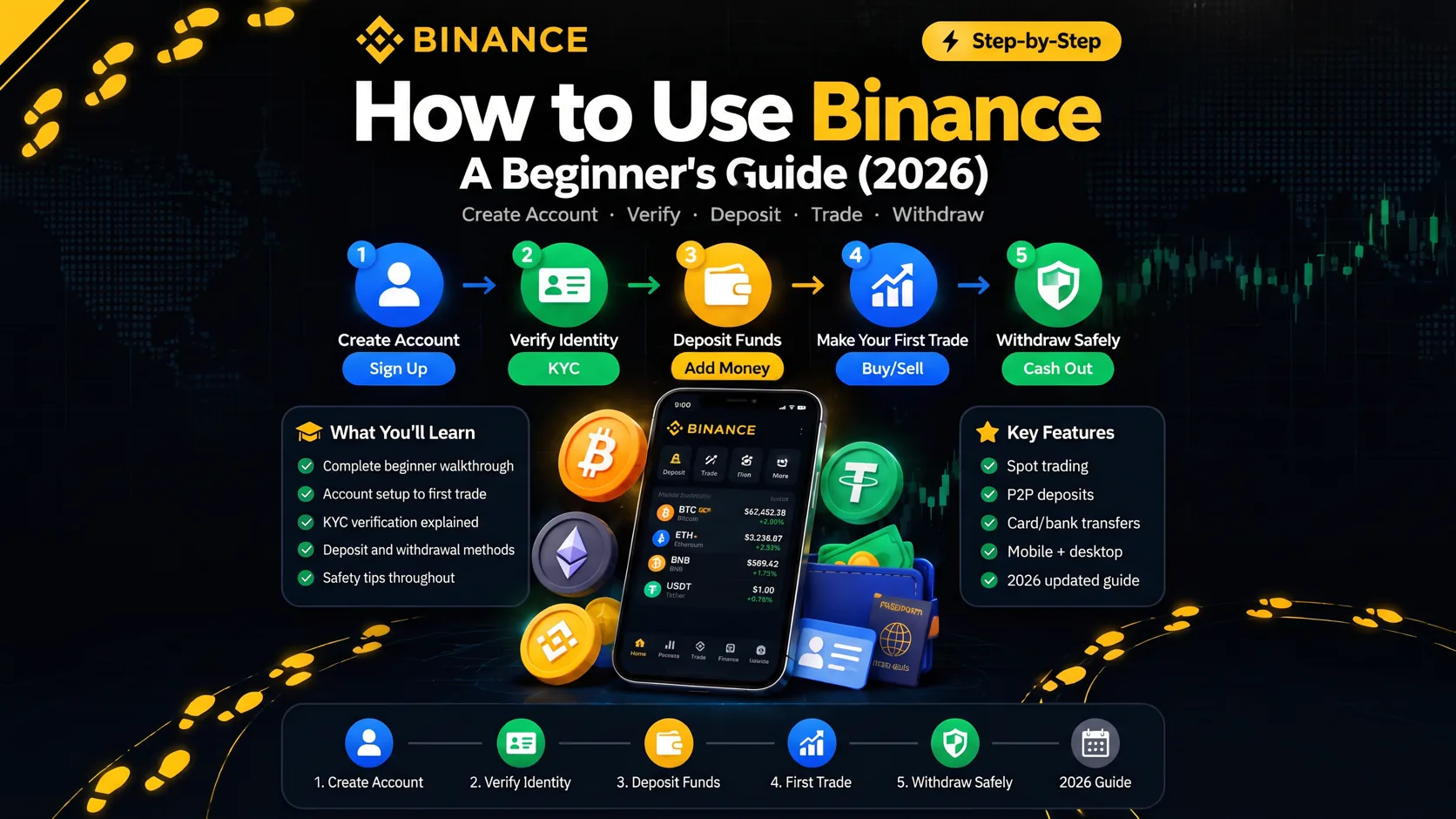
How to Use Binance: A Beginner's Guide (2026)
Learn how to use Binance step by step: create an account, verify your identity, deposit funds, make your first trade, and withdraw — safely.

What Is AI Crypto? AI Tokens Explained (2026)
AI crypto combines artificial intelligence and blockchain — GPU networks, data markets, and autonomous agents. Learn how AI tokens work and the real risks.
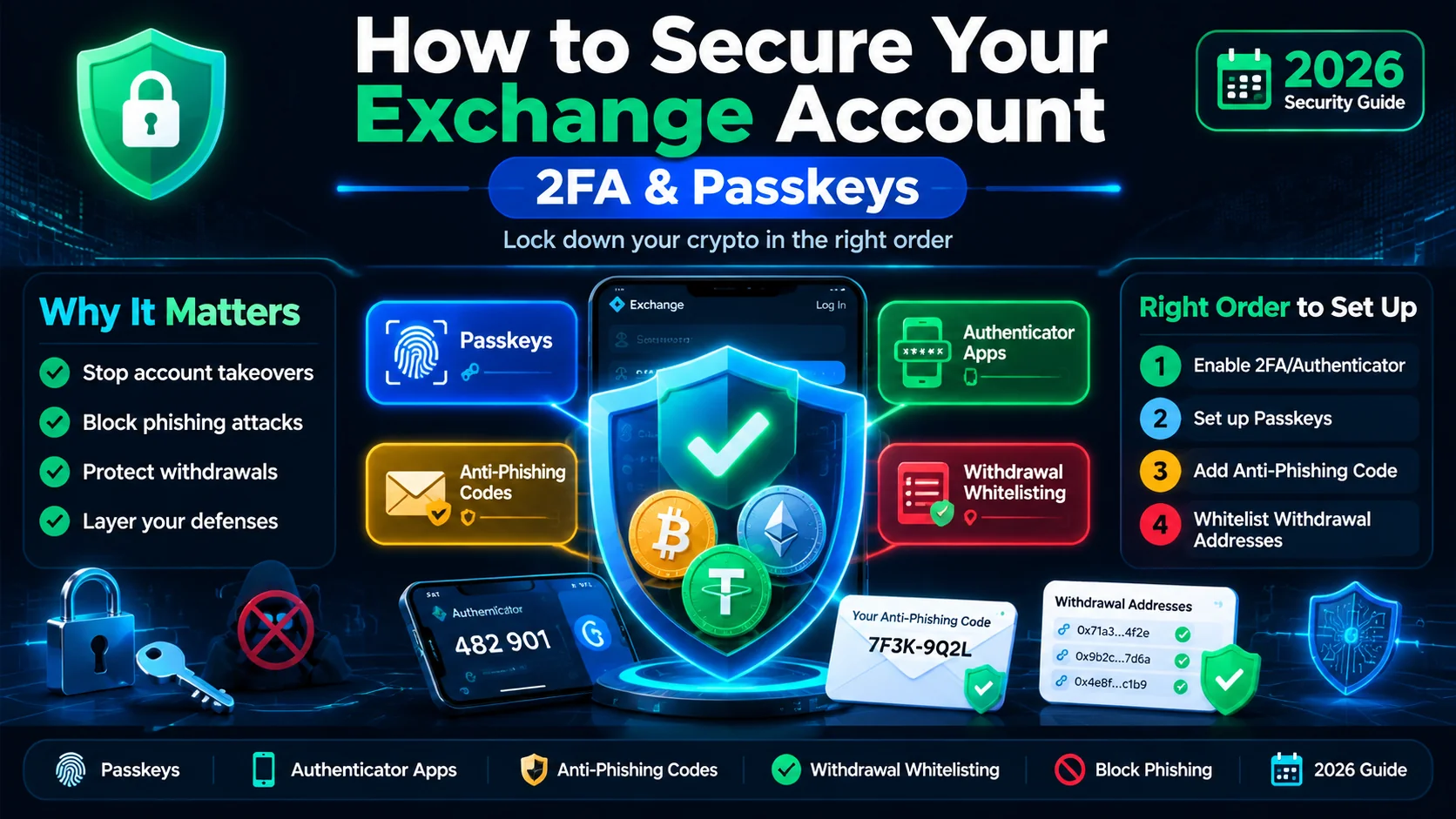
How to Secure Your Exchange Account (2FA & Passkeys)
Lock down your crypto exchange account: passkeys, authenticator apps, anti-phishing codes, and withdrawal whitelisting, in the right order.
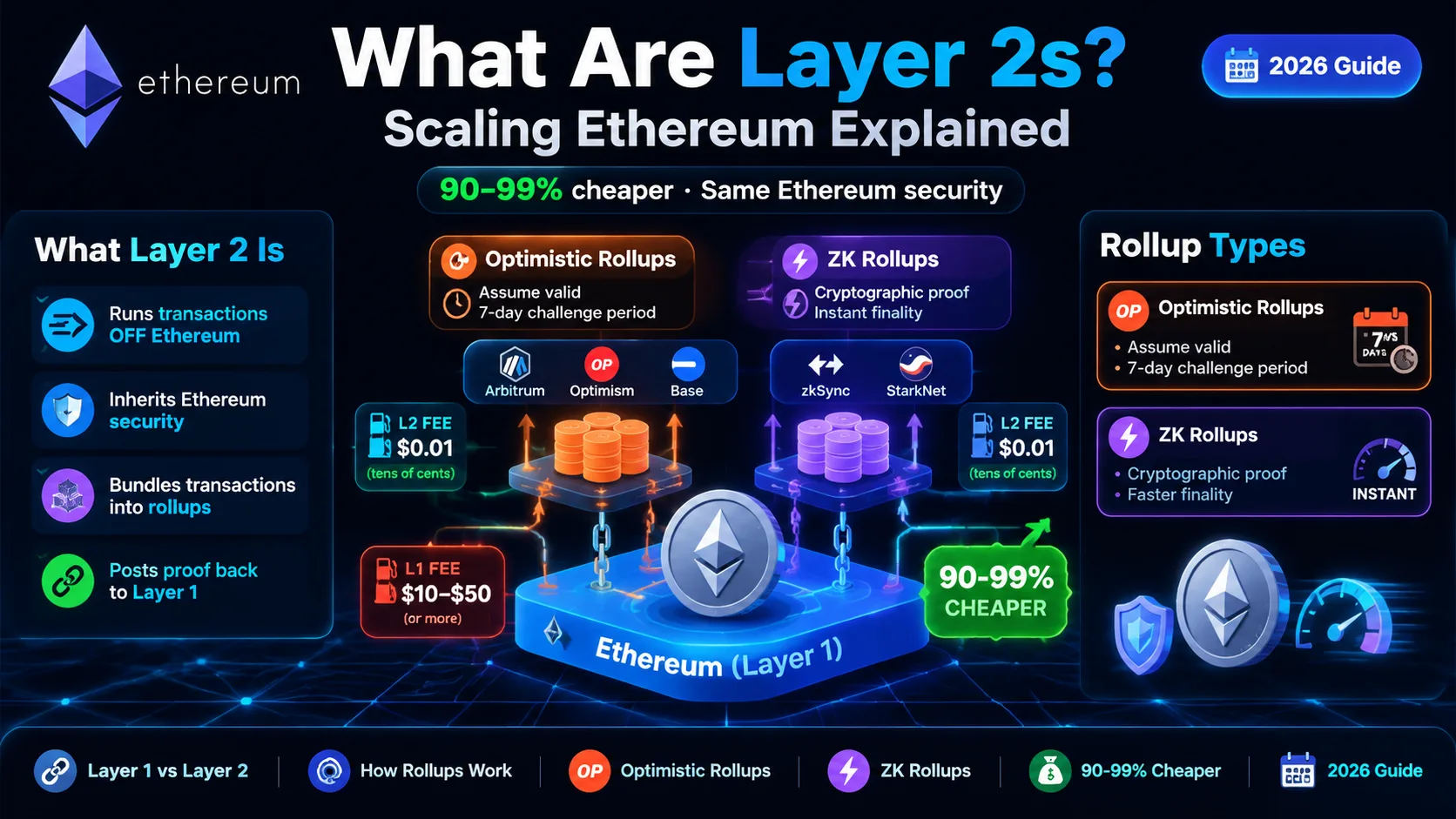
What Are Layer 2s? Scaling Ethereum Explained
Layer 2s are networks that run transactions off Ethereum but inherit its security — making crypto 90–99% cheaper. Learn how rollups work, optimistic vs ZK, and why withdrawals take 7 days.
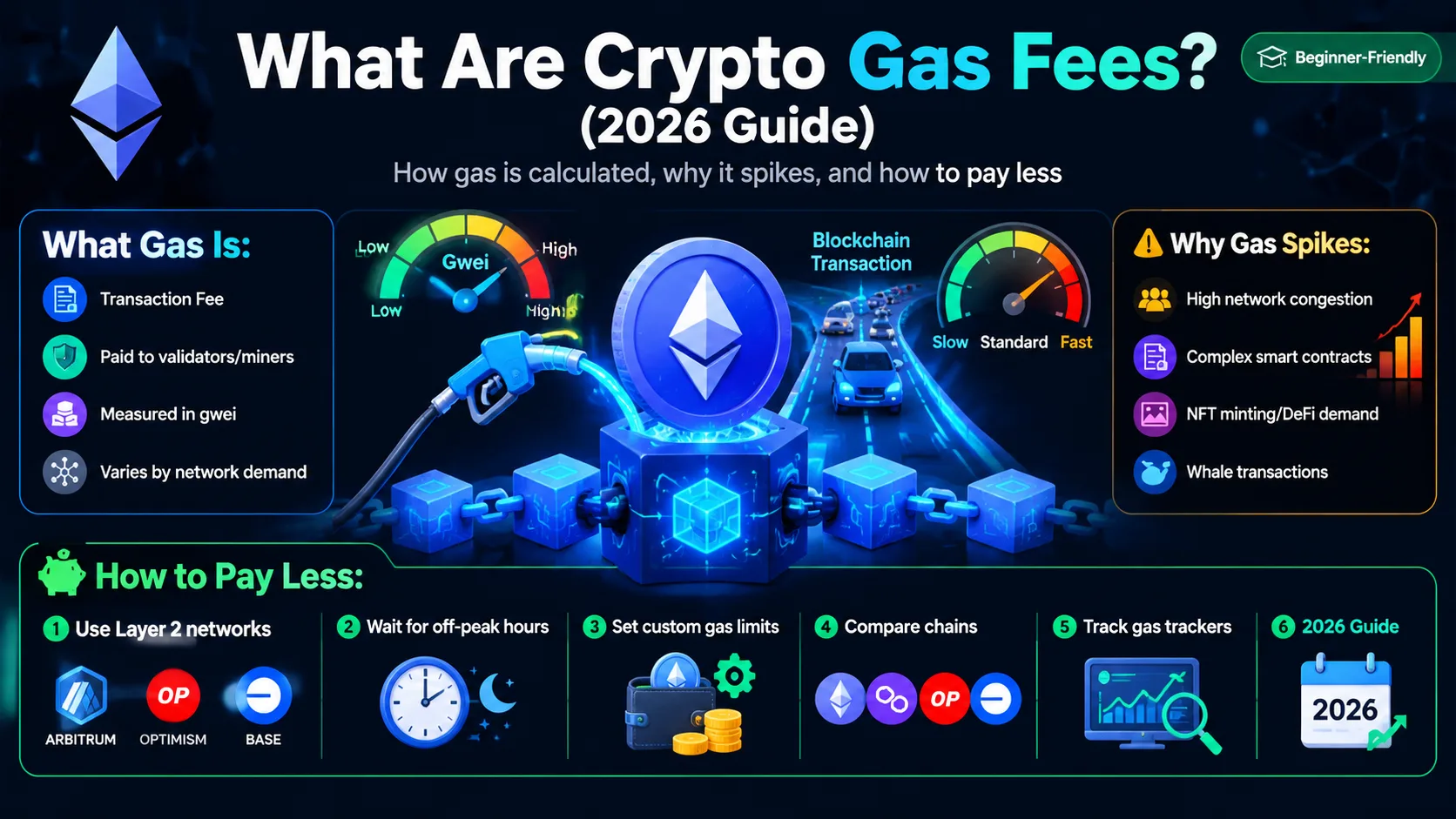
What Are Crypto Gas Fees? (2026 Guide)
A gas fee is what you pay to have a transaction processed on a blockchain. Learn how gas is calculated in gwei, why it spikes, and how to pay less.
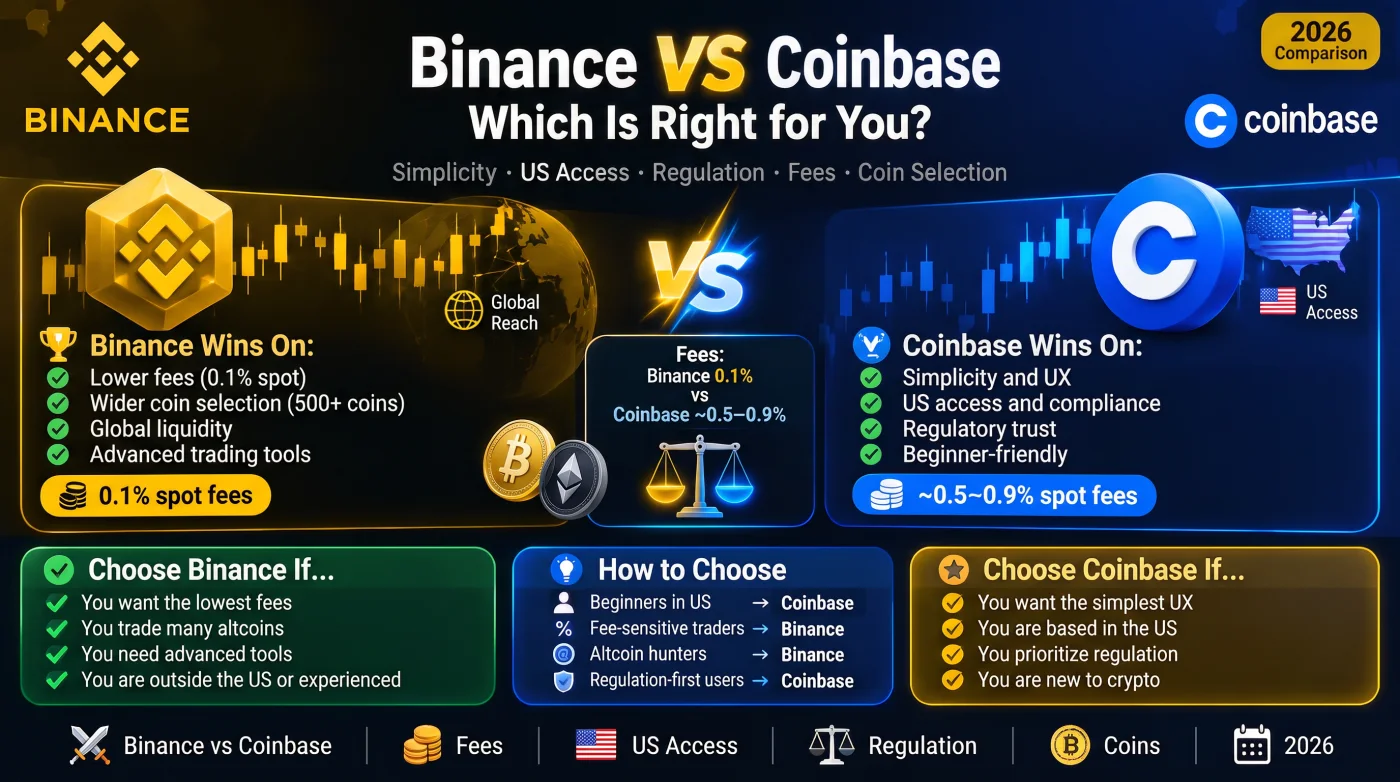
Binance vs Coinbase: Which Is Right for You?
Coinbase wins on simplicity, US access, and regulation; Binance wins on fees (0.1% vs ~0.5–0.9%) and coin selection. Here's how to choose.
Binance Earn: How to Earn Interest (2026)
Binance Earn pays interest on idle crypto via flexible savings, locked terms, and staking. Learn how it works, the yields, risks, and how to start.
How to Stake Crypto and Earn Yield (2026)
Crypto staking locks your coins to secure a proof-of-stake network and earn rewards — typically 2–8% a year. Learn how it works, the real risks, and how to start.
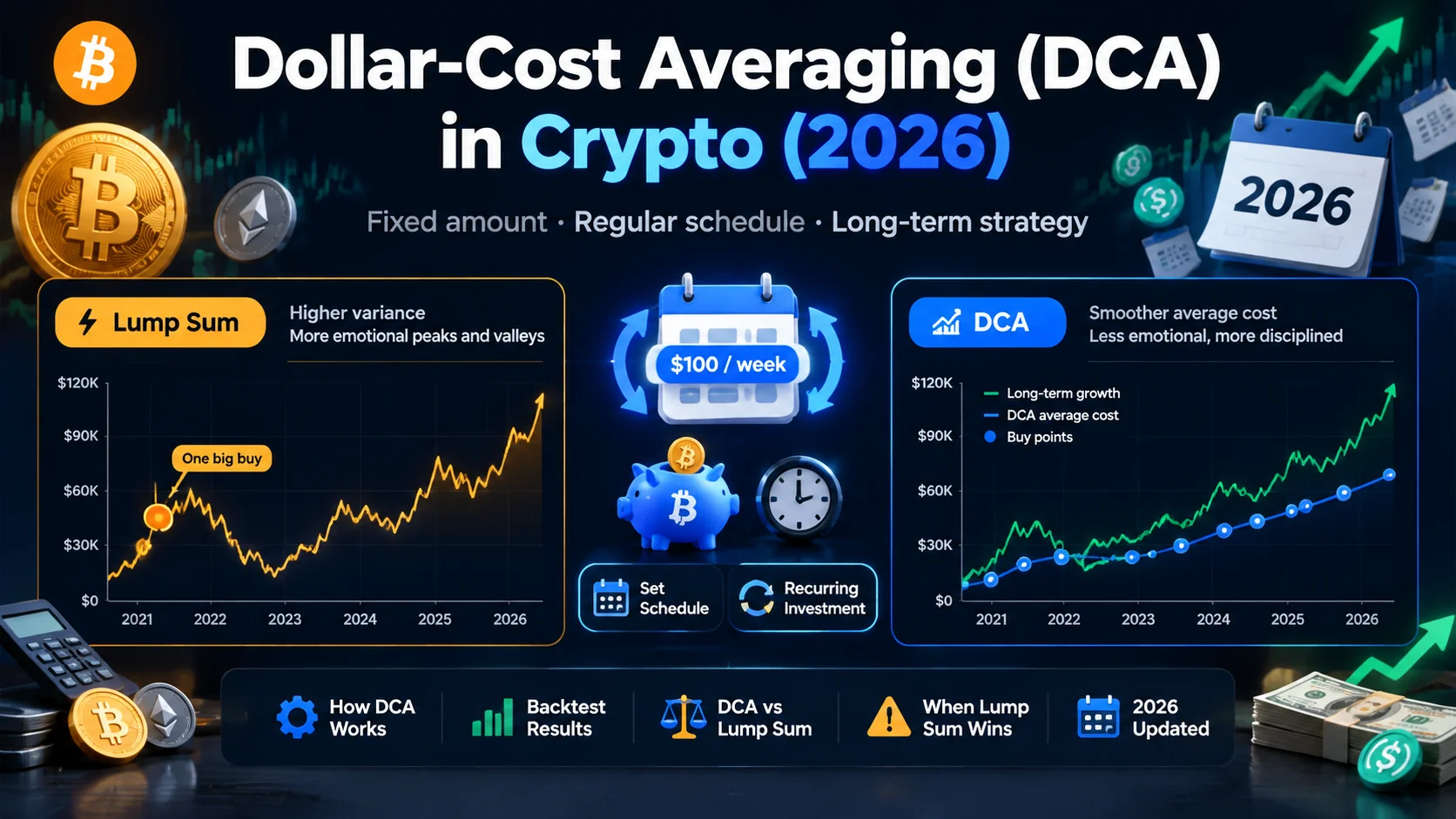
Dollar-Cost Averaging (DCA) in Crypto (2026)
Dollar-cost averaging buys a fixed dollar amount of crypto on a set schedule. Learn how DCA works, what backtests show, and when lump sum wins.
Crypto Taxes Explained: Rates & Rules (2026)
Selling, swapping, or spending crypto is a taxable event; buying and holding is not. How US crypto taxes work in 2026: rates, rules, and how to file.
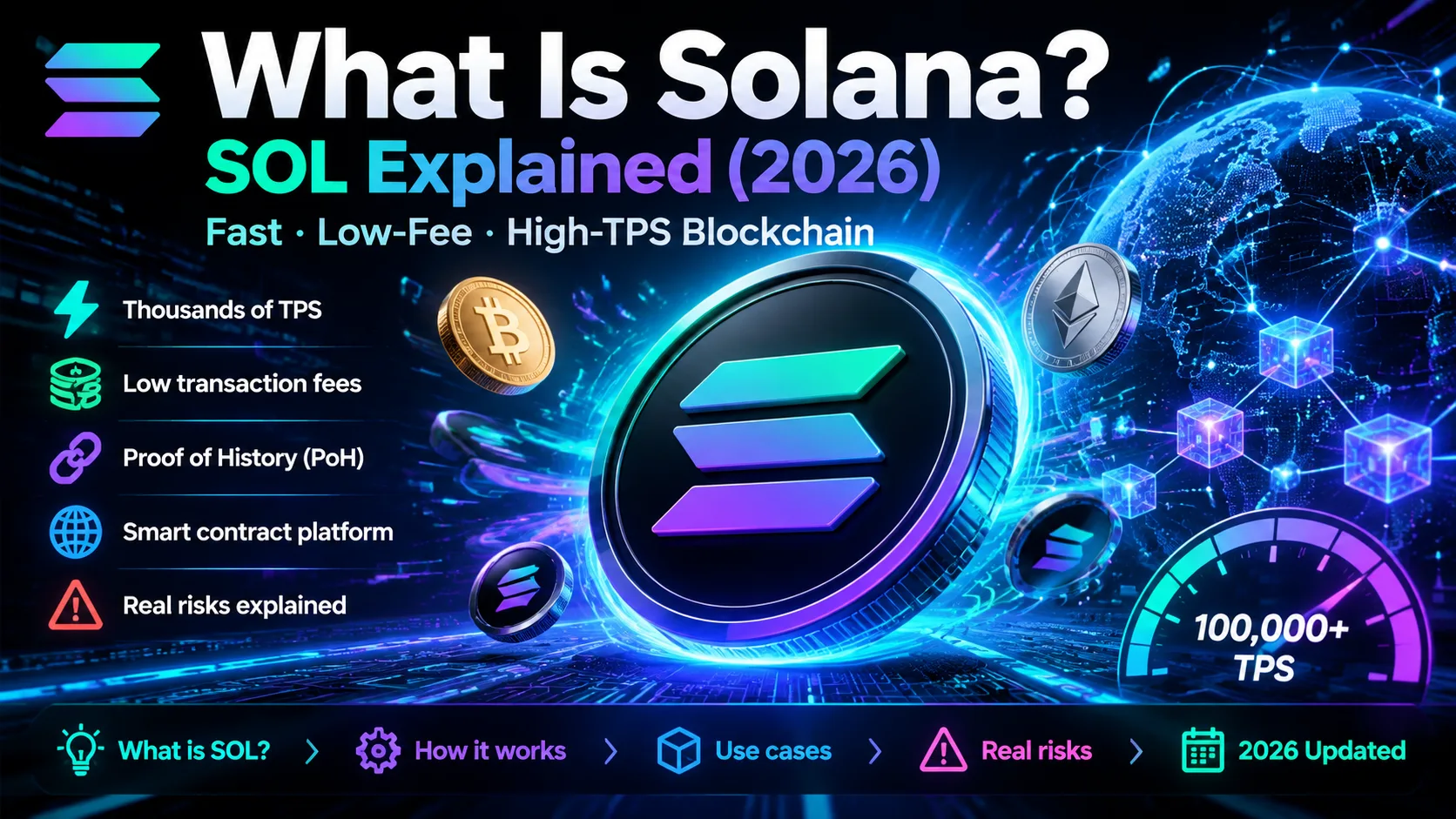
What Is Solana? SOL Explained (2026)
Solana is a fast, low-fee blockchain built to process thousands of transactions per second. Learn what SOL is, how it works, and the real risks.
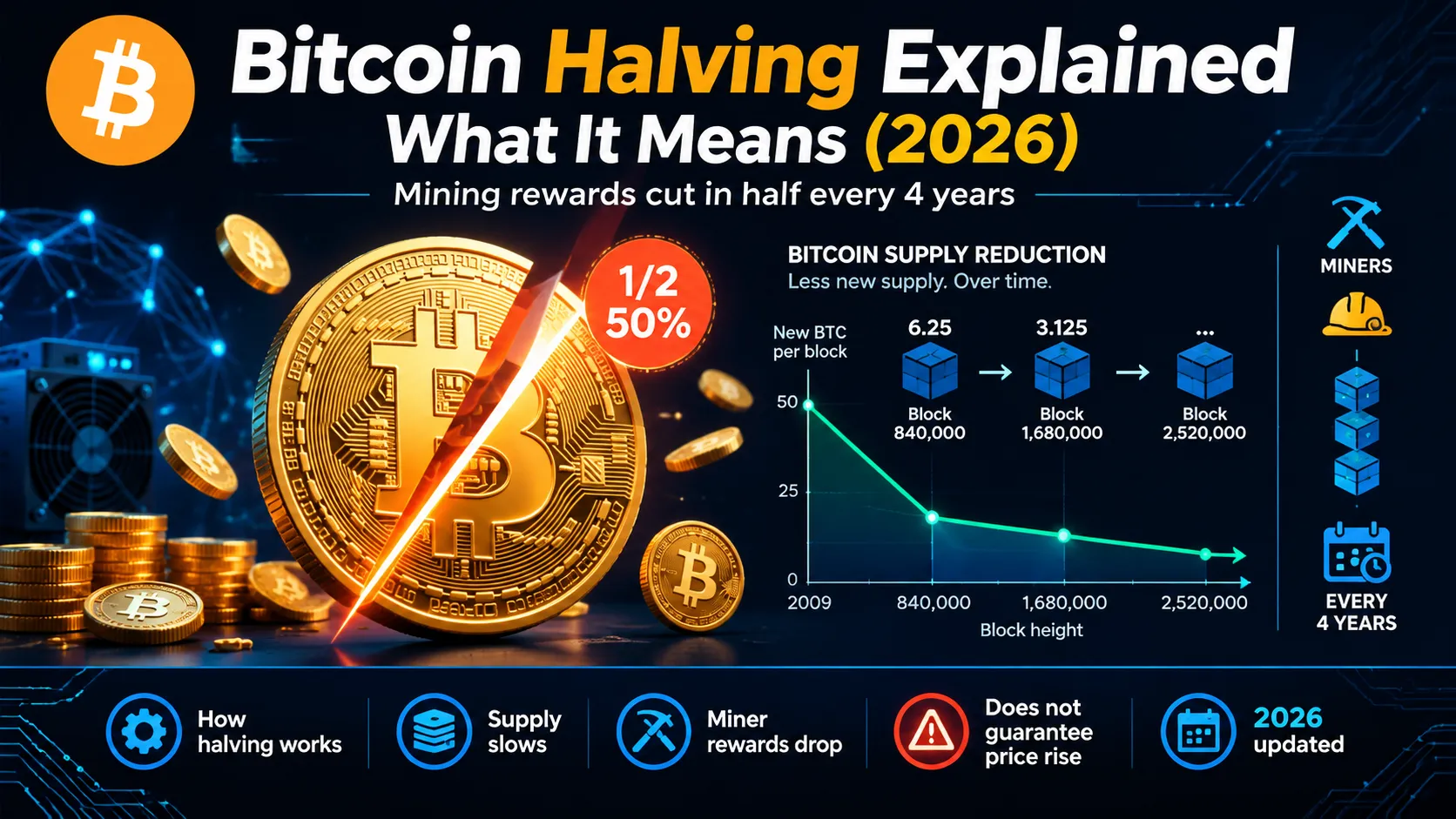
Bitcoin Halving Explained: What It Means (2026)
The halving cuts Bitcoin's mining reward in half every four years, slowing new supply. Learn how it works and why it does not guarantee a price rise.
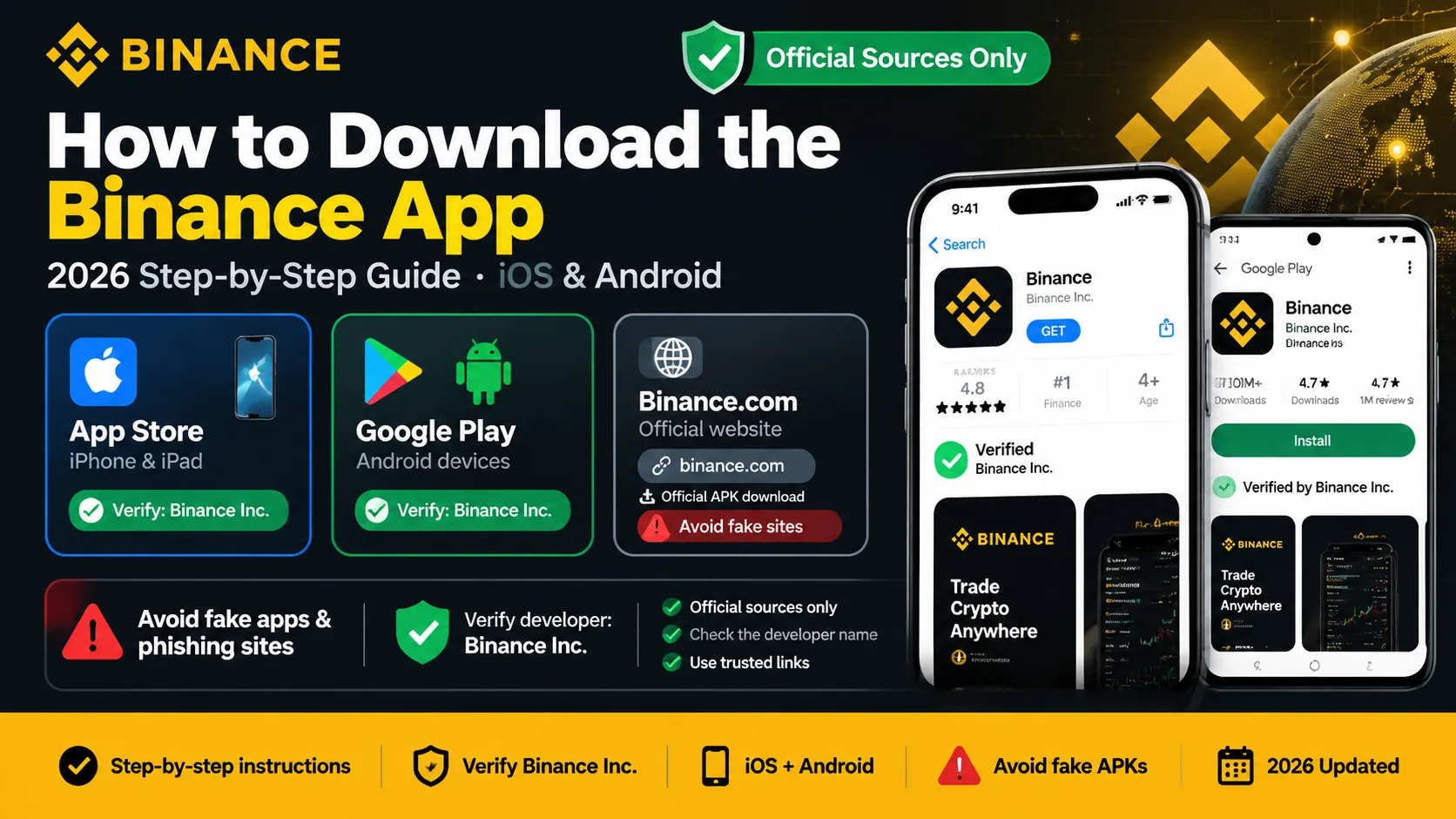
How to Download the Binance App (2026 Guide)
Download the official Binance app only from the App Store, Google Play, or Binance's own download page — and verify the developer is Binance Inc. before you install.
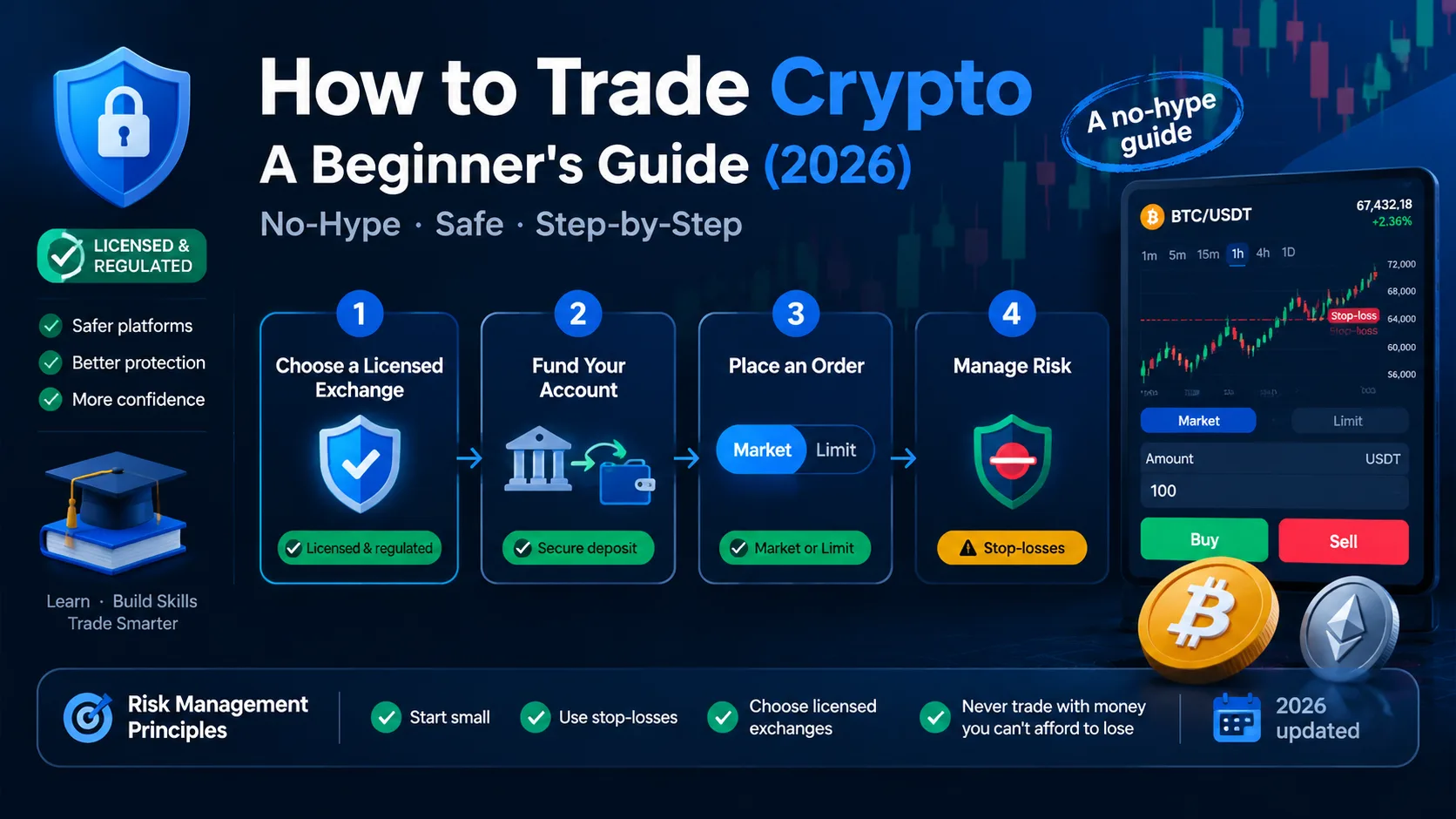
How to Trade Crypto: A Beginner's Guide (2026)
How to trade crypto safely: choose a licensed exchange, fund your account, place a market or limit order, and manage risk with stop-losses. A no-hype guide.
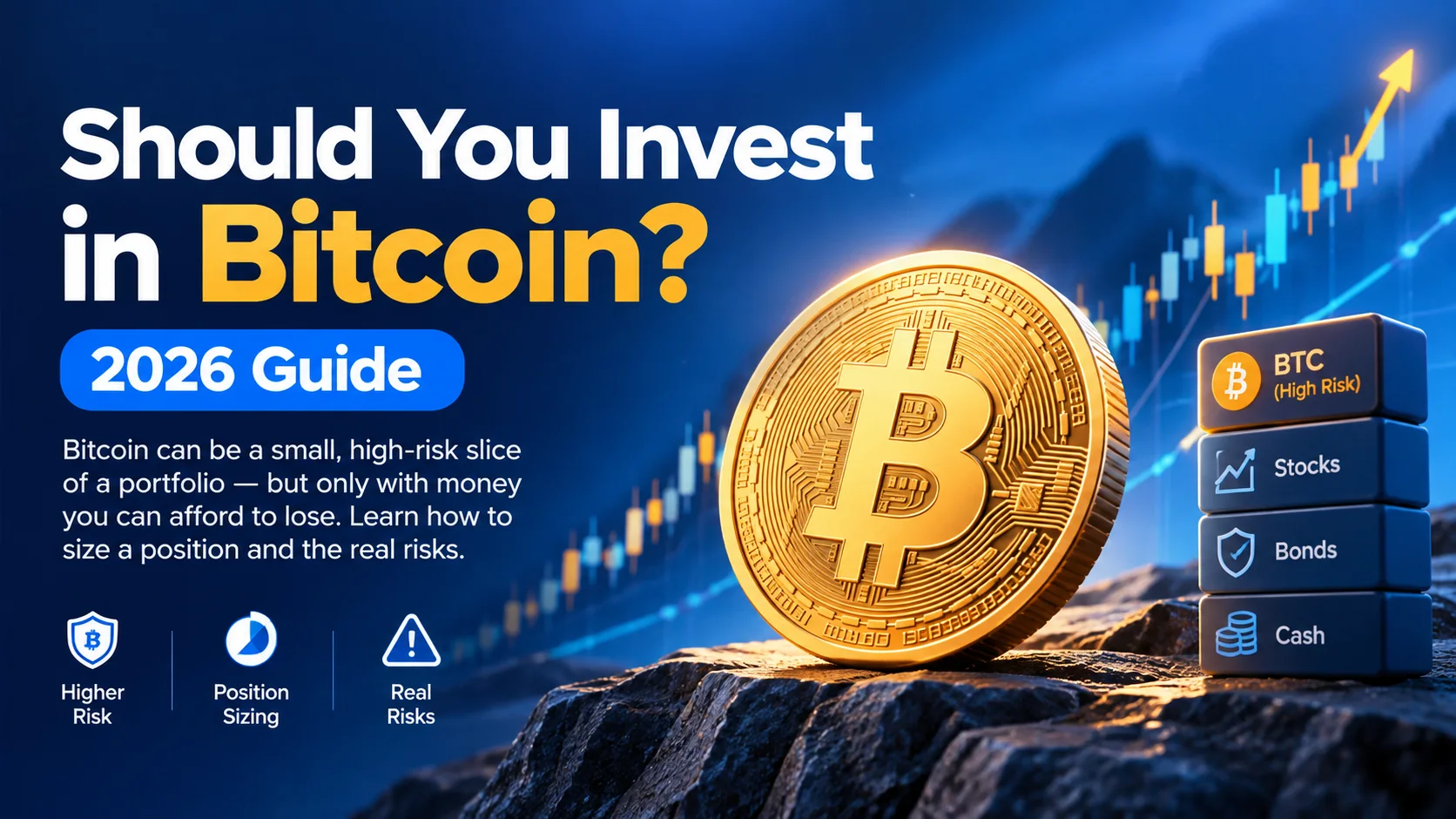
Should You Invest in Bitcoin? (2026 Guide)
Bitcoin can be a small, high-risk slice of a portfolio — but only with money you can afford to lose. Learn how to size a position and the real risks.
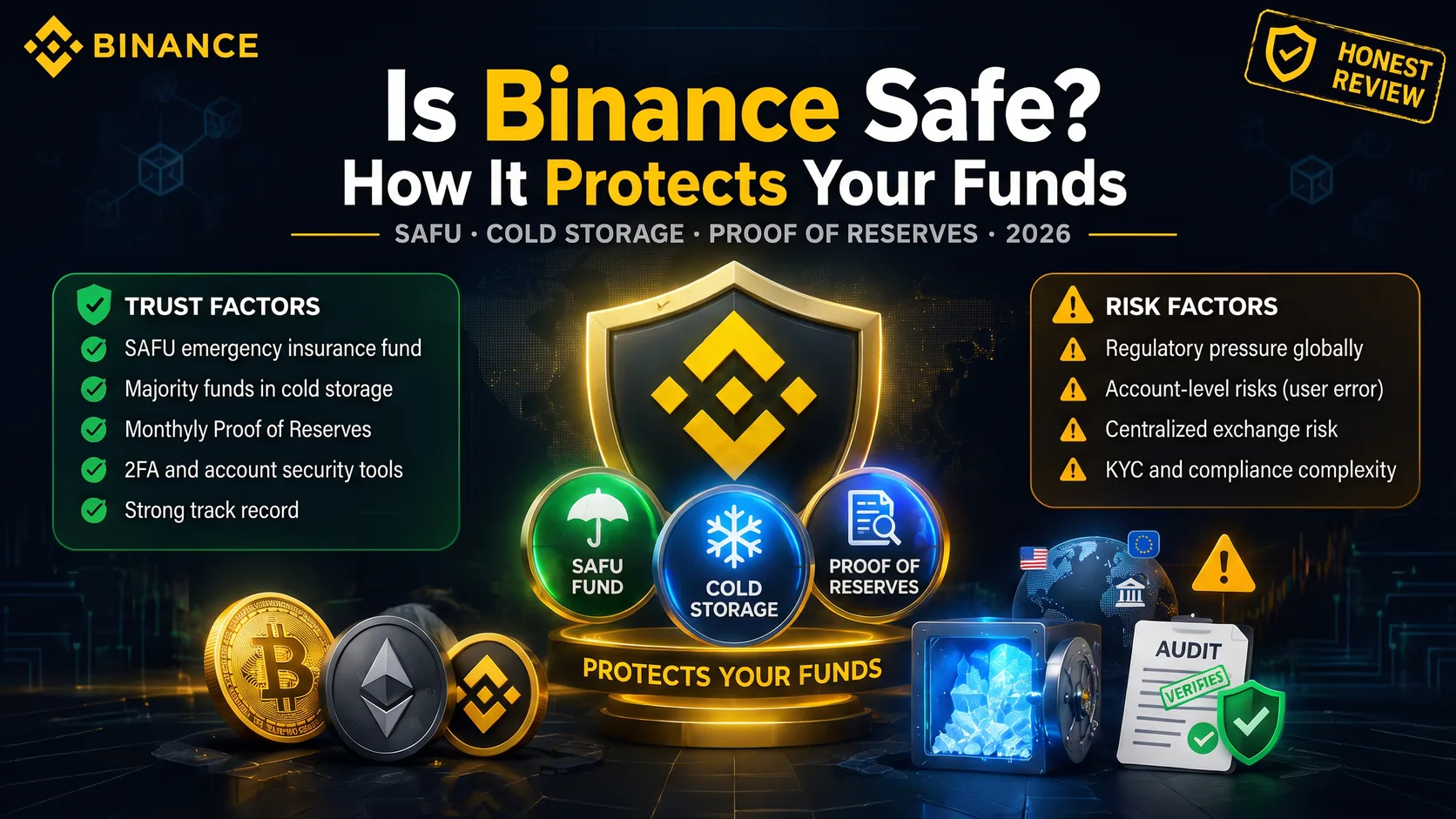
Is Binance Safe? How It Protects Your Funds
Is Binance safe in 2026? What the $6.3B October 2026 hack actually cost users (nothing), how SAFU, cold storage and zk Proof of Reserves work, and where the real risks are.
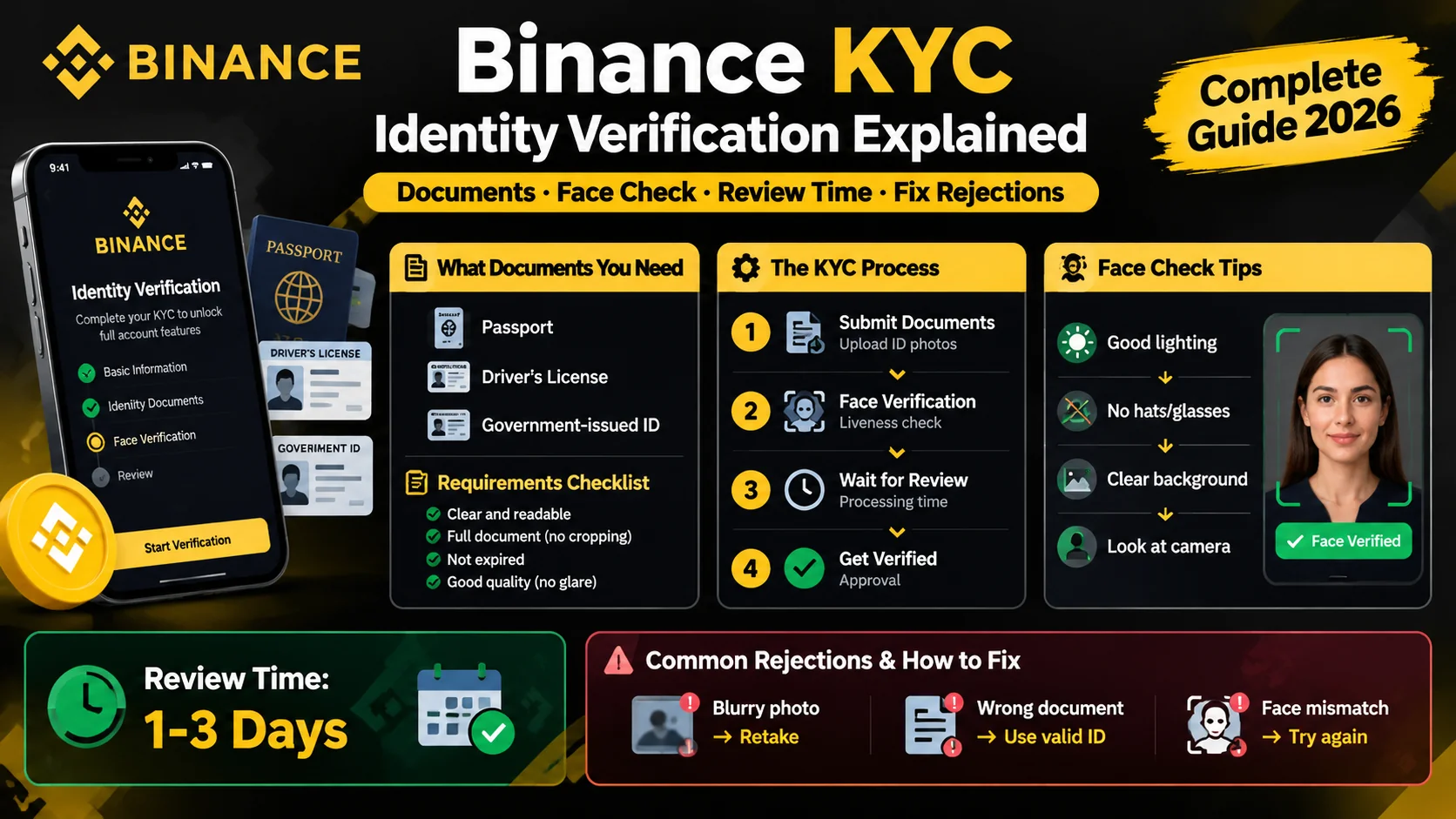
Binance KYC: How Identity Verification Works
Binance requires KYC before you trade. Learn the documents you need, how the face check works, how long review takes, and how to fix rejections.
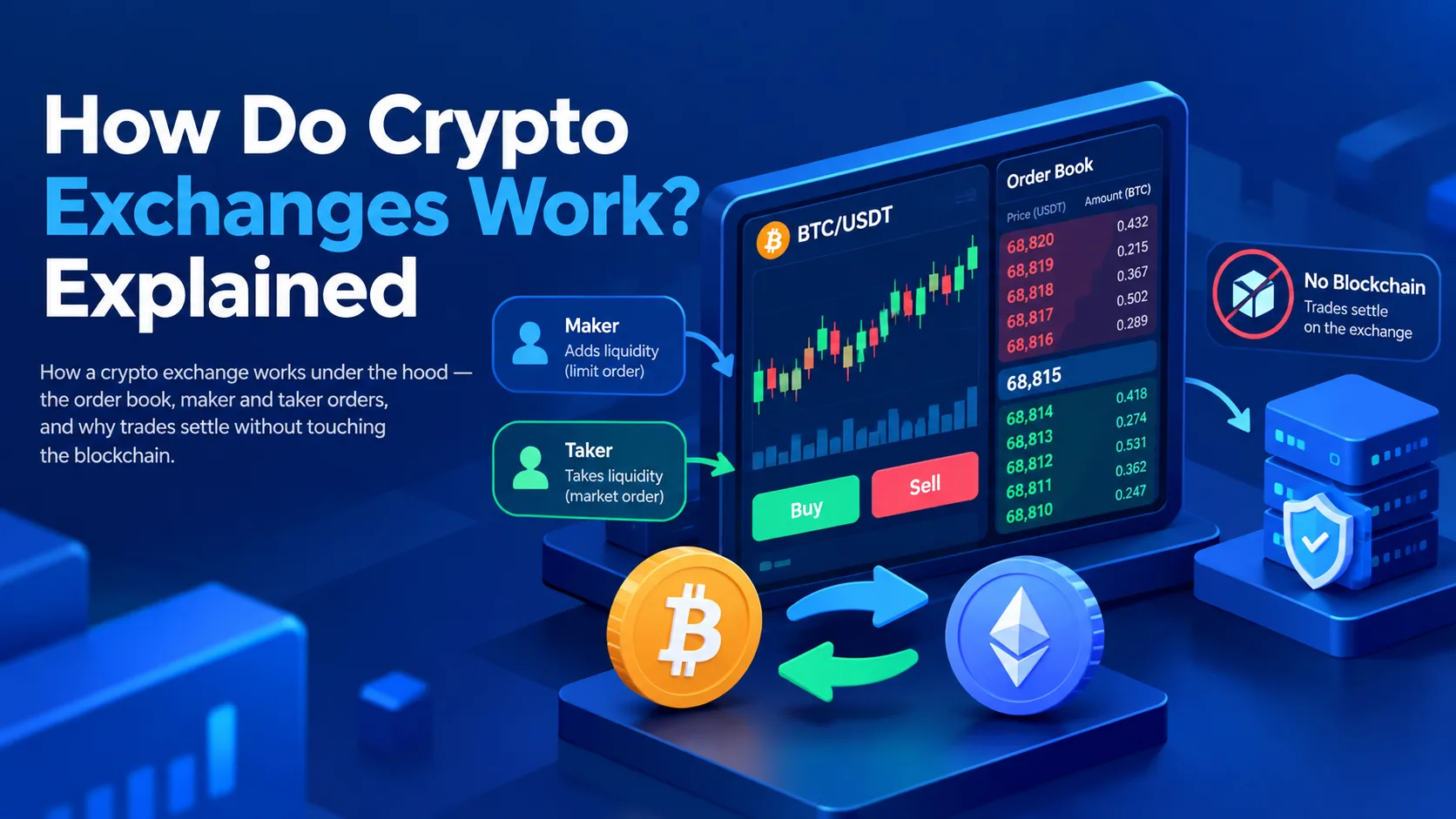
How Do Crypto Exchanges Work? Explained
How a crypto exchange works under the hood — the order book, maker and taker orders, and why trades settle without touching the blockchain.
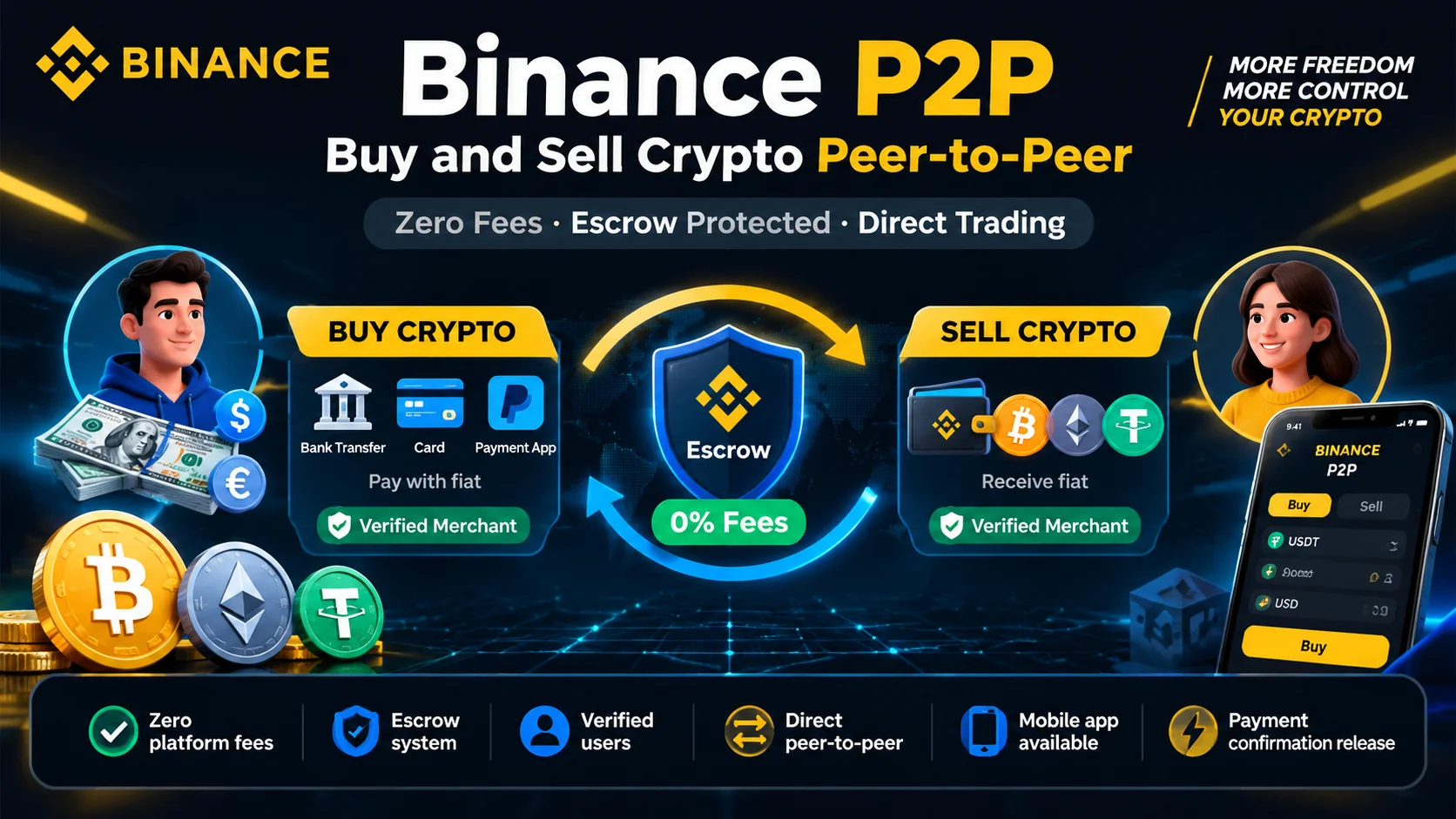
Binance P2P: Buy and Sell Crypto Peer-to-Peer
How Binance P2P works — buy and sell crypto directly with other users, with zero fees and an escrow system that holds funds until payment is confirmed.
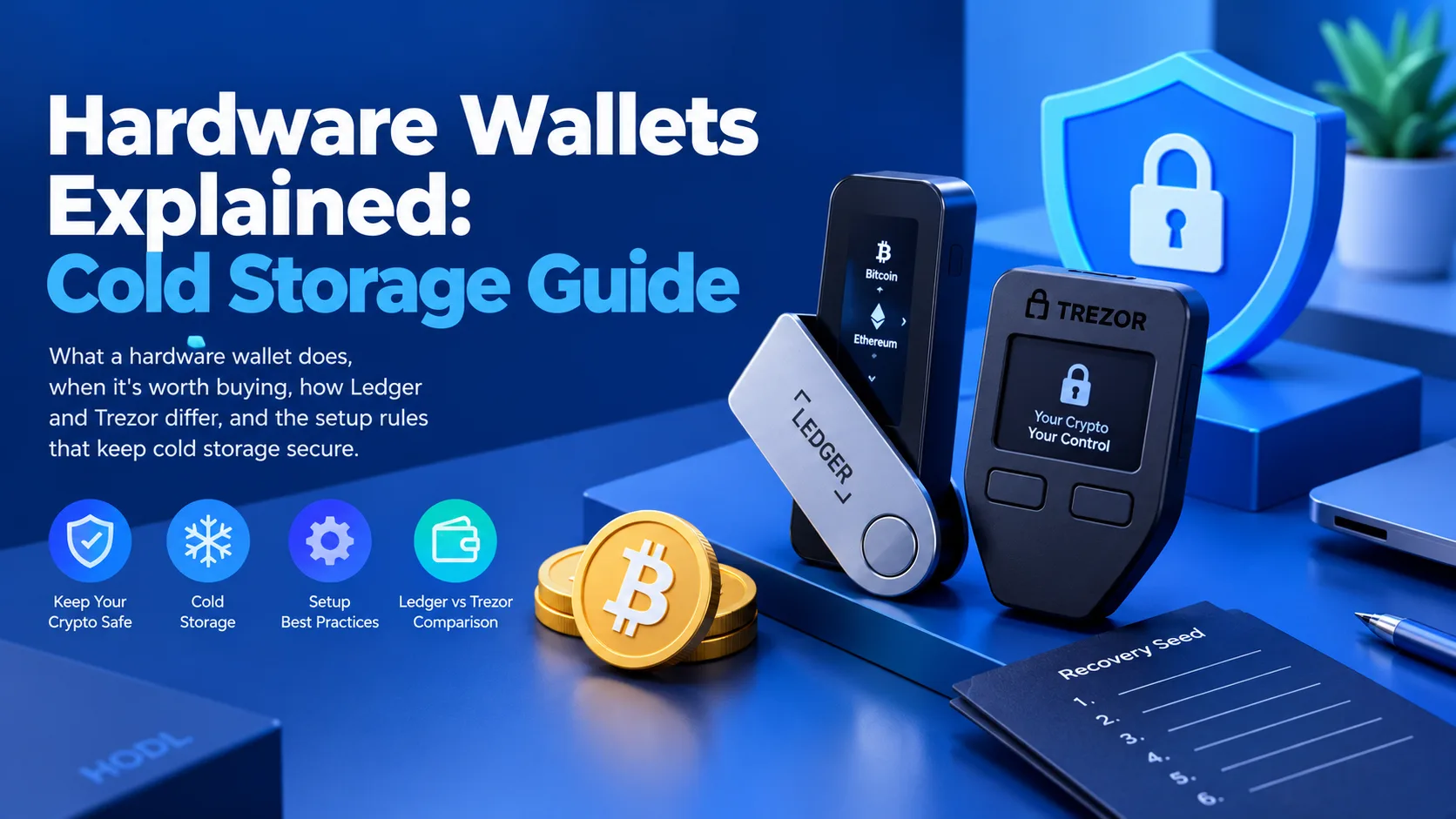
Hardware Wallets Explained: Cold Storage Guide
What a hardware wallet does, when it's worth buying, how Ledger and Trezor differ, and the setup rules that keep cold storage secure.
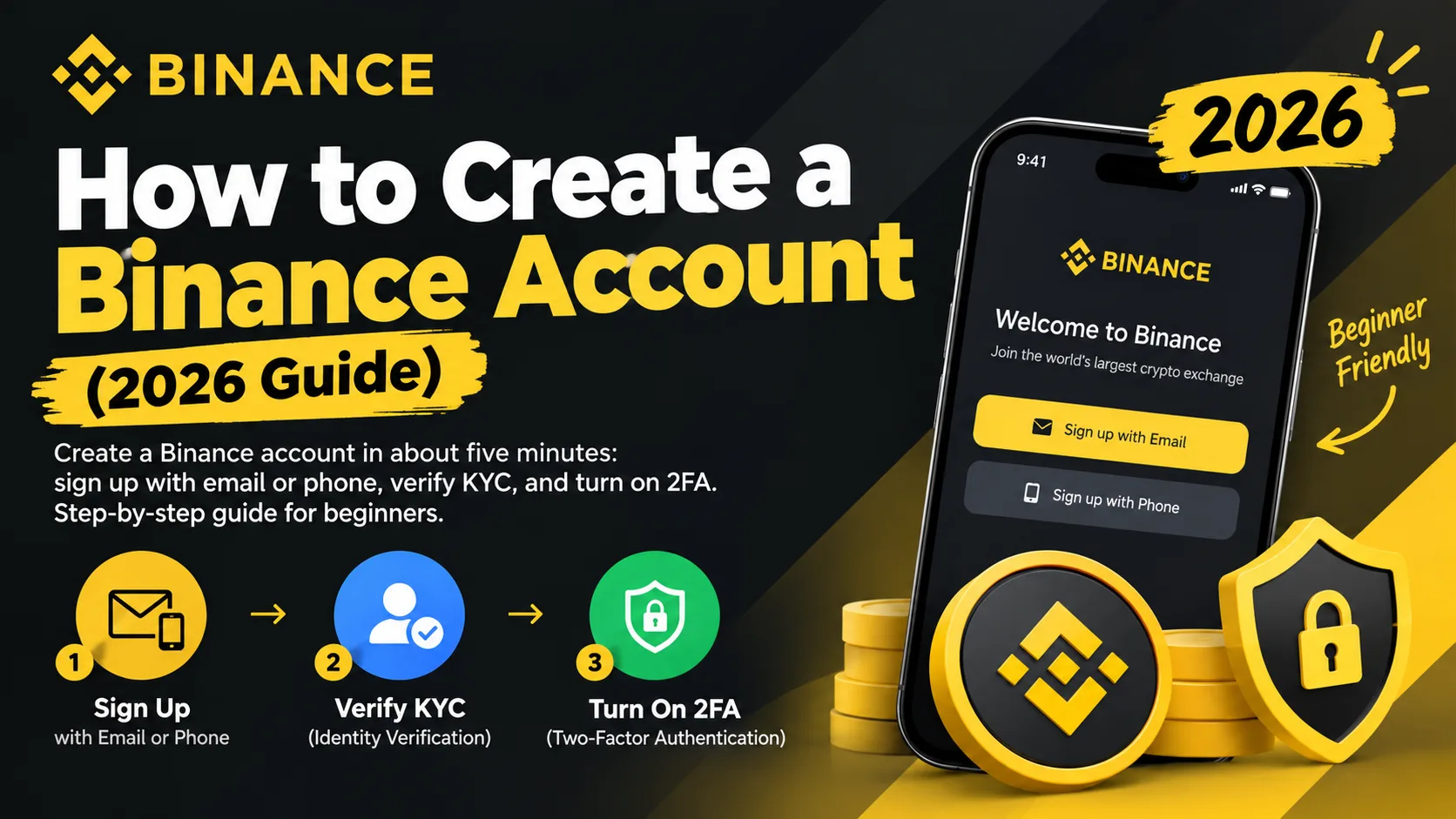
How to Sign Up for Binance (2026 Guide)
Sign up for Binance in about five minutes: create your account with email or phone, verify KYC, and turn on 2FA. Step-by-step guide for beginners.
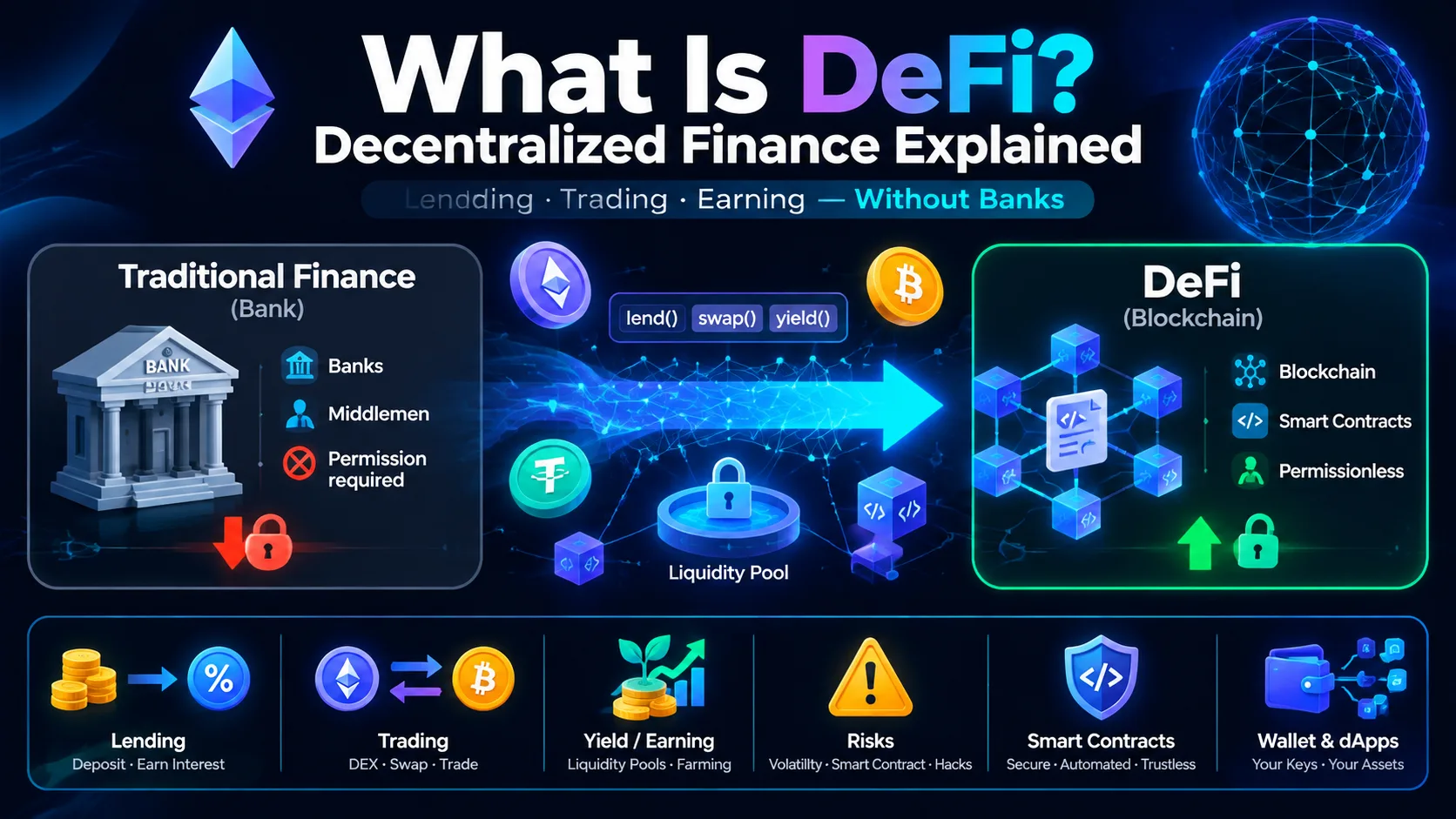
What Is DeFi? Decentralized Finance Explained
DeFi is financial services — lending, trading, and earning — rebuilt on blockchains instead of banks. Learn how it works and the risks.
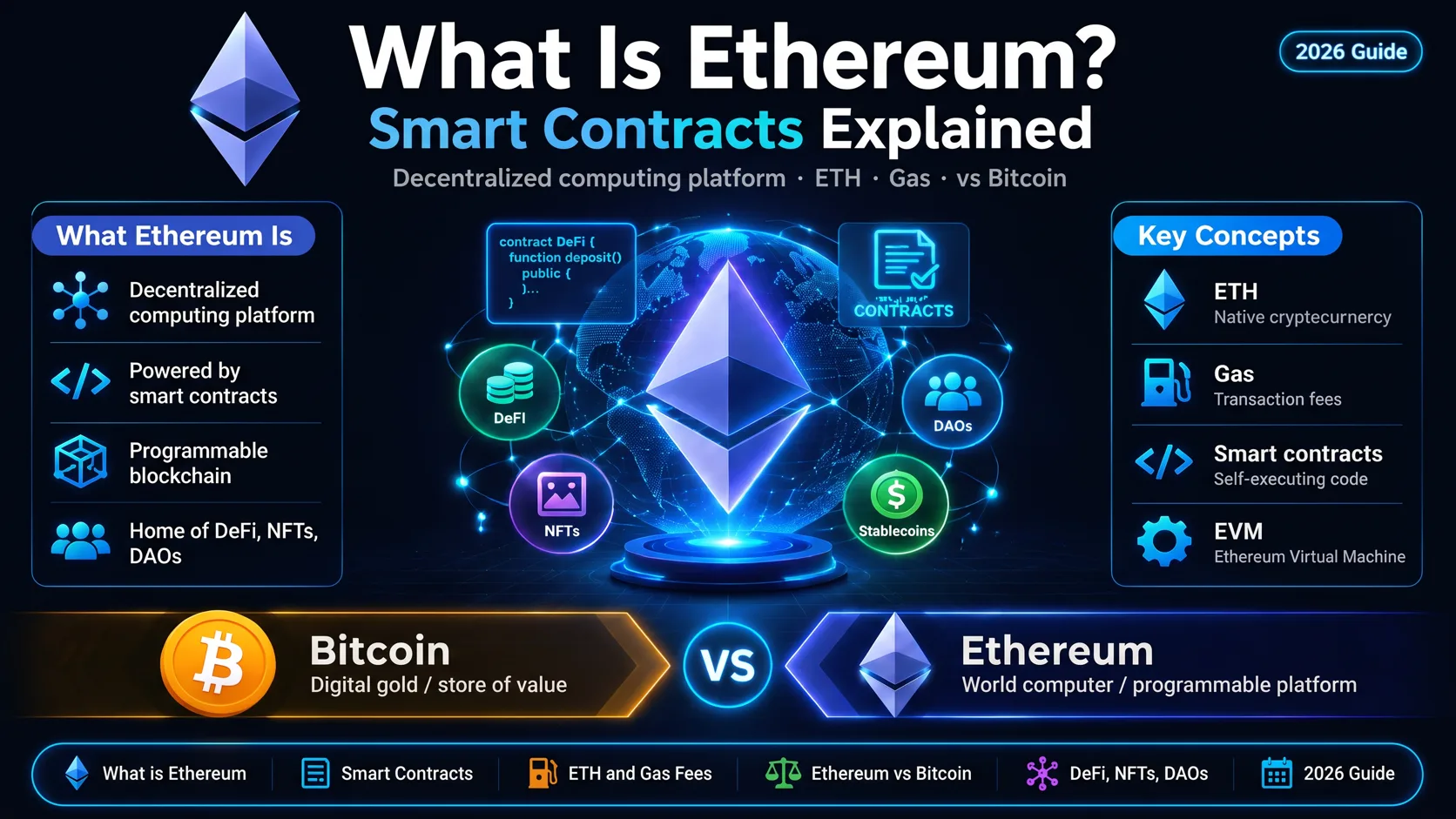
What Is Ethereum? Smart Contracts Explained
Ethereum is a decentralized computing platform powered by smart contracts. Learn how it works, what ETH and gas fees are, and how it differs from Bitcoin.
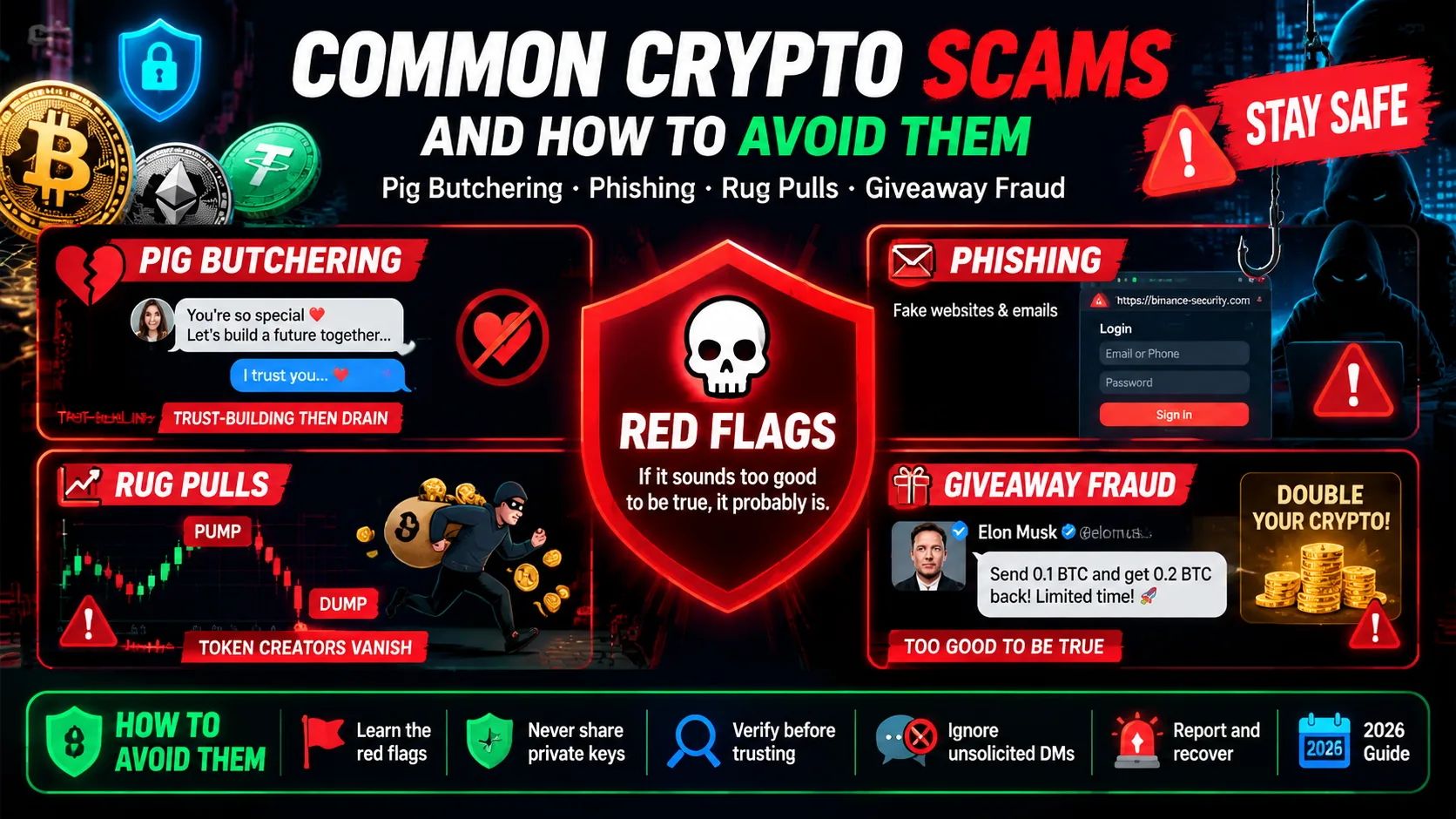
Common Crypto Scams and How to Avoid Them
The most common crypto scams — pig butchering, phishing, rug pulls, and giveaway fraud — how each works, the red flags, and what to do if scammed.
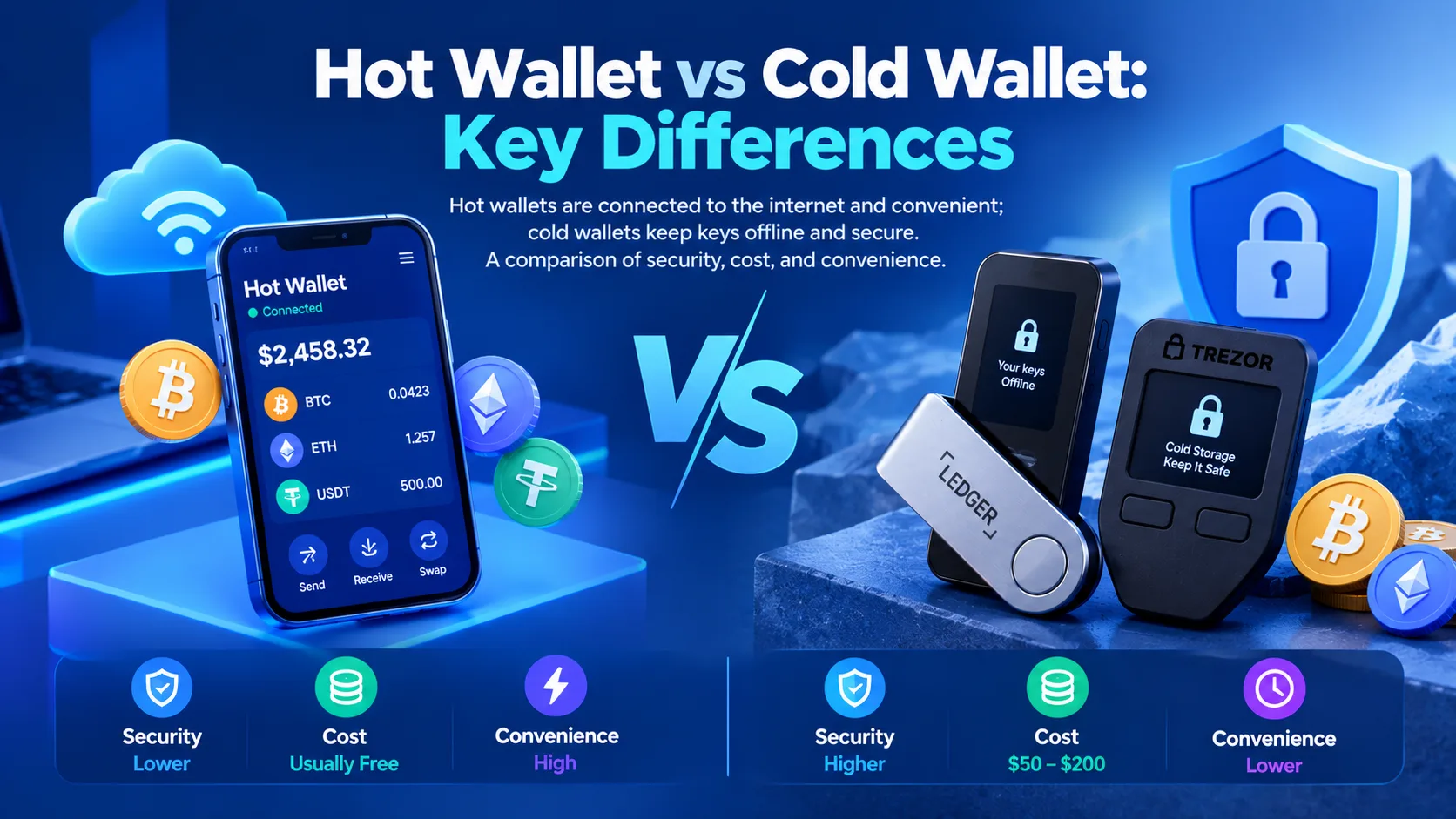
Hot Wallet vs Cold Wallet: Key Differences
Hot wallets are connected to the internet and convenient; cold wallets keep keys offline and secure. A comparison of security, cost, and convenience.
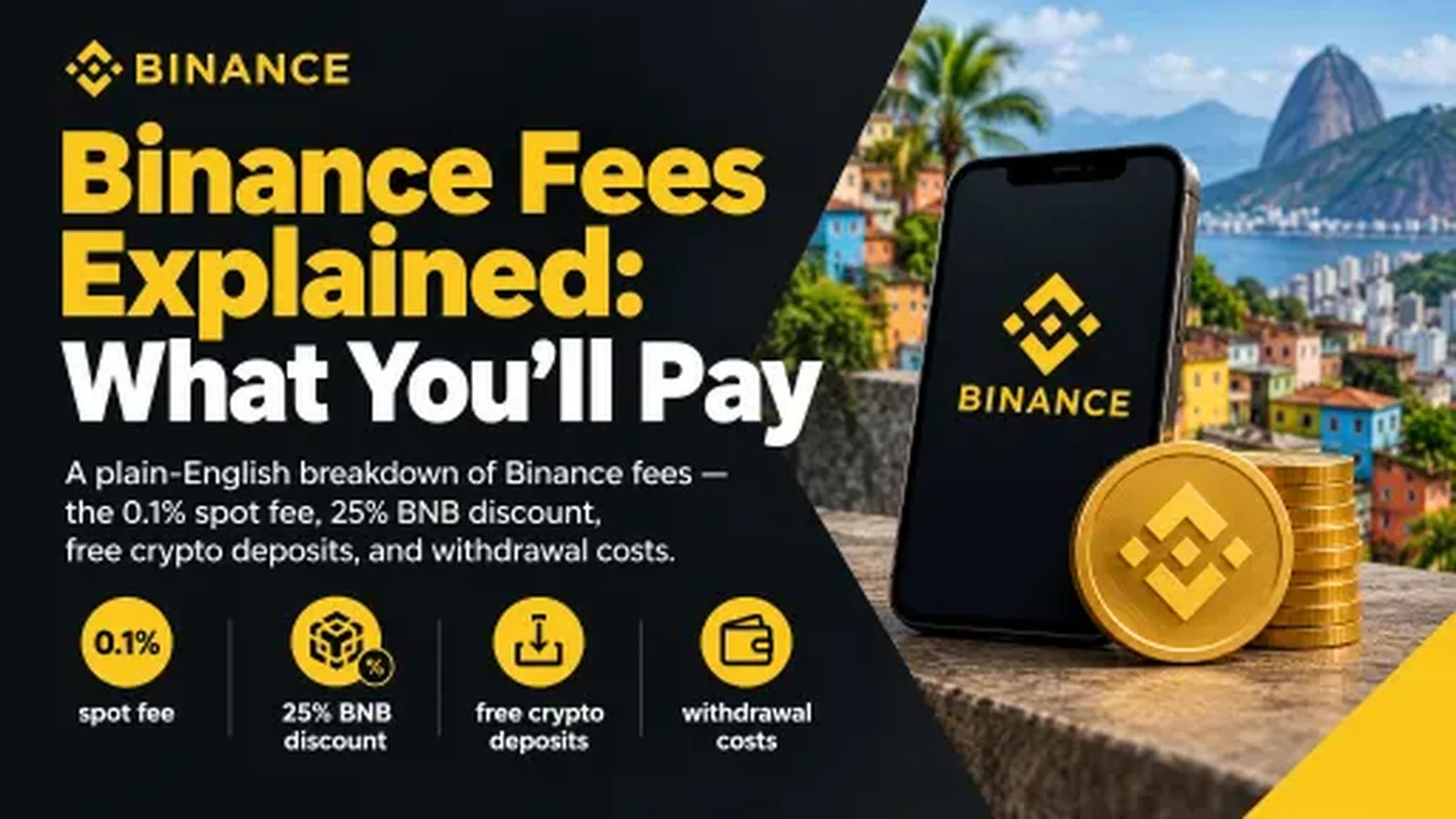
Binance Fees Explained: What You'll Pay
A plain-English breakdown of Binance fees — the 0.1% spot fee, 25% BNB discount, free crypto deposits, and withdrawal costs.
How to Withdraw from Binance (Crypto & Fiat)
How to withdraw from Binance — crypto to an external wallet or fiat to your bank — plus the fees, limits, and security settings that protect your funds.
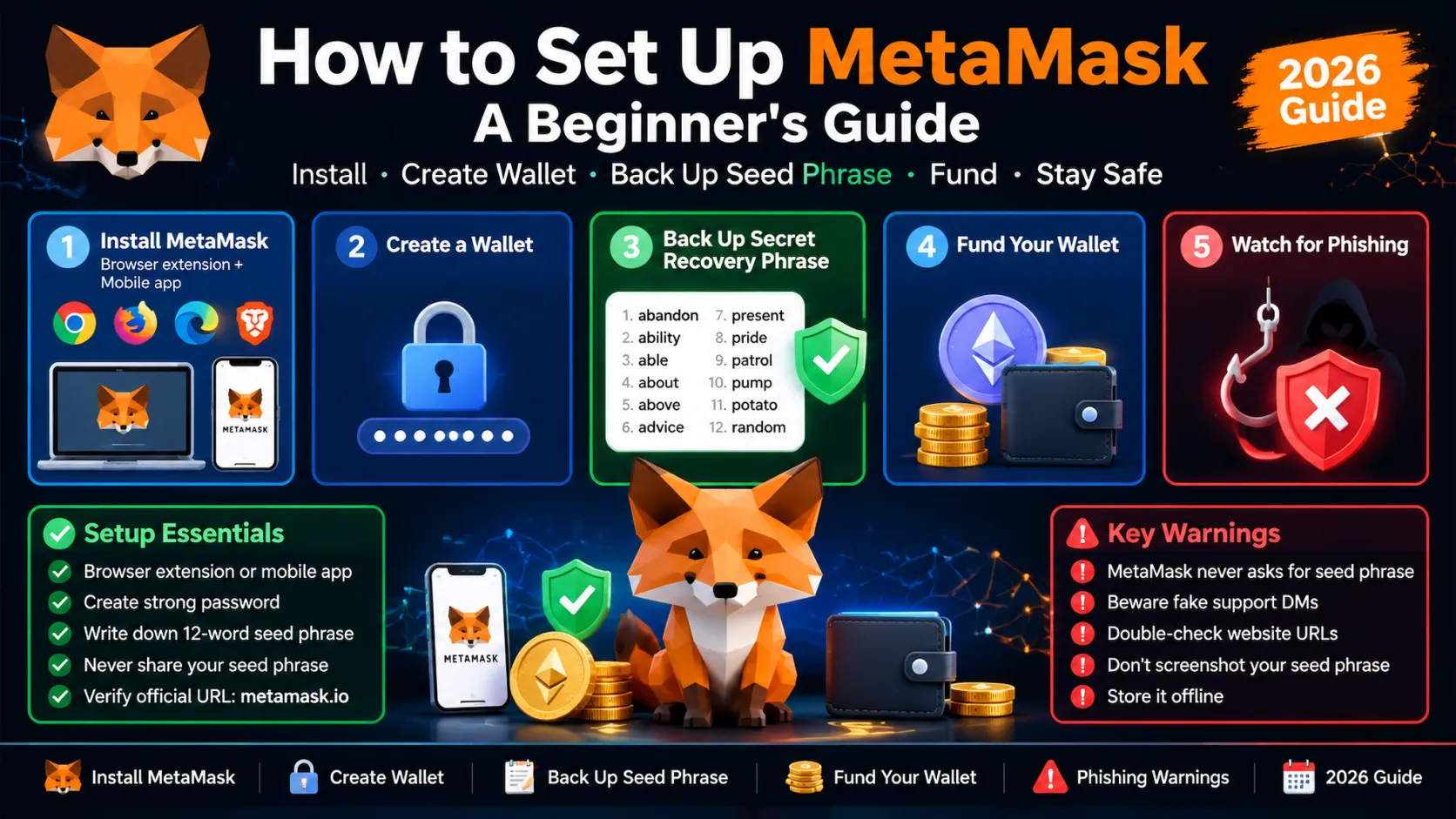
How to Set Up MetaMask: A Beginner's Guide
How to install MetaMask, create a wallet, and back up your secret recovery phrase — plus how to fund it and the phishing warnings to watch for.
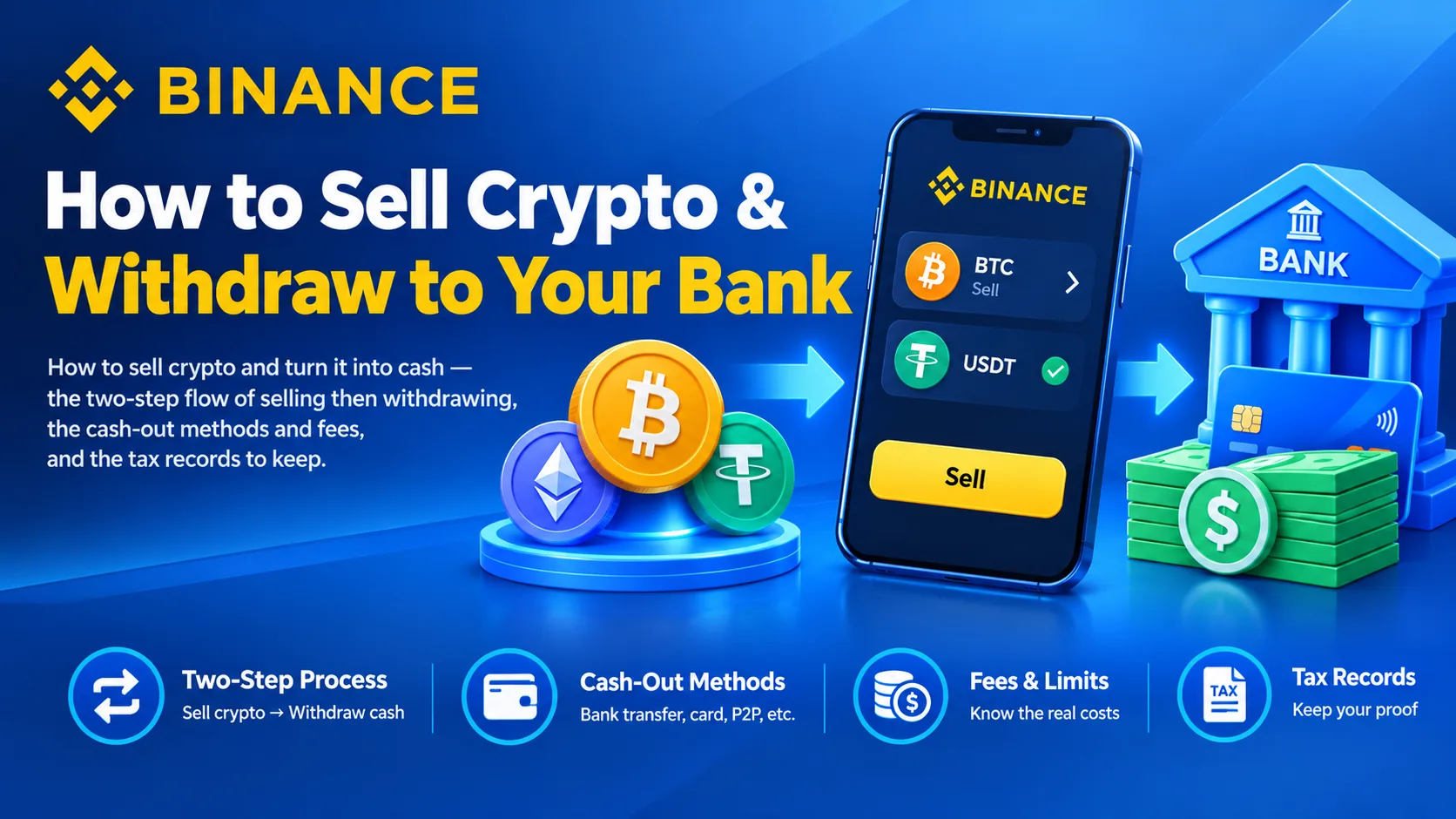
How to Sell Crypto & Withdraw to Your Bank
How to sell crypto and turn it into cash — the two-step flow of selling then withdrawing, the cash-out methods and fees, and the tax records to keep.
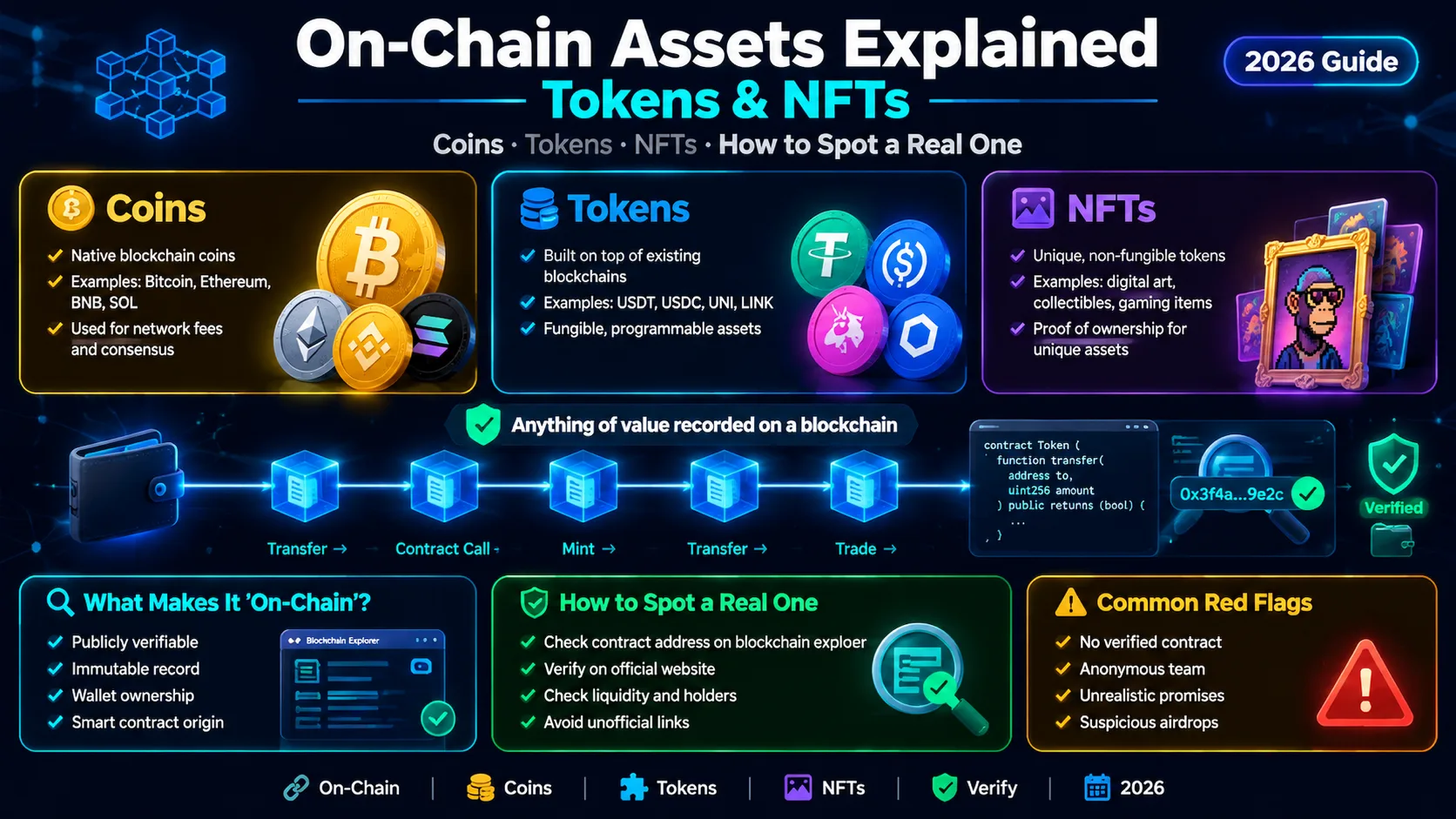
On-Chain Assets Explained: Tokens & NFTs
An on-chain asset is anything of value recorded on a blockchain — coins, tokens, and NFTs. Learn the three families and how to spot a real one.
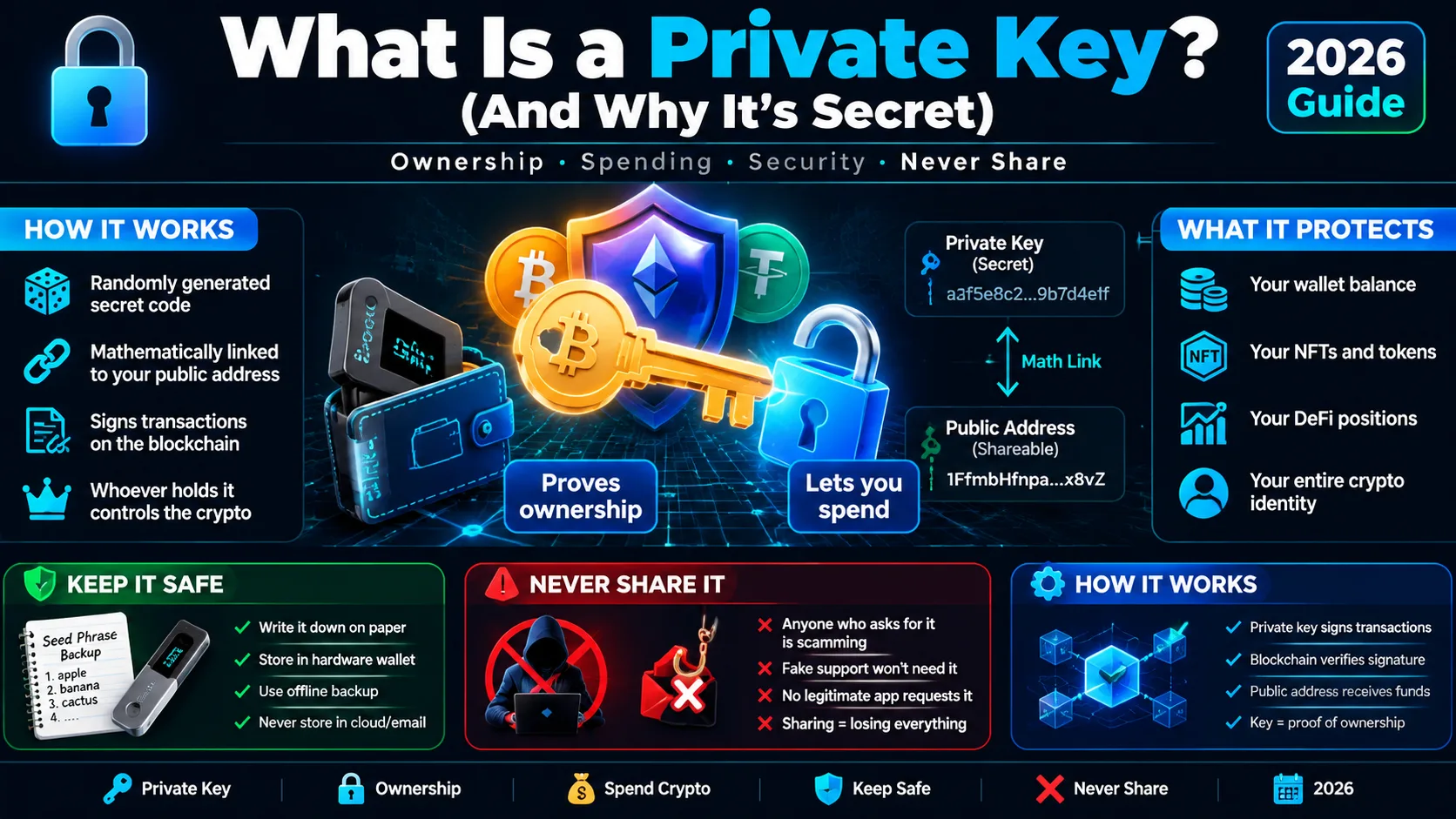
What Is a Private Key? (And Why It's Secret)
A private key is the secret code that proves you own your crypto and lets you spend it. Learn how it works and how to keep it safe.
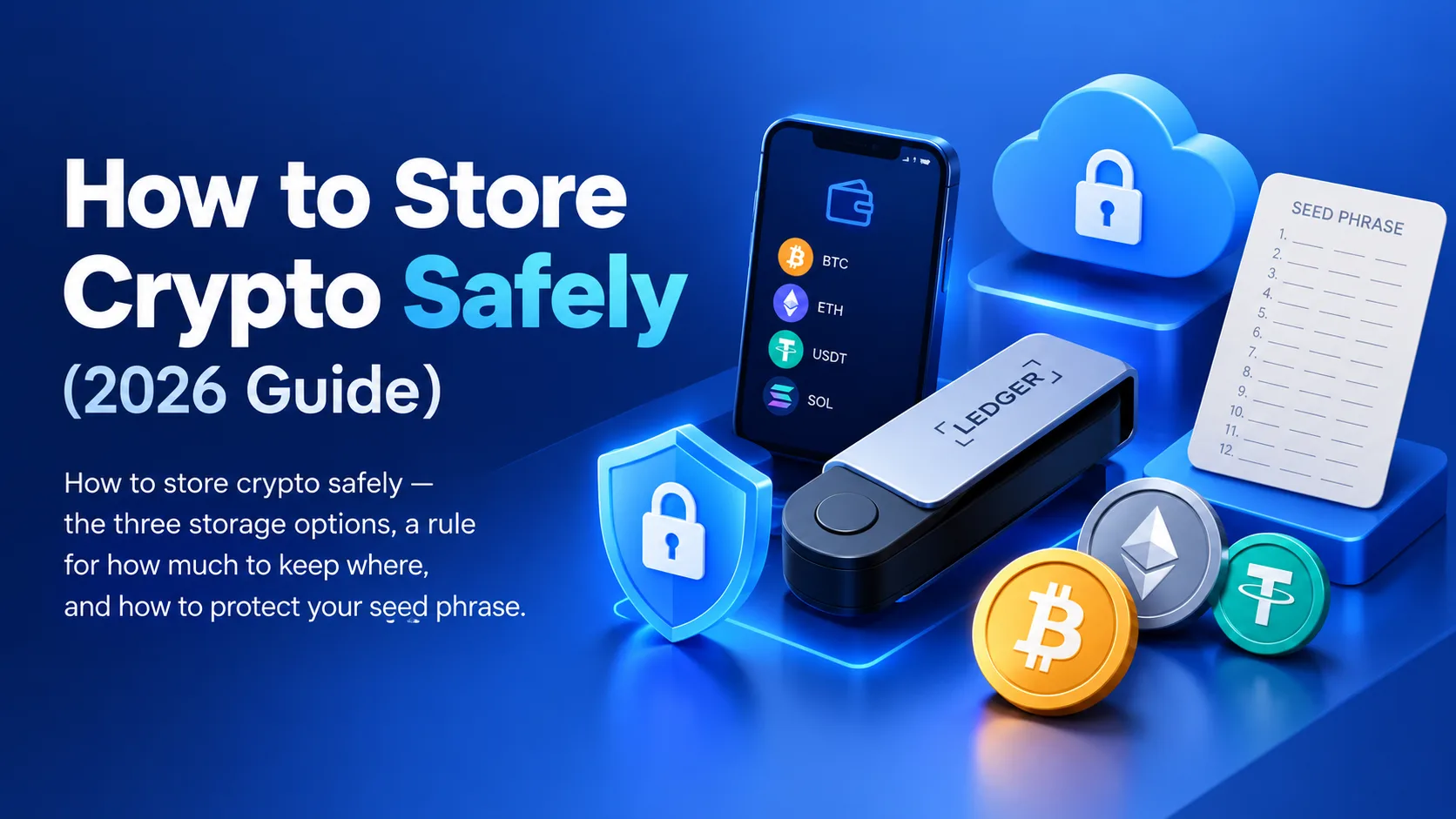
How to Store Crypto Safely (2026 Guide)
How to store crypto safely — the three storage options, a rule for how much to keep where, and how to protect your seed phrase.
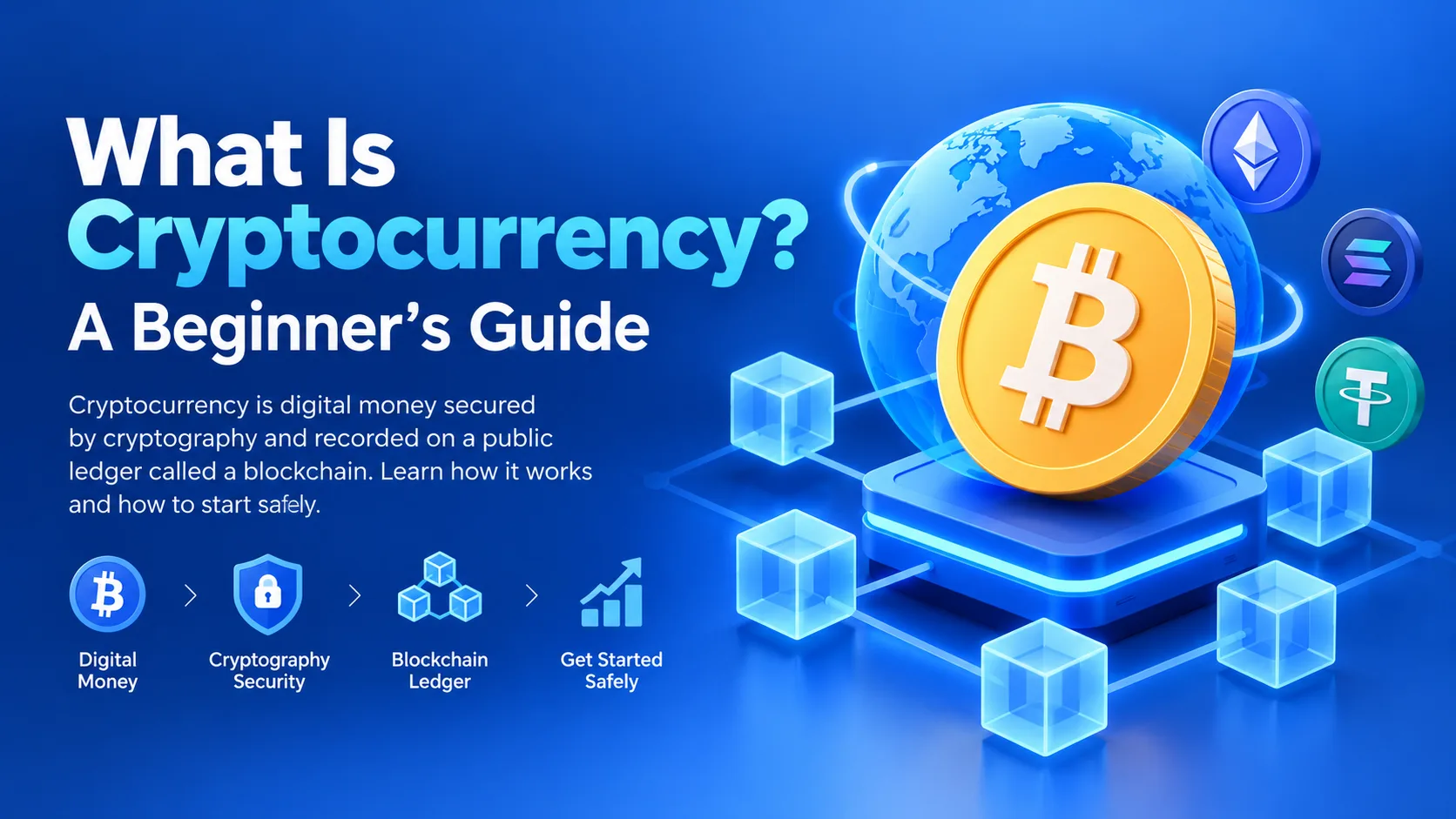
What Is Cryptocurrency? A Beginner's Guide
Cryptocurrency is digital money secured by cryptography and recorded on a public ledger called a blockchain. Learn how it works and how to start safely.
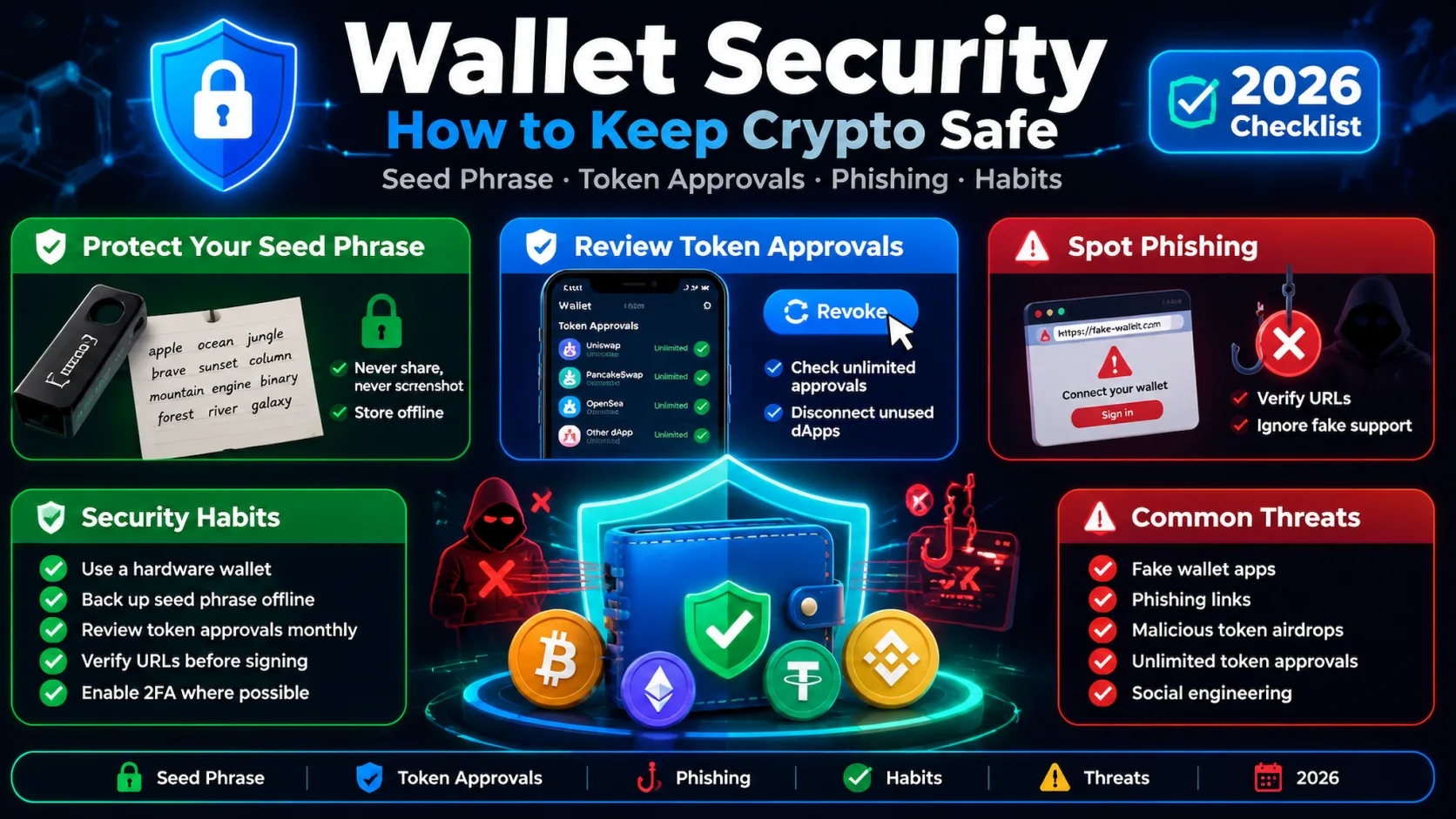
Wallet Security: How to Keep Crypto Safe
The wallet security habits that prevent losses — protecting your seed phrase, reviewing token approvals, and spotting phishing — in one checklist.
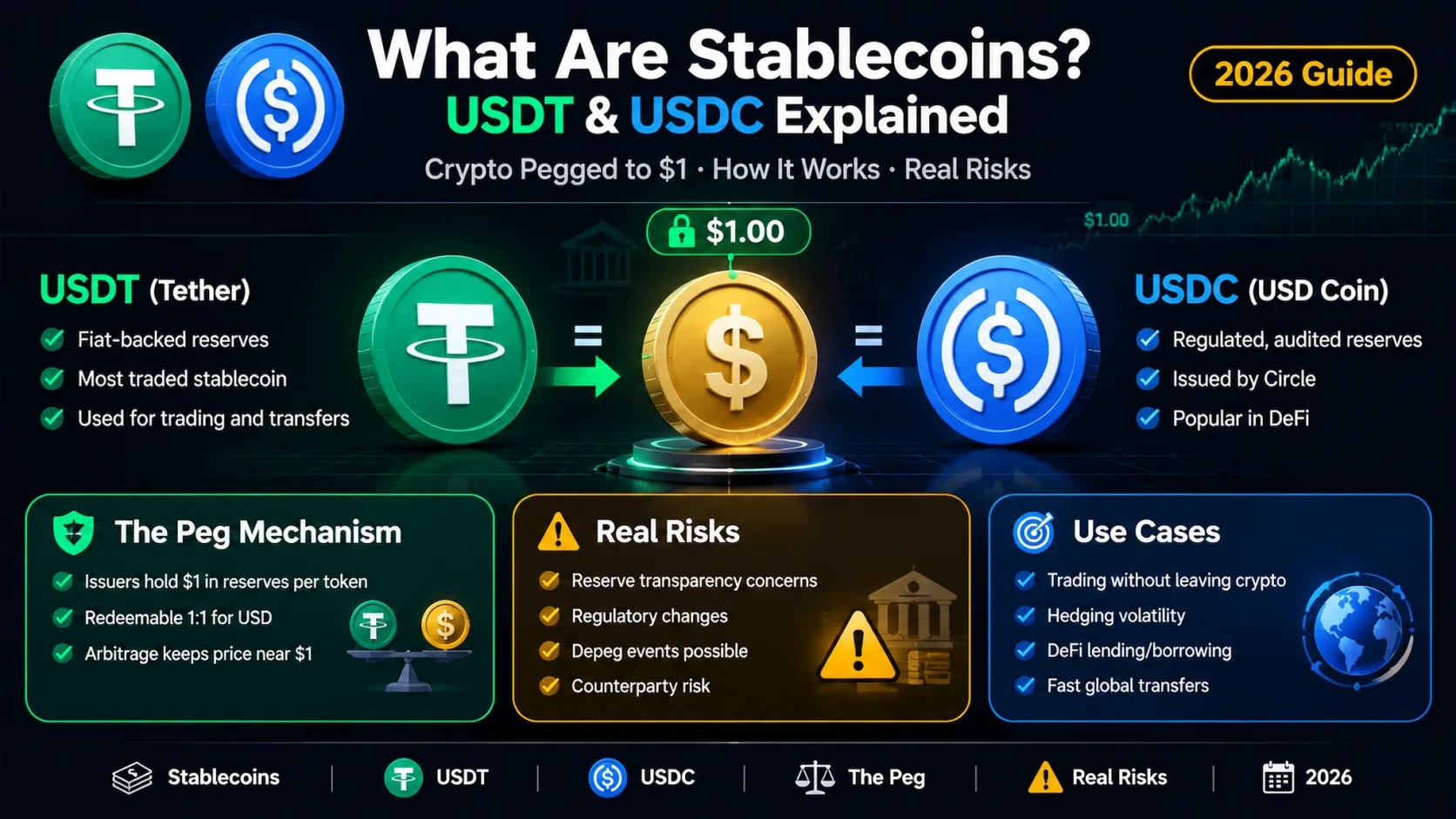
What Are Stablecoins? USDT & USDC Explained
A stablecoin is a cryptocurrency built to hold a fixed value, usually $1. Learn how USDT and USDC stay pegged and the real risks.
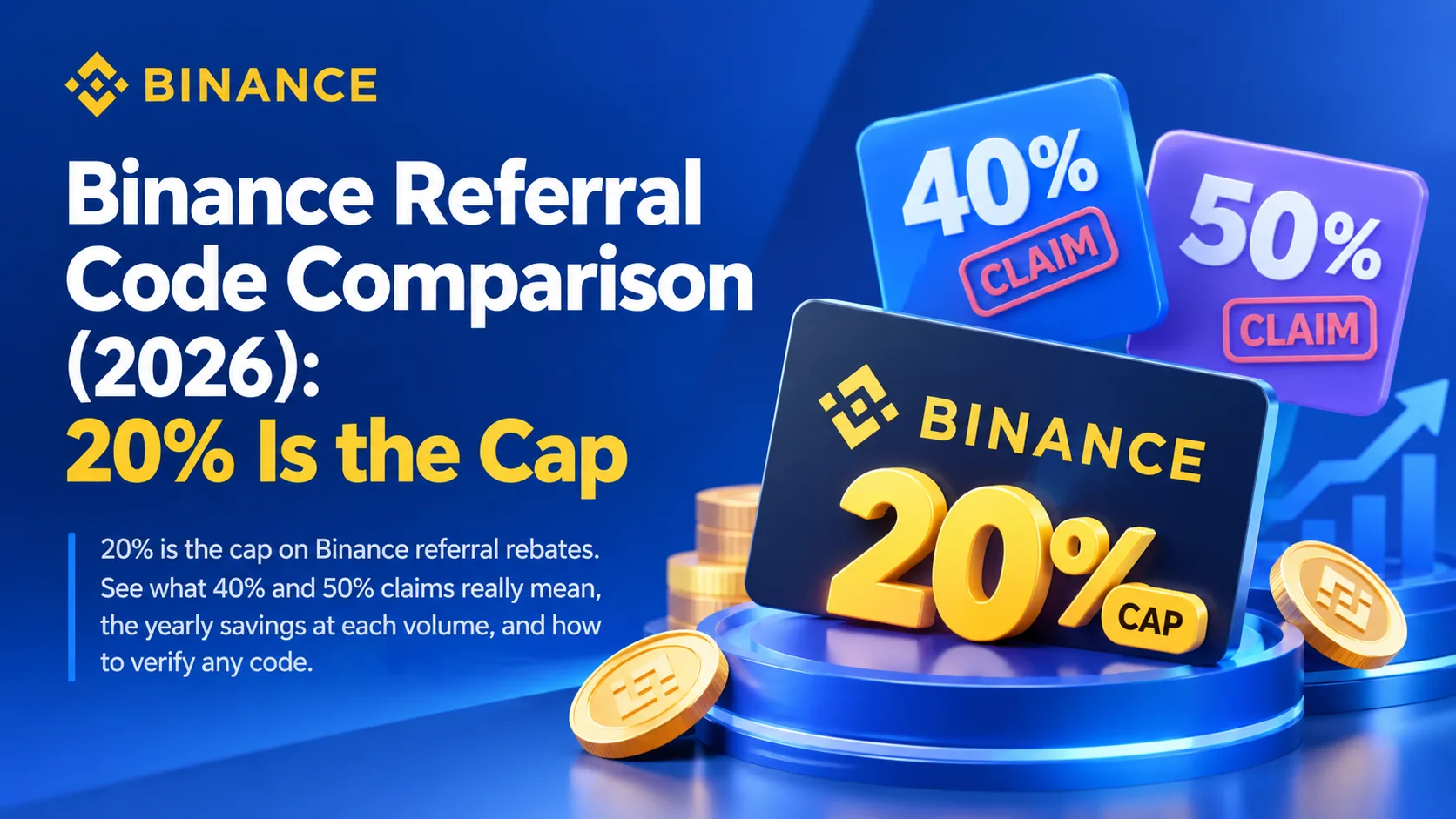
Binance Referral Code Comparison (2026): 20% Is the Cap
20% is the cap on Binance referral rebates. See what 40% and 50% claims really mean, the yearly savings at each volume, and how to verify any code.
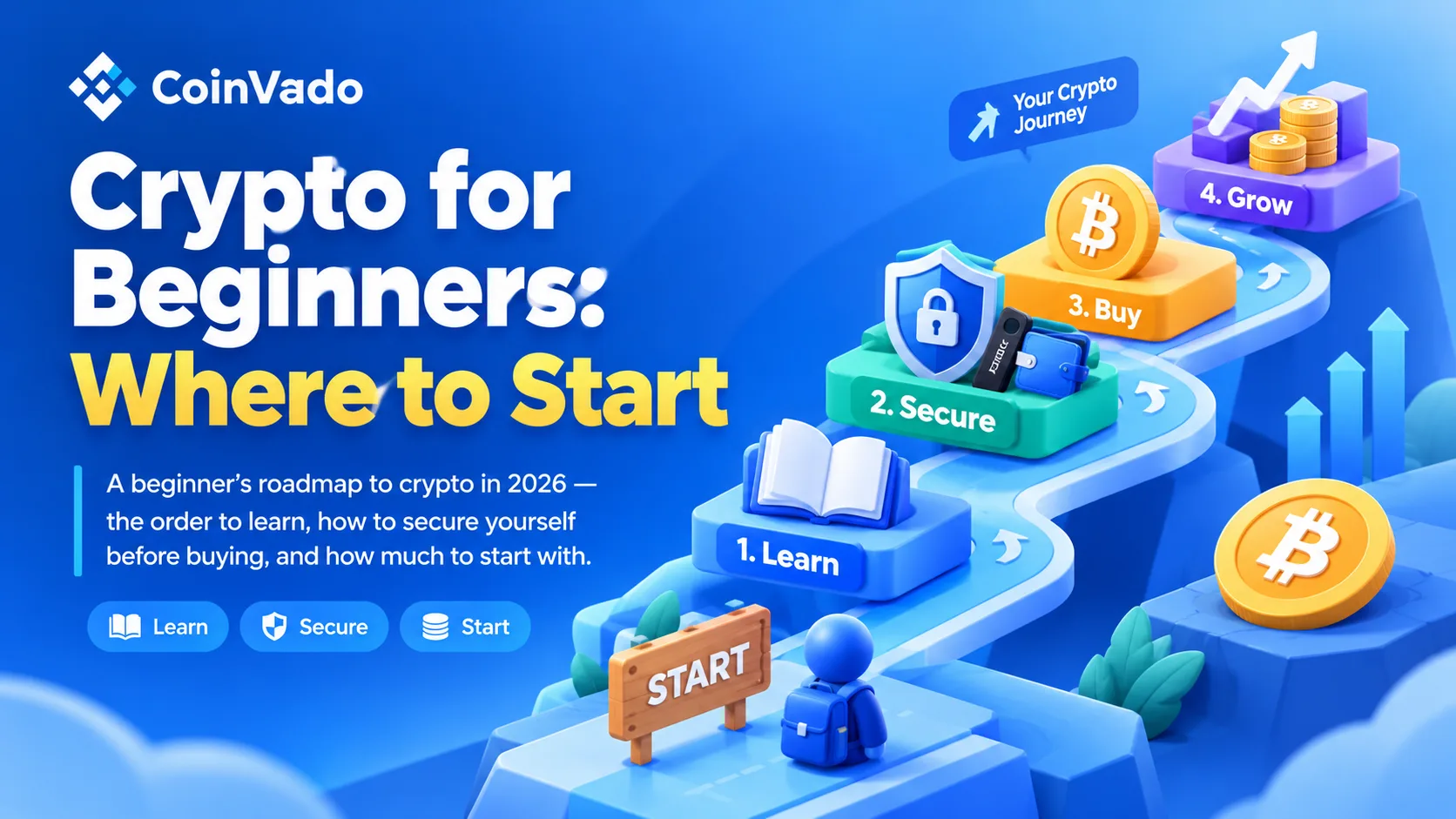
Crypto for Beginners: Where to Start (2026)
A beginner's roadmap to crypto in 2026 — the order to learn, how to secure yourself before buying, and how much to start with.
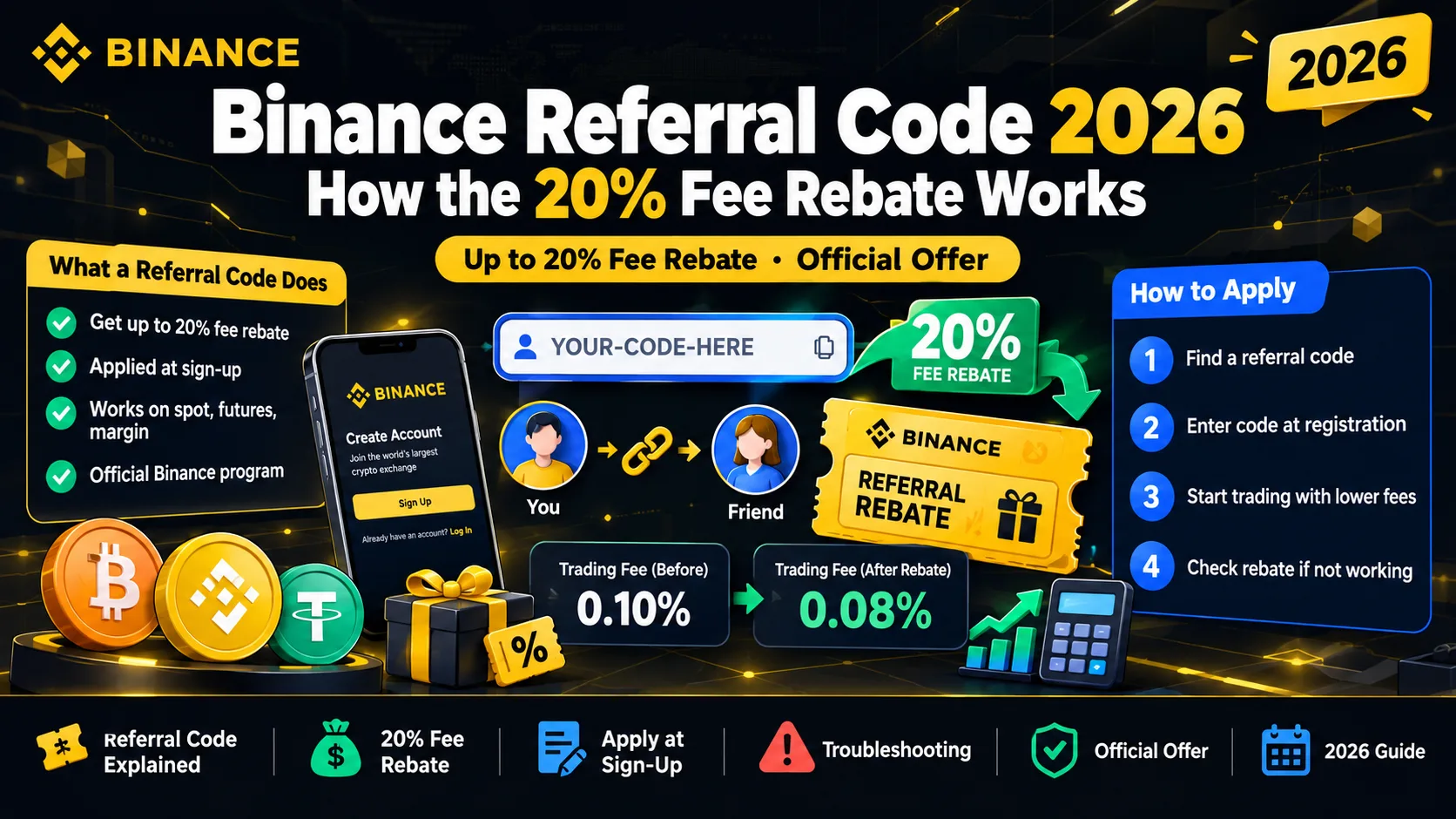
Binance Referral Code 2026: BN2688 and the 20% Rebate
A Binance referral code pays up to 20% of your trading fees back in USDC — not as a fee discount. How the cap really works, how long it lasts, and what to check.
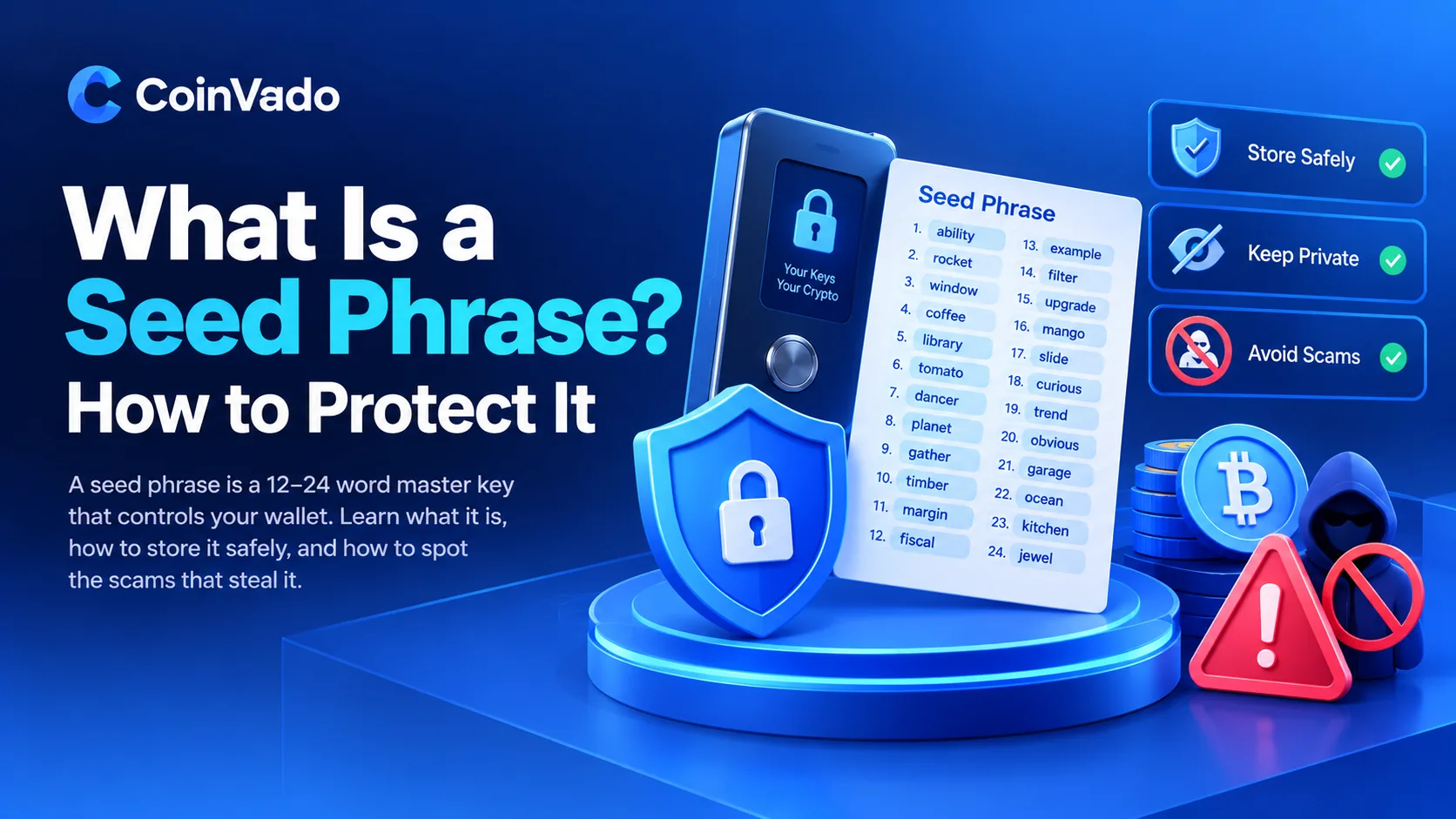
What Is a Seed Phrase? How to Protect It
A seed phrase is a 12–24 word master key that controls your wallet. Learn what it is, how to store it safely, and how to spot the scams that steal it.
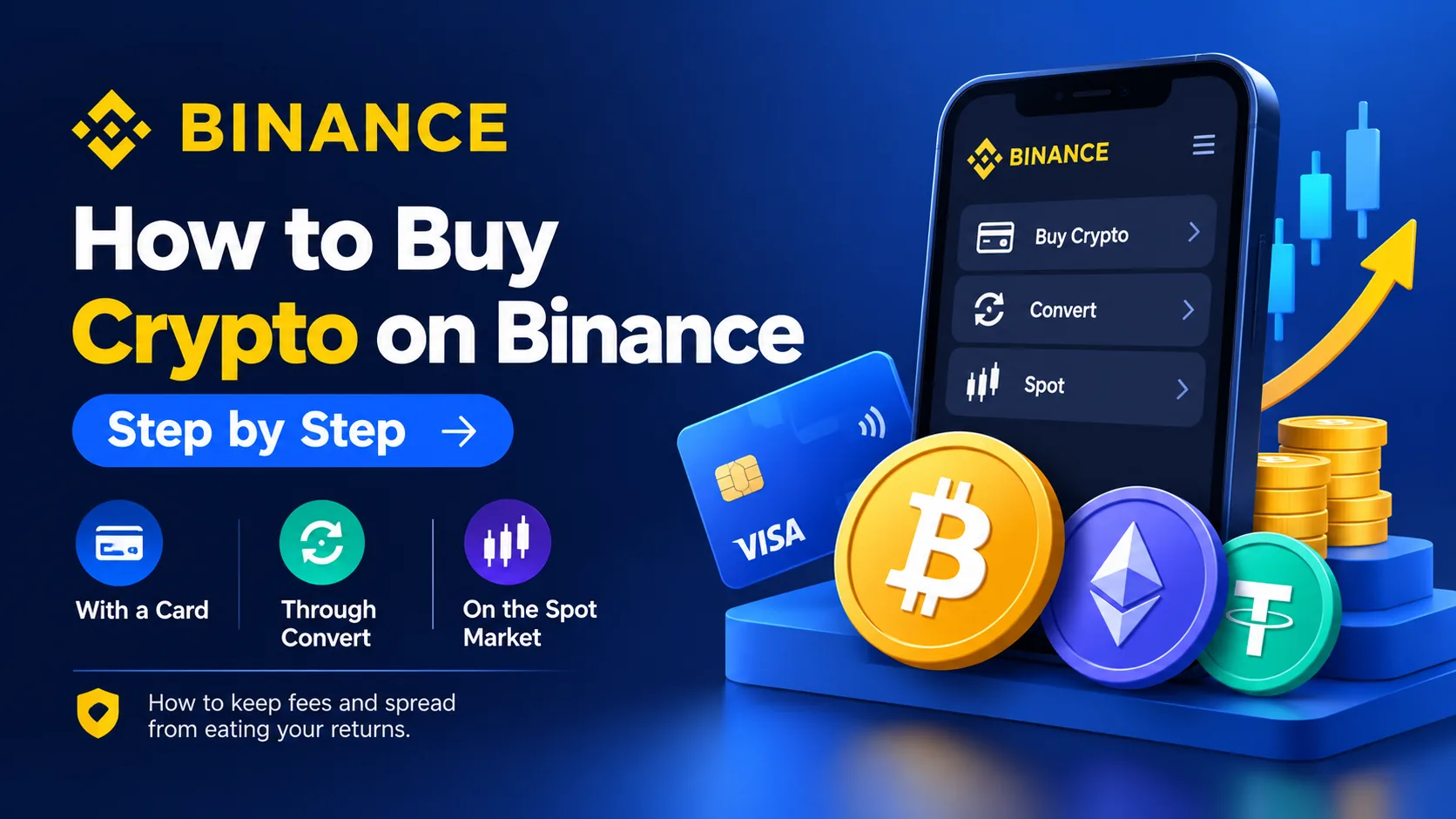
How to Buy Crypto on Binance (Step by Step)
How to buy crypto on Binance — with a card, through Convert, or on the spot market — and how to keep fees and spread from eating your returns.
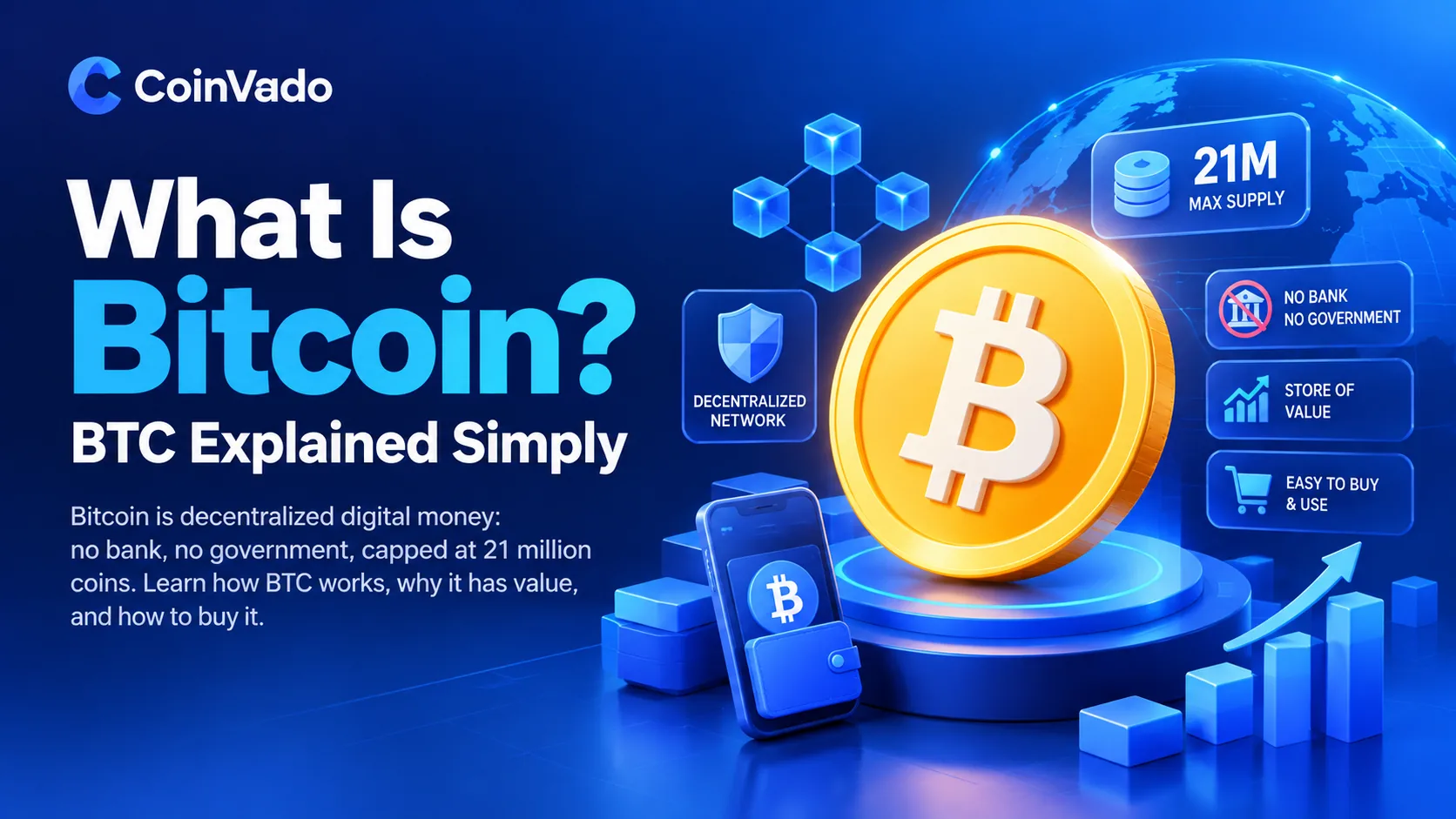
What Is Bitcoin? BTC Explained Simply
Bitcoin is decentralized digital money: no bank, no government, capped at 21 million coins. Learn how BTC works, why it has value, and how to buy it.
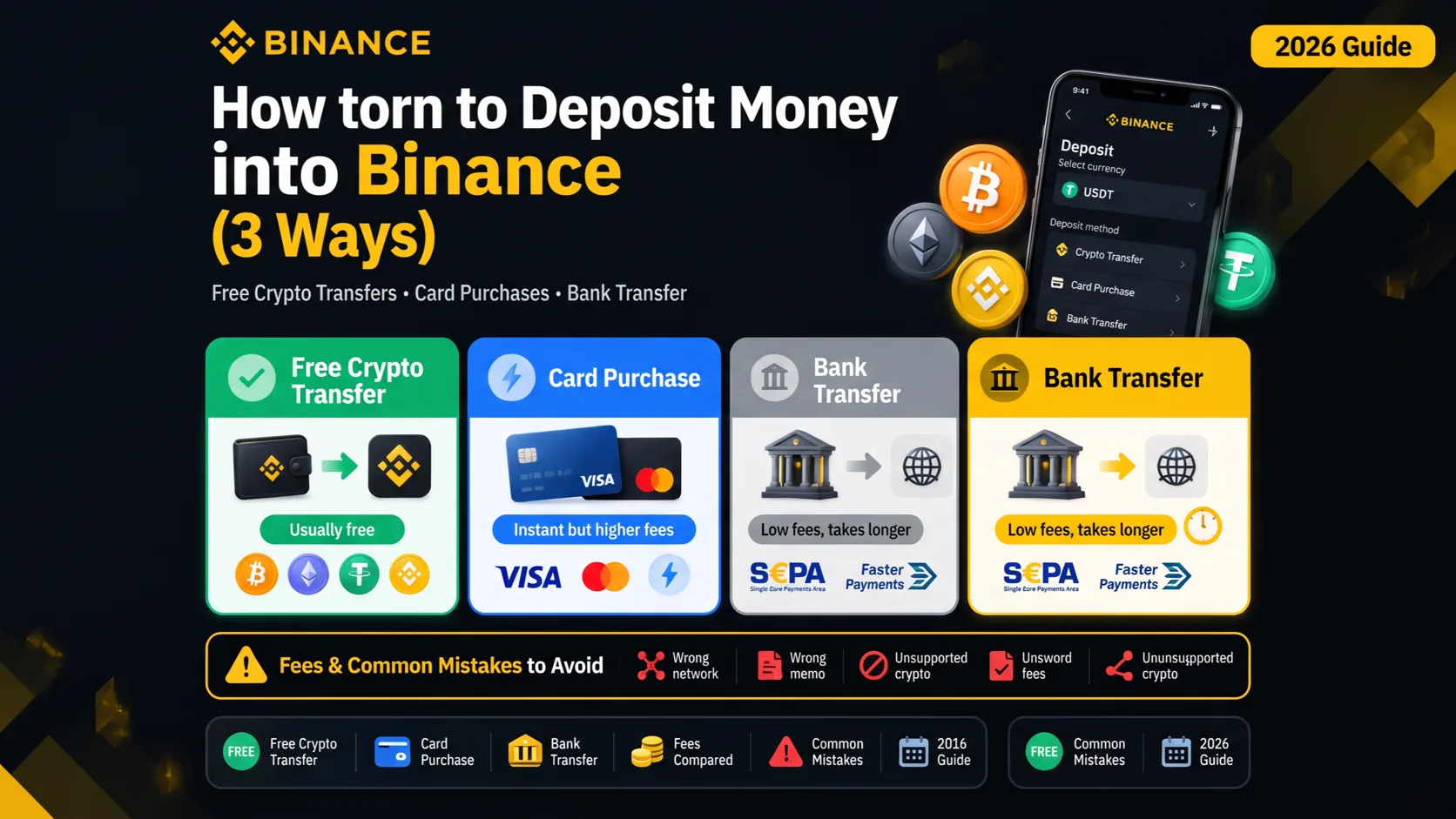
How to Deposit Money into Binance (3 Ways)
Learn how to deposit money into Binance — free crypto transfers, card purchases, and bank transfer — plus the fees and common mistakes to avoid.
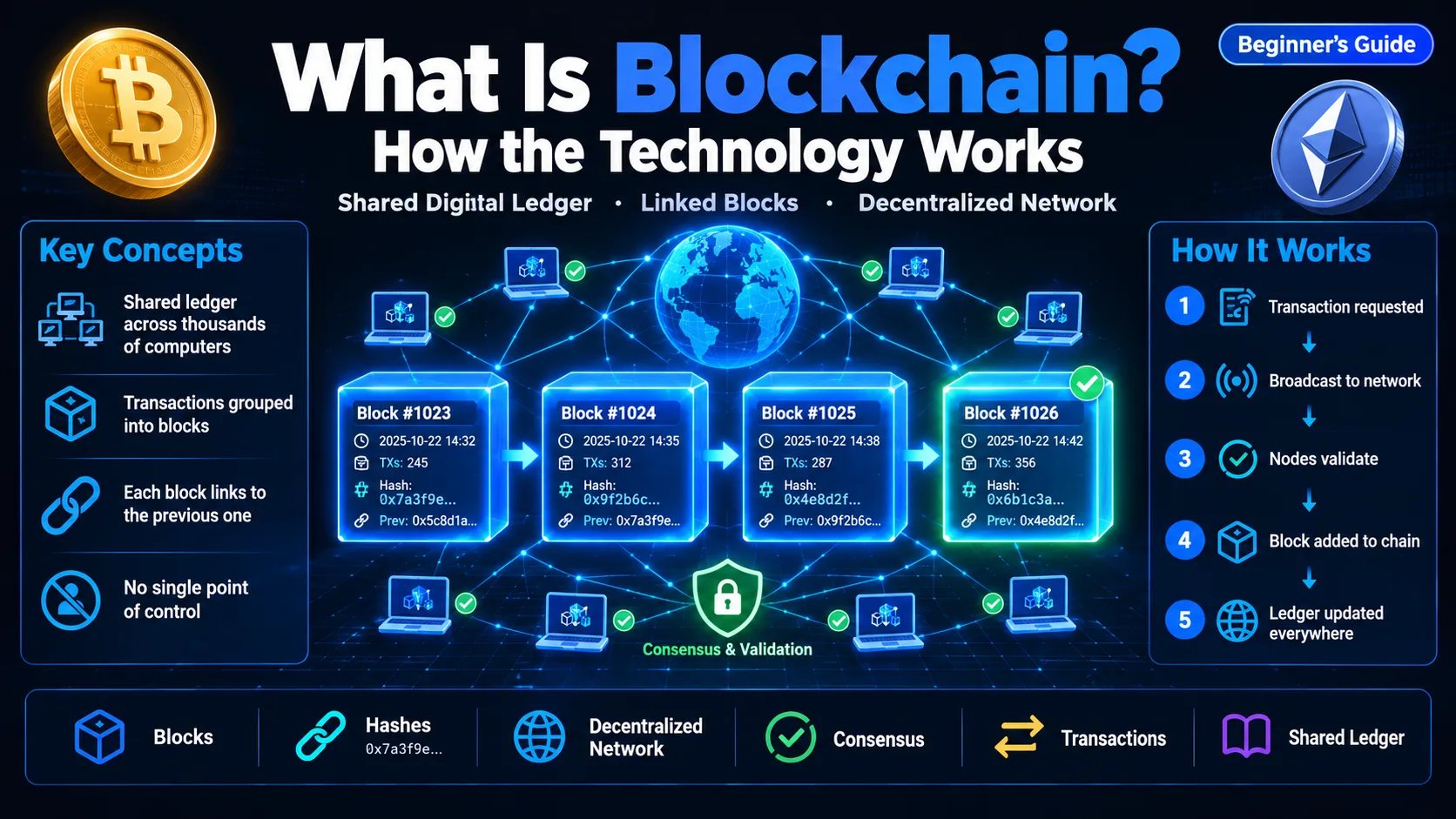
What Is Blockchain? How the Technology Works
A blockchain is a shared digital ledger copied across thousands of computers, with transactions grouped into linked blocks. Learn how it works.
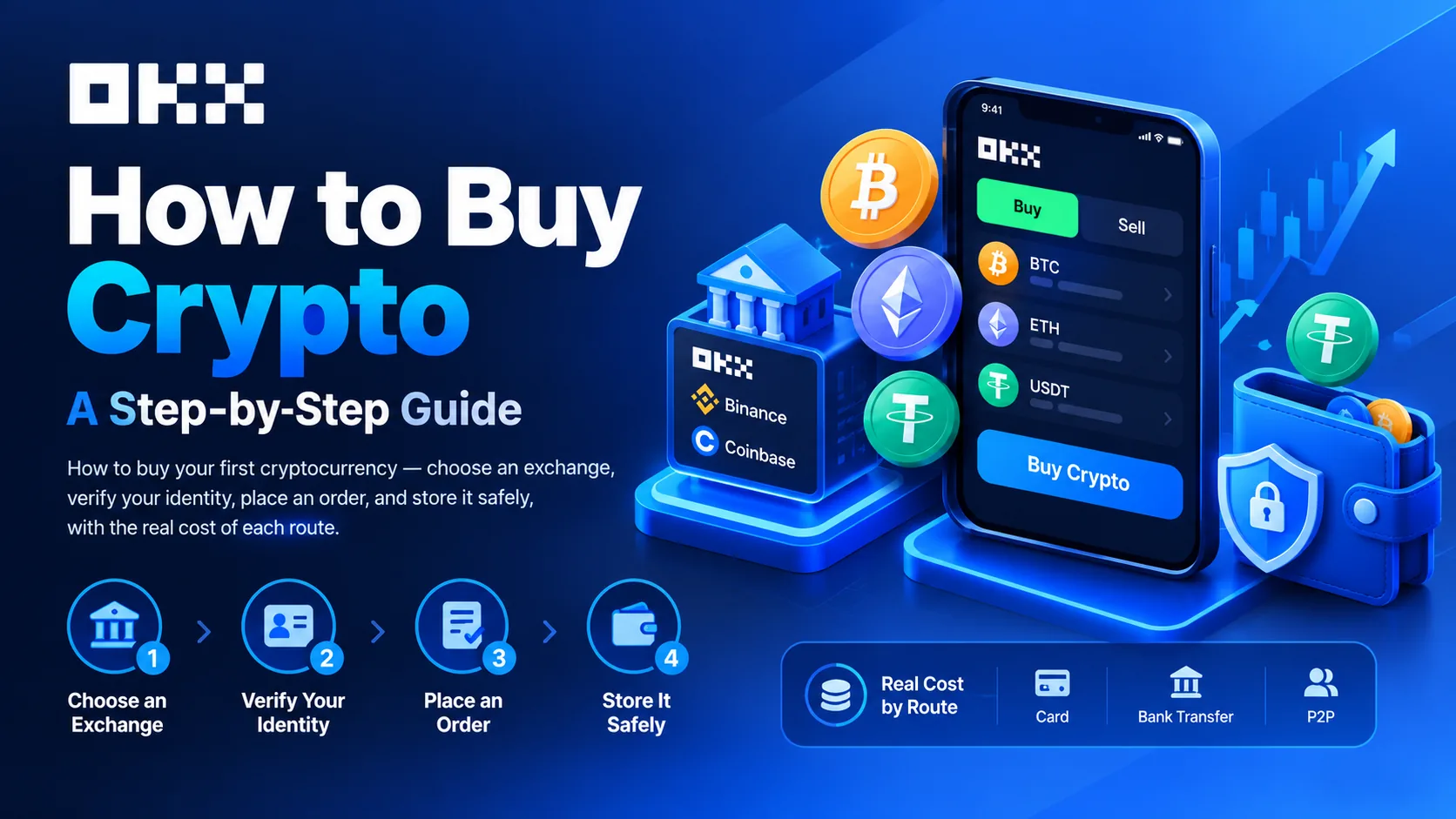
How to Buy Crypto: A Step-by-Step Guide
How to buy your first cryptocurrency — choose an exchange, verify your identity, place an order, and store it safely, with the real cost of each route.