
Binance Copy Trading: Fees, Minimums, and Real Risks (2026)
Binance copy trading mirrors a lead trader from 10 USDT, but you pay trading fees plus a profit share. How it works, what it costs, and when to skip it.
 Lucas Almeida 5 min read
Key takeaways
- Copy trading mirrors a lead trader's spot or futures positions automatically. It is not a fund, a yield product, or a guarantee — you own every loss.
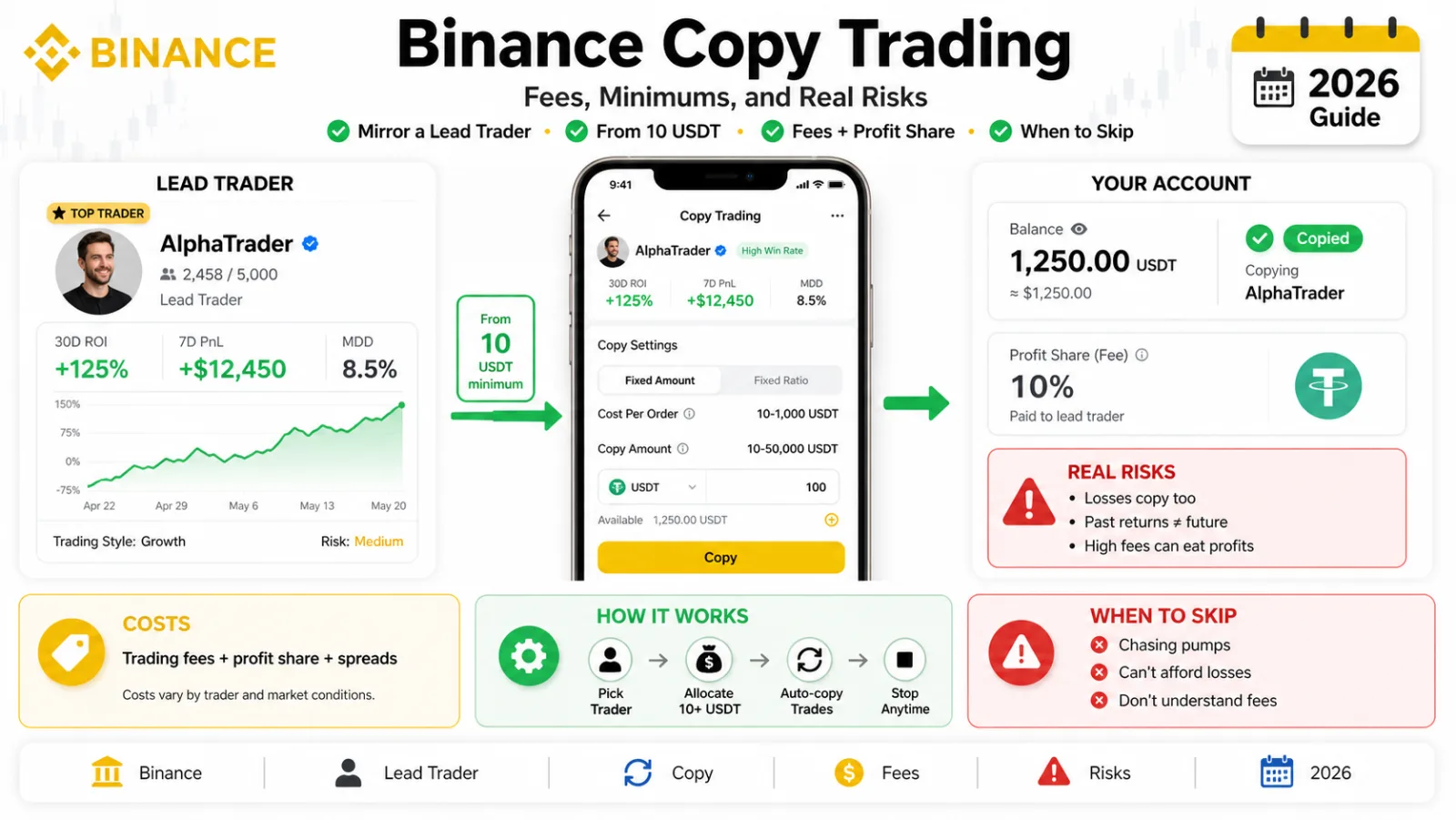
- The minimum is 10 USDT in fixed-amount mode or 100 USDT in fixed-ratio mode; lead traders need at least 500 USDT. A small balance can be too small to mirror a multi-position portfolio.
- You pay normal trading fees plus a profit share: 10% on spot, and up to 30% on futures depending on the lead trader's portfolio. The lead trader also earns 10% of your trading fees.
- Profit share applies only to net gains. Futures profit share is settled weekly on Mondays; losing periods do not generate a fee, but profit already shared is not refunded later.
- Copy trading is unavailable in the US, Canada, the Netherlands and several sanctioned regions, and it is not supported for sub-accounts. Check eligibility before you deposit.
Binance copy trading lets you mirror another trader’s spot or futures positions automatically, starting from 10 USDT in fixed-amount mode (100 USDT in fixed-ratio mode). It is not passive income: you pay standard trading fees plus a 10% profit share on spot (up to 30% on futures), and every loss is yours. This guide covers how the product actually works, what it costs, and the cases where you should skip it.
What is Binance copy trading?
Copy trading is an automated mirror: when a lead trader opens, adds to, or closes a position, Binance places a proportional order in your copy portfolio. You do not hand over your funds, and the lead trader cannot withdraw them.
There are two separate products:
- Spot copy trading mirrors buy and sell orders in spot markets. Your loss is limited to the value of the assets in the copy portfolio.
- Futures copy trading mirrors leveraged perpetual futures positions. It can produce losses larger than your initial margin, and positions can be liquidated.
The copy trading account is separate from your ordinary Spot account. Assets are not shared between spot and futures copy portfolios, and you can follow up to 10 copy trading portfolios (plus one lead portfolio if you qualify as a lead trader). Binance also applies slippage protection — 0.3% for BTCUSDT and ETHUSDT, 0.5% for other pairs at the time of writing.
A lead trader is not a fund manager and copy trading is not a managed account. You keep custody, you see every trade, and you can stop at any time. That also means there is no compensation scheme if the strategy fails.
How does copy trading work on Binance?
You choose a lead portfolio, set an amount and a copy mode, and the platform mirrors each new trade in proportion to your settings. The lead trader keeps trading; your portfolio follows.
Binance offers two sizing modes:
| Mode | Minimum | How orders are sized |
|---|---|---|
| Fixed amount | 10 USDT | A fixed USDT amount per trade, set by you |
| Fixed ratio | 100 USDT | Trades sized as a proportion of your portfolio |
Fixed amount is easier to reason about: if the lead buys $2,000 of BTC and you set $10 per trade, your order is $10. Fixed ratio scales with your balance, so a larger portfolio takes larger positions. Neither mode changes the lead trader’s risk — it only changes how much of that risk reaches you.
Before you can copy, Binance requires identity verification, including proof of address in some cases. Copy trading is not available to sub-accounts, and spot and futures copy trading serve different jurisdictions based on local rules.
How much do you need to start?
The platform floor is 10 USDT in fixed-amount mode or 100 USDT in fixed-ratio mode, but that is not a realistic strategy size. Lead traders need at least 500 USDT to open a portfolio of their own.
A 10 USDT balance cannot properly mirror a portfolio that holds eight positions, because every mirrored order still has to meet the exchange’s minimum order size. In practice, a multi-position futures portfolio usually needs a few hundred USDT before the copy starts to resemble the lead trader’s allocation. Treat 10 USDT as a way to test the mechanics for a week, not as a way to run a strategy.
Withdrawals are limited to the balance above your minimum. If you have 15 USDT in a fixed-amount portfolio, you can withdraw 5 USDT; withdrawing the whole balance closes the portfolio.
What does Binance copy trading cost?
You pay normal trading fees plus a profit share, and the lead trader also takes a cut of your trading fees. The exact mix depends on whether you copy spot or futures, and the rates below come from Binance’s spot copy trading FAQ and futures copy trading page.
| Cost | Spot copy trading | Futures copy trading |
|---|---|---|
| Trading fee | Standard spot fee | Standard futures fee |
| Profit share | 10% of net profit | Up to 30%, set per portfolio |
| Lead trader fee commission | 10% of your trading fees | 10% of your trading fees |
| BNB fee discount | 25% off spot fees if enabled | 10% off futures fees if enabled |
| Referral rebate | Applies to trading fees only | Applies to trading fees only |
| Deposit / withdrawal | Normal network fees | Normal network fees |
Two things surprise new copiers. First, the profit share is not the only cost — the lead trader also earns 10% of the trading fees your copies generate. Second, a referral rebate reduces the trading fee, not the profit share. If you sign up with a code, the rebate still applies to the fees you pay, but it does not make the lead trader’s share smaller. BNB discounts follow Binance’s standard fee schedule.
Fees are charged in the quote asset of each trade, so a futures portfolio can bleed funding payments and fees even on days when the lead trader does not open a new position.
How is the profit share calculated?
Profit share is charged on net profit after fees, and only when the portfolio is above the profit already shared. Binance’s futures formula is:
Profit to be settled = max[(realized profit + unrealized PNL) × profit share % − already shared profit, 0]
That floor at zero matters. A losing month does not create a profit-share invoice, and a portfolio that gives back earlier gains does not owe the lead trader again until it exceeds the previous high-water mark. Profit already paid is not refunded.
| Scenario | Result before profit share | 10% profit share | What you keep |
|---|---|---|---|
| +20% on a $1,000 copy, $10 in fees | +$190 | $19 | $171 |
| −20% on a $1,000 copy, $10 in fees | −$210 | $0 | −$210 |
| Rebound of $300 after $19 was shared | +$300 cumulative | $11 | $289 |
The last row is the part most people miss: because the formula subtracts profit already shared, you pay only on the new high, not on the same gain twice.
Futures profit share is settled weekly, based on portfolio Total PNL, with snapshots from 00:00 UTC on Mondays and payment to the lead trader’s Spot account. It is also settled when you stop copying, when the lead trader closes the portfolio, or when you withdraw profits. Spot portfolios display their own settlement terms on the portfolio page.
How do you choose a lead trader?
Screen for risk before return: a long track record, a survivable drawdown, and a strategy you can explain. The leaderboard’s ROI number is the least useful metric on its own.
| Metric | What it tells you | Beginner rule of thumb |
|---|---|---|
| 30-day and 90-day ROI | Recent performance | Ignore a single explosive month |
| Maximum drawdown | Worst peak-to-trough loss | Under 20–30% if you cannot stomach more |
| Win rate | Consistency of closed trades | 50–60% is normal; 100% is suspicious |
| Assets under management | Other people’s conviction | Bigger is not safer, but a tiny AUM is fragile |
| Copied days | Length of track record | 90+ days minimum, 6+ months preferred |
| Strategy description | Markets, leverage, holding period | If you cannot explain it, do not copy it |
A portfolio showing an 8,000% ROI with a 60% maximum drawdown is not a better version of a portfolio showing 40% ROI with a 12% drawdown. The first one has already shown you how it behaves in a bad month — badly. Past performance does not predict future returns, but drawdown tells you what you would have had to sit through.
Also check what the lead trader actually holds. Two leaders with different names can both be long the same three memecoins with 20× leverage; copying both does not diversify you.
How do you start copying step by step?
The setup takes minutes; the hard part is choosing a portfolio you would still trust after a 30% drawdown.
- Complete KYC and check eligibility. Finish identity verification, including proof of address if prompted. Sub-accounts cannot use copy trading, and the US, Canada, the Netherlands and several sanctioned regions are excluded from spot copy trading.
- Open Copy Trading and choose the product. In the Binance app, open Copy Trading and select Spot or Futures. The two products have separate portfolios and separate minimums.
- Screen the lead trader. Open the portfolio and read the strategy description, maximum drawdown, AUM and copied days before you look at ROI.
- Set the mode and amount. Choose fixed amount or fixed ratio, enter the amount, and check the profit-share rate displayed for that portfolio.
- Start copying. Confirm the setup and let the system mirror new trades. Existing positions may not be copied immediately; the portfolio page shows what has been mirrored.
- Monitor the first week. Check the trade history, fees charged, and whether the lead is following the stated strategy. If the behaviour does not match the description, stop.
What are the real risks?
Copy trading transfers the lead trader’s decisions to your account, not their accountability. The main risks are:
- You absorb 100% of losses. The lead trader earns on profit; you carry the downside.
- Futures leverage can wipe out the portfolio. A 20× position can be liquidated by a small adverse move, and liquidation is not a profit-share event for the lead.
- Strategy drift. A lead trader can change markets, leverage or holding period without asking you. Yesterday’s spot swing trader can become today’s 50× perp scalper.
- Slippage and liquidity. Binance’s slippage protection caps how far an order can fill from the expected price, but it does not guarantee a fill. Thin markets can leave your copy behind.
- Fee drag. Trading fees, profit share, funding payments and withdrawals all reduce the return the leaderboard shows.
- Platform and regional risk. Product rules, eligible countries and portfolio availability can change without notice.
- Off-platform scams. Anyone offering “guaranteed copy trading returns”, asking for your 2FA code, or asking you to send funds to a private wallet is stealing from you. Binance copy trading never requires a transfer to an individual.
The risk warning on Binance’s own futures copy trading page is blunt: virtual asset prices are volatile, the value of your investment can go down as well as up, and you may not get back the amount invested.
How do you stop copying and withdraw?
Open the portfolio, select Stop Copying, then close any positions that remain. Stopping the copy does not necessarily close the positions already open in your account; check the portfolio and close them manually if you want to be flat.
Withdrawals are limited to the balance above your minimum. Closing a portfolio converts balances above 10 USDT to USDT, while smaller balances are returned to your Spot account in the original token. Low-liquidity tokens can delay the conversion. For futures, profit share is also settled when you stop copying.
Before you withdraw, check whether the lead trader has open positions that would be left running. A common mistake is to stop copying during a drawdown and leave a leveraged position unattended.
Is Binance copy trading available in your country?
No in the US, Canada, the Netherlands and several sanctioned regions; other countries depend on the product and the current service list. Binance’s spot copy trading notice explicitly excludes the United States and its territories, Canada, Cuba, Crimea, Iran, the Netherlands, North Korea, Syria, and non-government-controlled areas of Ukraine.
Futures copy trading has a separate service list and serves more jurisdictions, but the US is still excluded. Binance.US is a separate platform with its own products and does not offer the global copy trading product. If you are in an eligible country, check the service list before you deposit, because the lists change with local regulation.
Copy trading also requires identity verification with proof of address in some cases, and it is not available for sub-accounts.
Is copy trading worth it for beginners?
For most beginners, no — not as a first product and not as a substitute for learning spot trading. Copy trading is a way to delegate execution, not a way to delegate judgment. If you cannot explain why the lead trader holds what they hold, you cannot tell strategy from luck.
It can make sense as a small satellite position if three things are true: you have money you can lose entirely, you have checked at least 90 days of history and the drawdown, and you are using it to learn how futures behave rather than to chase a leaderboard return. Even then, cap it at a small share of your portfolio and stop if the strategy drifts.
For most people, the better default is boring: buy BTC or ETH on a schedule, keep the position in spot, and learn the mechanics before adding leverage. Our DCA guide and trading beginner guide cover that path. If you want to see how futures margin, funding and liquidation actually work before copying anyone, our Binance futures guide walks through the real costs. If you have not opened an account yet, start with the Binance registration guide so the referral code is applied before your first deposit.
What are the common problems and fixes?
| Problem | Why it happens | What to do |
|---|---|---|
| A copied trade did not open | The order was below the pair’s minimum size, or slippage protection blocked the fill | Increase the copy amount or choose a portfolio with fewer positions |
| You cannot withdraw the full balance | The portfolio must retain the minimum (10 or 100 USDT) | Withdraw only the excess, or close the portfolio |
| Profit share was charged after a losing week | The share is based on cumulative net profit above the previous high, not weekly P&L | Check the portfolio’s total PNL and shared-profit history |
| You stopped copying but positions remain | Stop Copying stops new mirrors; it does not always close existing positions | Close the remaining positions manually |
| Copy trading is not available | Country restriction, sub-account, or incomplete proof-of-address verification | Check the service list and your account type |
| The lead trader stopped trading | The portfolio was closed or the lead paused | Your copy stops; review and close any open positions |
The bottom line
Binance copy trading is a real product with real costs: from 10 USDT in fixed-amount mode, a 10% spot profit share (up to 30% on futures), a 10% fee commission to the lead trader, and full exposure to losses. It is useful for delegating execution to a trader whose risk you have actually checked; it is dangerous as a shortcut to “passive income”.
If you use it, start with an amount you can lose, check drawdown before ROI, and read the portfolio page instead of the leaderboard headline. If you want the 20% trading-fee rebate, register through a referral link first — and remember the rebate applies to trading fees, not to the lead trader’s profit share.
Minimums, profit-share rates, settlement timing and regional restrictions were checked on 16 November 2026 against Binance’s Spot Copy Trading FAQ, the Futures Copy Trading lead-trader FAQ, the Spot Copy Trading launch announcement and Binance’s fee schedule. Binance changes product rules without notice — confirm the current terms in the app before you copy.
Don't have a Binance account yet?Sign up nowenter the referral codeBN2688
Frequently asked questions
What is the minimum amount for Binance copy trading?
How much does Binance copy trading cost?
Is the profit share charged on losses?
How often is copy trading profit share paid?
Can I lose more than I invest in copy trading?
Is Binance copy trading available in the US?
Can I stop copying at any time?
Is copy trading profitable?
Editor-in-Chief & Lead Researcher
Editor of MyCryptoStart. Independent researcher of cryptocurrency exchanges, focused on fees, security, KYC, and onboarding — publishes step-by-step guides in plain English for beginners.
View author page →Some links on this page are affiliate links: we may earn a commission at no extra cost to you. This content is educational and is not financial, investment, or legal advice. Affiliate disclosure · Disclaimer.
Continue reading
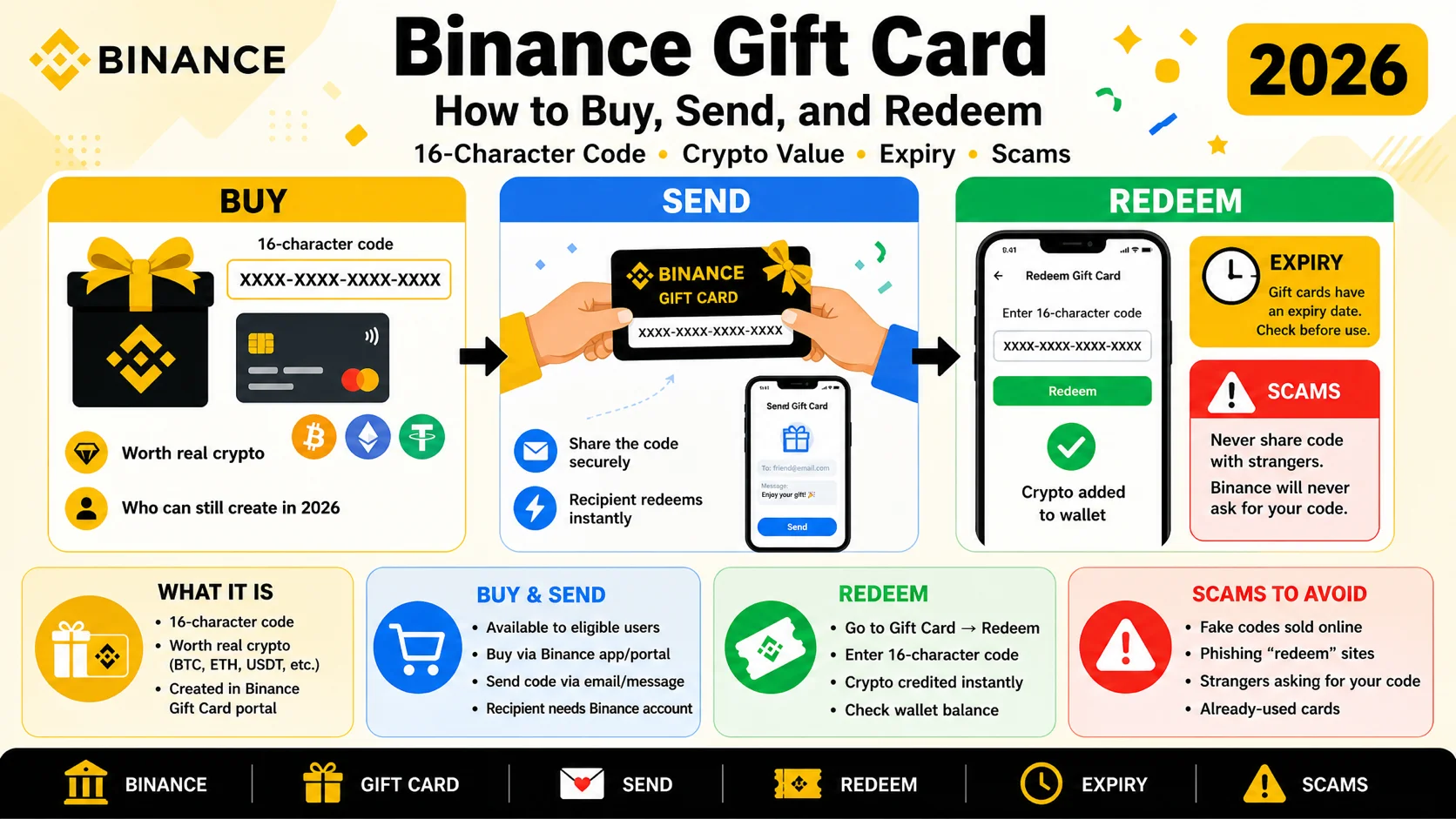
Binance Gift Card: How to Buy, Send, and Redeem (2026)
A Binance Gift Card is a 16-character code worth real crypto. Who can still create one in 2026, where to buy, how to redeem, when it expires, and the scams to avoid.
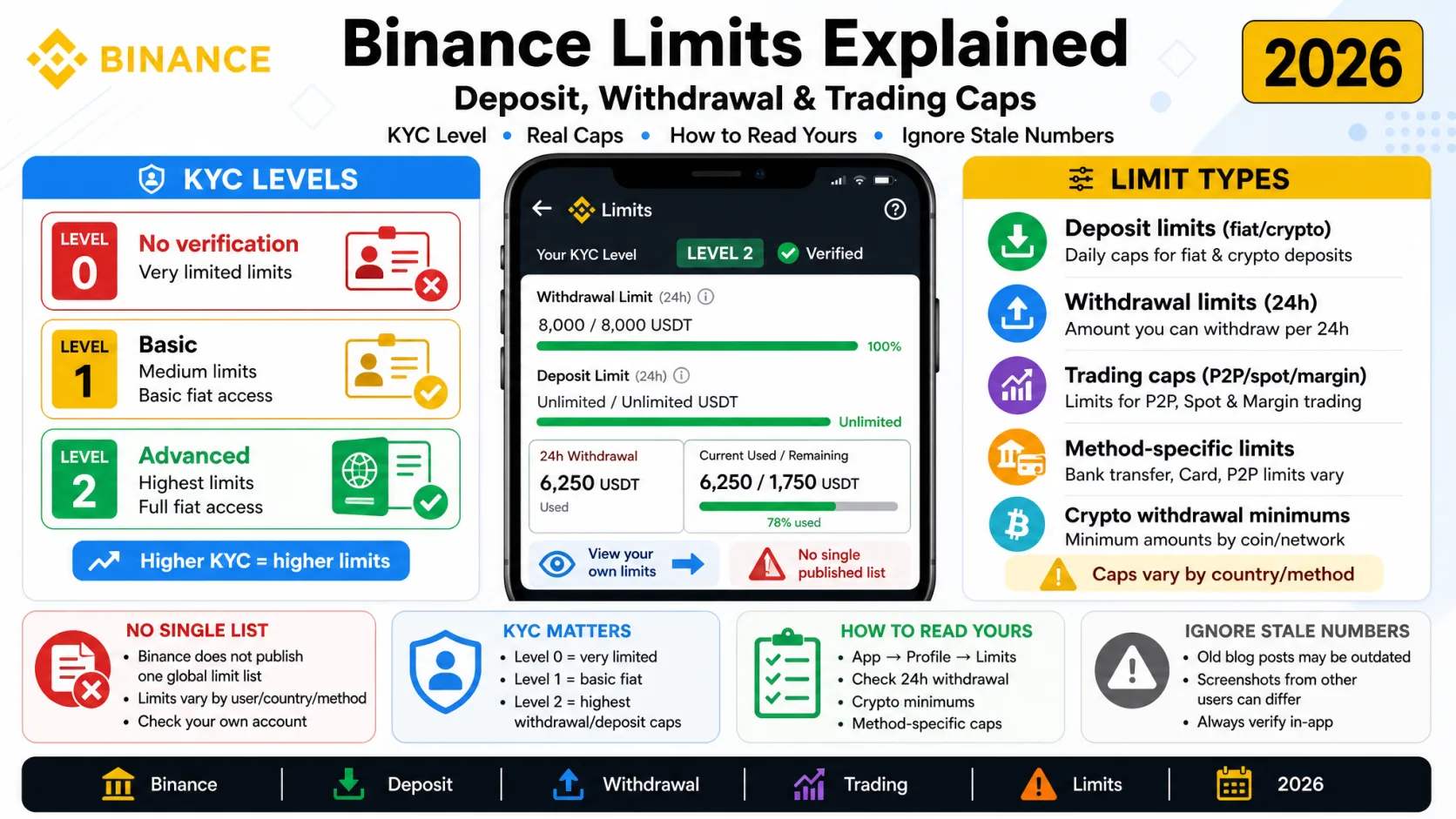
Binance Limits Explained: Deposit, Withdrawal, and Trading Caps (2026)
Binance publishes no single limit list. The real withdrawal, deposit and trading caps by KYC level, how to read your own, and the stale numbers to ignore.
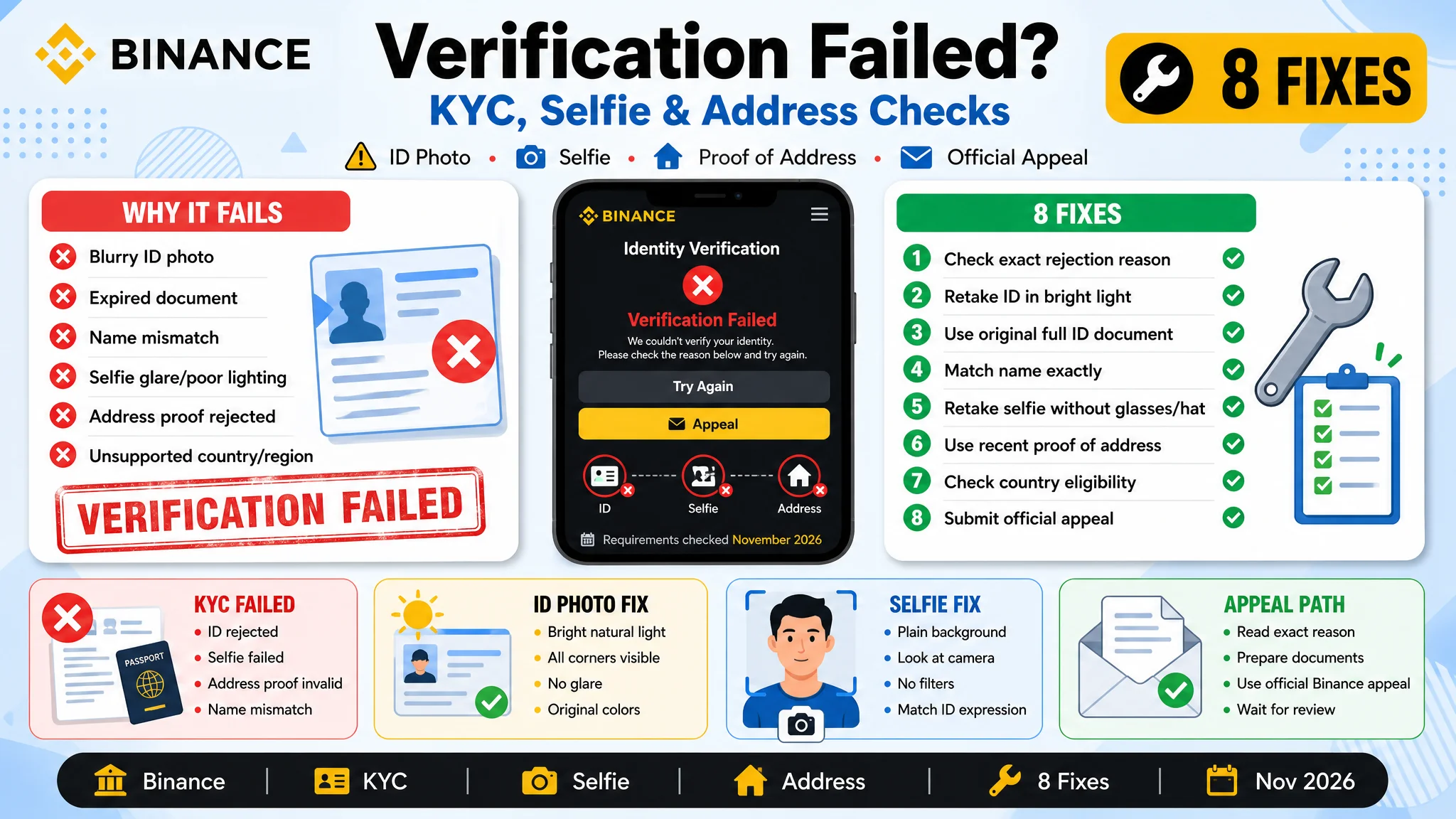
Binance Verification Failed? 8 Fixes for KYC, Selfie, and Address Checks (2026)
Binance verification failed? Find the exact rejection, fix the ID photo, selfie or address proof, and use the official appeal path. Requirements checked November 2026.