
Binance Referral Code Comparison (2026)
20% is the cap on Binance referral rebates. See what 40% and 50% claims really mean, the yearly savings at each volume, and how to verify any code.
 Lucas Almeida 5 min read
 Key takeaways
- 20% is the system cap on the rebate a Binance referral code can give you — on spot and, since October 2025, on futures as well. Any page promising 30%, 40%, or 50% back to you is quoting the referrer's commission, not your savings.
- The gap between codes is real. At the standard 0.1% spot fee, a user trading 100,000 USDT a month earns 240 USDT a year back with a 20% code versus 120 USDT with a 10% code and nothing with no code.
- A 20% rebate stacks with the BNB fee discount — but multiplicatively, not additively. Spot costs drop about 40% in total, futures about 28%.
- Our code BN2688 is set at the 20% cap for both spot and futures, pays out automatically the next day, and can be self-verified in your account dashboard in about three minutes.
- Judge any code with four questions — what percentage (and for whom), does it cover futures, what is the validity period, and can you verify it yourself after signing up.
Comparing Binance referral codes comes down to one number: 20% is the system cap on what any code can give you back (Binance’s referral program docs cap the invitee rebate at 20%), on spot trading and futures alike. A code that verifiably pays the full 20% on both markets is the best a referral code can be; every percentage you see above that belongs to the referrer, not to you. Our code BN2688 is set at that cap, and this guide shows you the math behind why it matters and how to confirm it yourself in three minutes.
First, the disclaimer every honest comparison needs: none of this changes how much you should trade. A rebate trims your costs; it does not make frequent trading profitable. If you are still deciding whether to start, read what cryptocurrency is first and come back to the savings question later.
What do the numbers on referral code pages actually mean?
Most referral code pages throw around four or five different percentages without ever saying who receives each one. That is the whole trick. There are two people in this system — the referrer (whoever owns the code) and you, the invitee — and the big numbers you see advertised are almost always the referrer’s share.
Here is the decoder table for the numbers you will actually encounter (per Binance’s Referral Pro documentation, checked October 2026):
| Number on a promo page | What it actually is | Who gets it |
|---|---|---|
| 20% | The system cap on the rebate shared with the new user | You |
| 30–50% | The referrer’s spot commission under Referral Pro — a 20% base, rising to 30%, 41%, and 50% by tier | The referrer |
| 10–50% | The referrer’s futures commission — a 10% base, rising to 30%, 40%, and 50% by tier | The referrer |
| “$600 welcome bonus” | Task-based promotion rewards, unrelated to any code | You — but only by completing promo tasks |
Once you can read this table, the marketing noise collapses into one question: of the commission Binance pays on my fees, how much does the code owner share back with me? The share can be set anywhere from 0% to 20%. A page that quotes “40% rebate” either misunderstands its own code or is counting on you not to check.
Two details worth knowing before you compare codes:
- The commission structure changed in 2025. Binance replaced its old BNB-holding commission tiers with the tiered Referral Pro program — futures in August 2025, spot in October 2025. A referrer’s commission now runs from a 20% base to 50% at the top spot tier (and 10% to 50% on futures), but the share they can pass back to you stays capped at 20%.
- A code with no shared rebate still “works” — it just pays the referrer 100% of the commission and you nothing. This is why “the code applied successfully” and “you are getting a rebate” are two different checks.
How much does a referral code actually save you per year?
Rebates are percentages of your fees, so the saving scales with your volume — from pocket change to a meaningful amount. Binance’s standard spot fee is 0.1% per trade for regular users, and the futures taker fee starts at 0.05% (see our full Binance fees breakdown or Binance’s official fee schedule).
Spot trading (0.1% fee, no BNB discount):
| Monthly spot volume | Fees per year | 10% code returns | 20% code returns |
|---|---|---|---|
| 10,000 USDT | 120 | 12 | 24 |
| 100,000 USDT | 1,200 | 120 | 240 |
| 1,000,000 USDT | 12,000 | 1,200 | 2,400 |
Futures trading (0.05% taker fee on notional volume):
| Monthly futures volume | Fees per year | 10% code returns | 20% code returns |
|---|---|---|---|
| 100,000 USDT | 600 | 60 | 120 |
| 1,000,000 USDT | 6,000 | 600 | 1,200 |
| 10,000,000 USDT | 60,000 | 6,000 | 12,000 |
Three conclusions fall straight out of these tables:
- Volume is the multiplier. At 10,000 USDT a month the difference between code tiers is about one coffee per month; at a million it is 1,200 USDT a year. Casual traders should not distort their behavior for a rebate, but active ones should not leave it on the table either.
- A spot-only code forfeits the bigger half. Futures notional volume typically dwarfs spot volume because leverage multiplies it. A code covering spot but not futures gives away the larger stream.
- 0% is the real baseline. Signing up without a code does not save you money — it just guarantees you get none of it back. Since using a code is free, the only losing move is not using one.
Can you stack a rebate on top of the BNB discount?
Yes — and this is where most articles get the arithmetic wrong. You will often see “20% rebate + 25% BNB discount = 45% savings.” That is incorrect, because the two discounts multiply rather than add. The BNB discount reduces your fee at the moment of the trade, and the rebate is calculated on the fee you actually paid after that discount.
The correct stacking math for a 20% code:
- Spot: 0.1% base fee → 0.075% with BNB discount (25%) → 0.06% effective after a 20% rebate. Total cost reduction: about 40%.
- Futures: 0.05% taker fee → 0.045% with BNB discount — note the futures discount is 10%, not 25% — → 0.036% effective after the rebate. Total cost reduction: about 28%.
The futures discount being 10% is an easy detail to get wrong, because most articles quote the spot figure for both markets. For the full mechanics of the BNB discount, see how Binance fees work.
The rule of thumb: a 20% code plus BNB discount roughly cuts your effective spot fees by 40% — but expressed as multiplication (0.75 × 0.8 = 0.6), not the addition you’ll see in headlines.
What does the BN2688 referral code include?
Our code is deliberately boring: no games, no “contact us for your reward” — just the maximum the system allows, set up so you can verify it without trusting us. Here is exactly what BN2688 offers (checked September 2026):
| Item | Detail |
|---|---|
| Spot rebate | 20% of trading fees, per trade |
| Futures rebate | 20% of trading fees (the system maximum) |
| Validity | Spot: ongoing while your account is below VIP 3. Futures: 12 months from your futures account activation |
| Settlement | Automatic, next day (T+1), paid in USDC by default |
| How to apply | Automatically via the link below, or enter BN2688 in the Referral ID field at sign-up |
| Cost to you | Zero. Your fees are identical with or without the code |
💡 Don't have a Binance account yet? Sign up now — enter the referral code BN2688.
Then — and this is the part we insist on — verify it yourself instead of taking our word for it. It takes about three minutes:
- At sign-up: opened through the link, the Referral ID field should already show
BN2688. Entering it manually? Check it character by character — a one-digit typo silently voids the benefit. - After registration: open your profile and find the referral or rebate section. Your dashboard shows the rebate percentages actually attached to your account — confirm spot and futures both read 20%.
- After your first trade: place one small trade and check your funding wallet the next day. The rebate should equal about 20% of the fee shown on the trade, arriving in USDC.
- If the numbers do not match: open a support ticket with Binance directly. Rebates are settled by Binance’s system, so official support is the only channel that can fix them — anyone offering to “manually top up” your rebate in a chat is scamming you.
Step 2 is the one that makes comparisons honest: any code whose rebate shows up as 20% in your own dashboard is as good as any other 20% code, whatever the marketing says.
How do you judge any referral code in four questions?
Apply this checklist to every code anyone ever hands you, including ours:
Question 1: What percentage — and whose? The ceiling for your rebate is 20%. A page advertising “30%+” back to you is out; a page saying only “high rebate” without a number should be assumed to be at the bottom of the range.
Question 2: Does it cover futures? A spot-only rebate is worth roughly half of what it appears to be for anyone who trades perpetuals. Ask, or check the dashboard after signing up.
Question 3: What is the validity period? Spot rebates generally last while you are below VIP 3, but futures rebates run 12 months from the day you activate the futures account, and eligibility ends at VIP 3. “Lifetime futures rebates” is not a thing under current rules.
Question 4: Can you verify it yourself? Only system-settled rebates visible in your own account count. “Join our group for your cashback” and “message me to activate it” are disqualifying on sight — official rebates never flow through private chats.
Matching codes to your situation:
| Your situation | What to do |
|---|---|
| Not registered yet | Apply a full-cap code like BN2688 during sign-up — it cannot be added later in most cases |
| Registered, no code ever bound | Check whether you meet the 90-day rebind conditions (see below) |
| Bound to a weaker code | Bindings cannot be switched; weigh whether a new account is worth it |
| Trading spot and futures | Only full-cap 20%/20% codes make sense, then stack the BNB discount |
| Trading rarely | Any code is fine — just use one; the rebate is small but free |
Which claims are always fake?
Four promises show up again and again in referral code marketing. Any one of them is grounds to walk away:
- “Get 30%, 40%, 50% back.” Above the 20% system cap means the number belongs to the referrer. Not negotiable, not “special access.”
- “1% back on your trading volume.” Rebates are a share of fees — about 0.1% of volume — so “1% of volume” would mean paying you ten times what Binance collected. On a 1,000 USDT trade that is the difference between a real 0.2 USDT rebate and a fictional 10 USDT one. This one swap inflates the promise fifty-fold.
- “Buy a premium referral code.” Codes are free. Anyone selling one is selling nothing.
- “Transfer funds to activate your rebate” / “share your verification code.” That is not a referral program; that is phishing. A real code requires nothing but a text field at registration.
The logic behind all four is the same: legitimate rebates are settled automatically by Binance’s system, and the referrer never touches your money. Any “benefit” requiring human intervention outside the platform is structurally impossible to deliver — which is convenient, because it was never going to be delivered.
Already signed up without a code?
Depending on your account status, you may still have options:
- No code ever bound. Binance’s rebind feature lets established accounts attach a referral code retroactively if the account is older than 90 days and inactive over the recent period — the activity threshold was lowered from 180 days to 90 days in March 2026, per Binance’s Affiliate Recall Program. Log in through a referral link and confirm the binding; if the offer does not appear, your account does not currently qualify.
- Bound to someone else’s code. There is no switching, no exceptions, regardless of what any page implies. The only path to a 20% code is a new account, which is only worth it if your trading volume makes the difference material — the tables above tell you exactly how much material.
- Not eligible and not worth restarting. Then extract the savings you can control: enable the BNB discount (an immediate 25% off spot fees) and check your fee tier. Both together can outweigh a rebate tier difference entirely.
What should you watch out for?
- Rules change without much notice. Every figure in this guide was checked in September 2026, and Binance has revised this program repeatedly — the USDC settlement switch, the 12-month futures window, and the 90-day rebind threshold all changed within the last two years. The number shown in your account at sign-up is the binding one.
- A rebate is a discount, not income. It scales down when you trade less and disappears when you trade not at all. Never add trades to “earn the rebate back” — a 20% rebate on fees cannot rescue a strategy that loses money on the trades themselves.
- Regional programs differ. Binance operates separate local entities with separate terms, and a screenshot from one country proves nothing about another. Check the terms shown to your account, and confirm Binance serves your region before registering.
- This article contains referral links. We earn a commission if you sign up through them — which is exactly how the rebate you receive gets funded. Your fees are the same either way, and the verification steps above work for any code, including ours.
The bottom line
The best Binance referral code is not a magic number — it is the boring maximum: 20% back on spot and futures, settled automatically, verifiable in your own dashboard within three minutes of signing up. Everything marketed above that cap belongs to the referrer; everything requiring a chat message, a payment, or a “volume-based” promise is fake by construction. Use a code — it is free — stack it with the BNB discount for roughly 40% off effective spot fees, and let your own account, not anyone’s advertising, confirm the numbers.
New to Binance entirely? Start with how to create a Binance account and our referral code explained, then verify your identity before your first deposit.
Don't have a Binance account yet?Sign up nowenter the referral codeBN2688
Frequently asked questions
What is the maximum rebate a Binance referral code can give?
Are codes advertising 40% or 50% rebates fake?
Does using a referral code cost me anything?
Can I add a referral code after creating my account?
How do I verify what rebate my code actually gives?
Why did my rebate arrive in USDC?
How long do referral rebates last?
I already signed up with a weak 10% code. Can I switch to a 20% one?
Editor-in-Chief & Lead Researcher
Editor of MyCryptoStart. Independent researcher of cryptocurrency exchanges, focused on fees, security, KYC, and onboarding — publishes step-by-step guides in plain English for beginners.
View author page →Some links on this page are affiliate links: we may earn a commission at no extra cost to you. This content is educational and is not financial, investment, or legal advice. Affiliate disclosure · Disclaimer.
Continue reading
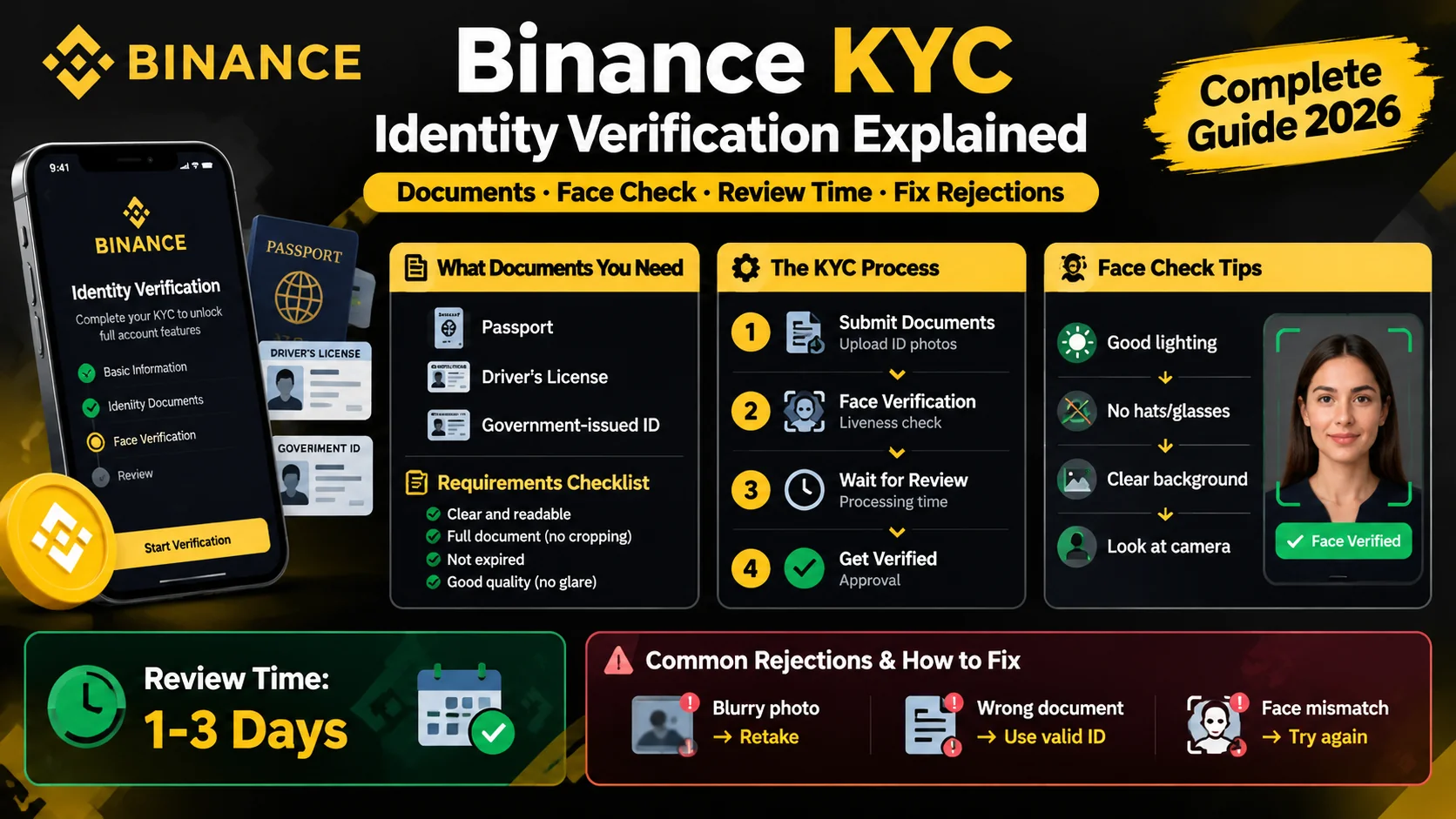
Binance KYC: How Identity Verification Works
Binance requires KYC before you trade. Learn the documents you need, how the face check works, how long review takes, and how to fix rejections.
Binance P2P: Buy and Sell Crypto Peer-to-Peer
How Binance P2P works — buy and sell crypto directly with other users, with zero fees and an escrow system that holds funds until payment is confirmed.
How to Create a Binance Account (2026 Guide)
Create a Binance account in about five minutes: sign up with email or phone, verify KYC, and turn on 2FA. Step-by-step guide for beginners.