
Binance Launchpool: How It Works (2026 Guide)
Binance Launchpool lets you lock BNB or stablecoins to farm a new token before it lists. How it works in 2026, what you really earn, and the risks.
 Lucas Almeida 5 min read
Key takeaways
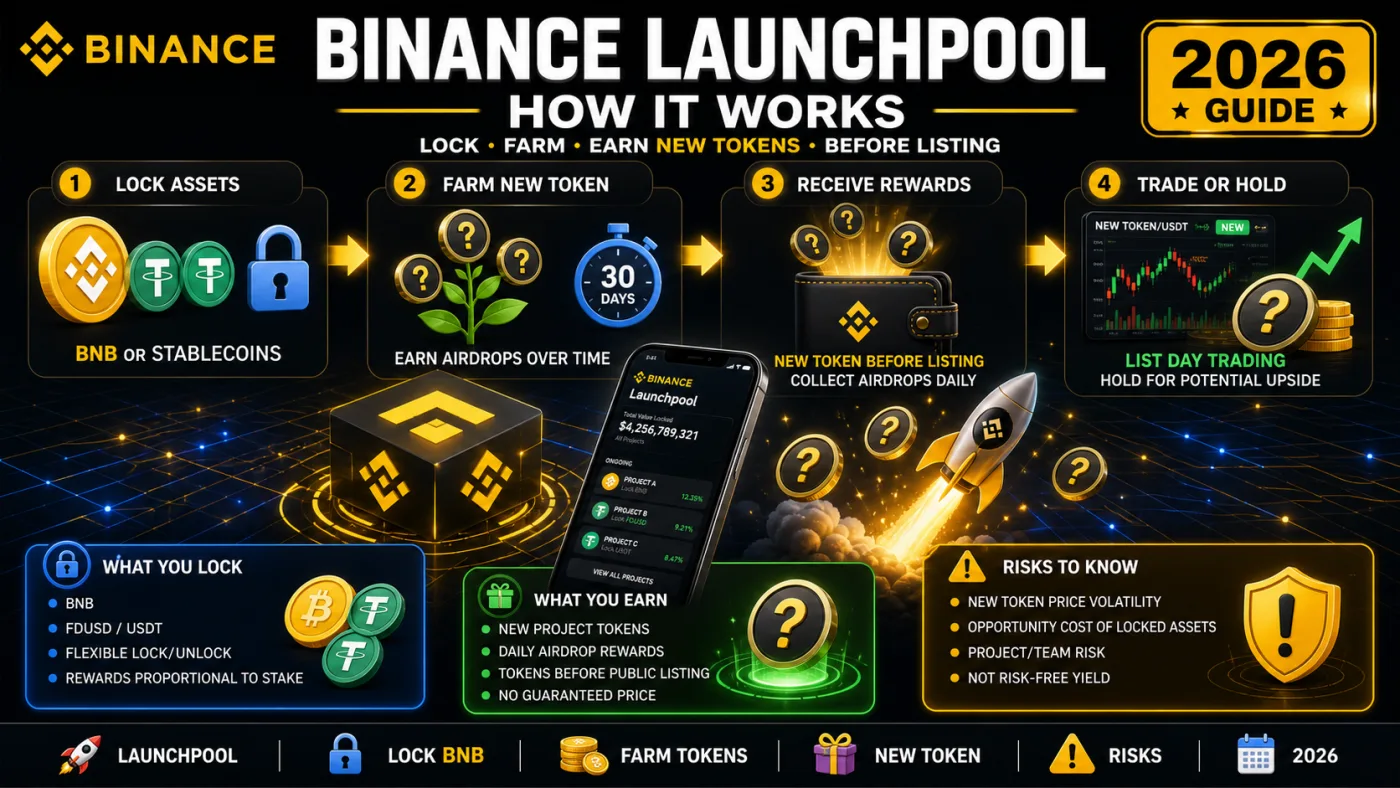
- Binance Launchpool is a farming program: you lock BNB or a stablecoin for a set window and earn a brand-new token before it lists. Your locked coins stay yours and can be unlocked at any time.
- In 2026 it is episodic, not continuous. The 72nd Launchpool, Opinion (OPN), farmed for just two days in March 2026, and Binance's Launchpool page often shows 'new projects coming soon'.
- Binance's everyday new-token program is now HODLer Airdrops: hold BNB in Simple Earn, and tokens are distributed after a snapshot window — no locking required.
- Rewards are share-based, not interest. Your cut is your locked amount divided by the pool total, so the advertised APY compresses as more people join, and per-user hourly caps apply.
- 'Free tokens' is misleading. You do not pay for them, but you carry the new token's price risk, the opportunity cost of locked BNB, platform risk — and in most countries, income tax on receipt.
Binance Launchpool is a farming program: you lock BNB or an accepted stablecoin for a set window and earn a brand-new token before it lists on the exchange. Your locked coins stay yours — you can unlock at any time — but what you earn is a share of the pool, not a fixed interest rate.
The part most guides still get wrong is cadence. In 2026 Launchpool is episodic, not continuous: the 72nd project, Opinion (OPN), farmed for just two days, March 3–4, 2026, and Binance’s Launchpool page regularly shows “new projects coming soon” (announcement and page checked October 2026). If what you actually want is regular new-token rewards, the program doing the heavy lifting today is HODLer Airdrops, where you simply hold BNB in Simple Earn.
This guide covers how Launchpool works mechanically, what you can realistically earn, how to join when a project is live, and the risks that the “free crypto” framing hides.
⚠️ The most important thing first: don’t tap Sign Up directly in the app — you’ll miss the new-user rewards. The welcome benefits only apply when you register through an invite link or enter the referral code BN2688. Remember this.
What Is Binance Launchpool?
Launchpool is a “farm”: you park existing coins to earn a new token, rather than paying for it up front. Binance launched the format in September 2020, and it sits under the same Launchpad umbrella as the older token-sale products — but the mechanics are different from buying a token sale allocation.
Three things define it:
- You don’t buy the new token. You lock BNB or a stablecoin you already hold, and the project’s tokens are distributed to the pool proportional to everyone’s locked amounts.
- Your coins remain yours. Launchpool locks are not fixed-term deposits. You can unlock whenever you want, and the rewards you have already earned stay with you.
- The project decides the rules. Each launch sets its own pools, dates, reward allocation, and per-user caps. There is no universal “Launchpool APY”.
The most recent project is a useful concrete example. Opinion (OPN) allocated 20,000,000 OPN — 2% of total supply — across four pools, with 80% of the rewards going to the BNB pool:
| OPN pool | Reward share | Tokens allocated | Hourly cap per user |
|---|---|---|---|
| BNB | 80% | 16,000,000 OPN | 33,333 OPN |
| USDC | 10% | 2,000,000 OPN | 4,166 OPN |
| U | 5% | 1,000,000 OPN | 2,083 OPN |
| USD1 | 5% | 1,000,000 OPN | 2,083 OPN |
Source: Binance’s Opinion (OPN) Launchpool announcement, 2026-03-02. Farming ran March 3–4, 2026, with spot listing on March 5 at 13:00 UTC.
How Does Binance Launchpool Actually Work?
Rewards accrue hourly and are calculated on your share of each pool, not on a rate you are promised in advance. That single sentence explains almost everything that surprises first-time farmers.
The formula is simple:
Your reward = (your locked amount ÷ total locked in that pool) × that pool’s total reward — applied hour by hour, and capped per user per hour.
Two consequences follow. First, the more people who lock into the pool, the smaller your share — the “APY” you see on the project page is an estimate that shrinks as the pool grows. Second, the hourly hard cap only matters for large positions: in the OPN BNB pool, hitting the 33,333 OPN hourly cap would have required roughly 8,333 BNB, or about 0.2% of a 4-million-BNB pool.
Three mechanical details are worth knowing before you lock anything:
- BNB in Simple Earn counts automatically. BNB subscribed to Simple Earn (Flexible or Locked) and On-Chain Yields is included in your Launchpool BNB balance without extra steps. One exception: BNB used as collateral for Binance Loans (flexible rate) is excluded.
- Minimums are tiny. Binance’s Launchpool FAQ lists a minimum lock of 0.01 of the asset, so the barrier is eligibility, not size.
- Exit is automatic at the end. When farming ends, locked assets and unclaimed rewards are returned to your Spot wallet automatically, typically within 90 minutes. The new token then lists, often with a Seed Tag — Binance’s label for early-stage, higher-volatility listings.
What Changed in 2026?
Launchpool used to run almost continuously; in 2026 it runs in bursts, and the format has compressed. Early projects farmed for roughly a month. OPN farmed for two days.
The shift is visible in the product mix. Third-party trackers counted only two Launchpool events in the 12 months to August 2026, against roughly 39 HODLer Airdrop rounds in the same period — Binance’s own announcement numbering supports the picture: OPN was Launchpool project #72, while HODLer Airdrops had already passed its 65th project by mid-2026.
What changed in practice:
- You cannot farm continuously. Between projects, the Launchpool page simply shows “new projects coming soon”. There is nothing to join.
- The window is short. A two-day farm means missing the announcement usually means missing the project entirely.
- Stablecoin pools multiplied. OPN used four pools, including newer dollar tokens (U and USD1), giving users a way to farm without BNB price exposure — at a much smaller share of the rewards.
- New-token distribution moved elsewhere. Binance now routes most new listings through HODLer Airdrops, Megadrop, and Binance Alpha, with Launchpool reserved for occasional events.
The practical skill in 2026 is not “how do I farm” — it is following Binance’s announcement feed closely enough to act inside a two-day window.
Launchpool vs HODLer Airdrops vs Launchpad
Three Binance programs hand out new tokens, and they are constantly confused. The difference is what you have to do.
| Launchpool | HODLer Airdrops | Launchpad (IEO) | |
|---|---|---|---|
| What you do | Lock BNB or a stablecoin in a specific pool | Hold BNB in Simple Earn / On-Chain Yields | Commit funds to buy tokens at the sale price |
| Lock-up | Soft — unlock any time | None | Committed during subscription |
| How rewards are set | Your share of the pool, hourly | Your hourly average BNB balance during a snapshot window | Fixed allocation at the sale price |
| Typical cadence in 2026 | Occasional, days-long | Frequent, dozens of rounds a year | No public sales in recent years |
| KYC required | Yes | Yes | Yes |
Two details matter for HODLer Airdrops specifically, because it is the program most beginners will actually use:
- Eligibility is based on your hourly average BNB balance across a multi-day snapshot window, with balances above 0.01 BNB counting. Moving BNB in and out mid-window lowers your average.
- Rewards are sent to your Spot wallet automatically, usually within about 24 hours of the announcement. Per-round holding caps change each time, so read the announcement rather than assuming last round’s cap applies.
How Much Can You Realistically Earn?
Your return equals your share of the pool times the pool’s reward — and it falls as more people join. There is no honest way to promise a number in advance, so treat the worked example below as arithmetic, not a forecast.
Assume a BNB pool holding 4,000,000 BNB, paying 16,000,000 tokens over the farming window, and an illustrative listing price of $0.50:
| You lock | Your share of pool | Tokens earned | Illustrative value at $0.50 |
|---|---|---|---|
| 1 BNB | 0.000025% | 4 | ~$2 |
| 10 BNB | 0.00025% | 40 | ~$20 |
| 100 BNB | 0.0025% | 400 | ~$200 |
Source: arithmetic based on the OPN pool structure; pool size and listing price are illustrative, not actual results. BNB price is not included, so compare the token value against what your BNB would have done if left alone.
Three observations from that table:
- The return scales linearly with your position. There is no bonus for small farmers — a 1 BNB position earns 1/100th of a 100 BNB position in the same pool.
- The dollar value is dominated by the listing price. If the token lists at a third of the illustrative price, the reward is a third of the shown value. That is the real variable, and nobody controls it.
- Stablecoin pools trade yield for safety. In OPN, the USDC pool carried 10% of the rewards versus 80% for BNB — lower upside, but no exposure to a BNB drawdown during the farm.
The APY shown on the Binance project page combines the current pool size with a reference price. Both inputs move, which is why early APRs on launch pages look spectacular and settle lower within hours.
What Do You Need Before You Start?
Four things, and only one of them is money.
- A verified Binance account. Launchpool is closed to unverified accounts, so complete identity verification first. Registration through an invite link keeps the referral code attached — see how to create a Binance account.
- An eligible jurisdiction. The global program excludes the US and a list of restricted regions that each announcement spells out. US residents can only use Binance.US, which is a separate platform with a separate referral program.
- The asset the pool accepts. BNB for the main pool, or the stablecoin named in the announcement. Depositing BNB from another wallet or buying it on the spot market both work.
- An updated app. Project-specific requirements are real: the OPN announcement required app version 2.89.0 or later, and an outdated app is a common reason the Launchpool tab appears empty.
How to Join a Binance Launchpool, Step by Step
Here is the full flow, from zero to holding the new token.
Step 1: Create and verify your account
Register through an invite link so the referral code applies automatically, then finish KYC. Both steps are prerequisites for every Binance reward program, not just this one.
💡 Don't have a Binance account yet? Sign up now — 20% fee rebate on spot and futures — enter the referral code BN2688.
Step 2: Get BNB into your account
Buy BNB on the spot market or deposit it. If you plan to use a stablecoin pool instead, hold the stablecoin the project accepts — not every project takes USDT. If you farm several pools across the year, a recurring buy builds the BNB position gradually instead of forcing you to pick one entry price.
Step 3: Confirm a project is live
Open Launchpool in the app (or the Launchpool page on the website) and check for an active project and its dates. If the page shows “new projects coming soon”, stop here — there is nothing to farm, and no amount of preparation changes that.
Step 4: Lock into a pool
Choose a pool, enter the amount, and confirm. Read three things on the confirmation screen before you tap through: the farming start and end dates, the per-user hourly cap, and whether the pool uses BNB or a stablecoin.
Step 5: Track accrual
Rewards accrue hourly and are distributed daily in most projects. Check your position against the hourly cap. If your position is large enough to hit the cap, the excess locked amount earns nothing — splitting across pools is the usual fix.
Step 6: Unlock and decide
Your lock can be released at any time. When farming ends, everything returns to Spot automatically. You then face the only decision that actually determines your profit: sell the new token, hold it, or convert it into something you understand better. Most launch tokens are volatile, and the listing day is usually the highest-liquidity day they will see for a while.
What Are the Risks Most Guides Skip?
“Free crypto” describes the fee, not the risk. Five things can turn a Launchpool farm into a loss.
- New-token price risk. Launch tokens are early-stage by definition — OPN listed with a Seed Tag and only 19.85% of supply circulating at listing. A large share of future supply typically unlocks later, which is a structural headwind on price.
- APY compression. The advertised figure assumes the pool size at the moment you look. When a launch attracts attention, the pool can multiply in size within hours and your share shrinks with it.
- Opportunity cost on BNB. Locking BNB during a rally is a real cost if you would otherwise have sold. The soft lock protects you from a forced exit, not from missing a move.
- Platform and custody risk. Your coins sit on Binance throughout. Launchpool is a custodial product; the exchange’s solvency and operational risk are part of your exposure.
- Tax. In most jurisdictions the tokens count as income at receipt, valued at the price when you receive them — and again as capital gains when you sell. Keep records; the crypto taxes guide explains the mechanics.
One more, specific to 2026: compliance changes faster than launch calendars. Restricted-jurisdiction lists and product availability have been revised repeatedly, and a program available at sign-up can be closed to new participants later.
Common Problems and Fixes
| Problem | Likely cause | Fix |
|---|---|---|
| Launchpool page is empty | No active project | Check Binance announcements; wait for the next launch — the page shows “coming soon” between events |
| “Not eligible” error | KYC incomplete or restricted region | Finish verification; check the project announcement’s jurisdiction list |
| Rewards lower than the advertised APY | Pool grew after you locked | Compare your share to the current pool size, not the entry-date APY |
| BNB isn’t counting toward the pool | BNB used as Binance Loans collateral | Move it out of loan collateral; Simple Earn and On-Chain Yields balances count automatically |
| Tokens not in Spot after farming ends | Distribution delay | Wait up to about 90 minutes; then check the announcement for the distribution schedule |
| Launchpool tab missing in the app | Outdated app version | Update to the version stated in the announcement (2.89.0+ for OPN) |
Is Launchpool Worth It for Beginners?
It is worth it if you already hold BNB for the long term and you check announcements regularly. It is not worth it if you would buy BNB specifically to farm a two-day project.
A simple decision rule:
- You already hold BNB and read announcements → farm when a project appears. The marginal effort is a few taps, and the downside is bounded by BNB’s own price movement.
- You want regular new-token rewards with zero locking → use HODLer Airdrops through Binance Earn instead. Hold BNB in Simple Earn and let snapshots do the work.
- You would buy BNB just for the farm → skip it. You take on BNB price risk, trading fees, and token price risk to earn a reward whose value is unknown until listing.
- You are considering borrowing to farm → don’t. Interest plus liquidation risk on collateral swamps any plausible reward.
The Bottom Line
Binance Launchpool lets you lock BNB or a stablecoin for a short window and earn a new token before it lists — but in 2026 it runs as occasional two-day events rather than a permanent yield product. Your reward is your share of the pool, the advertised APY compresses as the pool grows, and the real risk is the price of the token you receive, not a fee you pay.
If you want the habit without the timing problem, hold BNB in Simple Earn and let HODLer Airdrops find you. If you want to farm, follow the announcements and be ready to act within days.
New to Binance? Start with creating your account and applying the referral code at sign-up — then read Binance Earn for the products that pay while you wait for the next launch. If you are still deciding how much to put in, the dollar-cost averaging guide is a better starting point than any single launch.
Don't have a Binance account yet?Sign up nowenter the referral codeBN2688
Frequently asked questions
What is Binance Launchpool?
Is Binance Launchpool free?
How much can I earn from a Launchpool?
Can I withdraw my coins during a Launchpool?
What is the difference between Launchpool and HODLer Airdrops?
Can US users join Binance Launchpool?
Editor-in-Chief & Lead Researcher
Editor of MyCryptoStart. Independent researcher of cryptocurrency exchanges, focused on fees, security, KYC, and onboarding — publishes step-by-step guides in plain English for beginners.
View author page →Some links on this page are affiliate links: we may earn a commission at no extra cost to you. This content is educational and is not financial, investment, or legal advice. Affiliate disclosure · Disclaimer.
Continue reading
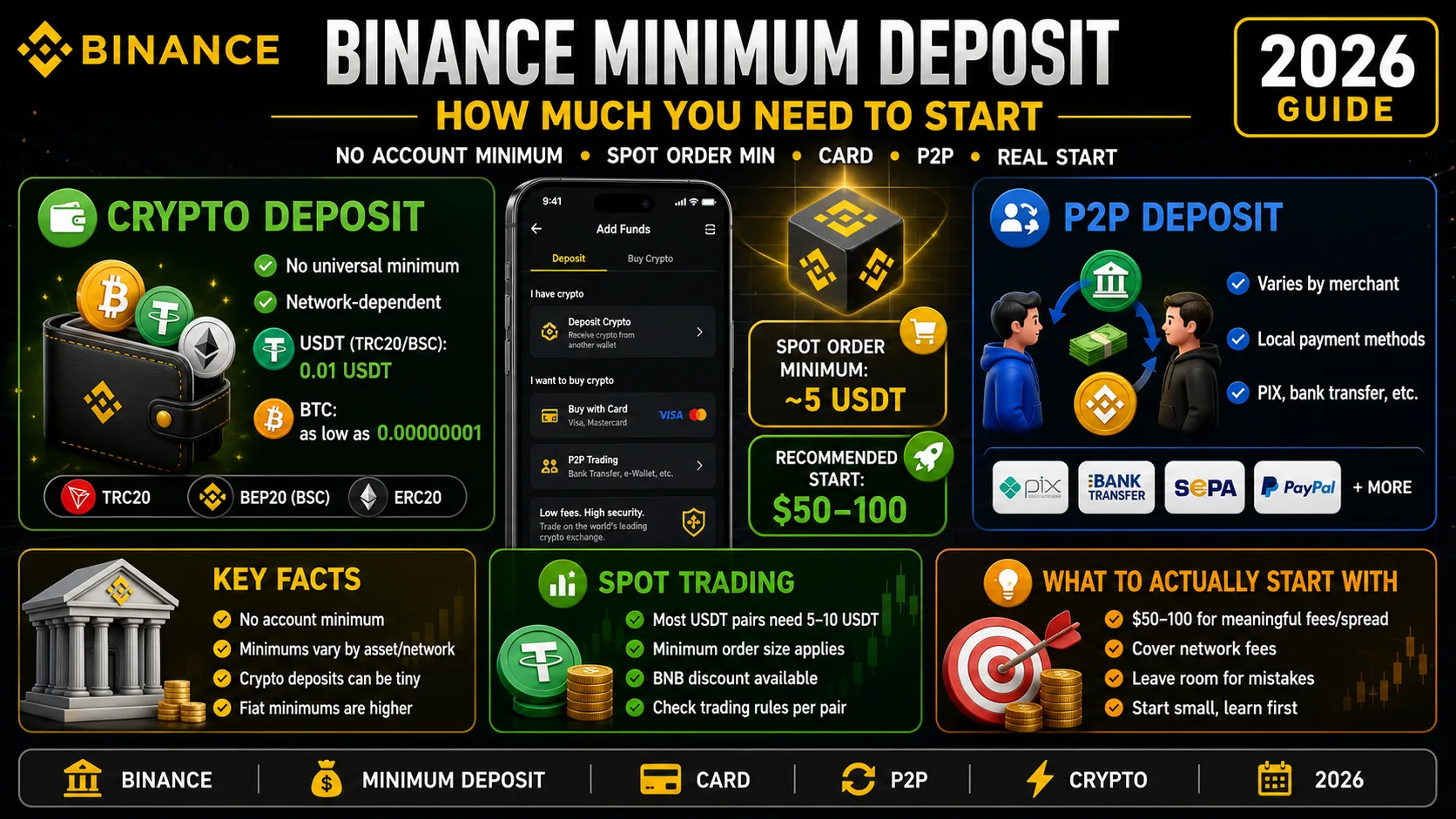
Binance Minimum Deposit: How Much You Need in 2026
Binance has no account minimum, but most spot orders need 5 USDT. The real deposit, card and P2P minimums — and how much to actually start with.
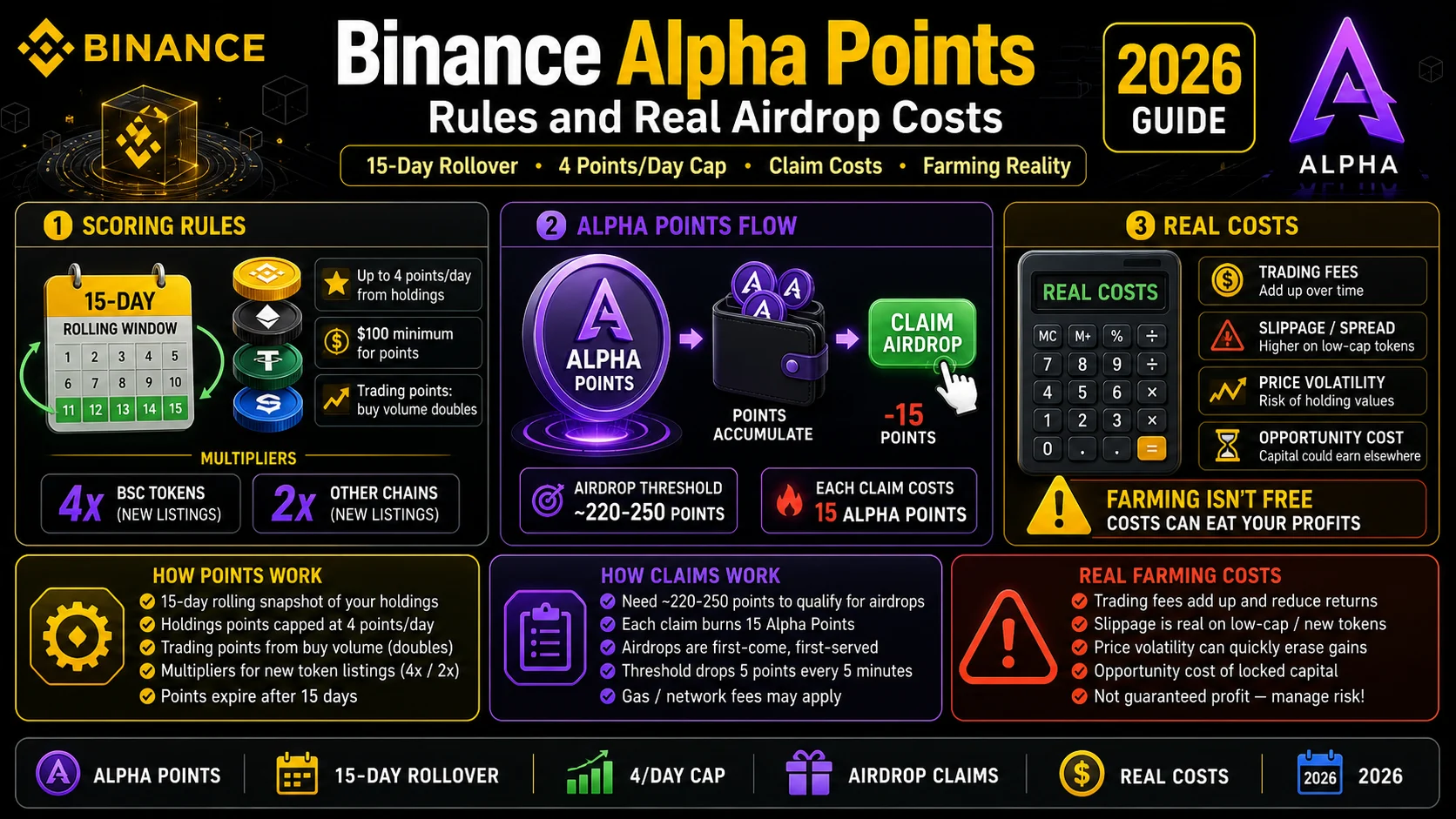
Binance Alpha Points (2026): Rules and Real Airdrop Costs
Alpha Points roll over 15 days and cap at 4 points a day from holdings. Here is how the scoring works, how claims work, and what farming really costs.
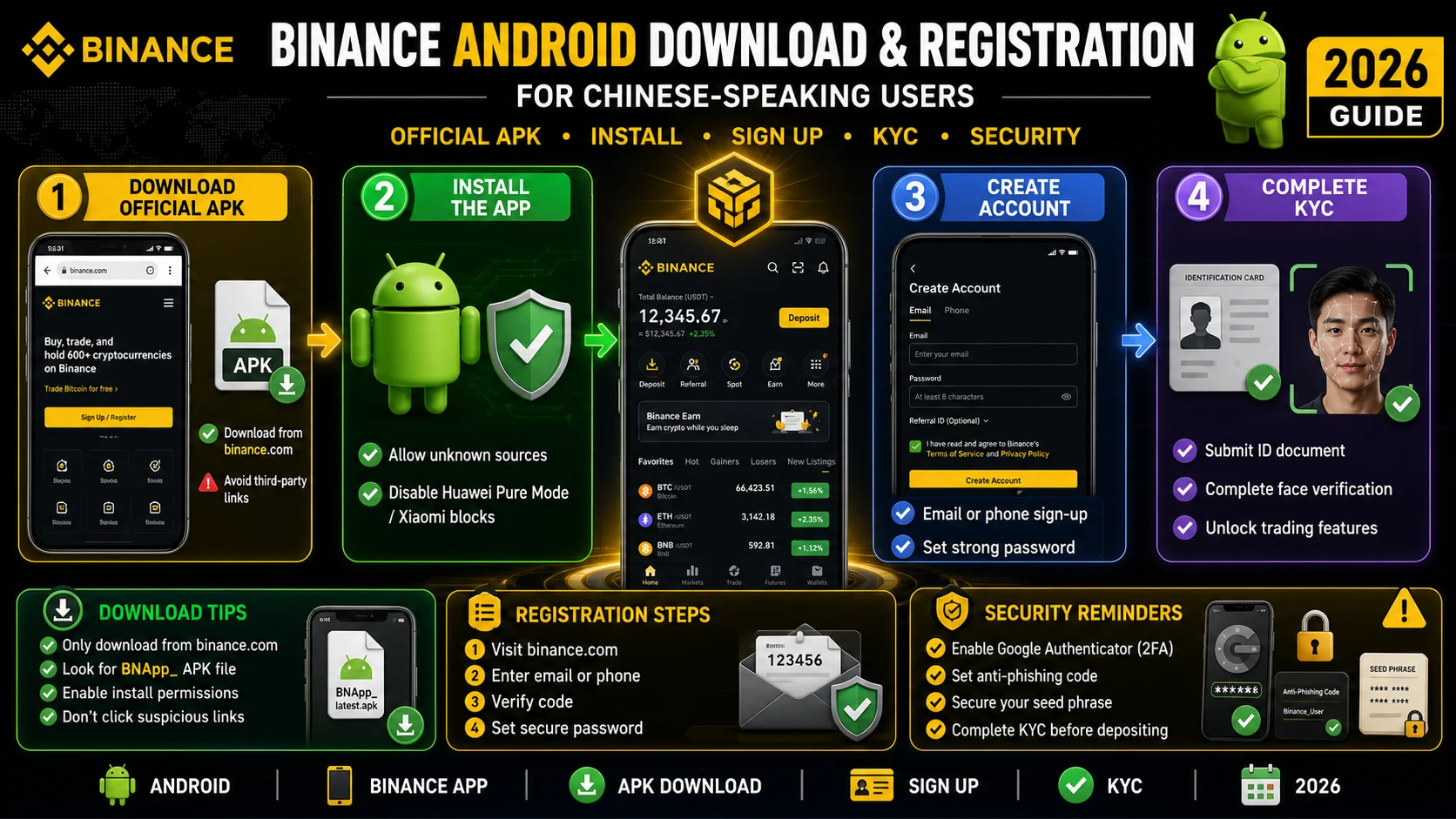
Binance in Chinese: Android Download and Registration (2026)
An Android walkthrough for Chinese speakers: official download sources, OEM install blocks, language settings, registration, KYC, and a first deposit.