
Binance Alpha Points (2026): Rules and Real Airdrop Costs
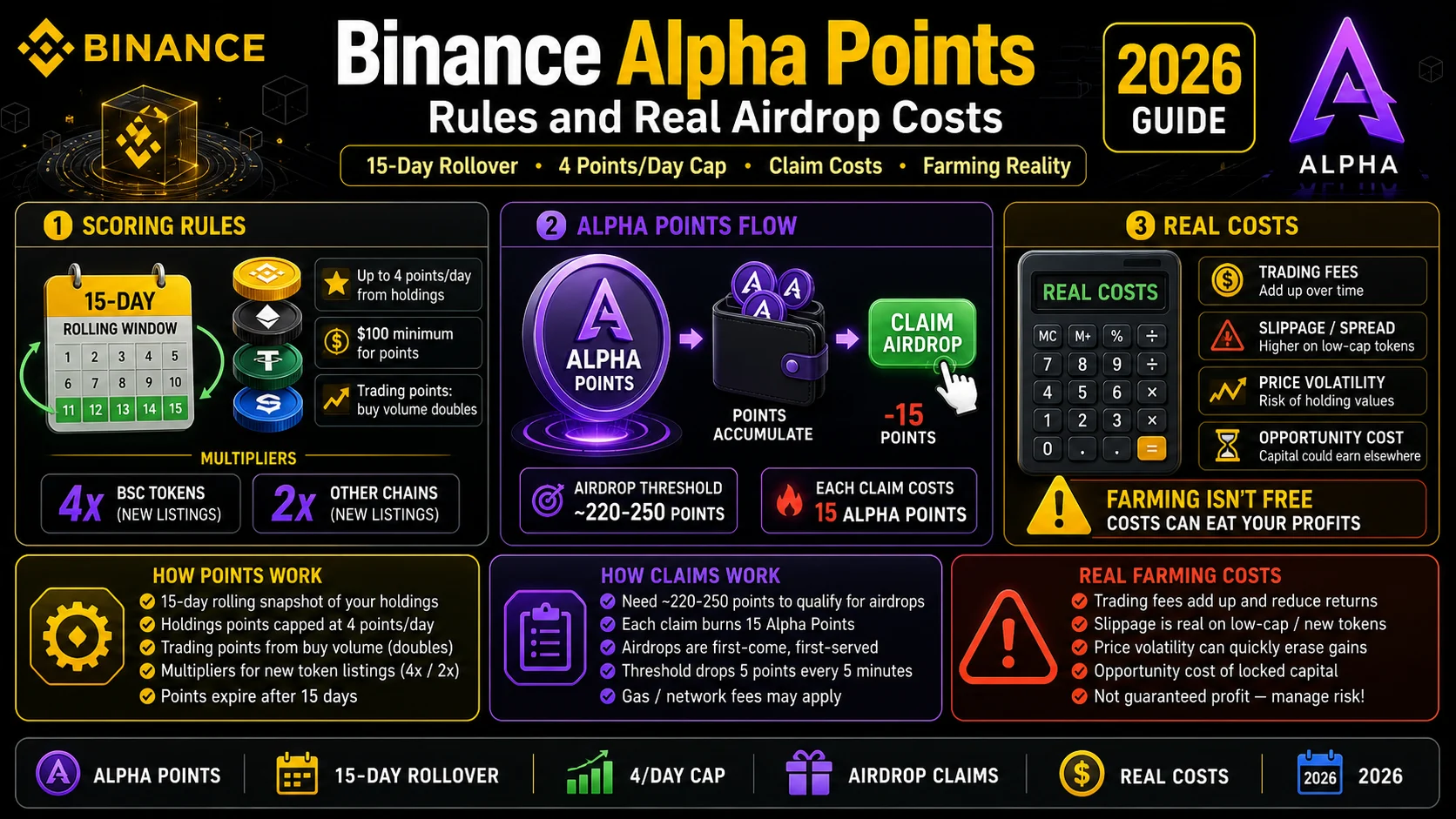
Alpha Points roll over 15 days and cap at 4 points a day from holdings. Here is how the scoring works, how claims work, and what farming really costs.
 Lucas Almeida 5 min read
Key takeaways
- Alpha Points are the sum of your balance points and Alpha purchase-volume points over the last 15 days, snapshotted daily at 23:59:59 UTC.
- Holding assets earns at most 4 points a day, or 60 points across a full 15-day window — below the 220–250 point thresholds common in October 2026.
- Volume points double with each point: $2 of daily buying earns 1 point, $1,024 earns 10, and $32,768 earns 15.
- Claiming an airdrop usually costs 15 points, and most events run a two-phase threshold with a 24-hour claim window.
- Farming is not linear: going from 150 to 245 points can require roughly 39 times more daily volume, turning a $4–$19 cost into $166–$756.
Binance Alpha Points are not a check-in streak. They are a rolling 15-day activity score: up to 4 points a day from your balance, plus points earned from buying Alpha tokens, where every doubling of volume adds one point. In October 2026, most airdrop thresholds sat between 220 and 250 points, and a claim typically cost another 15 points. Staying eligible takes two weeks of consistent activity, not one big trade.
The part most guides skip is the cost. Because volume points scale logarithmically, going from 150 to 245 points can require about 39 times more daily buying volume. This guide explains the scoring, the claim mechanics, and the real cost of farming — so you can decide whether the game is worth playing.
⚠️ The most important thing first: don’t tap Sign Up directly in the app — you’ll miss the new-user rewards. The welcome benefits only apply when you register through an invite link or enter the referral code BN2688. Remember this.
What are Binance Alpha Points?
Alpha Points measure how active you are in Binance Alpha and the Binance Wallet, and they determine access to Alpha airdrops, TGEs, and some on-chain tasks. They are not a token: you cannot transfer them, sell them, or cash them out.
Points unlock four main things:
| Benefit | What it is | Does it consume points? |
|---|---|---|
| Alpha airdrop | A project distributes tokens to eligible users through Binance | Usually 15 points to claim |
| TGE / Pre-TGE | Early access to new token sales, sometimes with a lock-up | Depends on the event |
| Alpha Box | A box pooling up to 10 projects, with common, rare, and hidden tiers | Points are consumed; one project is drawn at random |
| Booster tasks | On-chain tasks that reward users | No points consumed, but usually requires at least 61 points |
Binance says 221 tokens launched through Alpha airdrops, TGEs, or Booster campaigns between April 2025 and October 2025. The incentive loop is simple: projects want exposure, Binance wants activity, and users want tokens.
The key distinction: points determine eligibility, not profit. Hitting the threshold gets you a ticket; what the ticket is worth depends on the project, the listing price, and when you sell.
How are Alpha Points calculated?
Daily points = balance points + Alpha purchase-volume points. Both are snapshotted at 23:59:59 UTC and summed across the last 15 days.
Balance points: a maximum of 4 a day
Balance points are tiered by total assets held on Binance, including spot balances, Alpha account assets, Alpha tokens in the Binance Wallet, some DeFi positions such as slisBNB and PancakeSwap LP, and unrealized futures PnL.
| Total assets (USD) | Points per day |
|---|---|
| $100 to under $1,000 | 1 |
| $1,000 to under $10,000 | 2 |
| $10,000 to under $100,000 | 3 |
| $100,000 or more | 4 |
Balance points cap at 4 a day, or 60 across 15 days. That is below the 220–250 point thresholds common in October 2026, so holding alone cannot get you into most airdrops. Volume points are mandatory.
Volume points: one point per doubling
Volume points count only purchases of Alpha tokens. Selling neither earns nor deducts points. The scale doubles:
| Daily purchase volume (USD) | Volume points |
|---|---|
| $2 | 1 |
| $4 | 2 |
| $8 | 3 |
| $16 | 4 |
| $32 | 5 |
| $64 | 6 |
| $128 | 7 |
| $1,024 | 10 |
| $4,096 | 12 |
| $32,768 | 15 |
This curve is the whole cost story: points rise slowly while volume rises exponentially. Moving from 10 to 11 points requires doubling daily buying from $1,024 to $2,048; the next point requires $4,096.
Two modifiers matter:
- New-token multipliers: newly listed Alpha tokens usually carry a 30-day volume multiplier — 4× on BNB Chain and 2× on other chains. A $100 purchase can count as $400 during the multiplier window.
- Binance-only activity: only trades through Binance’s keyless wallet and centralized exchange count. Wallets that were imported or exported do not. Once an Alpha token lists on regular spot, its volume stops counting toward Alpha.
A 15-day example
Suppose you hold $10,000 in assets and buy $4,096 of Alpha tokens every day:
| Item | Per day | Over 15 days |
|---|---|---|
| Balance points | 3 | 45 |
| Volume points | 12 | 180 |
| Total | 15 | 225 |
225 points sits inside the October 2026 threshold range. Maintaining it requires buying $4,096 every single day, and from day 16 the first day’s points start expiring.
Why do points expire after 15 days?
Alpha Points are the sum of the last 15 days, not a lifetime total. Points earned today disappear 15 days from now, so stopping activity causes the score to fall from day 16 onward.
Three consequences follow:
- A single volume spike fixes one day, not two weeks. Buying $61,440 in one day adds 15 points for that day only; the score still decays over the following 14 days.
- Maintenance matters more than bursts. Staying at 225 points requires an average of 15 points a day, which means daily balance and volume activity.
- Eligibility is fixed when an event starts. If your score is high enough at the snapshot, you qualify; topping up after the event opens usually does not help.
The snapshot is taken at 23:59:59 UTC, and points usually refresh the next morning. Confirm the current score on the Alpha Points page in the app.
How do you claim an Alpha airdrop?
Airdrops are not automatic: you claim them on the event page, usually for 15 points, within a window that is often 24 hours. Miss the window and the eligibility is gone.
The standard flow:
- Open the Binance app and search for “Alpha” or “Alpha events.”
- Open the Airdrop tab and check the current event, threshold, prize pool, and claim time.
- Check your score. The event page shows your current points and whether you qualify.
- Enter the page 5–10 minutes early and complete any face or security verification in advance.
- Tap Claim and confirm the points deduction. The usual cost is 15 points; the event page is authoritative.
- Wait for delivery. Tokens typically arrive in the Binance Wallet within 1–2 days, after which you can move them to spot and sell.
Since 19 June 2025, most airdrops use a two-phase allocation:
| Phase | Threshold | Rule |
|---|---|---|
| Phase 1 | Higher threshold X | Qualified users claim first, on a first-come basis |
| Phase 2 | Lower threshold Y (Y < X) | Opens if the pool remains; some events drop the threshold by 5 points every 5 minutes |
The two-phase design rewards high scores first and lets lower scores pick up leftovers. If you are just below the initial threshold, waiting for phase 2 can work — but the pool may already be empty.
Two other formats are worth knowing:
- Alpha Box: launched in February 2026 and updated in April 2026, a box pools up to 10 projects across common, rare, and hidden tiers. Points buy one random draw, and each user can claim once per event.
- Booster tasks: on-chain tasks that do not consume points but usually require at least 61 points. They can involve approvals and contract interactions, so phishing risk is real.
What does farming actually cost?
Farming cost = trading fees + slippage + capital lock-up, not just fees. And because volume doubles with each point, the cost curve is steep.
The model below assumes $10,000 in balance (3 points a day), both buy and sell legs included, Alpha limit-order fees of 0.01% and market-order fees around 0.1%, round-trip slippage of 0.1%–0.4%, and no funding, withdrawal, or token price moves.
| Target points (15 days) | Daily points | Volume points/day | Daily buying | 15-day two-way volume | Fees (0.01%–0.1%) | Slippage (0.1%–0.4%) | Total cost |
|---|---|---|---|---|---|---|---|
| 150 | 10 | 7 | $128 | $3,840 | $0.4–$3.8 | $3.8–$15.4 | $4–$19 |
| 200 | 13.3 | 10.3 | ~$1,260 | $37,800 | $3.8–$37.8 | $37.8–$151 | $42–$189 |
| 225 | 15 | 12 | $4,096 | $122,880 | $12.3–$122.9 | $123–$492 | $135–$615 |
| 245 | 16.3 | 12.3 | ~$5,040 | $151,200 | $15.1–$151.2 | $151–$605 | $166–$756 |
The shape matters more than the exact numbers:
- 150 points is cheap; 225 is expensive; 245 is another tier. From 150 to 245, points rise 63%, but daily buying rises from $128 to $5,040 — about 39 times.
- Slippage often costs more than fees. At a 0.01% limit-order fee, fees are a few dollars, but Alpha token spreads and slippage of 0.1%–0.4% can eat the savings on a single round trip.
- The sell leg costs money but earns no points. You have to sell to recycle capital; selling pays fees and slippage without adding volume points. Many guides count only the buy side and understate the cost by half.
- Capital lock-up is a hidden cost. Buying $4,096 a day requires that much capital in rotation; if the money could otherwise earn yield, that opportunity cost belongs in the model.
Cost per point
Divide total cost by target points to get a comparable number:
| Target points | Total cost | Cost per point |
|---|---|---|
| 150 | $4–$19 | $0.03–$0.13 |
| 200 | $42–$189 | $0.21–$0.95 |
| 225 | $135–$615 | $0.60–$2.73 |
| 245 | $166–$756 | $0.68–$3.09 |
When an airdrop requires 245 points, multiply 245 by your cost per point before deciding. If your cost is $1 per point, the threshold costs $245; an airdrop worth $100 is a losing trade.
What is an airdrop actually worth?
Airdrop values are not guaranteed and vary widely — tens of dollars is common, hundreds happen, and four-figure outliers exist but are not the norm. The token often keeps falling after delivery.
Four variables drive the result:
| Variable | Effect | What to do |
|---|---|---|
| Project quality | Strong projects list higher; weak ones break issue | Check backing, funding, and community before claiming |
| Number of claimants | Lower thresholds mean more claims and a smaller share | Prefer higher-threshold, larger-pool events |
| Exit timing | Airdrop tokens often spike at listing and fade | Set a sell level in advance |
| Vesting | Some airdrops lock or vest tokens | Read the unlock schedule; do not treat paper value as cash |
A practical rule: if you cannot sell within 24 hours, or you do not understand the project, halve the headline value. Farming costs are certain cash outflows; airdrop returns are uncertain token prices. They do not subtract cleanly.
What are the main risks?
The biggest risk is not failing to qualify — it is qualifying for something that is not worth the cost. Five risks, roughly in order of likelihood:
- Thresholds keep rising. Early 2025 thresholds were often 140–190 points; by October 2026 they were 220–250. More participants means higher thresholds and higher costs for latecomers.
- Points expire. The 15-day window means a missed week erases two weeks of maintenance spending.
- Token prices fall. Airdrop tokens commonly fade after listing; waiting to “break even” can turn a gain into a loss.
- Wear and tear is underestimated. Fees, slippage, spreads, and capital lock-up can make the real cost 2–4 times the headline fee.
- Account and compliance risk. Multiple accounts, borrowed identities, and bulk registrations can trigger risk controls. Some jurisdictions restrict crypto trading, so check local rules first.
Regional note: crypto rules differ by country. Binance’s availability and the products you can access depend on your jurisdiction. This article explains mechanics, not legal or investment advice.
Should you participate?
Alpha Points suit people who already trade on Binance, hold assets there, and can spare a few minutes a day; they do not suit people opening an account solely to farm, borrowing money, or running multiple accounts. The first group has low marginal cost; the second gets eaten by fees and slippage.
| Your situation | Recommendation | Why |
|---|---|---|
| Already holding $10,000+ on Binance | Reasonable to participate | Balance points already contribute 3 a day |
| Already trading spot every month | Reasonable | Routing some buys through Alpha lowers marginal cost |
| New account with under $1,000 | Be cautious | Balance points are only 1 a day; volume must be bought |
| Planning multiple accounts | Do not | Risk controls, KYC, and reward cancellation outweigh the upside |
| Cannot tolerate token volatility | Skip it | Alpha tokens and airdrop tokens can fall sharply |
The sensible framing is that Alpha is a bonus for active users, not a zero-cost side hustle. Treat it as a by-product of trading you would do anyway, and the expected value becomes far more realistic.
💡 Don't have a Binance account yet? Sign up now — 20% fee rebate on spot and futures — enter the referral code BN2688.
If you want to participate, start with how to register on Binance, how to complete KYC, and how the Binance Wallet works. For the broader airdrop landscape, read what crypto airdrops are and how to avoid scams.
Disclaimer: This article is for education only and is not investment advice. Alpha Points rules, airdrop thresholds, claim costs, and trading fees change with platform policy and each event. Figures reflect public information from October–November 2026; confirm the live event page before acting. Alpha tokens are volatile and airdrop value is not guaranteed. Check the rules for your jurisdiction.
Don't have a Binance account yet?Sign up nowenter the referral codeBN2688
Frequently asked questions
Do Binance Alpha Points expire?
How many Alpha Points can I earn just by holding assets?
How many points does it cost to claim an Alpha airdrop?
Is farming Alpha Points profitable?
Are Alpha trading fees the same as regular spot fees?
Can I use multiple accounts to farm Alpha Points?
Editor-in-Chief & Lead Researcher
Editor of MyCryptoStart. Independent researcher of cryptocurrency exchanges, focused on fees, security, KYC, and onboarding — publishes step-by-step guides in plain English for beginners.
View author page →Some links on this page are affiliate links: we may earn a commission at no extra cost to you. This content is educational and is not financial, investment, or legal advice. Affiliate disclosure · Disclaimer.
Continue reading
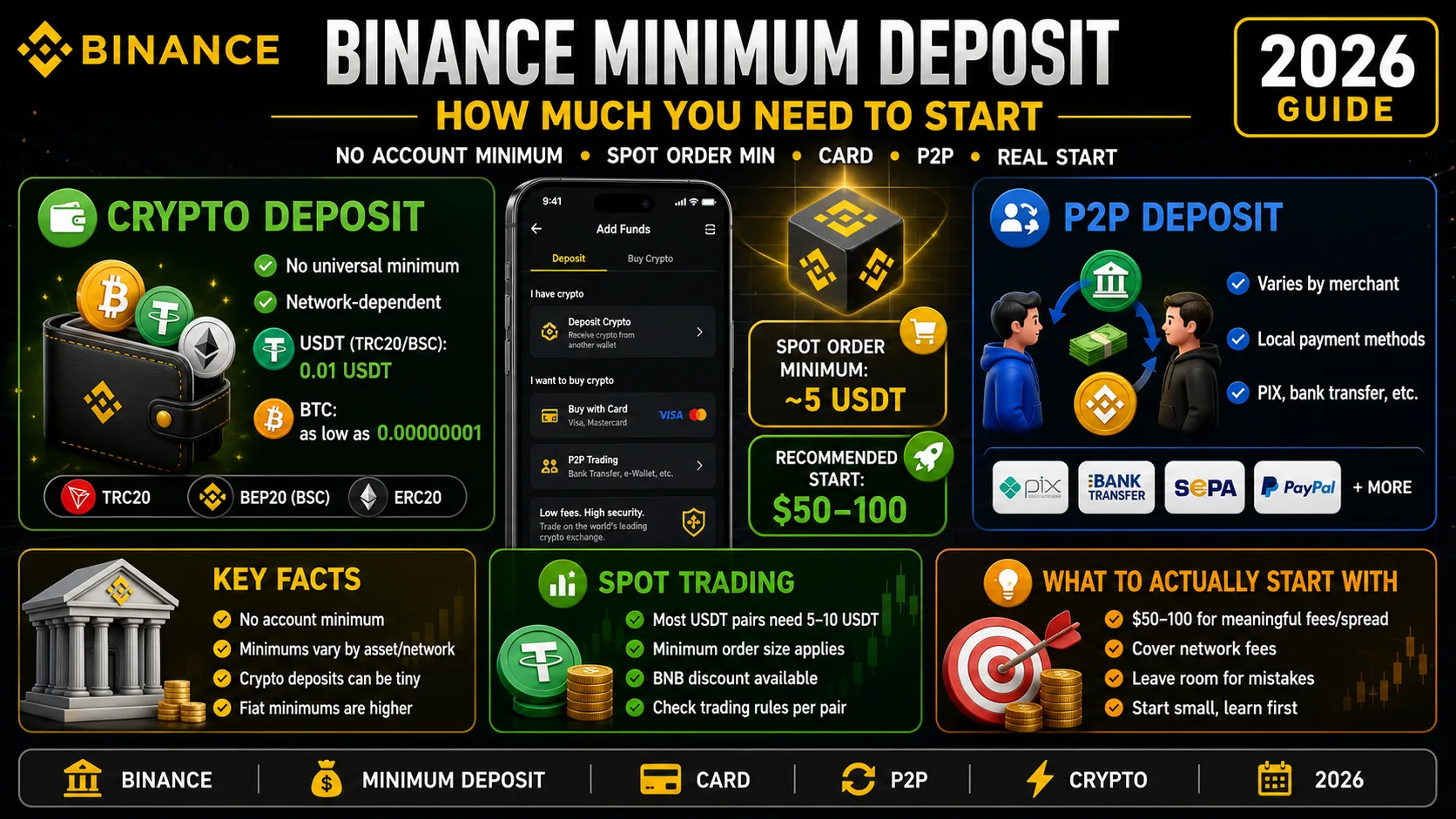
Binance Minimum Deposit: How Much You Need in 2026
Binance has no account minimum, but most spot orders need 5 USDT. The real deposit, card and P2P minimums — and how much to actually start with.

Binance in Chinese: Android Download and Registration (2026)
An Android walkthrough for Chinese speakers: official download sources, OEM install blocks, language settings, registration, KYC, and a first deposit.
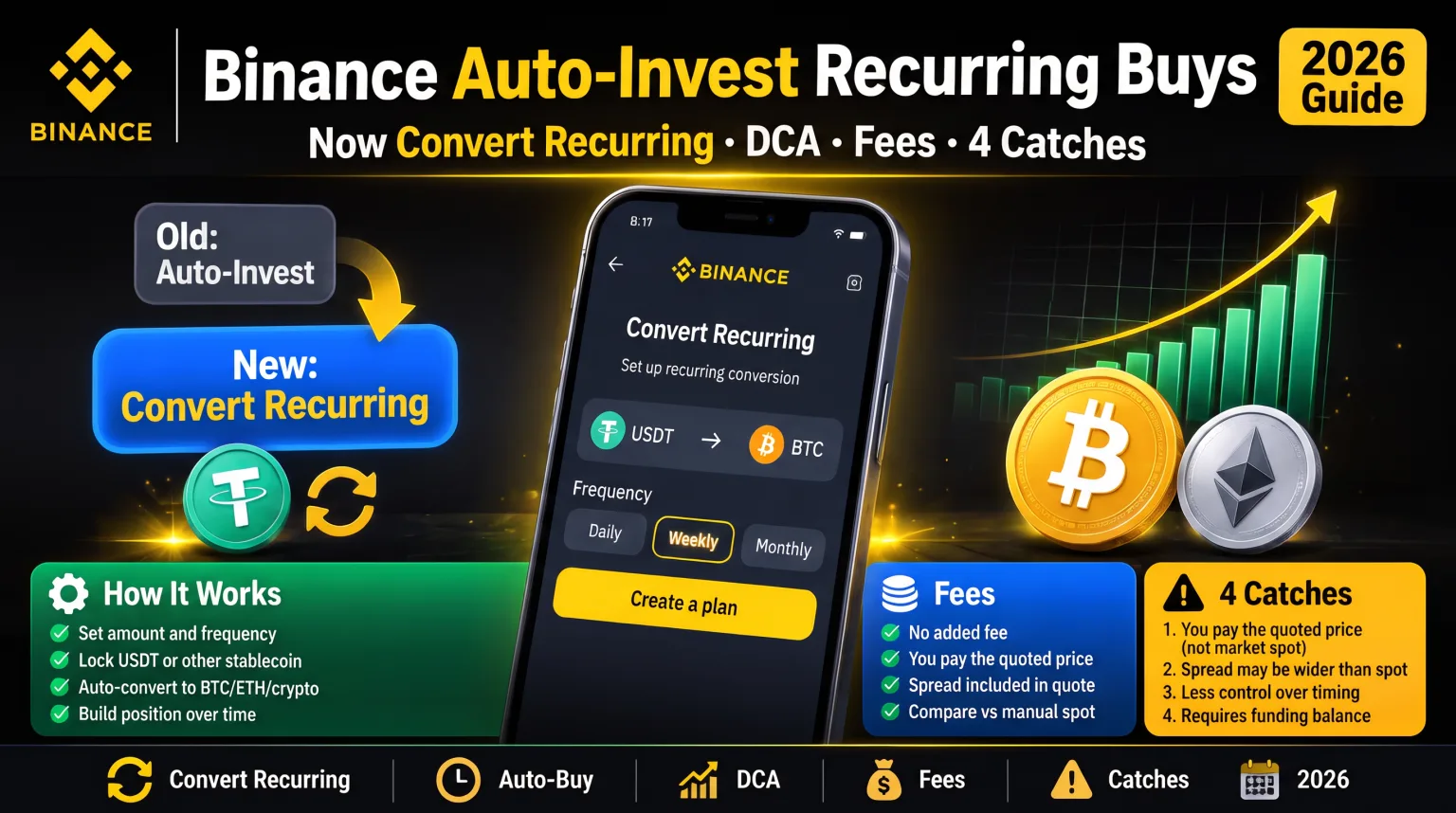
Binance Auto-Invest: Recurring Buys (2026)
Binance Auto-Invest is now Convert Recurring: no added fee, but you pay the quoted price. Set up a DCA plan in 2026, what it costs, and four catches.