
Custodial vs Non-Custodial Wallets: What's Safer?
Custodial wallets let a platform hold your keys; non-custodial wallets make you the bank. Compare control, recovery, security, and the right split.
 Lucas Almeida 5 min read
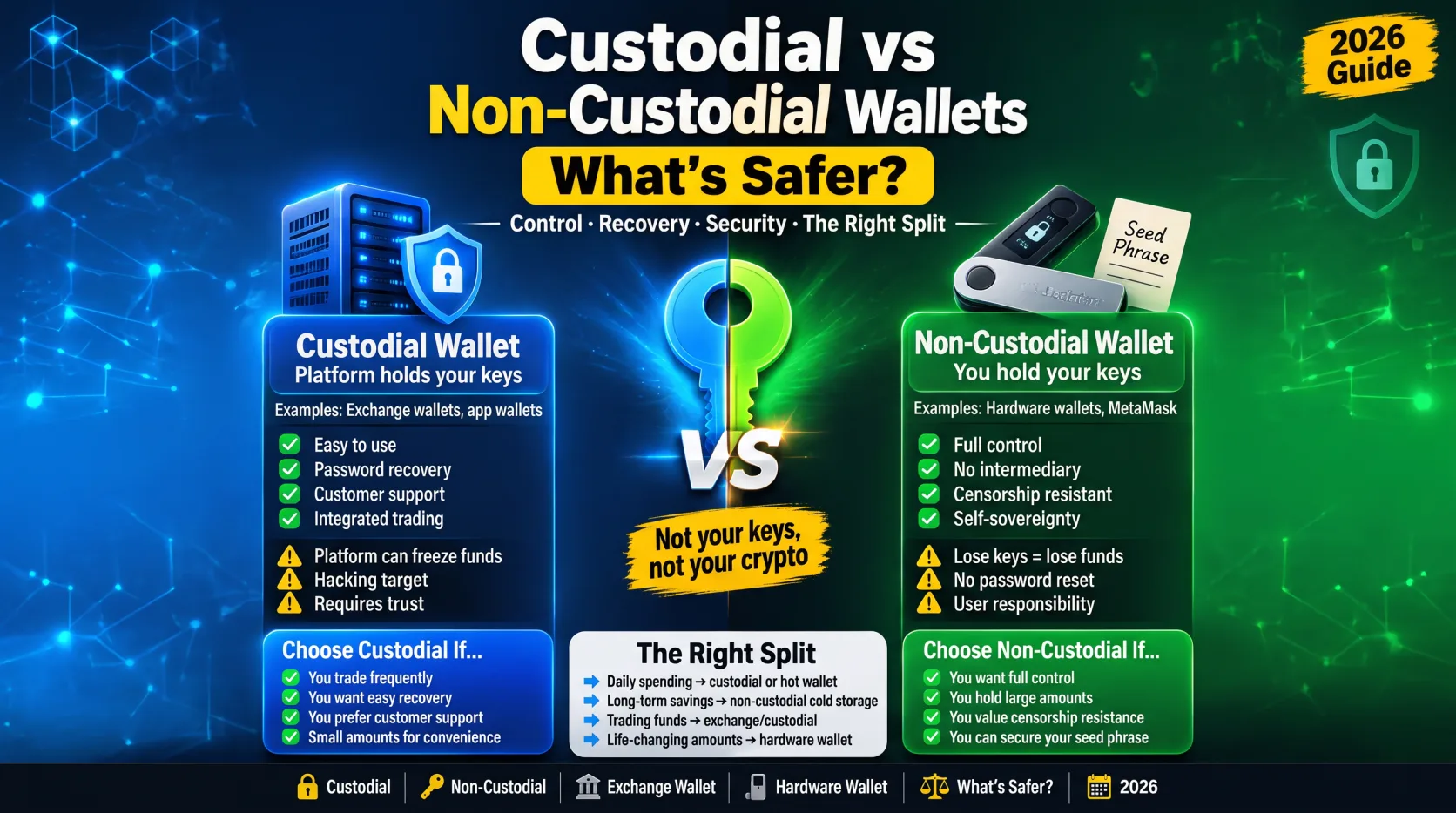
Key takeaways
- Custodial means a platform holds the private keys and you hold an account. Non-custodial means you hold the keys and the platform cannot move your funds.
- The distinction is not hot versus cold. An exchange account is custodial and hot; a hardware wallet is non-custodial and cold; MetaMask is non-custodial and hot.
- Custody changes where a loss comes from. Custodial risk is counterparty failure, withdrawal freezes and platform hacks; non-custodial risk is lost seed phrases, phishing and irreversible mistakes.
- Custodial accounts are generally not bank deposits and not FDIC-insured. A platform can fail, freeze withdrawals or lose keys even when its app looks stable.
- The practical answer is layered: keep a small trading balance on an exchange, and move savings you would miss into a non-custodial wallet with a tested backup.
A custodial wallet is an account where a platform holds the keys — an exchange balance is the most common example. A non-custodial wallet is one where you hold the keys, usually through a seed phrase, and no company can move or freeze your coins. Neither is automatically safer. Custody changes where a loss comes from: a custodial account exposes you to the platform, while a non-custodial wallet exposes you to your own backup and to irreversible mistakes.
That is the whole decision in one sentence. The rest of this guide shows how each model actually fails, what recovery looks like on each side, and how to split your holdings so no single failure can reach everything.
What is the difference between custodial and non-custodial?
The difference is who controls the private key, not whether the wallet is online. If a company can reset your password and move your balance, the wallet is custodial. If only your seed phrase can restore access, it is non-custodial.
This is a different question from hot versus cold. Hot and cold describe whether the key touches the internet. Custodial and non-custodial describe who holds it. The two axes combine:
| Custodial | Non-custodial | |
|---|---|---|
| Hot | Binance, Coinbase, Kraken account | MetaMask, Trust Wallet, Phantom |
| Cold | Exchange cold storage you do not control | Ledger, Trezor, air-gapped wallet |
That table clears up most beginner confusion. An exchange account is not “a wallet you own” — it is an account on a platform that holds the keys. A hardware wallet is not automatically non-custodial if you bought a pre-set device from a reseller and never generated the seed yourself. And a MetaMask wallet is non-custodial even though it runs in your browser and is therefore hot.
The custody question comes first because it decides who you can call when something goes wrong. In a custodial account, you call support. In a non-custodial wallet, there is no one to call.
Custodial vs non-custodial at a glance
Here is the full comparison in one table. The sections below explain each row and the failure cases behind it.
| Custodial | Non-custodial | |
|---|---|---|
| Who holds the keys | The platform | You |
| What you hold | An account and a password | A seed phrase or private key |
| Recovery if access is lost | Password reset, support, KYC | Seed phrase only; no reset |
| Counterparty risk | Yes — insolvency, freeze, hack | No platform can move funds |
| Main personal risk | Trusting the wrong platform | Losing the seed or signing a bad transaction |
| KYC | Usually required | Not at wallet level; on-ramps may require it |
| Insurance | Limited and usually not deposit insurance | None |
| Best for | Buying, selling, active trading | Long-term savings and direct ownership |
How does each model actually fail?
Custodial accounts fail through the platform; non-custodial wallets fail through the owner or the device. That is the sentence to remember, because it tells you which safeguards matter on each side.
Custodial failure modes:
- Insolvency. The platform lends, invests or loses customer assets and cannot return them. FTX is the canonical case: when it collapsed in November 2022, its estate faced a shortfall of roughly $8 billion. Most approved claims have since been repaid, but at November 2022 prices — customers lost years of access and the upside of the assets they thought they owned.
- Withdrawal freezes. A platform can pause withdrawals during a run, a hack, a regulatory action or a liquidity crunch. Your balance may still show on screen while you cannot move it.
- Exchange hacks. Centralized platforms concentrate coins in hot wallets and operational systems. In 2025, roughly $2.7 billion was stolen from crypto platforms, including the $1.5 billion Bybit breach — which Bybit covered in full, but not every exchange can.
- Seizure and legal process. A custodial account is tied to your identity through KYC. Authorities can freeze or seize balances, and a platform can restrict your account for compliance reasons.
- Operational error. Wrong-network deposits, frozen accounts and support queues are real risks, especially when you are new.
Non-custodial failure modes:
- Lost seed phrase. If you lose the phrase and the device, the funds are gone. Chainalysis has estimated that around 23% of mined bitcoin is lost or inaccessible, much of it due to lost keys and passwords.
- Phishing and malicious signatures. A fake site or a bad approval can drain a wallet without ever revealing the seed. Wallet-drainer phishing still cost users about $84 million in 2025 across more than 106,000 victims, according to Scam Sniffer — smaller than in 2024, but far from gone.
- Physical attacks. A person who knows you hold keys can target you at home. Industry reporting has flagged a rise in wrench attacks against self-custody holders, which is why privacy about holdings matters.
- Device and supply-chain compromise. A tampered hardware wallet, a malicious browser extension or a firmware flaw can defeat an otherwise sound setup.
- No recovery and no recourse. A transaction sent to the wrong address cannot be reversed. There is no chargeback and no support ticket that returns the funds.
The honest conclusion is not “one side is safe.” It is that custody moves the loss from a company’s balance sheet to your own operational discipline, or vice versa.
Which is more secure?
Custodial is more secure against personal mistakes; non-custodial is more secure against platform failure. The right question is which risk you are more exposed to at your current balance and experience level.
The numbers show both sides. In 2025, $2.7 billion was stolen from crypto platforms, while personal wallet compromise losses were about $713 million, down from roughly $1.5 billion in 2024, according to Chainalysis. Those figures do not prove one model is safer; they show that both models produce large losses, through different mechanisms.
Two details matter more than the headline totals:
- Platform failures tend to be correlated. When an exchange fails, every customer is affected at once. A personal wallet mistake usually affects one person. Custodial risk is systemic; non-custodial risk is individual.
- Self-custody failures are often irreversible. A platform hack may be covered by reserves, insurance or a guarantee fund, as Bybit showed in 2025. A seed phrase handed to a phishing site is not covered by anyone.
The balanced verdict: a custodial account with a strong password and 2FA is safer than a non-custodial wallet you do not know how to back up. A non-custodial wallet with a tested backup and a hardware signer is safer than leaving years of savings on an exchange. The model is not the whole answer; the execution is.
What happens when you lose access?
Custodial recovery runs through the platform; non-custodial recovery runs through your seed phrase — and only your seed phrase. This is the most practical difference between the two models.
In a custodial account, forgetting your password is usually recoverable: you reset it by email, pass a 2FA check, or contact support and complete identity verification. The platform can also freeze the account if it suspects fraud, which cuts both ways — it can protect you, and it can lock you out. Your access depends on the platform’s process and its continued solvency.
In a non-custodial wallet, the seed phrase is the account. There is no password reset, no support desk and no identity check that can restore it. If the phrase is lost, the funds are lost. If the phrase is stolen, the funds can be stolen instantly and irreversibly. If the phrase is written in a cloud note or photographed, it is one breach away from being someone else’s.
Newer wallets soften this with social recovery and MPC designs, where the key is split among guardians or devices. These can be a reasonable middle ground, but they are not standard, they add setup complexity, and they introduce new trust assumptions. Do not assume a wallet has recovery just because it has a polished app; check the documentation before you fund it.
The practical consequence is simple: a non-custodial setup is only as good as its backup. Test the backup before you deposit meaningful funds. Restore the wallet from the seed on a second device, confirm the addresses match, then wipe the test device. If you cannot restore it, you do not have a backup — you have a hope.
What about privacy, KYC, and control?
Custodial accounts are identity-linked and can be restricted; non-custodial wallets are not anonymous, but they are not accounts a platform can freeze. The privacy difference is real but narrower than many people assume.
A custodial platform usually requires KYC, reports to tax authorities in some jurisdictions, and can freeze or close your account. That is the price of password recovery, fiat rails and regulated access. It also means your holdings are legible to the platform, to regulators and, in a breach, to attackers.
A non-custodial wallet does not require KYC to create, and no platform can freeze it. But the blockchain is public: every transaction is visible, and chain-analysis firms link addresses to people. The exchange or payment provider you use to buy crypto usually performs KYC, and tax rules apply regardless of where the keys sit. Non-custodial means you control the keys; it does not mean you are invisible.
Control is the stronger argument for self-custody. A non-custodial wallet cannot lend your coins, cannot rehypothecate them, cannot pause withdrawals and cannot decide you are ineligible for your own balance. That matters most for savings you do not intend to touch.
What does each cost?
Custodial looks free because the cost is embedded in spreads, trading fees and the risk you accept; non-custodial has visible network fees and a hardware cost. Neither is free, but the costs are easier to see on the non-custodial side.
A custodial account usually charges nothing to open. The platform earns from trading fees, conversion spreads, withdrawal fees and, in some products, lending or staking margins. The hidden cost is counterparty exposure: you are trusting the platform with the full balance, and that exposure is not priced on your statement.
A non-custodial wallet is free to create, but you pay network fees when you move funds, and a hardware wallet costs roughly $50 to $200 as a one-time purchase. There is no monthly custody fee and no platform taking a cut of your balance. The hidden cost is your time and the cost of mistakes: a wrong address or a lost seed can cost everything.
For a long-term holder, the hardware cost is trivial against the balance it protects. For someone with $200 of crypto, a $79 device is a large percentage — and a free hot wallet or a custodial account with 2FA is a reasonable starting point.
Custodial vs non-custodial: which should you choose?
Choose custodial for money you are actively trading or spending, and non-custodial for money you are keeping. That is the decision rule that survives changes in price, platform and experience level.
Use a custodial account if:
- You are buying your first crypto and learning how addresses, networks and fees work.
- You trade or rebalance often and need fast access.
- You want fiat on-ramps, support and password recovery.
- You are keeping only a small working balance.
Use a non-custodial wallet if:
- You are holding savings you do not plan to touch for months or years.
- You want to use DeFi, NFTs or self-custody features directly.
- You accept responsibility for backups and device security.
- You are prepared to test recovery before funding the wallet.
Use both if:
- You buy on an exchange and move long-term holdings off it.
- You want the convenience of a platform without making it the only place your crypto exists.
- You can manage two security setups without confusing them.
The amount is the tie-breaker. A useful working split is a small exchange balance for trading, a small hot wallet for active use, and the majority in a non-custodial cold wallet. The percentages are personal; the principle is that no single failure — a platform collapse, a phishing link, a lost device — should be able to reach everything you own.
How do you set up a safe hybrid?
Start on an exchange, move a test amount, verify the backup, then move the rest — and never store the seed phrase digitally. This sequence catches the mistakes that turn self-custody from protection into a loss.
💡 Don't have a Binance account yet? Sign up now — 20% fee rebate on spot and futures — enter the referral code BN2688.
- Buy on a regulated exchange. Use a platform available in your country, complete KYC, and enable an authenticator app plus a withdrawal whitelist. If you are starting from zero, the Binance registration guide walks through the account setup.
- Set up the non-custodial wallet yourself. Download the wallet from the official site or app store, generate a new seed phrase on the device, and write it on paper or metal. Never use a phrase that came with a device, a message or a “support agent.”
- Test the backup before funding. Restore the wallet on a second device, confirm the address matches, then wipe the test device. A backup you have not restored is not a backup.
- Send a small test transaction. Send a small amount on the correct network, confirm it arrives, then send the rest. This catches wrong-network and wrong-address mistakes while the cost is small.
- Verify every address on the device. For large transfers, check the first and last characters on the hardware wallet’s own screen, not just the computer. Clipboard hijackers swap addresses after you copy them.
- Keep the exchange balance small. Leave only what you need for trading and fees. Move the rest to self-custody on a schedule, not only when the market feels risky.
- Review approvals and access. Revoke token approvals you no longer use, keep the seed offline, and tell one trusted person how your backup works without telling them the phrase. Our seed phrase guide and wallet security guide cover the details.
What should you watch out for?
- “Custodial” does not mean “insured.” Exchange balances are generally not FDIC-insured, and platform guarantee funds cover specific failures, not every loss. Read the terms before treating an exchange as a savings account.
- “Non-custodial” does not mean “unhackable.” Phishing, malicious approvals, fake apps and supply-chain attacks target self-custody users precisely because the keys are valuable. A hardware wallet protects the key, not your judgment.
- A seed phrase in the cloud is not a backup. Screenshots, password managers, email drafts and cloud notes are all reachable by malware and account takeovers. Write it down, store it offline, and consider a metal backup for fire and water resistance.
- Do not use a VPN to open a restricted platform. Custody does not change the platform’s terms. A frozen account is still frozen, and a workaround can put the balance at risk.
- Beware of “recovery” services and fake support. No legitimate support agent needs your seed phrase. Anyone who asks for it is stealing from you, whether the wallet is custodial or non-custodial.
- Plan for inheritance. A custodial account has a beneficiary process; a non-custodial wallet does not. Without a documented, secure plan, your heirs may never access the funds.
The bottom line
Custodial and non-custodial are not a safety ranking; they are two ways of holding the same asset with different failure points. A custodial account is convenient, recoverable and exposed to the platform. A non-custodial wallet is direct, irreversible and exposed to your own backup discipline. The 2022–2025 record shows both sides losing money: FTX and other platform failures on one side, phishing and lost keys on the other.
For most people the answer is a hybrid: buy and trade on a regulated exchange, keep only a working balance there, and move savings into a non-custodial wallet with a tested backup. If you have not opened an exchange account yet, start with the Binance registration guide; if you are ready to move funds off, read how to store crypto safely and hot vs cold wallets next.
Custody terms, insurance and platform practices were checked on 2 November 2026 against published exchange terms, Chainalysis’s 2026 crypto crime reporting, Scam Sniffer’s 2025 wallet-drainer data and public bankruptcy records for FTX and Mt. Gox. This is educational content, not legal, tax or investment advice — confirm the terms of any platform or wallet before relying on them.
Don't have a Binance account yet?Sign up nowenter the referral codeBN2688
Frequently asked questions
What is the difference between a custodial and non-custodial wallet?
Is a custodial wallet safer than a non-custodial wallet?
Is an exchange account a custodial wallet?
Can a non-custodial wallet be recovered if I lose my seed phrase?
Are custodial crypto accounts insured?
How much crypto should I keep on an exchange?
Which is better for beginners, custodial or non-custodial?
Does a non-custodial wallet mean I can trade anonymously?
Editor-in-Chief & Lead Researcher
Editor of MyCryptoStart. Independent researcher of cryptocurrency exchanges, focused on fees, security, KYC, and onboarding — publishes step-by-step guides in plain English for beginners.
View author page →Some links on this page are affiliate links: we may earn a commission at no extra cost to you. This content is educational and is not financial, investment, or legal advice. Affiliate disclosure · Disclaimer.
Continue reading
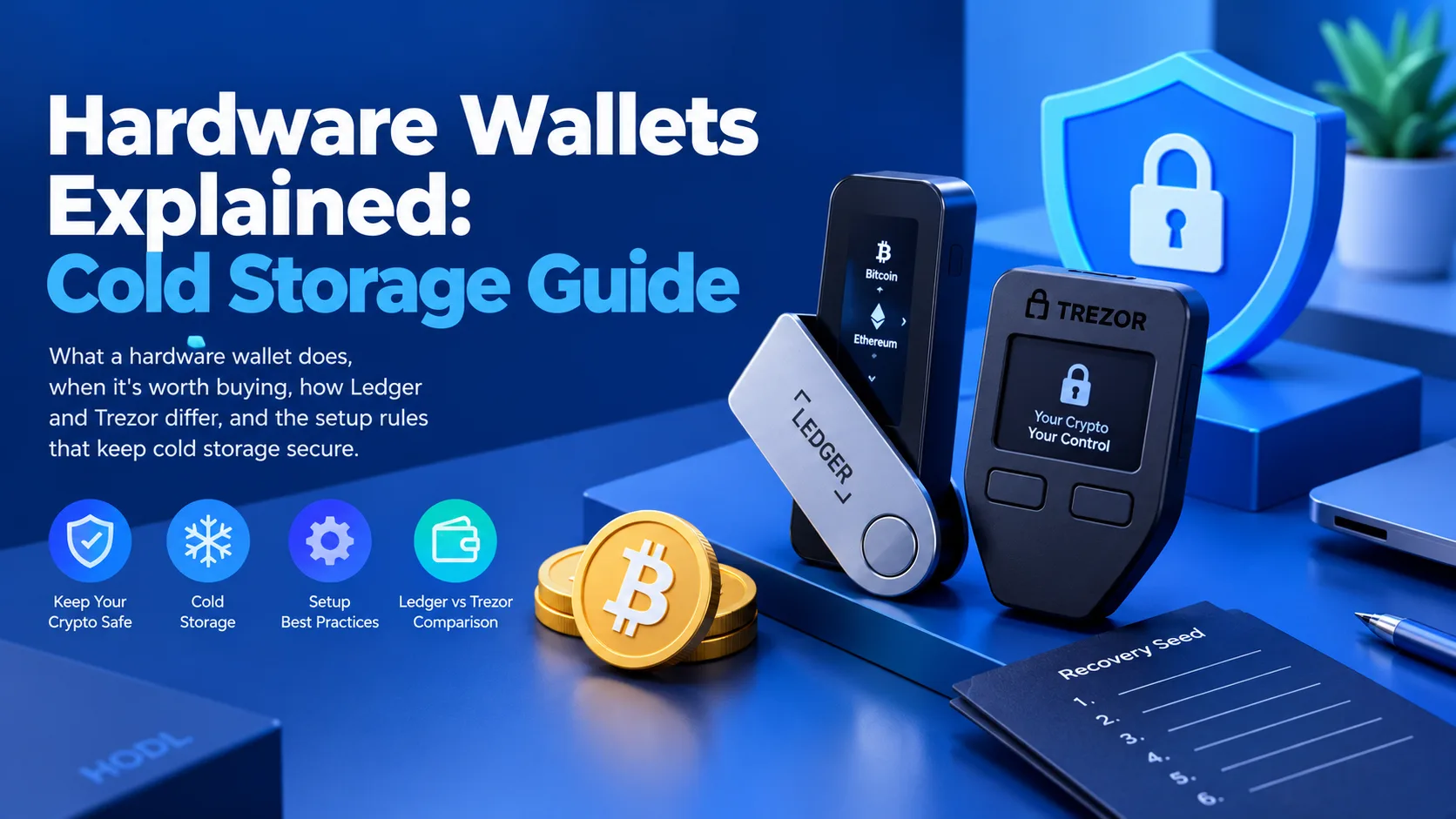
Hardware Wallets Explained: Cold Storage Guide
What a hardware wallet does, when it's worth buying, how Ledger and Trezor differ, and the setup rules that keep cold storage secure.
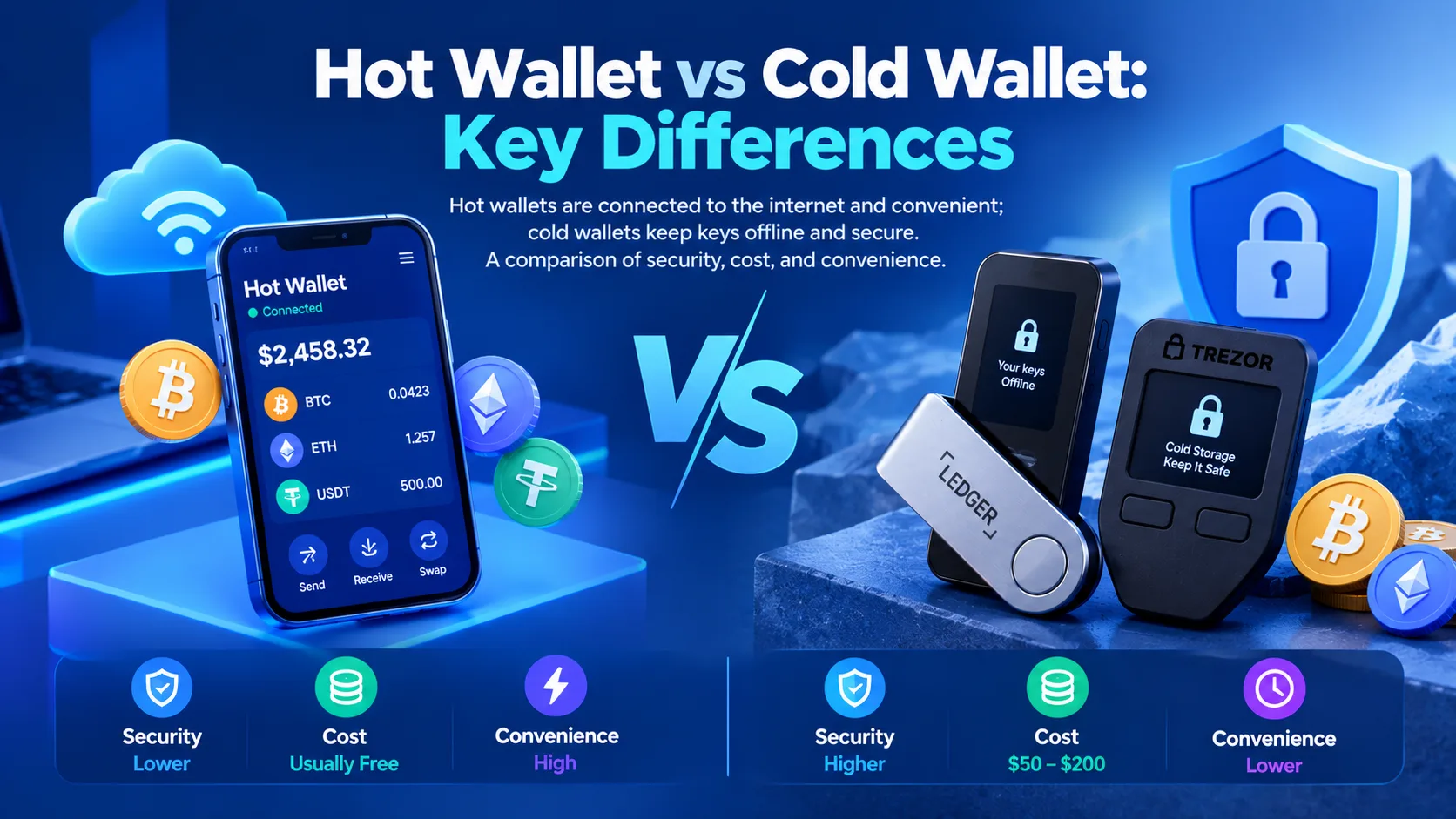
Hot Wallet vs Cold Wallet: Key Differences
Hot wallets are connected to the internet and convenient; cold wallets keep keys offline and secure. A comparison of security, cost, and convenience.
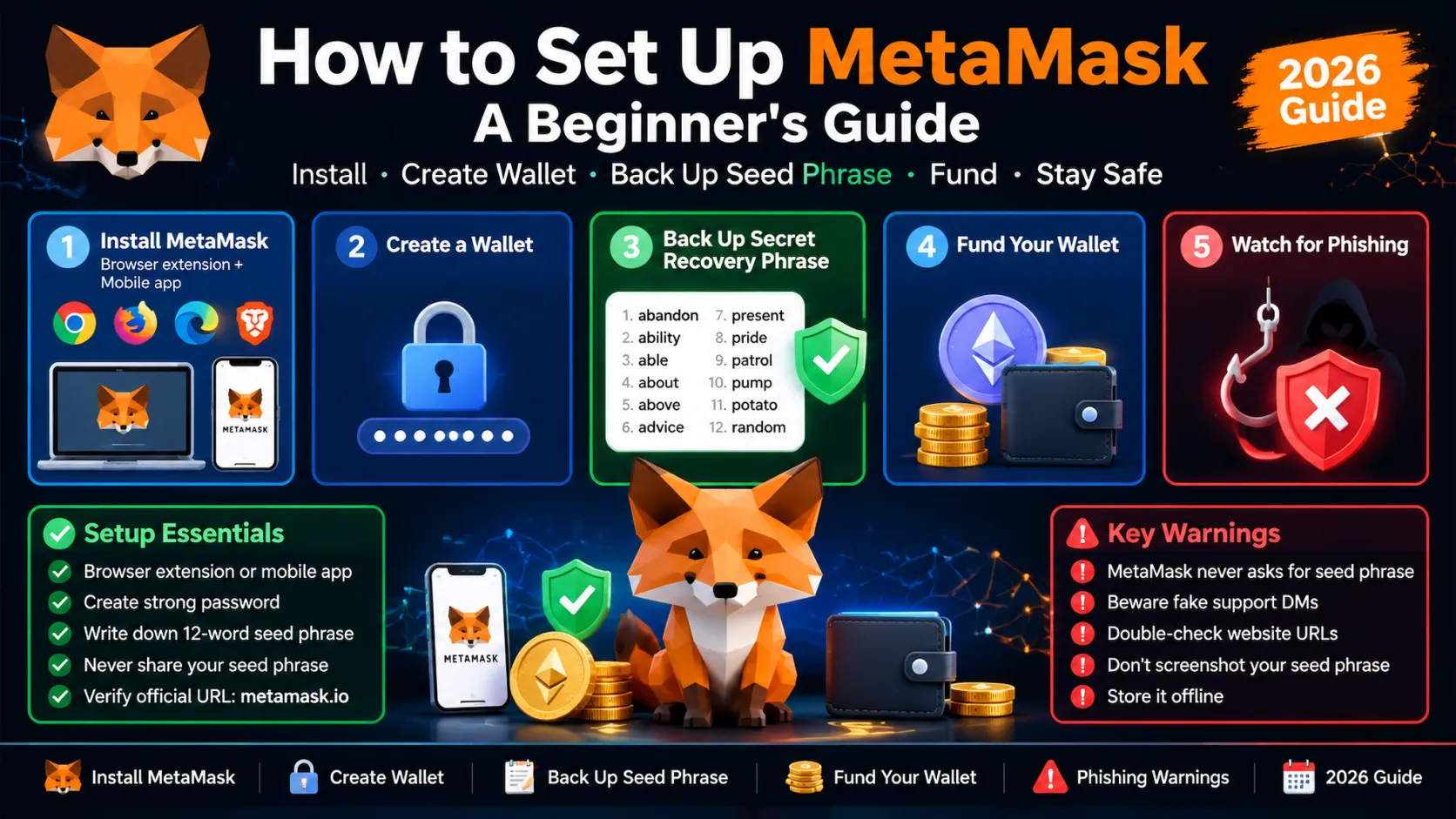
How to Set Up MetaMask: A Beginner's Guide
How to install MetaMask, create a wallet, and back up your secret recovery phrase — plus how to fund it and the phishing warnings to watch for.