
Binance Launchpad: How New Token Sales Work (2026)
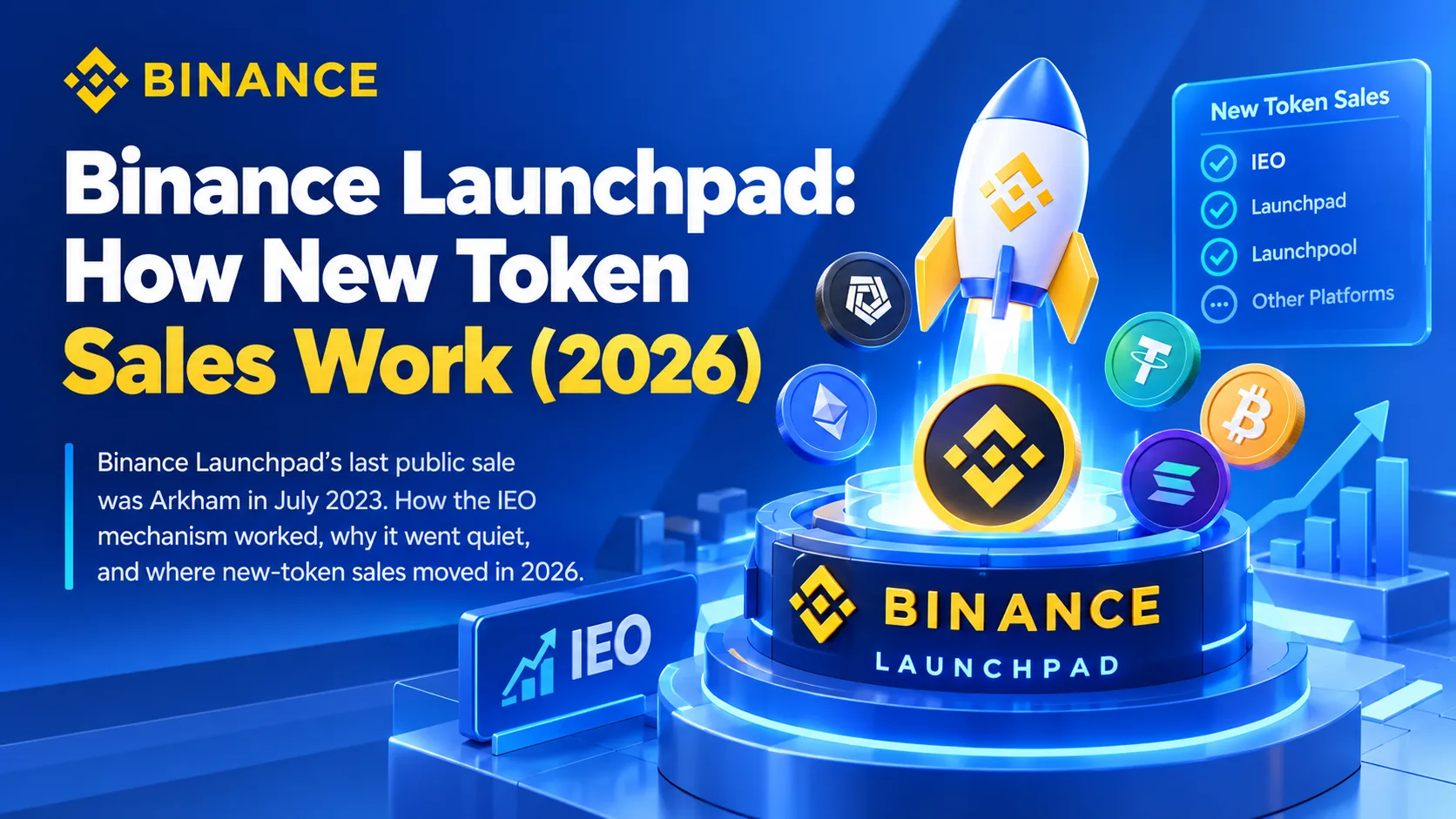
Binance Launchpad's last public sale was Arkham in July 2023. How the IEO mechanism worked, why it went quiet, and where new-token sales moved in 2026.
 Lucas Almeida 5 min read
Key takeaways
- Binance Launchpad is Binance's initial exchange offering (IEO) platform: a project sells a fixed number of tokens at a fixed price, and users subscribe with BNB.
- It has not run a public sale since Arkham (ARKM) in July 2023 — roughly 1,200 days as of October 2026, and Binance's launchpad URL now resolves to the Launchpool page.
- Allocation was never first-come-first-served. A six-day BNB averaging period set your maximum commitment, then a 24-hour subscription window allocated pro rata — Arkham drew 10.18 million BNB against a $2.5 million cap, about 990x oversubscribed.
- Fixed sale prices did not mean fixed profits: only 11 of the 35 tracked sales were above their sale price in August 2026, with a median return of 0.34x.
- In 2026 new tokens arrive through HODLer Airdrops, occasional Launchpools, and Binance Wallet TGEs gated by Alpha Points — not through Launchpad.
Binance Launchpad is Binance’s initial exchange offering (IEO) platform: a project sells a fixed number of tokens at a fixed price before listing, and users subscribe with BNB. The mechanic is simple. The part most guides still miss is that it has not run a public sale since Arkham (ARKM) in July 2023 — roughly 1,200 days as of October 2026.
That changes what this guide is for. Instead of walking you through a sale you cannot join, it explains how the mechanism worked, what the results actually looked like, and where Binance now issues new tokens instead. If a Launchpad sale ever reopens, the steps below still apply.
⚠️ Before anything else: don’t tap Sign Up directly in the app — you’ll miss the new-user rewards. The welcome benefits only apply when you register through an invite link or enter the referral code BN2688. Remember this.
What Is Binance Launchpad?
Binance Launchpad is a token-sale venue, not a trading product. A project hands Binance an allocation of its token, Binance sets a fixed price and a sale cap, and users commit BNB for a share of that allocation. It is the exchange-hosted version of an ICO, which is why it is called an IEO.
Three things defined it:
- The price is fixed in advance. Everyone in a given sale paid the same price per token, set by the project and Binance. There was no order book and no bidding.
- You paid in BNB. Subscription was BNB-only for the later sales, including Arkham. Your BNB was locked during the window and either converted or refunded.
- Size did not guarantee an allocation. Demand almost always exceeded supply, so the sale was oversubscribed and filled pro rata. Committing more BNB raised your share but never guaranteed the full amount.
The first sale was BitTorrent (BTT) in January 2019. The format ran through several mechanisms over the years — first-come-first-served early on, then a lottery, then the BNB-average subscription model used for the final sales.
How Did a Launchpad Sale Actually Work?
The final format had four stages, and the first one is the one people misunderstand.
| Stage | What happened | Arkham example |
|---|---|---|
| Preparation period | Hourly BNB snapshots over about six days; the average set your maximum commitment | July 11–17, 2023 |
| Subscription window | 24 hours to commit BNB up to your limit and sign the token purchase agreement; BNB locked | July 17, 06:00 – July 18, 06:00 UTC |
| Calculation | Allocation computed pro rata across all commitments | July 18, 06:00–07:00 UTC |
| Distribution | BNB deducted for your allocation, remainder refunded, tokens credited to spot | July 18, 07:00 UTC |
The allocation formula is the whole game:
Your allocation = (your committed BNB ÷ total BNB committed) × tokens for sale
And the result of that formula for Arkham was brutal for anyone expecting a large position. The sale offered 50,000,000 ARKM (5% of a 1 billion supply) at $0.05, for a $2.5 million hard cap with a $15,000 per-user cap. It drew 10,182,983 BNB — about $2.4 billion — from 114,454 participants, roughly 990x the allocation. The effective rate was 4.92 ARKM per BNB, so a user who committed 50 BNB received about 246 ARKM.
Two details are worth internalising because they repeat in every Binance new-token product:
- The averaging period rewards parking, not timing. Because balances were snapshotted hourly and averaged, BNB moved in on the last day counted for almost nothing.
- The BNB you commit is locked. During the subscription window it could not be traded, withdrawn, or used as collateral — a real cost if the market moves.
What Happened to Launchpad in 2026?
It went quiet, and stayed quiet. As of October 2026 there has been no public sale since Arkham in July 2023, and Binance’s launchpad URL (binance.com/en/launchpad) resolves to the Launchpool page rather than a sale calendar.
The product was not formally abolished — projects can still apply, and Binance has never announced a shutdown. But the practical picture is unambiguous:
- Third-party trackers list no active or upcoming Launchpad sales, and no IEOs in the trailing year.
- The completed-projects view now points at Launchpool and HODLer Airdrops, not at old IEOs.
- New-token distribution moved to other products: HODLer Airdrops running roughly monthly, Launchpool in short bursts (KITE in late October 2025, OPN on March 3–4, 2026), Megadrop idle since KERNEL in April 2025, and Binance Wallet TGEs and Pre-TGEs for early-stage sales.
Why the shift? A fixed-price IEO is a poor fit for how Binance now onboards tokens. A sale needs a price discovery moment, a listing slot, and a compliance review; an airdrop or a points-gated wallet sale needs none of those and spreads tokens to users who already hold BNB. Whether Launchpad returns is a business decision, not something you can plan around.
Launchpad vs Launchpool vs HODLer Airdrops vs Wallet TGE
Four Binance programs hand out new tokens, and beginners mix them up constantly. The difference is what you have to give.
| Launchpad (IEO) | Launchpool | HODLer Airdrops | Wallet TGE / Pre-TGE | |
|---|---|---|---|---|
| What you do | Commit BNB at a fixed sale price | Lock BNB or a stablecoin in a pool | Hold BNB in Simple Earn during a snapshot | Meet an Alpha Points threshold, then subscribe with BNB |
| What you get | Tokens bought at the sale price | A share of the pool’s rewards | Tokens airdropped automatically | Tokens at the sale price, pro rata |
| Cost | The sale price in BNB | Opportunity cost of locked coins | Nothing beyond holding BNB | Sale price plus the trading volume used to earn points |
| Status in 2026 | No public sale since July 2023 | Occasional, days-long bursts | Running, roughly monthly | Frequent, early-stage sales |
| Where | Binance exchange | Binance exchange | Binance exchange | Binance Wallet (keyless, KYC required) |
The Wallet TGE row is the one that matters most for 2026, because that is where the “buy early at a fixed price” activity actually went. Eligibility runs on Alpha Points, a score built from your balance and your Alpha token trading volume over a rolling 15-day window; points are then deducted when you confirm participation. Recent sales used two-hour windows, per-wallet BNB caps, and pro-rata allocation with unused funds refunded — mechanically the same idea as Launchpad, with a points gate instead of a BNB-average gate.
What Did Launchpad Sales Actually Return?
Less than the launch-day screenshots suggest. A third-party review of all 35 sales found that, as of August 2, 2026:
- Only 11 of 35 tokens traded above their sale price.
- The median return was 0.34x — a 66% loss.
- 24 of 35 were underwater.
- The average of 2.10x drops to about 1.01x once MATIC and INJ are excluded — two outliers carrying the whole record.
- The 2021 cohort was the worst: 1 of 11 positive, median 0.055x.
The lesson is not “Launchpad was a scam.” It is that a fixed sale price is an entry price, not a valuation floor. Projects that listed into a hot market and then lost 90% were following the same template as the winners; the difference showed up months later, not on listing day.
One genuine design detail worked in buyers’ favour: on Arkham’s listing, Binance trialled a price cap of 10x the sale price for the first five minutes in the Innovation Zone, specifically to blunt opening-day manipulation. ARKM pinned at the $0.50 ceiling, then ran higher after the cap lifted. It was announced as a trial, not a permanent feature.
How to Join a Launchpad Sale If One Opens
If Binance revives the product, this is the sequence that applies.
Step 1: Verify your account and check your jurisdiction
Launchpad required completed identity verification and excluded the US, Belarus, Cuba, Crimea, Iran, North Korea, Syria, New Zealand, and others named per project. Finish KYC first and read the announcement’s restriction list — it changes between projects. See also where Binance is available.
💡 Don't have a Binance account yet? Sign up now — 20% fee rebate on spot and futures — enter the referral code BN2688.
Step 2: Build your BNB average before the window
The preparation period is where the allocation is effectively decided. Binance takes hourly snapshots and averages them, so the maximum you can commit is set by the balance you held throughout — not by what you deposit the day the sale opens.
Step 3: Read the caps and the price
Three numbers decide your outcome before you commit anything: the sale price, the per-user cap, and whether the sale is oversubscribed. Arkham’s per-user cap was $15,000 (300,000 ARKM); committing more than the cap did nothing. See Binance fees for what the subsequent trades cost.
Step 4: Subscribe inside the 24-hour window
Commit BNB up to your calculated limit and sign the token purchase agreement. Your BNB is locked immediately — no trading, no withdrawals, no transfers until distribution.
Step 5: Receive your pro-rata allocation and the refund
An hour after the window closes, Binance deducts the BNB for your actual allocation and returns the rest, together with the new tokens, to your spot wallet. If you committed 50 BNB into an Arkham-style 990x oversubscription, expect roughly 0.1% of what you asked for.
Step 6: Decide before trading opens
Listing typically starts around 12:00 UTC on the same day. Decide in advance whether you are selling into the opening, holding, or setting a rule — the first minutes are usually the highest-liquidity the token will see for months.
How to Get New Tokens on Binance in 2026
Since Launchpad is dormant, here is what actually works today, ranked by effort.
- Hold BNB in Simple Earn and let HODLer Airdrops find you. Eligibility is based on your hourly average BNB balance during a snapshot window, with balances above 0.01 BNB counting. Rewards land in your spot wallet automatically. It is the lowest-effort route and the one closest to “free” — though the BNB price risk is real.
- Farm the occasional Launchpool. When a project is live, lock BNB or a stablecoin for the window and unlock whenever you like. How Binance Launchpool works covers the arithmetic.
- Use Binance Wallet TGEs if you already trade Alpha tokens. The Alpha Points threshold is expensive to manufacture — you either hold a large balance or trade a large volume. The PREDICT Pre-TGE Prime Sale on October 29–30, 2026 required 60 Alpha Points, deducted 15, capped at 6 BNB per wallet, and ran for two hours.
- Skip anything that requires borrowing BNB. Interest plus liquidation risk on collateral is a guaranteed cost against an unknown reward.
The honest ranking: HODLer Airdrops for effort, Wallet TGEs for early access, Launchpool when it appears. None of them require you to guess a listing price.
What Are the Risks?
- Token price risk. Every one of these programs pays in a new, volatile token. The sale price is not a floor, and listing-day prices rarely hold.
- BNB exposure. To qualify for anything on this page you hold BNB, and BNB itself moves. From August 2025 to August 2026, BNB fell about 20.4% — which can easily exceed the value of the airdrops received.
- Points-farming cost. Alpha Points are earned partly through trading volume. Fees on that volume are a real cash cost, and pairing rewards with forced trading is how people lose money chasing a free token.
- Jurisdiction and product drift. Restricted-country lists and product availability change between projects. Something available at sign-up can be closed later, and the US is excluded from the global products entirely.
- Clone scams. “Binance Launchpad” is a name scammers reuse for fake presale sites asking you to send BNB to an address. Binance never asks you to send funds to a wallet address for a sale — everything happens inside your account. See common crypto scams.
- Tax. Tokens received are usually income at the value on receipt, and a disposal later is a capital gain or loss. Keep records from day one — the crypto taxes guide explains the mechanics.
Common Problems and Fixes
| Problem | Likely cause | Fix |
|---|---|---|
| Can’t find Launchpad in the app | No active sale; the entry point now sits under Launchpool | Check Binance announcements; assume nothing is live until a sale page appears |
| Allocation far below what you committed | Pro-rata oversubscription | Expected behaviour — compare your allocation to your commitment ratio, not to the pool |
| Couldn’t commit your full BNB balance | Balance below your calculated average limit | The limit comes from the preparation-period average, not your current balance |
| “Not eligible” during subscription | KYC incomplete or restricted jurisdiction | Finish verification; check the announcement’s country list |
| Alpha Points didn’t count toward a TGE | Points expired, were consumed, or the wallet isn’t keyless | Points expire 15 days after the snapshot; imported wallets don’t qualify |
| Tokens not visible after a sale | Manual claim required in Binance Wallet | Open the wallet’s Assets tab and claim the allocation |
| Rewards much smaller than advertised | Rewards are share-based, not a rate | Compare your share of the pool to the current pool size |
The Bottom Line
Binance Launchpad is the original IEO model — fixed price, BNB subscription, pro-rata allocation — and it has been dormant since Arkham in July 2023. If it returns, the mechanics above still apply: build your BNB average early, read the caps, expect a pro-rata slice of an oversubscribed sale, and decide your exit before trading opens.
Until then, the realistic path to new tokens is holding BNB in Simple Earn for HODLer Airdrops, farming the occasional Launchpool, and using Binance Wallet TGEs only if you are already active in Alpha. None of these is free money; each is a trade of BNB exposure or trading volume for a token whose price nobody knows.
If you do not have an account yet, start with how to create a Binance account and the referral code guide — the code has to be applied at sign-up, not after. Then read Binance Earn for the products that actually pay while you wait for the next launch.
Don't have a Binance account yet?Sign up nowenter the referral codeBN2688
Frequently asked questions
Does Binance Launchpad still exist in 2026?
How did the Binance Launchpad allocation work?
What was the last Binance Launchpad project?
Are Binance Launchpad sales profitable?
Where do new token sales happen on Binance now?
Can US users participate in Binance Launchpad?
Editor-in-Chief & Lead Researcher
Editor of MyCryptoStart. Independent researcher of cryptocurrency exchanges, focused on fees, security, KYC, and onboarding — publishes step-by-step guides in plain English for beginners.
View author page →Some links on this page are affiliate links: we may earn a commission at no extra cost to you. This content is educational and is not financial, investment, or legal advice. Affiliate disclosure · Disclaimer.
Continue reading
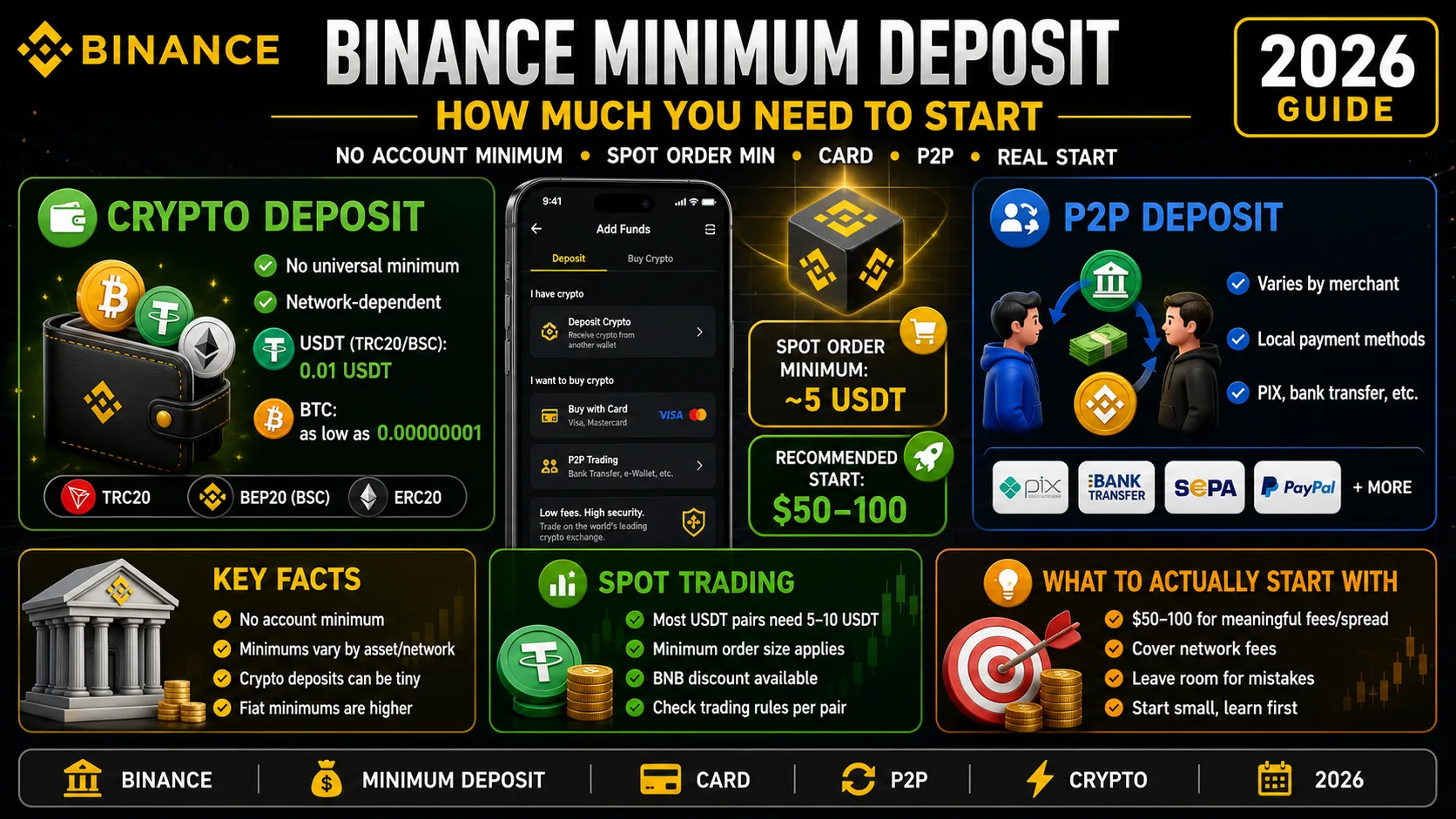
Binance Minimum Deposit: How Much You Need in 2026
Binance has no account minimum, but most spot orders need 5 USDT. The real deposit, card and P2P minimums — and how much to actually start with.
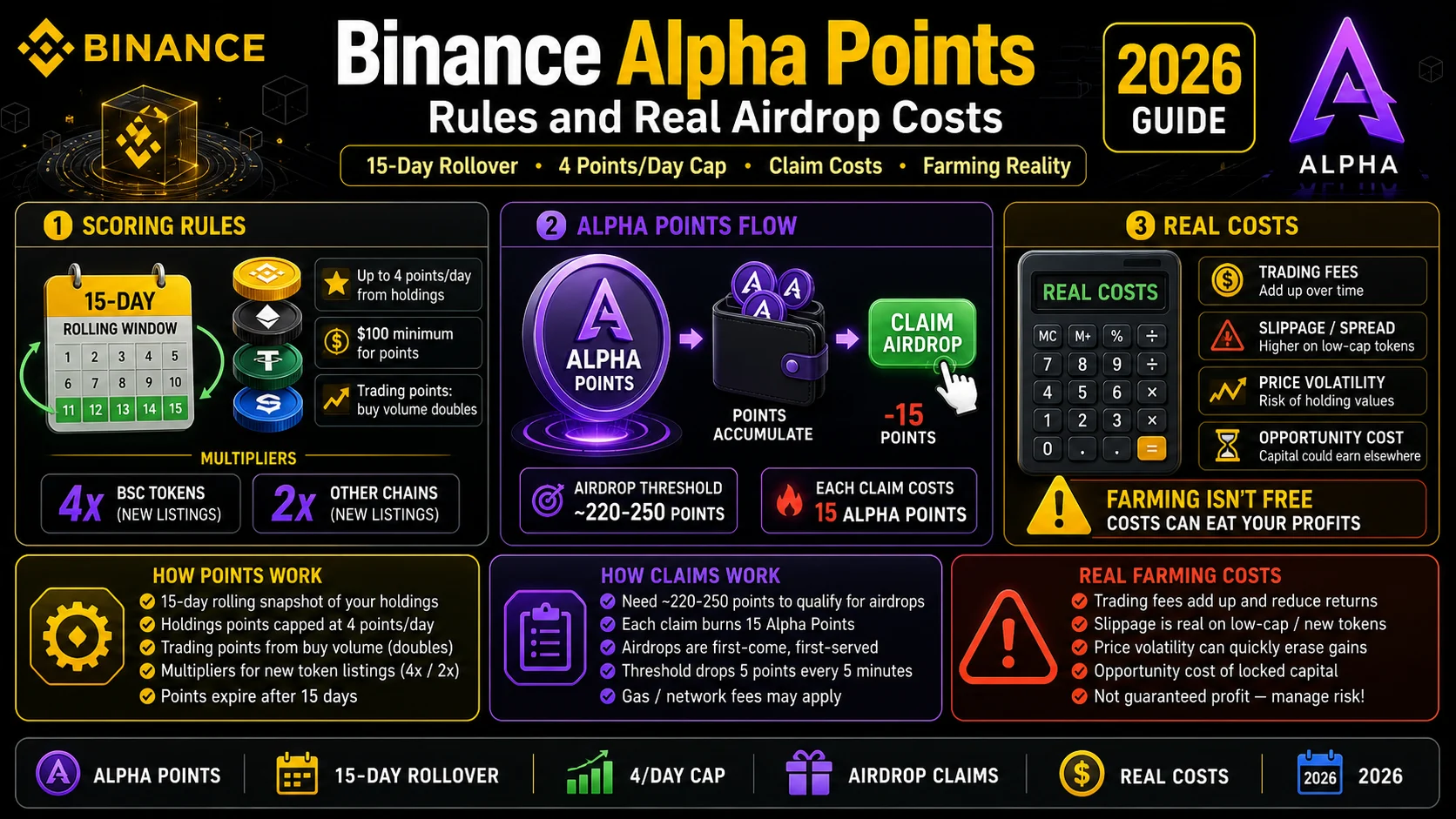
Binance Alpha Points (2026): Rules and Real Airdrop Costs
Alpha Points roll over 15 days and cap at 4 points a day from holdings. Here is how the scoring works, how claims work, and what farming really costs.
Binance in Chinese: Android Download and Registration (2026)
An Android walkthrough for Chinese speakers: official download sources, OEM install blocks, language settings, registration, KYC, and a first deposit.