
What Is AI Crypto? AI Tokens Explained (2026)
AI crypto combines artificial intelligence and blockchain — GPU networks, data markets, and autonomous agents. Learn how AI tokens work and the real risks.
 Lucas Almeida 5 min read
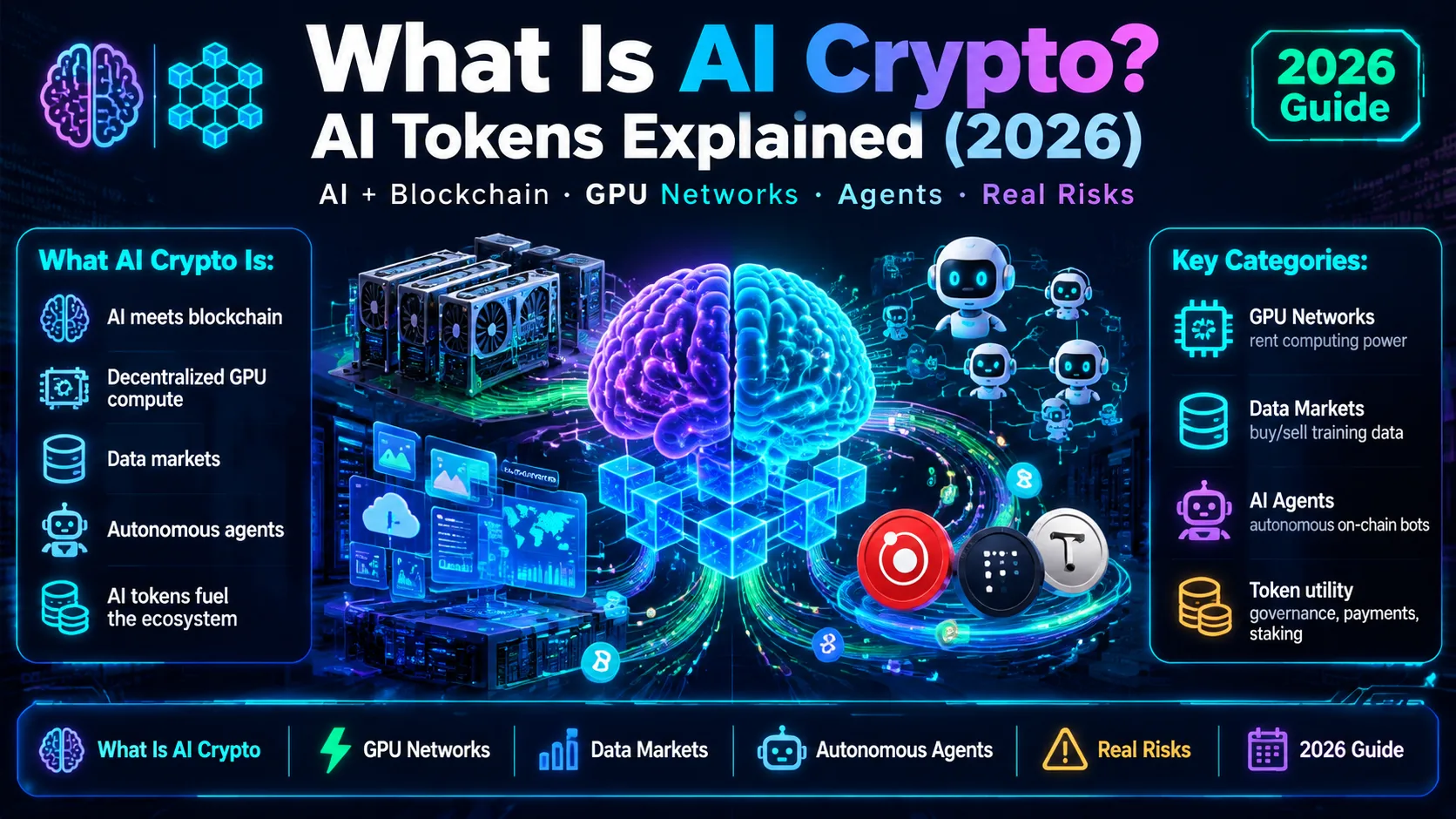
Key takeaways
- AI crypto is not one coin — it is a whole category where artificial intelligence and blockchain overlap, in two directions: blockchains that decentralize AI (compute, data, models), and AI that makes crypto products smarter (agents, trading bots).
- Most AI-crypto tokens are young, speculative, and heavily driven by the AI hype cycle — their prices can fall 60–80% from highs just like any overhyped narrative.
- The genuinely new risk is the AI agent: software that can send irreversible transactions on its own, so a mistake or a hacked prompt can move funds with no undo button.
- AI makes crypto scams far more convincing — deepfakes, fake 'guaranteed-profit' bots, and fake AI tokens are the main 2026 patterns to recognize.
- The beginner-sensible rule is the same as any altcoin: understand the project first, buy only tokens listed on a major exchange, and size the bet to money you can afford to lose entirely.
For a beginner, the short answer is: AI crypto is not one coin — it is a whole category where artificial intelligence and blockchain overlap, and the “AI tokens” are just the native coins of those projects. It runs in two directions: blockchains that make AI infrastructure decentralized (GPU computing, datasets, model marketplaces), and AI tools that make crypto products smarter (autonomous agents, trading bots, analysis). Most of it is young, speculative, and moving fast — which is exactly why it needs a clear head before any money goes in.
This guide explains what AI crypto actually is, how the two sides work, which tokens dominate in 2026, what makes it riskier than most of crypto, and how to buy it safely if you decide it belongs in your portfolio. It is education, not investment advice.
What Is AI Crypto?
AI crypto is a theme, not a protocol — the label applied to any project where artificial intelligence and blockchain technology meet. It is closer to “DeFi” or “gaming tokens” than to Bitcoin or Ethereum: an umbrella term, not a specific network.
The cleanest way to think about it is two directions:
- Blockchain for AI — using a decentralized network to run AI infrastructure that is normally controlled by big cloud companies. Instead of renting GPUs from Amazon or training data from a single vendor, these projects spread that work across a global network of independent providers.
- AI for blockchain — using artificial intelligence to make crypto products smarter, such as autonomous agents that trade on your behalf or tools that analyze on-chain data.
Both directions issue a token, and that token is what people mean by “an AI crypto coin.” The token usually does real work — paying for compute, rewarding data providers, or giving access to an agent — but as the risks section explains, not every token wearing the “AI” label has real technology behind it.
One thing to be clear about up front: AI crypto is a subset of altcoins — the umbrella term for any cryptocurrency other than Bitcoin. That is not a slight; it means these projects compete in an extremely crowded field, and the “AI” label alone tells you nothing about whether a project is real.
How Does AI Crypto Actually Work?
The mechanism depends on which direction a project points, so it helps to separate the two.
Direction one: decentralizing AI infrastructure
Training and running AI models needs two scarce resources: computing power (GPUs) and data. Today most of that is controlled by a few centralized cloud providers. A handful of blockchain projects try to build a decentralized alternative:
- GPU-computing networks match people who need processing power with people who own idle GPUs, and the token pays for that compute. Render (RENDER) and Akash Network are the best-known examples.
- Model marketplaces let independent developers publish AI models that anyone can call, with rewards flowing to the models that are actually used. Bittensor (TAO) is the leading example, structured so that competing “subnets” earn tokens by doing real work.
- Data and storage networks pay people to contribute the datasets and storage that AI training needs, with Filecoin and a few data-focused projects in this lane.
The pitch is the same one blockchain makes everywhere: remove the middleman. In theory, decentralized AI is cheaper, harder to censor, and rewards the people who actually contribute the compute and data.
Direction two: putting AI inside crypto products
The other half of the sector does not decentralize AI at all — it uses AI to build better crypto products:
- Autonomous agents are software programs that hold a crypto wallet and act on their own: placing trades, hunting for yield, or managing a portfolio without a human approving each step. This is the fastest-growing area, led by Fetch.ai (FET) and a wave of smaller “AI agent” tokens.
- Trading bots and analysis tools use machine learning to read markets, flag patterns, or execute buy and sell orders automatically.
- On-chain assistants turn natural-language questions into data — “what did this wallet do last month?” — by parsing blockchain activity.
The crucial distinction: in direction one, the blockchain is the product. In direction two, the AI is the product, and the blockchain mostly provides the payment rail and the wallet. Most AI-crypto tokens fall into one of these two buckets, and knowing which is the first test of whether you understand a project.
What Are the Main Types of AI Crypto?
Across the whole sector, projects sort into four practical categories. This table is the fastest way to place any token you come across:
| Type | What it does | 2026 examples |
|---|---|---|
| Infrastructure / compute | Decentralized GPU power and cloud for AI models | Render (RENDER), Akash (AKT), Internet Computer (ICP) |
| AI agents | Autonomous software that trades, manages, or posts on its own | Fetch.ai (FET), Virtuals Protocol (VIRTUAL), NEAR (NEAR) |
| Data & model marketplaces | Buy, sell, and license the data or models AI needs | Bittensor (TAO), Filecoin (FIL), Ocean Protocol |
| Application-layer tools | Consumer AI apps, analytics, and prediction markets | The Graph (GRT), OriginTrail (TRAC) |
A practical test before you research anything deeper: if you cannot place a token in one of these four buckets after ten minutes of reading, that is a warning sign. Legitimate projects make their category obvious because they want real users. Projects hiding behind vague “AI-powered” language usually have nothing underneath.
What Are the Biggest AI Crypto Tokens?
The AI-crypto sector has grown into a meaningful slice of the market — its combined market cap was roughly $18 billion as of early July 2026, according to CoinMarketCap’s AI & Big Data category, with several billion dollars in daily volume. The largest tokens, in that order, are:
- Bittensor (TAO) — a decentralized marketplace for AI models, where independent subnets compete to do real work and earn TAO. It has a Bitcoin-like hard cap of 21 million tokens.
- Render (RENDER) — a GPU network matching AI/compute buyers with GPU owners, positioned as a direct play on AI-compute demand.
- Fetch.ai (FET) — autonomous agents for DeFi, trading, and automation; part of the Artificial Superintelligence Alliance (ASI) merger.
- NEAR Protocol (NEAR) — a high-performance Layer 1 that has shifted toward AI agents and infrastructure.
- Internet Computer (ICP) — on-chain compute and hosting aimed at running AI workloads.
A first-hand note worth internalizing: exact prices and rankings in this sector change weekly, sometimes daily. A static list is useful for learning what the tokens do, not for knowing what they cost. When you are ready to act, check a live market tracker on the day — and remember that a token’s price alone tells you nothing about whether it is a real project or a hyped shell. Market cap, token supply, and whether the product has actual users matter far more.
What Makes AI Crypto Different — and Riskier?
Every crypto investment carries the usual risks — volatility, unclear regulation, the chance the project simply fails. AI crypto adds a few of its own, and they are worth naming plainly, the same way we do for Bitcoin’s risks:
- Hype-driven valuations. The AI narrative is powerful, and it moves token prices regardless of whether a project has real usage. Many AI tokens are down 60–80% from their peaks — a normal feature of narrative-driven crypto, not a bug you are uniquely immune to.
- The agent risk is genuinely new. Traditional crypto requires a human to press the button. An AI agent presses the button itself — and because blockchain transactions are final and irreversible, a mistake has no undo. An agent can be tricked by a malicious prompt, misread a contract, or over-permission a wallet and drain it faster than a person could react.
- Centralization under the hood. A lot of “decentralized AI” still runs on centralized cloud infrastructure, with wallet keys held by the platform. The decentralization is often partial — an important gap between the marketing and the reality.
- Regulatory uncertainty. Rules are firming up — Europe’s MiCA framework touches token issuance, listings, and marketing — and a project that is compliant today may not be tomorrow.
The single most useful mental model to carry away:
AI removes the friction of doing things in crypto, but it does not remove the risk — and because transactions are irreversible, it can move money faster than you can stop it.
That is the honest core of why AI crypto is the most speculative corner of an already speculative market.
AI-Powered Crypto Scams to Watch For
AI has made crypto scams dramatically more convincing, and this is where beginners most often get hurt. The numbers are striking: GenAI-linked scam reports rose roughly 456% between May 2024 and April 2025 (TRM Labs’ Chainabuse data), and about 60% of deposits into scam wallets now flow to scams using AI tools (Chainalysis). The patterns to recognize, all covered in more depth in our crypto scams guide:
- Deepfakes. Fake videos or voices of CEOs and celebrities endorsing a fake project. A convincing clip of a well-known founder is now trivial to fabricate — and it is not real just because it moves and speaks.
- Fake AI trading bots. The promise of “guaranteed profits from a unique algorithm” is the classic tell. No legitimate tool guarantees returns, and the bot is usually a front for a Ponzi scheme or outright theft.
- Fake AI tokens. A project hyped with AI buzzwords but no working product, where early holders dump on everyone else once the price rises. This is the same scam playbook as meme-coin rug pulls, dressed in AI language.
- AI phishing and fake tutorials. Personalized emails, fake support chats, and YouTube videos that claim to teach you to build a bot — while the code quietly deploys a wallet-drainer. One such campaign stole roughly $2 million from hundreds of wallets.
The defenses are the same basics we recommend everywhere: never share your seed phrase with any bot, agent, or support account; verify domains manually; and treat any “guaranteed AI yield” as a scam on sight. If you are going to let an AI tool touch real funds, give it a dedicated wallet with limited money and read-only permissions where possible — the bulk of your holdings belong in cold storage.
Should You Buy AI Crypto? A Beginner’s Decision Rule
There is no honest yes for everyone, so here is the rule we recommend instead of a verdict:
Only buy an AI token if you can pass three tests.
- You can explain the category. In one sentence, can you say whether the project decentralizes AI infrastructure or puts AI inside a crypto product — and which of the four types it is? If not, you do not understand it yet, and that is the only reason you need to skip it.
- You can point to real usage. Does the project have documentation, a dashboard, developer activity, and actual users? Or is the “product” a promise and a chart? A real project shows its work; a shell hides behind the AI label.
- You can afford to lose it all. AI crypto is the highest-risk end of crypto. The sensible size is small — money that vanishing would not change your life — not a bet sized for a jackpot.
If a token passes all three, and it is listed on a major exchange, the path to buying it is short and safe. If it fails any one of them, the right move is the same one that applies to any crypto decision: keep learning, and spend nothing.
How to Buy AI Crypto Safely
If you have decided to buy, the flow is the same as buying any major coin — and it starts with a large, regulated exchange rather than a decentralized swap that can quietly drain a wallet.
Step 1 — Choose an exchange. Binance is the largest global exchange and lists the major AI tokens. Our exchange comparison helps you decide.
Step 2 — Create and verify your account. Register with an email or phone number, then complete identity verification (KYC) with a photo ID. It is a one-time step required before you can trade or withdraw, and it is identical on every major platform.
Step 3 — Deposit money. Fund your account by bank transfer or card. Bank transfer is usually cheaper for larger amounts; card is faster but often carries a fee.
Step 4 — Buy the token. Search the token by its ticker (for example TAO, RENDER, or FET), and buy the amount you want — you can buy a fraction of a coin. Then decide where it lives: on the exchange, or withdrawn to a wallet you control.
💡 Don't have a Binance account yet? Sign up now — 20% fee rebate on spot and futures — enter the referral code BN2688.
A first-hand detail that matters more for AI crypto than almost anywhere else: verify the token’s contract address and ticker against an official source before you buy. The AI sector is where “fake token with a real-looking name” scams cluster, because the projects are obscure and the hype is high. The standard habit — confirm the ticker on the project’s official site, then double-check it on the exchange — takes thirty seconds and protects you from buying a lookalike with zero value. For anything you plan to hold long-term, read our storage guide before deciding whether it stays on the exchange or moves to a wallet you control.
The Bottom Line
AI crypto is real and growing — a genuinely interesting intersection where blockchains decentralize compute and data, and AI agents start to act on-chain. But it is also the most speculative corner of crypto: valuations driven by narrative, agents that can make irreversible mistakes, and a wave of AI-powered scams aimed precisely at newcomers who recognize the “AI” label without understanding what is underneath.
For someone who has not opened an account yet, the sensible first step is understanding before buying: know what a blockchain is, understand how Ethereum’s programmable layer differs, and only then decide whether an AI token deserves a small slice of money you can afford to lose entirely. When you are ready, the account-and-buy flow above takes minutes. What actually protects you — and what no AI can do for you — is the hour you spend understanding the thing before you hand over money.
Don't have a Binance account yet?Sign up nowenter the referral codeBN2688
Frequently asked questions
What is AI crypto in simple terms?
Is AI crypto the same as Bitcoin or Ethereum?
What are the biggest AI crypto tokens?
Is AI crypto a good investment for beginners?
How do I buy AI crypto tokens?
What are the biggest risks of AI crypto?
Editor-in-Chief & Lead Researcher
Editor of MyCryptoStart. Independent researcher of cryptocurrency exchanges, focused on fees, security, KYC, and onboarding — publishes step-by-step guides in plain English for beginners.
View author page →Some links on this page are affiliate links: we may earn a commission at no extra cost to you. This content is educational and is not financial, investment, or legal advice. Affiliate disclosure · Disclaimer.
Continue reading
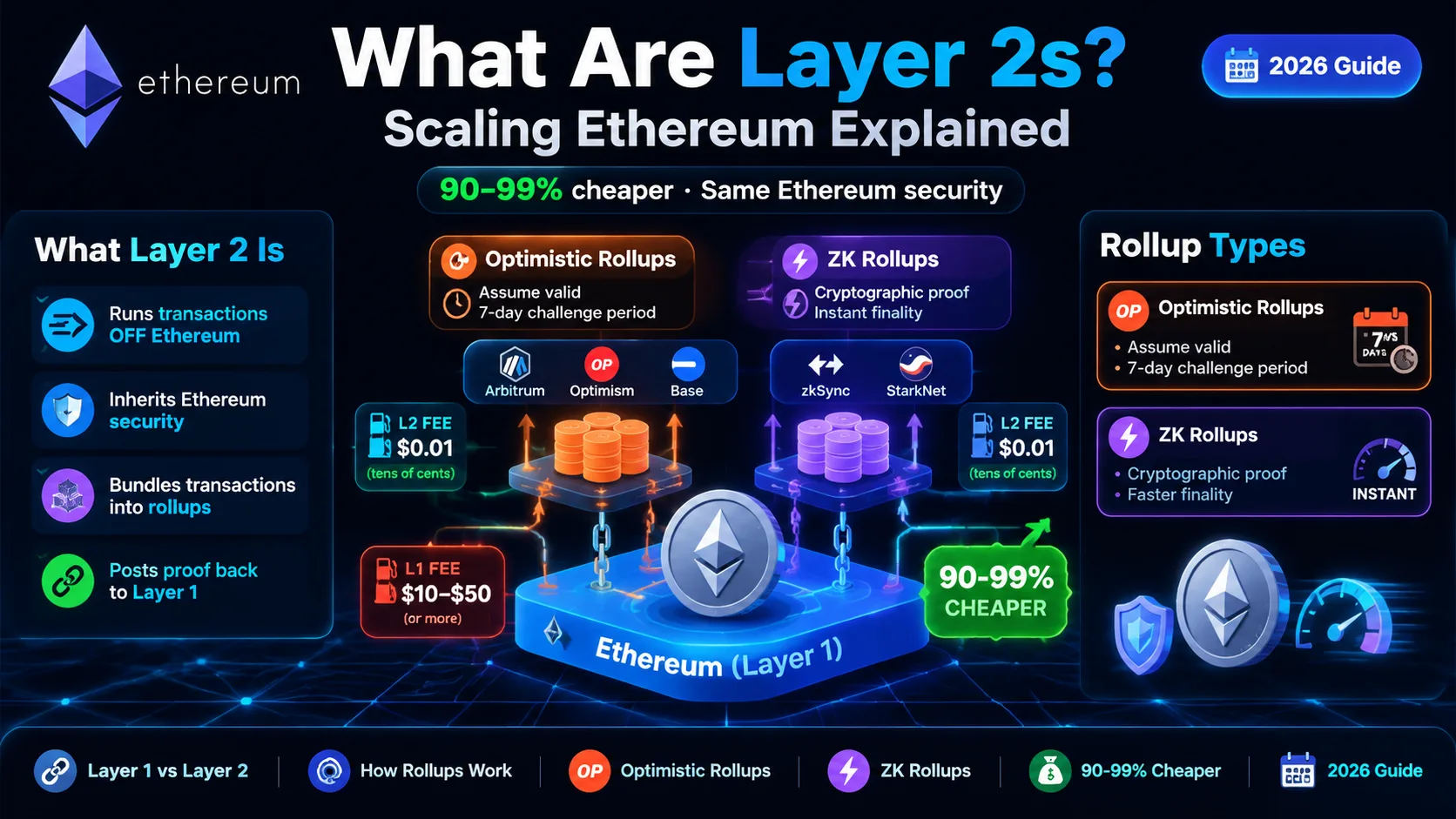
What Are Layer 2s? Scaling Ethereum Explained
Layer 2s are networks that run transactions off Ethereum but inherit its security — making crypto 90–99% cheaper. Learn how rollups work, optimistic vs ZK, and why withdrawals take 7 days.
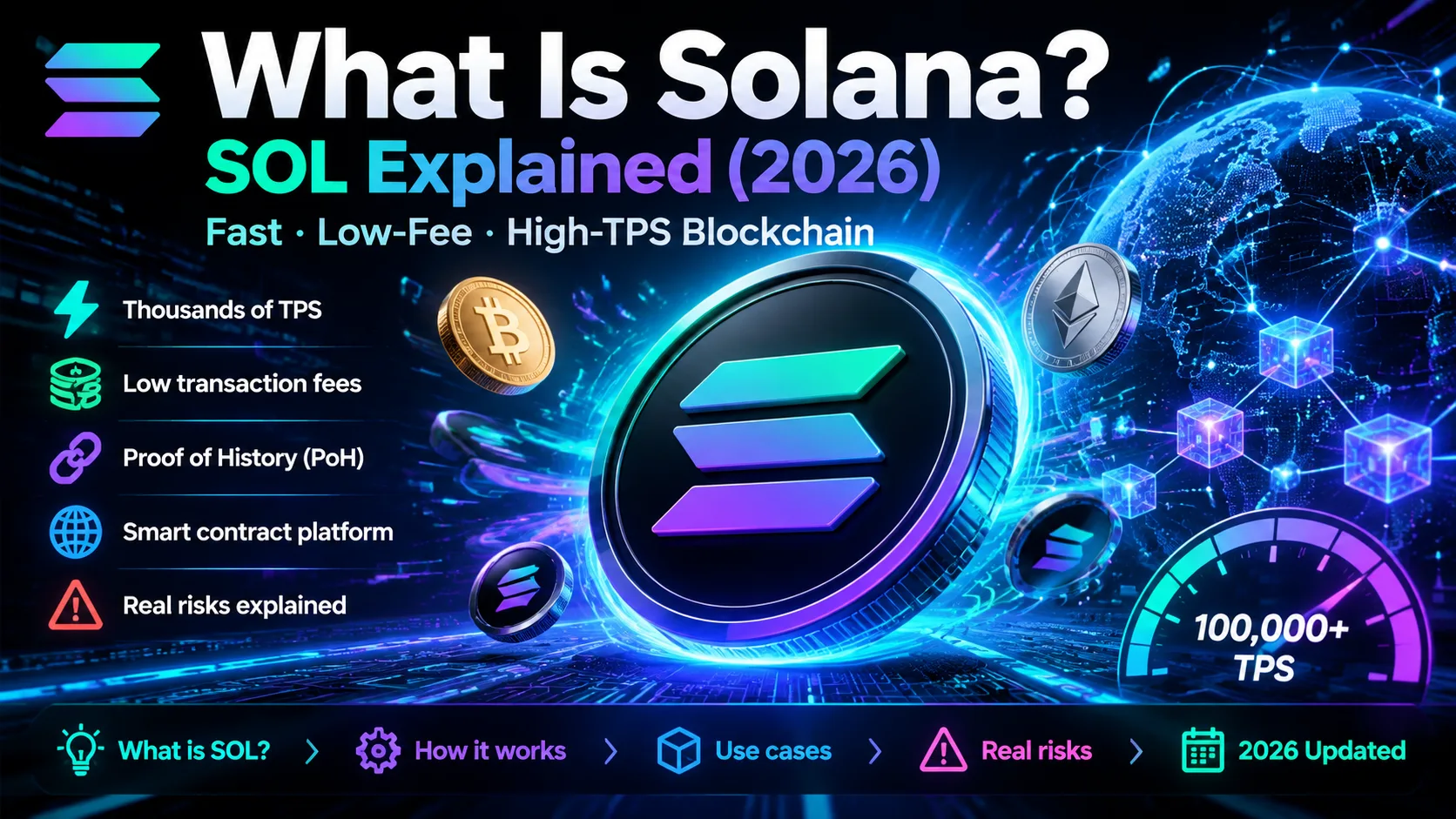
What Is Solana? SOL Explained (2026)
Solana is a fast, low-fee blockchain built to process thousands of transactions per second. Learn what SOL is, how it works, and the real risks.
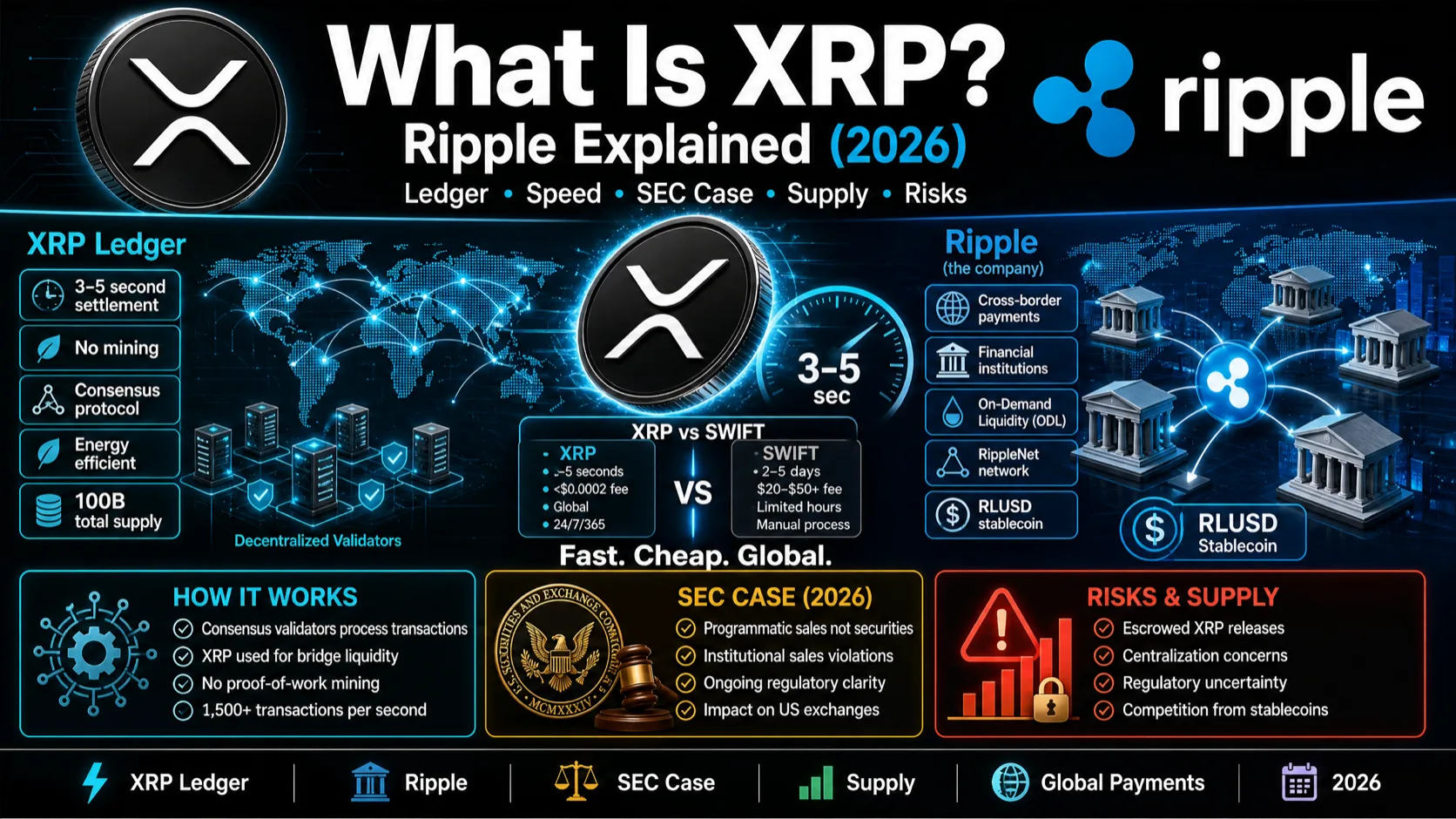
What Is XRP? Ripple Explained (2026)
XRP is the native coin of the XRP Ledger, which settles payments in 3–5 seconds without mining. How it works in 2026, the SEC case, supply, and risks.