
How to Trade Crypto: A Beginner's Guide (2026)
How to trade crypto safely: choose a licensed exchange, fund your account, place a market or limit order, and manage risk with stop-losses. A no-hype guide.
 Lucas Almeida 5 min read
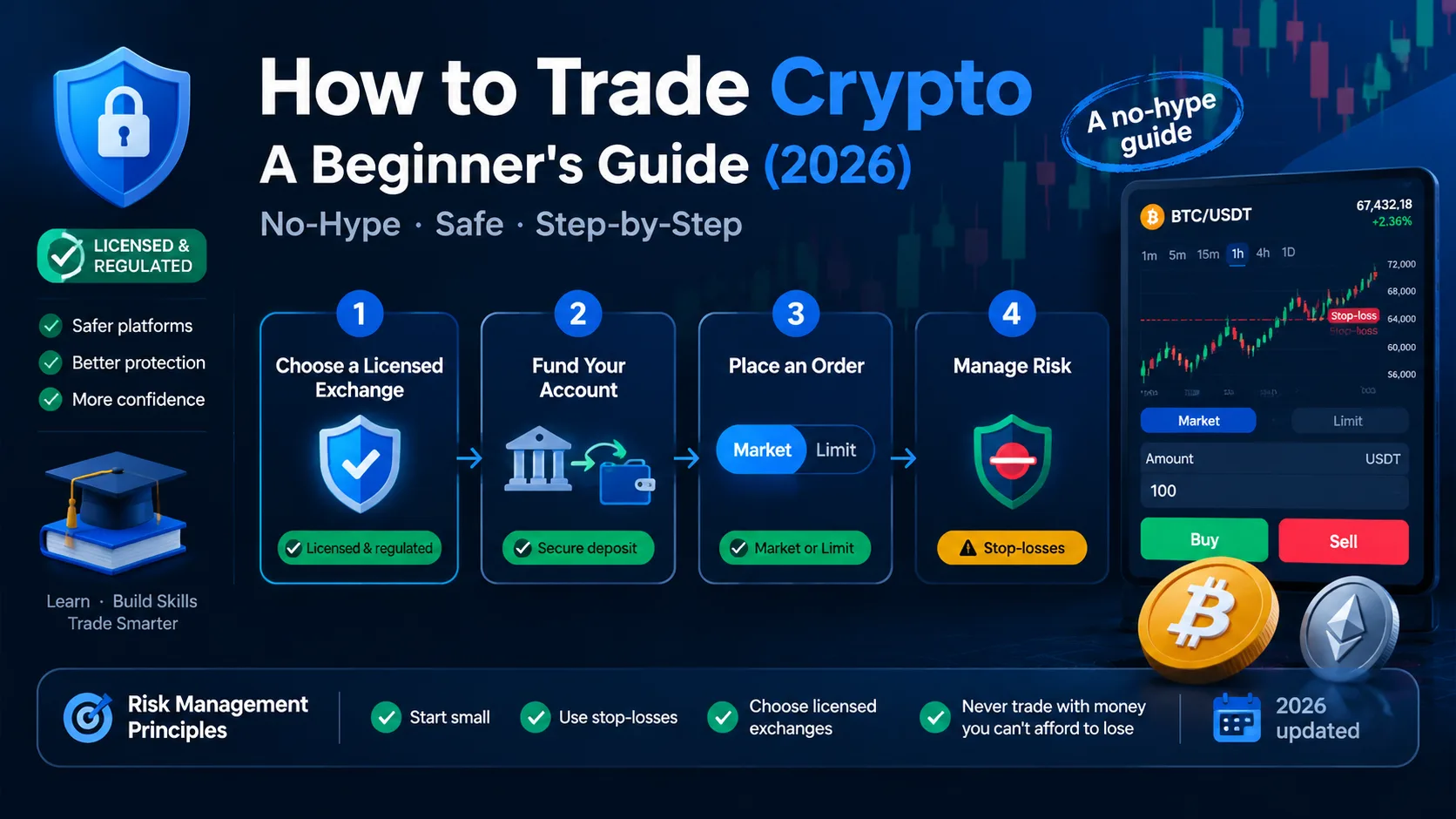
Key takeaways
- Trading crypto means buying and selling on an exchange's market. The safest way to start is spot trading Bitcoin or Ethereum with a market or limit order — not leveraged futures.
- The right setup order is: choose a licensed exchange, create and verify your account, turn on two-factor authentication, then fund it.
- A market order fills instantly at the current price; a limit order only fills at the price you set. Read the final quote — the amount you receive — not the headline price.
- The most important rule is risk control: risk only 1–2% of your capital on any single trade and always set a stop-loss before you open the position.
- Start with spot, not leverage. With spot the worst case is holding a coin that drops; with leverage a small move against you can wipe out your entire position.
Trading cryptocurrency means buying and selling it on an exchange’s market — and the safest way to start is spot trading Bitcoin or Ethereum with a market or limit order, on a licensed exchange, risking no more than 1–2% of your money per trade, with a stop-loss on every position. Skip leverage until you have months of spot experience: with spot the worst case is holding a coin that drops, while with leverage a small move against you can wipe out your whole position.
This guide walks through the full path — choosing a platform, funding it, placing an order, and managing risk — in plain English and in the order you should actually do it.
What you need before you start
Trading does not need much to begin, but a few things make the first trade go smoothly:
- A licensed exchange account. Trading happens on an exchange, so you need an account at a major one that operates where you live.
- A government-issued ID. Regulated exchanges require identity verification (KYC) before you can trade.
- A small amount of money you can afford to lose. This is not a throwaway line — it is the single most important decision you make before any trade.
- Two-factor authentication (2FA). An authenticator app on your phone, set up before you fund anything.
Have these four things and your first trade should take under an hour, most of which is the identity check.
Step 1: Choose a licensed exchange
Trading happens on a platform, and the platforms are not equal. There are four kinds of places you can trade, with very different trade-offs.
| Where | What it is | Good for a beginner? |
|---|---|---|
| Centralized exchange (CEX) | A platform built for crypto, e.g. Binance, Coinbase, Kraken | Yes — lowest fees, most coins, easiest to learn |
| Broker / bank app | Your brokerage or bank may offer crypto | Sometimes — simpler, but fewer coins and often higher fees |
| Decentralized exchange (DEX) | Peer-to-peer, no company in the middle | Not yet — you usually need crypto already, and mistakes are permanent |
| Payment app | PayPal, Cash App, and similar | Only for buying major coins — limited trading features and higher costs |
For a beginner, a centralized exchange is the right default: the fees are lowest, the order screen is standard across platforms, and you can move your crypto out to a wallet you control when you are ready.
Before you sign up anywhere, check two things:
- Is it licensed where you live? Availability is the first filter — some exchanges are restricted in certain countries, and the version you can actually access is what matters.
- What will the all-in cost be? Trading fees are a small percentage, but they add up, and the spread (the gap between the buy and sell price) is an invisible cost you always pay.
If you are choosing between the largest platforms, our best exchange for beginners lays out the trade-offs. The full sign-up walkthrough is in how to create a Binance account.
Step 2: Create and verify your identity
You cannot trade until your identity is verified, so do this first.
- Create the account with an email or phone number and a strong, unique password. A password manager beats reusing a password from another site.
- Complete identity verification (KYC). Upload a government-issued ID and usually finish a short face check. This is required by law on regulated exchanges, not something you can skip.
- Do not fund the account yet. Get verified and secured first, then deposit.
The full details — documents, the Verified vs. Verified Plus levels, and why the check exists — are in our KYC guide and the glossary entry on KYC.
Step 3: Turn on two-factor authentication
This is the step beginners skip and later regret. Do it before any money enters the account.
Two-factor authentication (2FA) adds a second proof of identity on top of your password. Not all methods are equal:
| Method | How it works | Strength |
|---|---|---|
| Authenticator app (Google Authenticator, Authy) | A rotating code generated on your phone | Strong — the code never leaves your device |
| Passkey / hardware key | A device-bound key that signs the login | Strongest — resists phishing |
| SMS code | A text message with the code | Weaker — can be intercepted by a SIM-swap |
Use an authenticator app as your primary method. With 2FA on, a stolen password alone is not enough to access your account. See our account security guide for the full checklist.
Step 4: Fund your account
Now you add money. How you add it decides part of your cost.
| Method | Typical cost | Speed | Best for |
|---|---|---|---|
| Bank transfer (ACH / SEPA / FPS) | Free to ~1% | 1–3 days | Planned or larger deposits — the default |
| Debit / credit card | 2%–5% or more | Minutes | Small, urgent first deposits |
| Crypto deposit | Network fee only | Varies | Moving coins you already own |
The pattern holds everywhere: the more convenient the method, the more you pay. Default to a bank transfer, and treat a card as a convenience you pay extra for. The full picture, including P2P options, is in our how to deposit funds into Binance guide.
Deposit only an amount whose total loss would not change your life. That number is different for everyone — the point is that it is small enough that a bad trade teaches you something instead of hurting you.
Step 5: Choose what to trade — spot, not futures
Before you place an order, decide what you are trading, because one choice here matters more than any coin pick: spot or futures.
- Spot trading means you buy the actual asset and own it. The worst case is that the price drops and you are holding something worth less.
- Futures (derivatives) trading means you trade a contract with leverage — borrowed exposure that multiplies both gains and losses. With 10x leverage, a 10% move against you wipes out your entire position. This is not a risk most beginners should take.
Start with spot, full stop. The honest rule that protects you: if you have not traded spot profitably and consistently for months, you should not be trading futures at all.
For which coin, most beginners should start with the two most established:
- Bitcoin (BTC) — the largest, most liquid, and easiest to understand. See what Bitcoin is.
- Ethereum (ETH) — the second largest, for the programmable side of crypto. See what Ethereum is.
Altcoins and meme coins are far more volatile and much easier to lose money in. Start with one or two coins you understand, not a dozen you have never researched.
Step 6: Place your first order
This is the part that looks complicated but is actually simple once you know the two order types that matter.
| Order type | What it does | When to use it |
|---|---|---|
| Market order | Buys or sells immediately at the current best price | You want to trade now — the beginner default |
| Limit order | Fills only when the price reaches the level you set | You are willing to wait for a better price |
| Stop-loss order | Automatically sells if the price falls to a level you set | Capping your loss on every position |
For a first trade, a market order is the right choice: it fills immediately at the current price. A limit order gives you price control but may never fill.
Two things to understand before you hit confirm, because they are where beginners overpay or get confused:
- The spread. The buy price and the sell price are never the same — the gap between them is the spread, and you always pay it, even though it is not shown as a line item. The order book is where those buy and sell prices come from.
- Slippage. A market order fills at the current price, but if the market is moving fast, the price you get can be slightly worse than the one you saw a second earlier. This is called slippage, and it is why you should read the final quote — the exact amount of crypto you will receive after fees — rather than the headline price.
The trading fee is the last piece. Spot fees on major exchanges are typically around 0.1% per trade, but the exact number depends on the platform and your volume tier, so check the official fee schedule — our Binance fees guide breaks down what you actually pay. None of these costs is large on its own, but together they decide whether a trade was worth making.
Step 7: Manage your risk — the most important step
Everything above gets you into a trade. This step keeps you alive in the market, and it is the part beginners ignore until a bad trade teaches them the hard way.
The core rule, used by disciplined traders everywhere: risk only 1–2% of your total capital on any single trade. “Risk” means the amount you lose if your stop-loss is hit — not the size of the position.
Concretely, on a $1,000 account, risking 1% means you accept losing $10 if the trade goes against you, and you set your stop-loss at the price that caps the loss there. That may sound small, but it means one bad trade is an annoyance, not a setback you cannot recover from.
Three rules that make the difference:
- Set a stop-loss the moment you open a position — no exceptions. A stop-loss is an order that sells automatically if the price falls to your level, so your loss is capped even when you are not watching.
- Avoid leverage. Stay at spot and under any leverage at all until you have a consistent, multi-month track record. Leverage is the single fastest way a beginner account goes to zero.
- Never trade money you cannot afford to lose. This is not moralizing — it is what lets you make calm decisions instead of emotional ones.
Think of it this way: the goal of your first trades is not to get rich, it is to still be here — with your account intact and your discipline tested — after a losing streak. Losing trades are normal. Surviving them is the skill.
How to build a simple trading plan
You do not need a complex system to start. A trading plan is just three decisions written down before you enter, not after:
- When will you enter? For example, “buy Bitcoin when it pulls back to a level I chose, or on a fixed weekly schedule.”
- How much will you risk? A fixed fraction — 1% is a good starting point — on every trade.
- When will you exit? Both the target where you take profit and the stop-loss where you accept the loss.
The reason to write it down in advance is that the market is designed to make you feel clever right before it makes you feel stupid. A written plan is what you follow when your feelings disagree.
Two common styles for beginners:
- Dollar-cost averaging (DCA) — buy a fixed amount on a regular schedule regardless of price. It removes the need to time the market and turns a big scary decision into a small repeatable habit. We cover it in how to buy crypto and the dedicated DCA guide.
- Swing trading — hold for days to weeks to capture larger moves. This needs more daily attention and is better attempted after you are comfortable with the basics.
Day trading — many trades within a single day — is not a beginner activity and is not a good place to start, whatever you may have seen online.
Common mistakes to avoid
These are the patterns that reliably cost beginners money, drawn from the same themes the major exchanges warn about in their own educational content:
- FOMO buying — chasing a coin after it has already pumped, buying near the top because you fear missing out.
- Panic selling — dumping at a loss the moment the price dips, locking in the loss before the trade had a chance.
- No stop-loss — letting a position fall far further than you intended while you were not watching.
- Over-leveraging — using 10x, 20x, or more on a small account, where one normal move erases everything.
- Watching too many coins — focus on two or three pairs until you know them well, rather than a dozen you half-understand.
- Ignoring fees and spread — forgetting to count the cost of entering and exiting when you decide whether a trade was worth it.
- Moving to futures too early — trading leverage before you have a consistent spot track record.
Every one of these is avoidable with the same two habits: a written plan, and a stop-loss on every trade.
The bottom line
Trading crypto as a beginner is a clear sequence: choose a licensed exchange, verify your identity, turn on 2FA, fund it with money you can afford to lose, and trade spot Bitcoin or Ethereum with a market or limit order — always reading the final quote before you confirm. Then the part that actually matters: risk only 1–2% per trade and set a stop-loss on every position, so a losing streak is survivable.
The goal of your first trades is not profit — it is to keep your account intact while you learn. Start small, stay on spot, and only ever risk what you can afford to lose.
Ready to begin? Here is how to buy your first crypto and how to create a Binance account. If you are new to the whole subject, start with what cryptocurrency is before you place a single order.
Don't have a Binance account yet?Sign up nowenter the referral codeBN2688
Frequently asked questions
How do I start trading cryptocurrency as a beginner?
What is the difference between a market order and a limit order?
Should a beginner trade spot or futures?
How much money do I need to start trading crypto?
What is a stop-loss and why do I need one?
Is crypto trading the same as investing?
Editor-in-Chief & Lead Researcher
Editor of MyCryptoStart. Independent researcher of cryptocurrency exchanges, focused on fees, security, KYC, and onboarding — publishes step-by-step guides in plain English for beginners.
View author page →Some links on this page are affiliate links: we may earn a commission at no extra cost to you. This content is educational and is not financial, investment, or legal advice. Affiliate disclosure · Disclaimer.
Continue reading
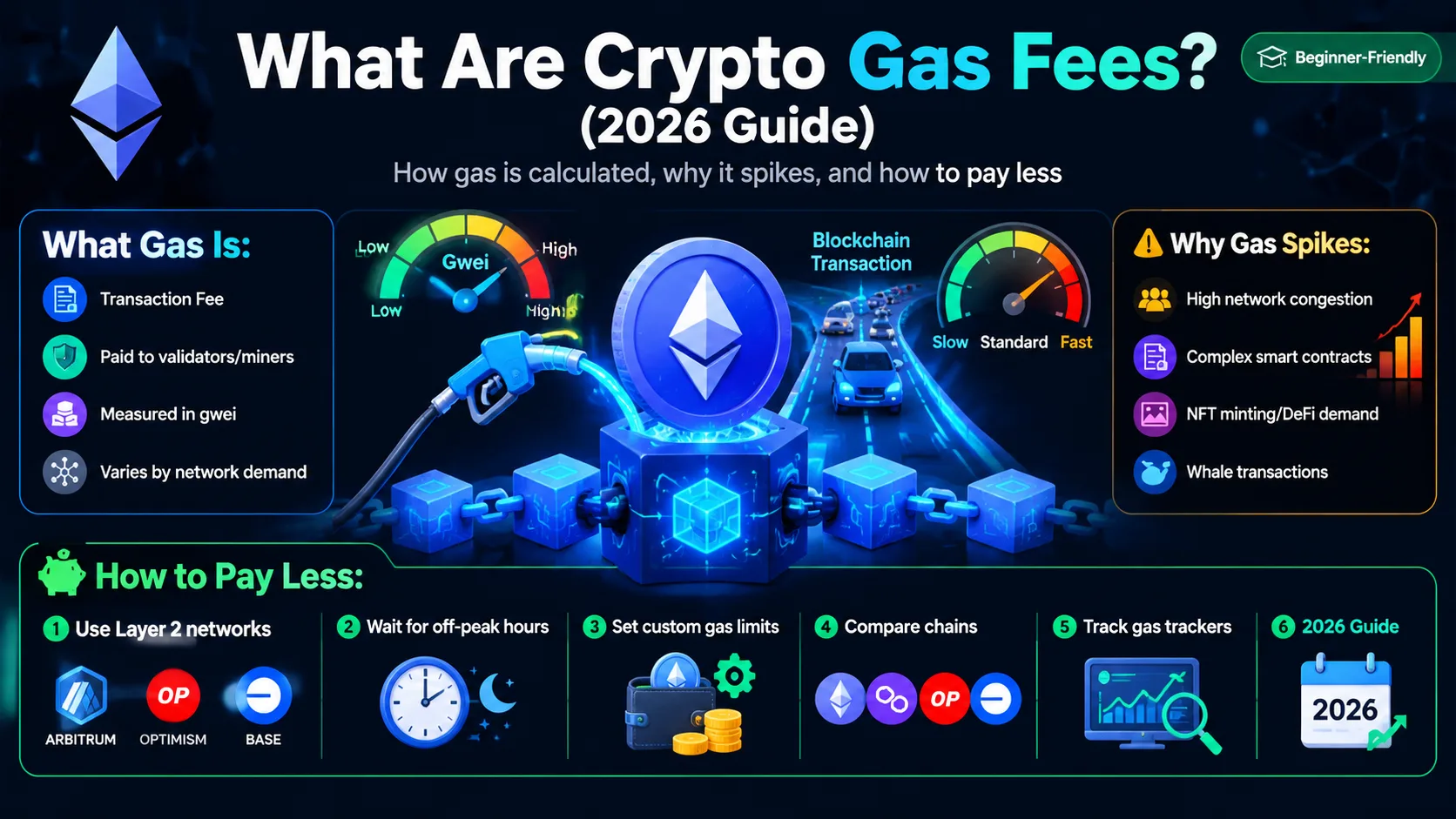
What Are Crypto Gas Fees? (2026 Guide)
A gas fee is what you pay to have a transaction processed on a blockchain. Learn how gas is calculated in gwei, why it spikes, and how to pay less.

Crypto Slang & Terms: The Jargon Decoded
Crypto's slang — FOMO, HODL, diamond hands, gas, and more — decoded in plain English. What each term means, and the one mistake beginners make with it.
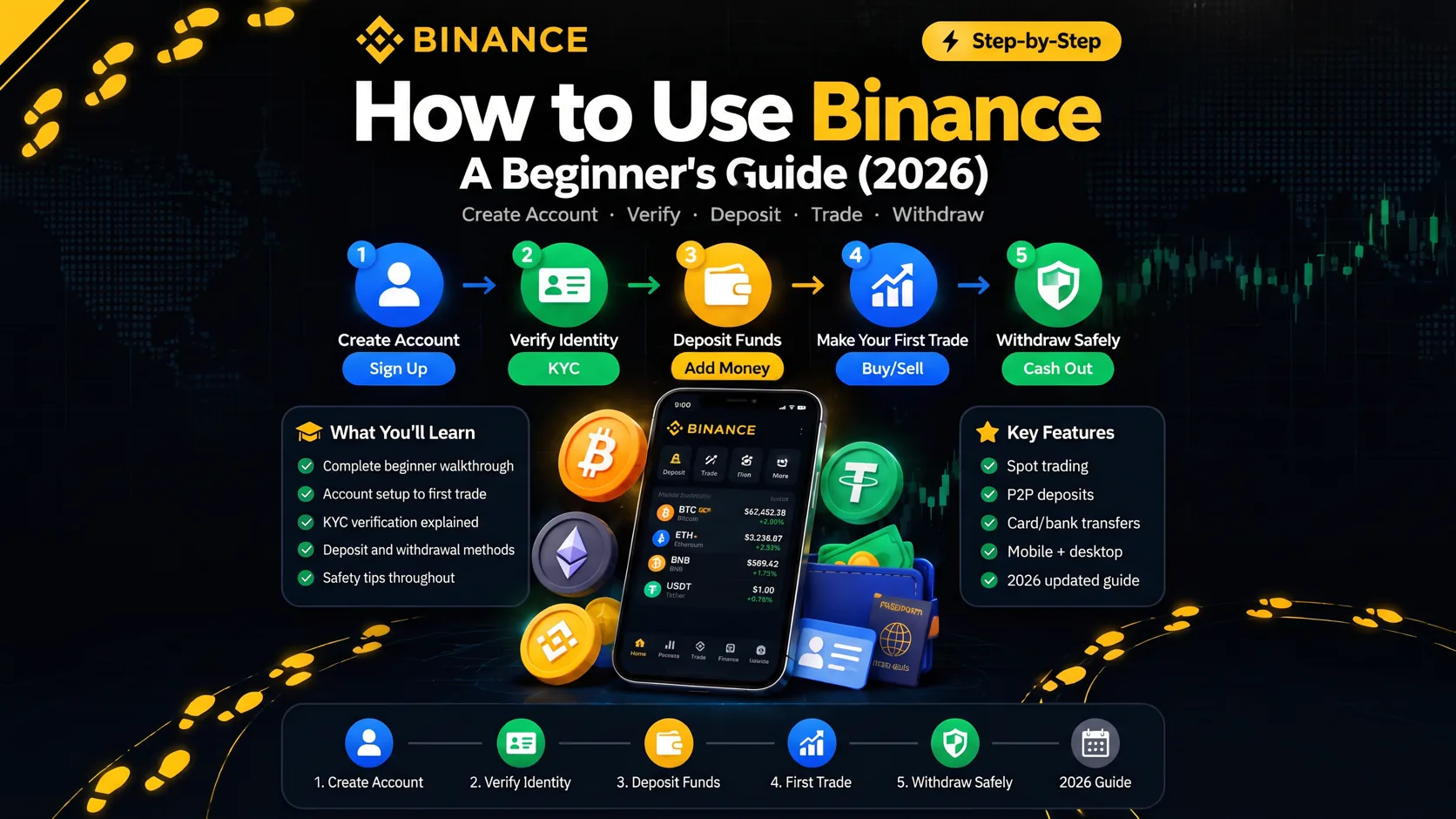
How to Use Binance: A Beginner's Guide (2026)
Learn how to use Binance step by step: create an account, verify your identity, deposit funds, make your first trade, and withdraw — safely.