
Is Binance Safe? How It Protects Your Funds
Is Binance safe in 2026? How SAFU, cold storage, and Proof of Reserves protect your funds — and where regulation and account security still carry risk.
 Lucas Almeida 5 min read
 Key takeaways
- Binance has not lost customer funds to a hack since 2019. Its ~$1 billion SAFU reserve, offline cold storage, and public Proof of Reserves are the core of that record.
- The biggest open risk is regulatory, not technical: a US$4.3 billion US settlement in 2023 and no EU MiCA licence as of late 2026 leave its legal status uneven by region.
- Most real-world losses come from the user side — phishing, SIM swaps, and weak two-factor authentication — so your own account settings matter as much as Binance's.
Binance is one of the safer large exchanges, but not a zero-risk place to park money. It has not lost customer funds to a hack since 2019, keeps most assets in offline cold storage, and backs users with a roughly $1 billion emergency fund (SAFU). At the same time, its legal footing is uneven by region — a US$4.3 billion US settlement in 2023 and no EU MiCA licence as of late 2026 — and the losses beginners actually suffer are usually their own account getting phished, not the exchange getting hacked.
So the honest short answer: Binance is reasonably safe for active trading, but not the place for long-term savings, and how safe you are depends partly on your country and partly on how you configure your own account.
How does Binance protect your funds?
Binance layers three defenses: an emergency reserve fund, offline cold storage, and account-level security controls.
- SAFU (Secure Asset Fund for Users). An emergency reserve Binance set up in 2018 to repay users if a breach or platform failure ever exceeds insurance. As of 2026 it holds roughly $1 billion, converted entirely into bitcoin in early 2026 and managed by Nest Clearing and Custody, a custodian regulated by the Abu Dhabi Global Market (ADGM). Binance has committed to topping it back up if its value falls below about $800 million. Read the fine print, though: Binance retains discretion over which losses qualify, and claims must be filed within 90 days of the eligible event — so it is a safety net, not a guarantee.
- Cold storage. The large majority of customer assets sit in offline wallets that are not connected to the internet, which makes them unreachable to remote hackers. Only a small working balance sits in “hot” wallets for daily withdrawals, and those use multi-signature and threshold-signature (TSS) approvals so no single person can move funds alone.
- Account security. The platform side includes two-factor authentication (2FA) with authenticator apps and passkeys, anti-phishing detection, withdrawal-address whitelisting, and anomaly monitoring. Binance says its AI risk systems blocked billions in potential losses in 2026 — a claim worth treating as marketing, but the controls themselves are standard and real.
The pattern across all three is the same: Binance’s job is protecting against the exchange being robbed. That is the part it has done well. What it cannot protect you from — a phishing link that tricks you — is covered later.
Has Binance ever been hacked?
Once, in 2019 — and the way it handled it is actually the strongest evidence in its favor.
| Date | Event | Outcome |
|---|---|---|
| May 2019 | 7,000 BTC (≈$41M) stolen from a hot wallet | Every affected user repaid in full from SAFU; no user lost money |
| Oct 2022 | ~$570M BNB Chain bridge exploit | A blockchain-level bridge hack, not a breach of Binance’s own custody; chain was paused and patched |
| Nov 2023 | US$4.3B settlement with US authorities | Founder CZ pleaded guilty and stepped down; a five-year monitor now oversees compliance |
The key line is the first one: Binance’s only major customer-fund breach was 2019, and it made users whole out of pocket rather than fighting them. Since then it has reported no customer-fund hack. That does not make it hack-proof — exchanges remain prime targets — but a seven-year clean record on the specific thing that matters most (customer custody) is the single most important fact in this review.
Note the 2022 BNB Chain incident is often lumped in with “Binance was hacked.” It was a smart-contract bridge exploit on a separate blockchain, not a theft from exchange custody, and customer exchange balances were not affected.
What is Binance’s biggest real risk?
Regulation — not technology. Binance’s security record is strong; its legal position is messy and still moving.
- United States. In November 2023 Binance agreed to pay about $4.3 billion and admitted to violations across anti-money-laundering and sanctions rules. Founder Changpeng Zhao (CZ) pleaded guilty and stepped down as CEO, and a five-year monitor now oversees its compliance. US residents cannot use the global platform at all — they are sent to Binance.US, a separate, smaller entity with fewer coins and features.
- European Union. As of late 2026, Binance has no MiCA licence. It was expected to stop onboarding new EU users from 1 July 2026, but tests by independent researchers in August found new accounts could still be opened in several EU countries through a “reverse solicitation” exemption. EU regulators — ESMA along with France, Germany, and Greece — opened an inquiry in October 2026 into whether that exemption is being misused. This is unresolved, and it is the main reason “is Binance safe” does not have one answer for everyone.
- Licensed regions. In places where Binance holds a local licence (for example Dubai or Abu Dhabi), it operates under genuine regulatory supervision and its safety profile is much closer to a traditional licensed institution. In grey areas, you carry more policy risk.
The practical rule: your safety partly depends on your jurisdiction. If Binance holds a licence where you live, you have real recourse. If it does not, you are relying on the exchange’s own good behavior — which has been good on custody, but has also produced the world’s largest-ever crypto enforcement settlement.
Can you verify your funds are actually there?
Yes, through Proof of Reserves (PoR) — but understand what it proves and what it does not.
Proof of Reserves is a public snapshot showing the exchange holds at least as much of each asset as customers are owed, published quarterly and verifiable with a Merkle tree (plus zk-SNARKs on newer versions). Recent snapshots showed BTC backed at about 100.16% and BNB at about 100.51% — meaning the exchange holds slightly more than customers are owed in those assets. You can check your own balance is included on Binance’s Proof of Reserves page.
Two honest limits that matter:
- PoR proves assets exist, not that they are unencumbered. A snapshot shows the coins are there at one moment; it cannot prove they were not simultaneously pledged as collateral elsewhere. This was exactly how FTX looked solvent on paper right up until it was not.
- PoR is not proof against misuse or failure. It answers “are my coins accounted for,” not “can the platform never collapse.” No audit replaces the baseline rule of not leaving more on an exchange than you are willing to lose.
So treat PoR as a good hygiene signal — Binance publishes one, which is better than exchanges that do not — not as a substitute for the judgment of how much to keep where.
How do you keep your own account safe?
This is where most real money is lost, and it is almost entirely under your control.
Exchange breaches make headlines, but the routine losses are quieter: a phishing site that steals your login, a SIM swap that resets your 2FA, or a “support agent” who talks you into sending coins. Protecting yourself:
- Use a strong 2FA. An authenticator app or a hardware passkey beats SMS, which can be intercepted through SIM-swap fraud.
- Turn on the withdrawal whitelist. New withdrawal addresses then require confirmation, which stops a thief from draining your account to their own wallet even if they log in.
- Treat every login as a phishing test. Only ever use the real Binance URL; never click a link from email, Telegram, or X. Fake “support” accounts are the most common trap.
- Don’t keep your life savings on any exchange. The single best account-security move is position sizing: only the amount you are actively trading should be there at all.
Most of this mirrors how to avoid crypto scams — the exchange protects the vault; you protect the key to the door.
Is Binance safe for you?
For active trading, in a jurisdiction where Binance is licensed, with your own account locked down — yes, Binance is one of the safer choices available.
The decision rule:
| If you… | Then Binance is… |
|---|---|
| Actively trade and keep only trading funds on it | A reasonable, comparatively secure choice |
| Live in a jurisdiction where Binance is licensed | Safer, with real regulatory recourse |
| Live where Binance has no licence (e.g. EU under current uncertainty) | Riskier — check your local status before onboarding |
| Plan to hold a large amount long-term | The wrong tool — use a self-custody wallet instead |
The honest framing is not “safe or unsafe” but “safe enough, for what, and where.” Binance’s custody has held up for seven years and it reimburses users after the one breach it did have; those are genuinely good signs. Its regulatory troubles are equally real and still unresolved. Both are true, and a careful beginner weighs both rather than asking for a one-word answer.
💡 Don't have a Binance account yet? Sign up now — enter the referral code BN2688.
The bottom line
Binance is a comparatively safe exchange with a strong custody record — no customer-fund hack since 2019, most assets in cold storage, a ~$1 billion SAFU fund, and public Proof of Reserves. Its weak points are regulatory (a US$4.3 billion settlement, no EU MiCA licence as of late 2026) and the fact that the losses beginners actually suffer are usually their own account being phished, not the exchange being robbed.
The sensible stance: use Binance for what it is good at — buying and trading — with an account you have secured with strong 2FA and a withdrawal whitelist, and only money you can afford to lose. For anything you plan to hold long-term, read how to store crypto safely and move it to keys you control. If you are still deciding whether Binance is even the right exchange, start with our Binance vs OKX comparison — and when you are ready, our step-by-step registration guide walks through setting up an account with security turned on from day one.
Don't have a Binance account yet?Sign up nowenter the referral codeBN2688
Frequently asked questions
Is Binance safe to keep my money on?
Has Binance ever been hacked?
What is SAFU and how does it protect me?
Is Binance legal in the US and EU?
What is Binance's Proof of Reserves?
Should I keep my crypto on Binance or in a wallet?
Editor-in-Chief & Lead Researcher
Editor of MyCryptoStart. Independent researcher of cryptocurrency exchanges, focused on fees, security, KYC, and onboarding — publishes step-by-step guides in plain English for beginners.
View author page →Some links on this page are affiliate links: we may earn a commission at no extra cost to you. This content is educational and is not financial, investment, or legal advice. Affiliate disclosure · Disclaimer.
Continue reading
Is OKX Safe? How It Protects Your Funds
Is OKX safe in 2026? Monthly Proof of Reserves, cold storage, and a full EU MiCA licence — plus the 2020 withdrawal freeze and US settlement risks.
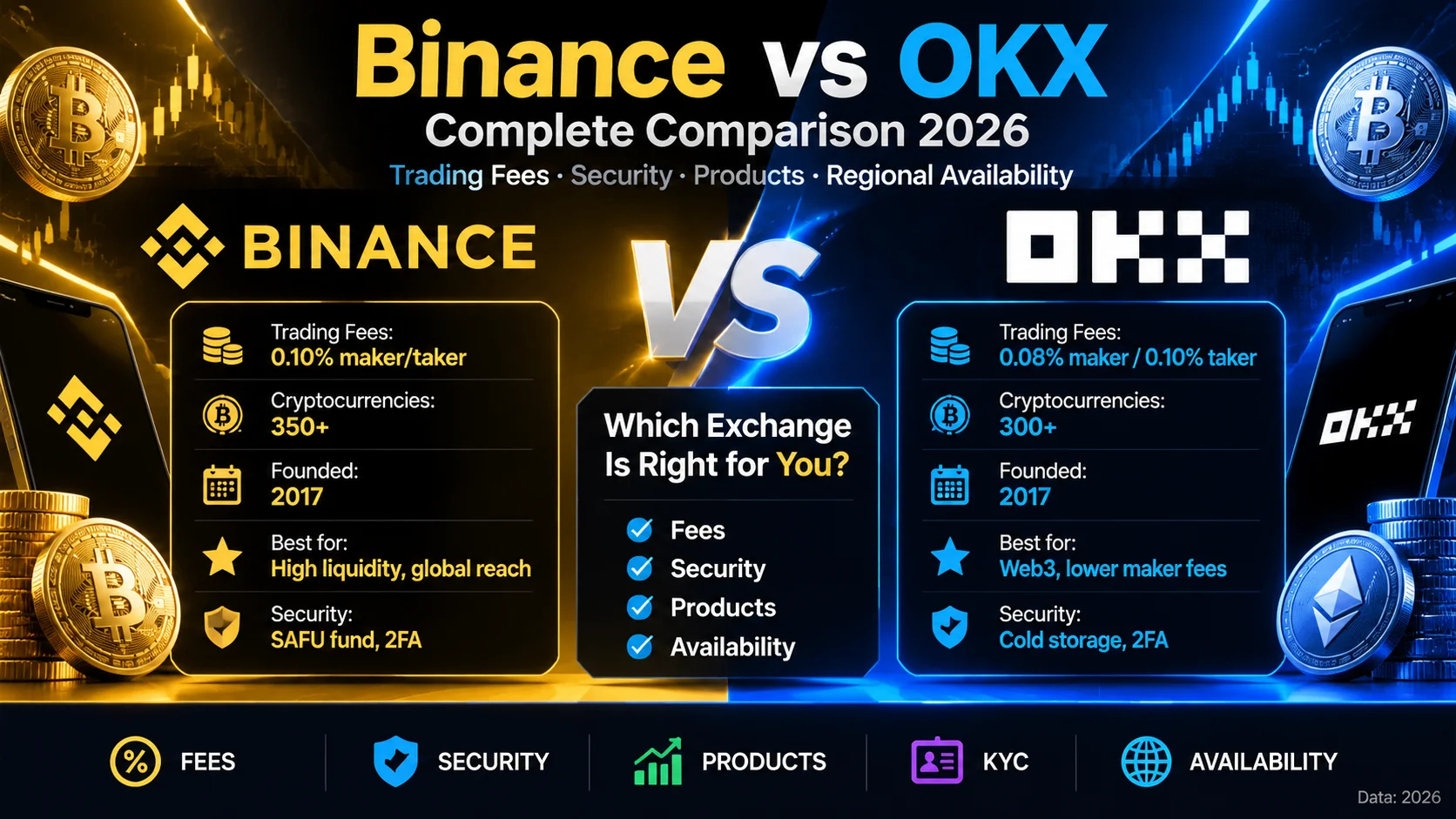
Binance vs OKX: Which Is Right for You?
An honest side-by-side of Binance and OKX — trading fees, availability by region, KYC, security, and products — with a clear rule for choosing.
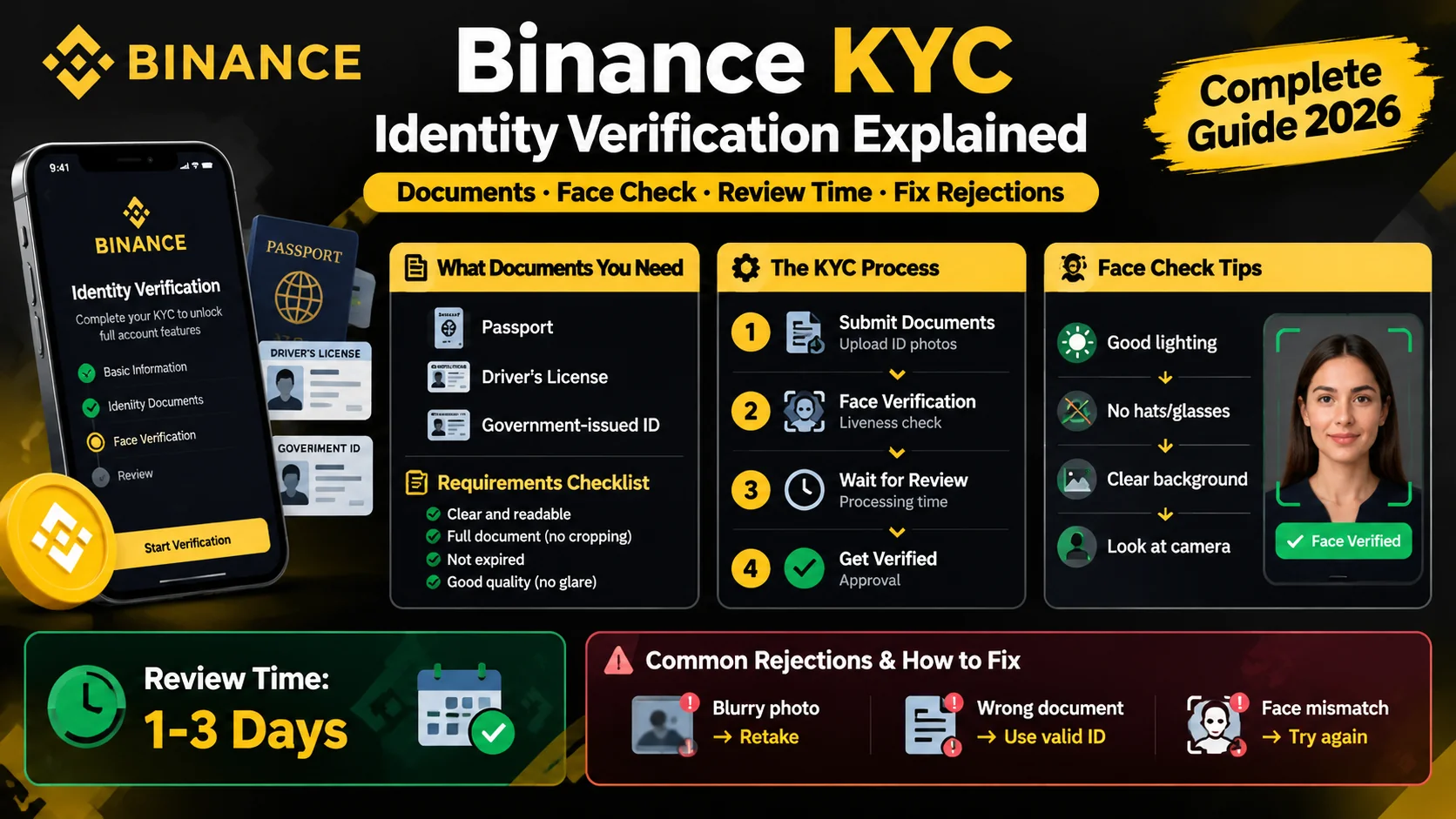
Binance KYC: How Identity Verification Works
Binance requires KYC before you trade. Learn the documents you need, how the face check works, how long review takes, and how to fix rejections.