
Binance Minimum Deposit: How Much You Need in 2026
Binance has no account minimum, but most spot orders need 5 USDT. The real deposit, card and P2P minimums — and how much to actually start with.
 Lucas Almeida 5 min read
Key takeaways
- Binance has no minimum to open an account, complete KYC, or hold a balance, and it charges no fee to receive crypto.
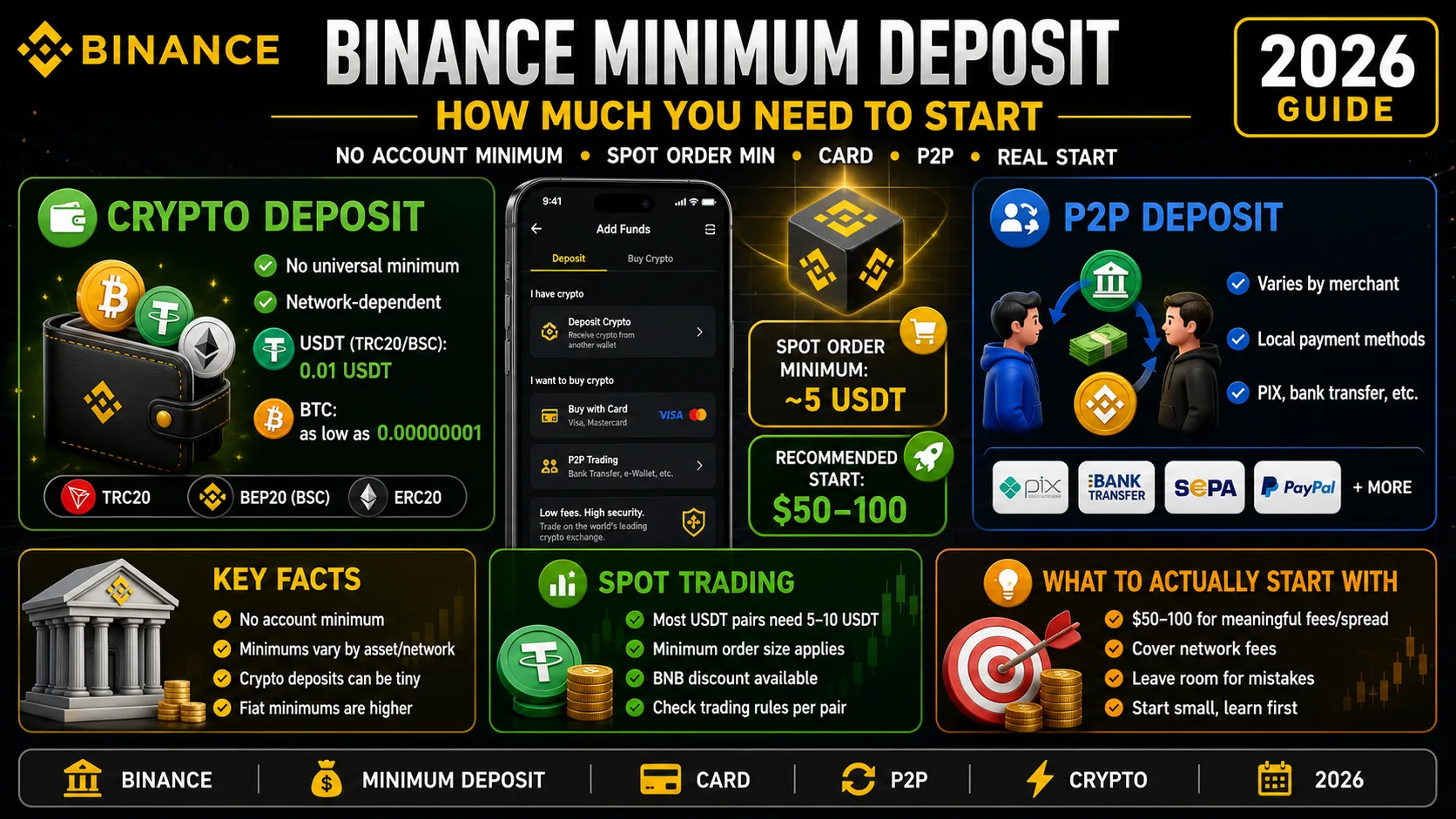
- The floor that decides whether you can trade is the minimum order size: on 8 November 2026, 488 of Binance's 518 USDT spot pairs required 5 USDT per order, and 30 required 1 USDT.
- Crypto deposit minimums are set per coin and network and are shown on the deposit screen; Binance says deposits below the displayed minimum may not be credited.
- Card and P2P routes have provider- or merchant-set minimums, usually around 10–20 USDT equivalent, and their fees are many times the 0.10% spot fee.
- A sensible first deposit is 50–100 USDT of money you can afford to lose. Below about 5 USDT, a balance can be too small to place an order or withdraw economically.
Binance sets no minimum deposit to open an account, complete verification, or hold a balance, and it charges nothing to receive crypto. The floor that actually stops people is the minimum order size: on 8 November 2026, 488 of Binance’s 518 USDT spot pairs required at least 5 USDT per order, and 30 required 1 USDT. Card and P2P routes add their own provider- or merchant-set minimums, usually around 10–20 USDT equivalent.
For most beginners the right first deposit is 50–100 USDT of money you can afford to lose, not the smallest amount the platform allows. Below about 5 USDT a balance can be too small to trade at all, and at 10 USDT fixed costs and withdrawal minimums eat a large share of it.
⚠️ The most important thing first: don’t tap Sign Up directly in the app — you’ll miss the new-user rewards and the fee rebate. Register through an invite link or enter the referral code BN2688 so the 20% trading-fee rebate is attached to your account. It cannot be added later.
Does Binance have a minimum deposit?
There is no single Binance minimum deposit. Each coin and network has its own threshold, displayed on the deposit screen before you send, and Binance’s own help centre warns that deposits below that threshold may not be credited.
That threshold exists for two reasons. Networks reject dust transfers that are too small to relay economically, and exchanges apply anti-spam rules so that millions of near-zero transfers do not clog deposit processing. The number therefore moves with the asset, the network, and occasionally Binance’s internal risk settings — which is why an old blog post quoting a figure is not a source you should trust.
| Floor | Who sets it | What it is in practice |
|---|---|---|
| Open an account | Binance | No minimum. Email or phone, then KYC |
| Hold a balance | Binance | No minimum. An empty account stays open |
| Deposit crypto | Binance, per coin + network | Shown on the deposit screen; can be fractions of a cent for stablecoins on cheap networks |
| Deposit fiat | Bank + currency + method | Varies by country; some methods advertise no minimum |
| Place a spot order | Binance, per trading pair | 5 USDT on most pairs, 1 USDT on 30 of them |
| Buy with card or P2P | Payment provider or merchant | Usually around 10–20 USDT equivalent |
One detail worth knowing: Binance does not charge a deposit fee for crypto. The only cost is the blockchain network fee, paid on the sending side. If a third-party service offers to “deposit for you” and charges a percentage, that is a service fee, not a Binance fee.
What is the minimum order size on Binance?
The minimum order value is 5 USDT on most spot pairs and 1 USDT on 30 of them, and it is enforced per order — not per account. On BTC/USDT, Binance’s public trading rules on 8 November 2026 listed a minimum notional of 5 USDT and a minimum quantity of 0.00001 BTC.
This is the number that decides whether a small deposit is usable. You can hold 3 USDT in your account forever; you simply cannot place a 5 USDT order with it.
| Pair | Minimum order value | Minimum quantity | Notes |
|---|---|---|---|
| BTC/USDT | 5 USDT | 0.00001 BTC | The 5 USDT value is the binding constraint at today’s price |
| ETH/USDT | 5 USDT | 0.0001 ETH | Same rule, different quantity precision |
| BNB/USDT | 5 USDT | 0.001 BNB | 5 USDT floor applies |
| SOL/USDT | 5 USDT | 0.001 SOL | 5 USDT floor applies |
| DOGE/USDT | 1 USDT | 1 DOGE | One of 30 cheaper-threshold pairs |
| SHIB/USDT | 1 USDT | 1 SHIB | Memecoin pairs more often carry the 1 USDT floor |
The check is worth doing properly. Binance’s minimum notional is the smallest order value in the quote currency, and the minimum quantity is the smallest amount of the coin. The effective minimum is whichever produces the larger order: on a cheap coin the notional rule binds, and on an expensive coin the quantity rule can bind instead.
Binance’s public exchange data confirms the split. Filtering every USDT spot pair listed as trading returned 518 pairs: 488 carried a 5 USDT minimum notional and 30 carried a 1 USDT minimum. The 1 USDT group is dominated by memecoins — DOGE, SHIB, PEPE, FLOKI, BONK, WIF — which is useful if your first purchase is a small speculative position rather than Bitcoin.
You can verify the figure for any pair in the app: open the pair, look under the order box for Minimum Trade Amount, or open the settings menu and choose Trading Parameters. On the website the same value appears when you hover the information icon beside the order size field.
What are the minimums for each funding method?
Crypto transfers, cards, bank transfers and P2P each have a different floor, and the cheapest route by fee is not the one with the lowest minimum. Here is how the four methods compare.
| Method | Minimum set by | Typical floor | Cost to you |
|---|---|---|---|
| Crypto transfer | Binance, per coin + network | Fractions of a cent for USDT on cheap networks | Network fee only, paid on the sending side; Binance charges nothing |
| Card purchase | Payment provider + region | Usually 10–15 USDT equivalent | A processing fee, typically several percent, plus a possible FX fee |
| Bank transfer | Bank, currency and method | Varies; some currencies have no minimum | Bank fee and FX spread; slow on weekends |
| P2P | The merchant in each ad | Commonly 10–20 USDT equivalent | A price premium or discount versus spot, set by the merchant |
The card route deserves a warning. On a 100 USDT card purchase, a 2% processing fee costs 2 USDT, which is 33 times the 0.06% effective spot fee you would pay after the BNB discount and a 20% referral rebate. Card is for convenience and for people with no crypto to transfer — not for recurring buys.
P2P is different again: the minimum is not a platform rule but a line in each merchant’s advertisement, and the price you pay is the merchant’s rate, not the order-book rate. Enter the amount you want in the P2P amount field and the list filters itself to ads that accept it; the Available/Order Limit column shows each merchant’s range.
How much should a beginner deposit?
A first deposit of 50–100 USDT is enough to learn the interface without making fees and spreads the main event, and it is small enough that a mistake does not hurt. Treat anything above that as a position size decision, not a setup step.
| Deposit | What it buys at ~75,716 USDT/BTC | What it is good for |
|---|---|---|
| 5 USDT | ~0.000066 BTC | The absolute floor: one minimum-size order |
| 50 USDT | ~0.00066 BTC | Learning the order types with real money |
| 100 USDT | ~0.00132 BTC | A sensible first deposit for most beginners |
| 500 USDT | ~0.0066 BTC | A meaningful position; fee rates start to matter |
The arithmetic behind “fees do not matter at tiny size” is worth seeing once. At 0.10% spot, a 5 USDT order costs 0.005 USDT in fees. Enable the BNB discount and it falls to 0.075%, or 0.00375 USDT. Add the 20% referral rebate and the effective cost is about 0.06%, or 0.003 USDT. Those differences are rounding errors at this size — which is exactly why the minimum deposit question matters more than the fee comparison question when you are starting.
At 100 USDT the same rates produce 0.10 USDT, 0.075 USDT and roughly 0.06 USDT. The percentage is identical; only the absolute number grows. Fees become a real line item at a few thousand USDT of monthly volume, not at your first purchase.
Two rules matter more than the amount. First, only deposit money you can afford to lose entirely — crypto is volatile and this is not a savings account. Second, do not deposit more just because the platform allows it; the minimum is a technical limit, not a recommendation.
Why a deposit below 5 USDT can get stuck
A balance under 5 USDT cannot place a normal spot order, and a balance barely above it can be uneconomic to withdraw, because withdrawal minimums and network fees are charged on the way out.
Three things can happen to a tiny balance:
- It cannot trade. 4 USDT in the account, a 5 USDT minimum order, and no way to reach the threshold except depositing more.
- It cannot leave cheaply. Withdrawal minimums are set per network, and the network fee is deducted from the amount. On some networks a 5 USDT withdrawal is possible but the fee takes a visible share.
- It sits as dust. Binance offers a Convert Small Balance to BNB function for leftovers, but converting dust is a cleanup, not a strategy.
The practical rule: fund at least one full minimum order plus enough to cover fees and a future withdrawal, or do not fund at all. A single 50 USDT deposit is more useful than ten 5 USDT experiments.
How do you check the exact minimum in the app?
Check the number at the point of action, not in a blog post, because all three minimums — deposit, order and withdrawal — are displayed live and change without announcement.
- Deposit: Wallet → Deposit → choose the coin → choose the network. The minimum deposit is shown with the address, before you send anything.
- Spot order: open the pair and look under the order box for Minimum Trade Amount, or open Trading Parameters from the settings menu.
- P2P: type your amount into the amount field; the ad list filters to merchants who accept it, and each ad shows its order limit.
- Card: the quote screen shows the minimum and the fee before you confirm; nothing is charged until you tap through.
- API users: the
NOTIONALfilter inexchangeInforeturnsminNotionalper symbol, which is where the 5 USDT and 1 USDT figures in this article come from.
Does a referral code or BNB discount change the minimum?
No. The referral rebate and the BNB discount change the fee percentage, never the minimum order value or the minimum deposit. A 5 USDT order remains a 5 USDT order whatever discount you attach to it.
What they do change is your lifetime cost per trade:
| Cost component | Spot fee | On a 1,000 USDT trade |
|---|---|---|
| Standard fee | 0.10% | 1.00 USDT |
| With BNB discount (25% off) | 0.075% | 0.75 USDT |
| Plus 20% referral rebate on the fee | ~0.06% | ~0.60 USDT |
The reason to register with a code is not the pennies it saves on a 5 USDT order. It is that the rebate is set at registration and cannot be added later, while your trading volume can grow for years. Registering without one is a permanent, avoidable cost — our referral code guide explains how to confirm the rebate actually attached, and the registration walkthrough shows where the code field hides on mobile.
Which countries change the numbers?
Your country can override every number above, because Binance’s availability varies and the local alternative is a different company with different limits.
| Market | What changes |
|---|---|
| United States | The global Binance platform does not accept US residents. Binance.US is a separate company with its own fees and referral programme, so the code BN2688 does not apply there |
| United Kingdom | New retail sign-ups are paused; existing accounts keep trading with restrictions such as no derivatives |
| EU / EEA | New user onboarding stopped in July 2026 under MiCA; existing accounts are unaffected |
| Nigeria | Binance discontinued naira services in 2024, so there is no NGN deposit route despite local guides still describing one |
| Taiwan | No TWD deposits. Taiwan’s VASP association added Binance to its warning list on 10 August 2026 for not completing FSC AML registration, so local users typically on-ramp through a registered local exchange first |
If your country is on that list, the minimum deposit question changes shape: you may not be able to fund Binance directly at all. Our Binance availability guide covers the country-by-country detail.
Common mistakes with a first deposit
Most failed first deposits share one of five causes, and only one of them is about the amount.
| Mistake | What happens | Fix |
|---|---|---|
| Sending on the wrong network | The transfer may be unrecoverable | Match the network on both sides; send a small test first |
| Depositing below the displayed minimum | The deposit may not be credited | Check the minimum on the deposit screen before sending |
| Using a card for a recurring buy | A 2%-plus fee every month | Transfer crypto or use P2P once you have a balance |
| Leaving a sub-5 USDT balance | It cannot place an order | Fund at least one full minimum order |
| Ignoring the local rules | No account, or a blocked deposit route | Check availability before you register |
The bottom line
Binance has no account minimum but a real trading floor: 5 USDT on most spot pairs, 1 USDT on 30 of them, plus per-network deposit minimums and provider-set card and P2P minimums. Fund 50–100 USDT if you are learning, keep the balance above one full order, and treat the minimum as a technical limit rather than a target.
Next, follow the deposit walkthrough to move money in without losing it to a network mismatch, or read the fee guide before your first trade. If you have not registered yet, do it through the invite link so the rebate is attached from day one — it cannot be added afterwards.
Don't have a Binance account yet?Sign up nowenter the referral codeBN2688
Frequently asked questions
Does Binance have a minimum deposit?
What is the minimum amount to buy Bitcoin on Binance?
Can I start with $10 on Binance?
Is there a minimum balance on Binance?
What is the minimum for card and P2P purchases?
Does a referral code or the BNB discount lower the minimum?
Editor-in-Chief & Lead Researcher
Editor of MyCryptoStart. Independent researcher of cryptocurrency exchanges, focused on fees, security, KYC, and onboarding — publishes step-by-step guides in plain English for beginners.
View author page →Some links on this page are affiliate links: we may earn a commission at no extra cost to you. This content is educational and is not financial, investment, or legal advice. Affiliate disclosure · Disclaimer.
Continue reading
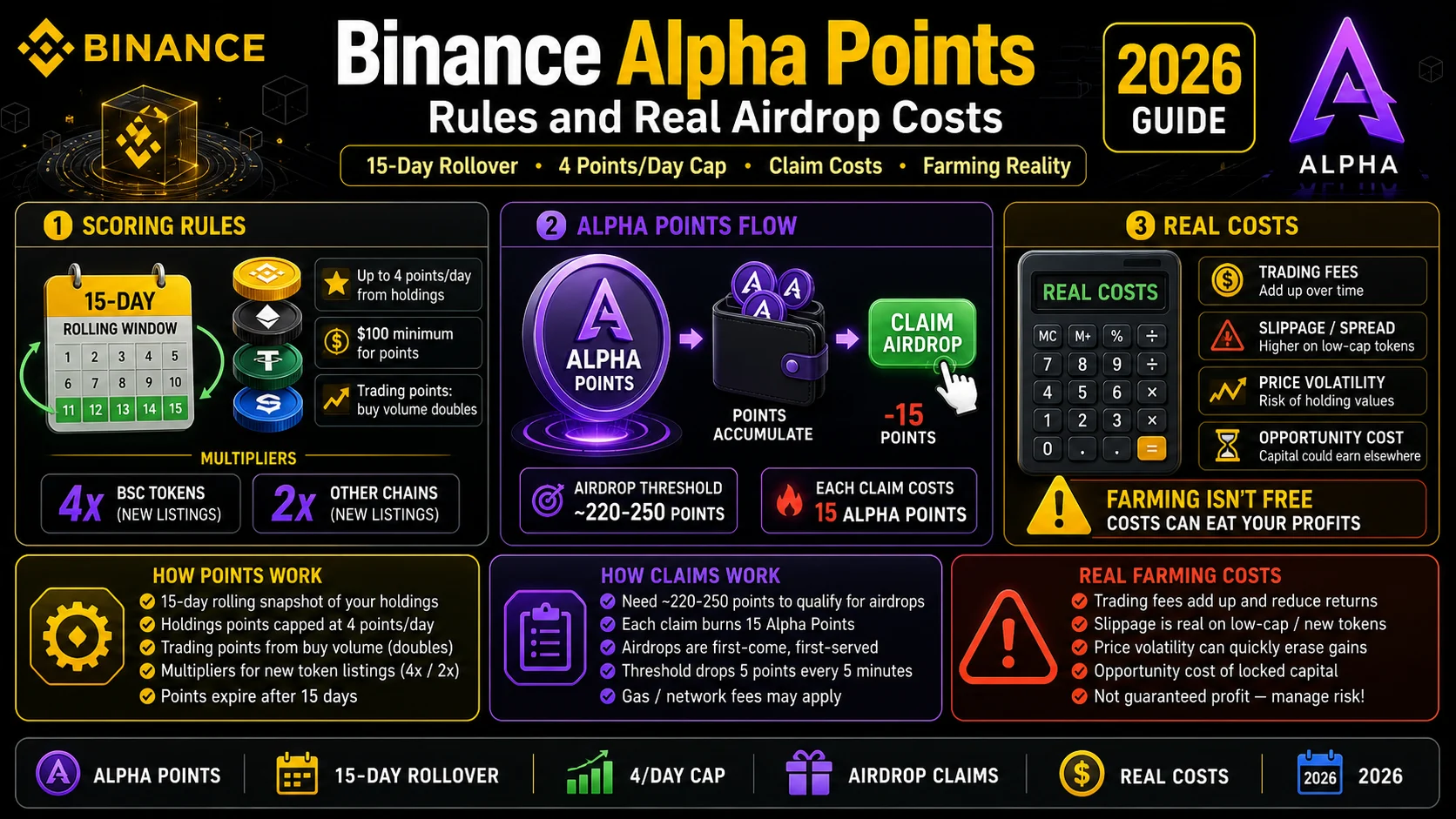
Binance Alpha Points (2026): Rules and Real Airdrop Costs
Alpha Points roll over 15 days and cap at 4 points a day from holdings. Here is how the scoring works, how claims work, and what farming really costs.
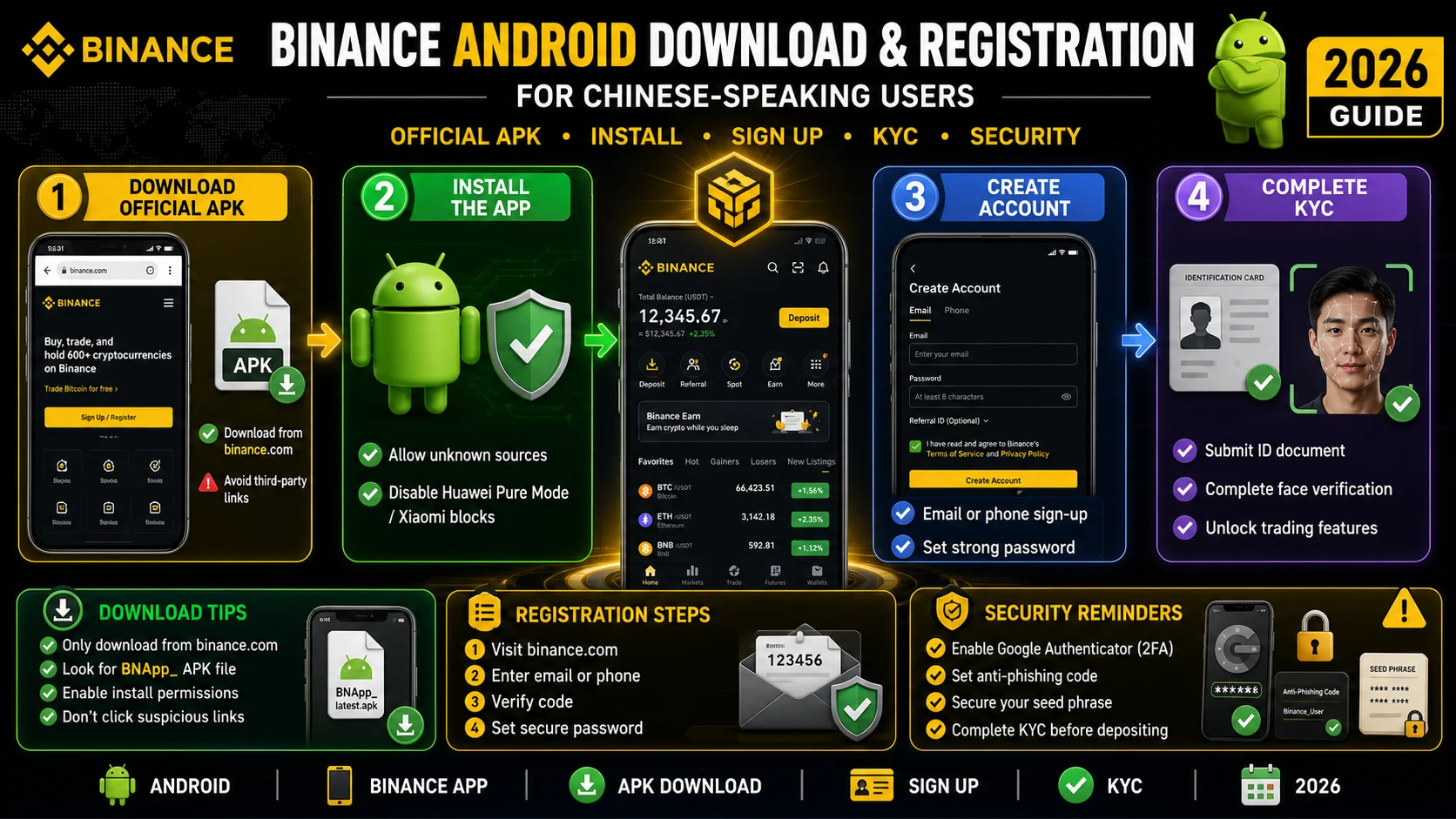
Binance in Chinese: Android Download and Registration (2026)
An Android walkthrough for Chinese speakers: official download sources, OEM install blocks, language settings, registration, KYC, and a first deposit.
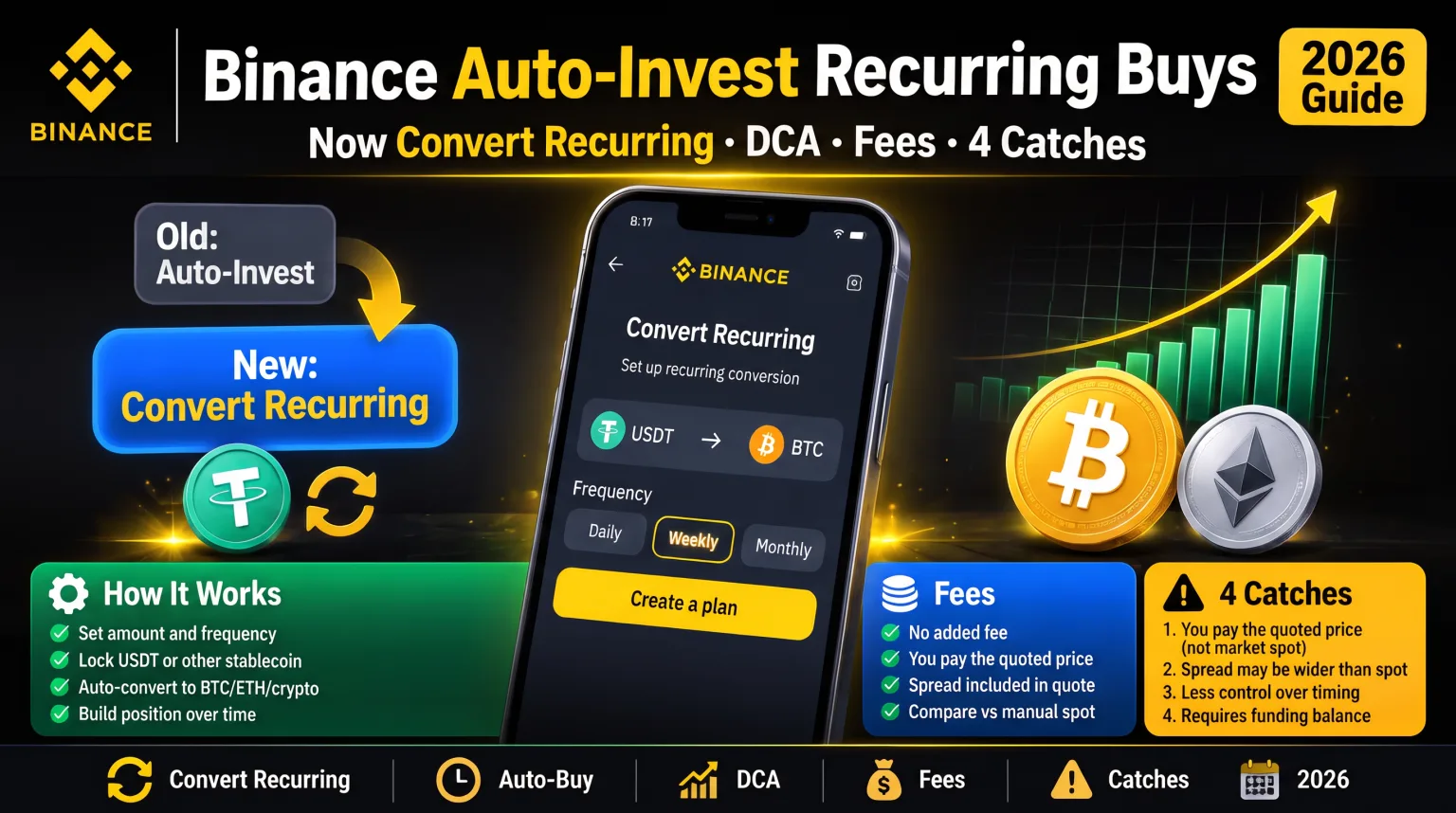
Binance Auto-Invest: Recurring Buys (2026)
Binance Auto-Invest is now Convert Recurring: no added fee, but you pay the quoted price. Set up a DCA plan in 2026, what it costs, and four catches.