
Crypto slang
What Is a Crypto Whale?
Short answer
A whale is a person or institution that holds enough of a cryptocurrency to move its price with a single trade. There's no official threshold — for a small-cap token a whale might hold a few percent of supply; for Bitcoin, the whales are the wallets holding thousands of coins. Whales matter because their buying and selling is visible on-chain before it shows up in price, so tracking them is a whole amateur discipline — and also because their moves don't always mean what beginners assume they mean.
Key takeaways
- A whale = a holder big enough to move the price with their own trades.
- There's no fixed threshold; it's relative to the asset's size and liquidity.
- Whale activity is visible on-chain, which is why 'whale watching' is its own hobby.
- Their moves are information, not instructions — a whale buying doesn't mean you should.
Where the word comes from
The whale metaphor is one of the oldest in finance: a creature big enough that its mere presence moves the water around it. Crypto borrowed it for the holders large enough to move a price with their own trades — a few percent of a thin altcoin’s supply, or a few thousand Bitcoin. The term caught on because it names something genuinely structural: in a market with no central party, the biggest holders are the closest thing to a force of nature, and everyone else trades in their wake.
Why whales matter to you
Two reasons. First, a whale can move the price against you: a single large sell can push a thin order book down faster than any news, and a single large buy can spike it — so knowing whether an asset has concentrated holders is basic due diligence before you enter. Second, whale activity is visible — on public blockchains, a big wallet accumulating or moving coins shows up before it’s reflected in price. That visibility is why “whale watching” is its own hobby: people track the large wallets and try to read the transfers.
How to read a whale move (and how not to)
The honest version of whale watching is humble about what it can know. A large transfer to an exchange is often read as “they’re going to sell” — and sometimes it is, but it can also be collateral, an OTC arrangement, or a wallet reshuffle. A large accumulation is often read as “they’re bullish” — and sometimes it is, but it can also be a whale preparing to distribute to the latecomers who copy them. The data is real; the interpretation is guesswork. A whale’s trade tells you what they did, not why, and never what you should do.
What whales actually mean for your strategy
The practical takeaway is less exciting than the hype. Check concentration before you buy — a token where three wallets hold most of the supply is a token one bad day from a whale dumping on you; this is part of the same pre-buy check you’d run on any altcoin. Treat whale news as context, not signal — “a whale just bought” is data, not a recommendation, and by the time it’s news, the move is made. And size for the whales — you can’t predict what the big holders will do, but you can make sure their next move doesn’t decide yours; our position-sizing frame is built for exactly that. The whale will move the market; the question is whether you’ve positioned yourself to be moved or to be caught in it.
Frequently asked questions
How much crypto makes you a whale?
Why do people track whales?
Should you copy what whales do?
Related terms

Editor-in-Chief & Lead Researcher
Editor of MyCryptoStart. Independent researcher of cryptocurrency exchanges, focused on fees, security, KYC, and onboarding — publishes step-by-step guides in plain English for beginners.
View author page →Some links on this page are affiliate links: we may earn a commission at no extra cost to you. This content is educational and is not financial, investment, or legal advice. Affiliate disclosure · Disclaimer.
Learn more about Whale
Our full guides that cover this term in depth.

What Is Bitcoin? BTC Explained Simply
Bitcoin is decentralized digital money: no bank, no government, capped at 21 million coins. Learn how BTC works, why it has value, and how to buy it.
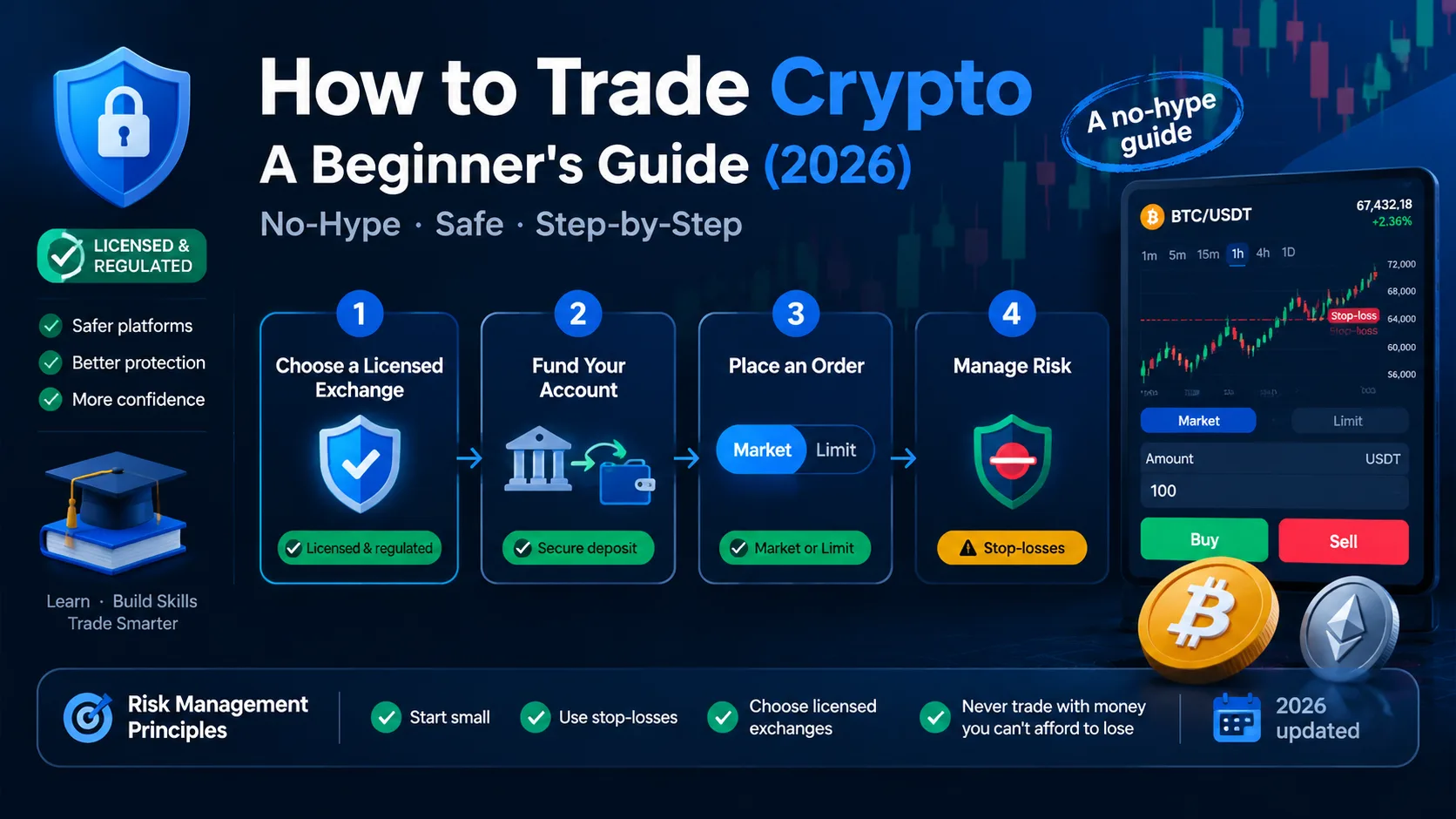
How to Trade Crypto: A Beginner's Guide (2026)
How to trade crypto safely: choose a licensed exchange, fund your account, place a market or limit order, and manage risk with stop-losses. A no-hype guide.