
Crypto slang
What Is a Rug Pull in Crypto?
Short answer
A rug pull is a scam where a token's creators hype it up, attract buyers, and then drain the money and disappear — 'pulling the rug' out from under investors. There are two main types: the liquidity rug, where developers remove the funds backing the token's trading, and the slow rug, where they dump their own token supply on buyers over time. The common thread is that the token was built to extract, not to grow, and the warning signs are checkable before you buy — if you know where to look.
Key takeaways
- A rug pull = developers of a token vanish with investors' money.
- Two main types: the liquidity rug (drain the trading pool) and the slow rug (dump supply over time).
- The token was built to extract, not to grow — the warning signs are checkable before buying.
- Concentrated holders, unlocked liquidity, no audit, anonymous team = the classic profile.
Where the word comes from
The phrase “pull the rug out from under someone” is old English for a sudden, humiliating betrayal — yanking away the ground a person is standing on. Crypto adopted it almost literally: the developers stand on stage selling a dream, and then pull the floor — the money, the liquidity, the project — out from under the buyers who believed them. The word spread because the betrayal is so clean: one minute a token is “up 10x,” the next it’s untradeable and the team’s social accounts are deleted.
How the two main types work
There are two shapes of rug, and they’re worth distinguishing because the defenses differ. The liquidity rug is fast and violent: a token needs a liquidity pool — a pair of the token and another asset that lets people buy and sell — and if the developers hold the keys to that pool, they can withdraw the entire thing once enough real money has flowed in. Trading stops instantly and the token is worth nothing. The slow rug is quieter: the team keeps the project looking alive while gradually dumping their own huge token allocation onto buyers, then disappears once they’ve sold. One is a sprint, the other a slow bleed, and both end the same way.
The warning signs are checkable
The comforting part is that a rug pull is predictable — it leaves a footprint before it happens. Four checks catch most of them. Concentrated supply: a block explorer will show whether a handful of wallets hold most of the token. Liquidity that isn’t locked: if the trading pool can be withdrawn, it eventually will be. No independent audit: or an “audit” from a firm that is itself anonymous. An unverifiable team: people who plan to steal your money usually don’t use their real names. None of this requires special skill — it’s the same ten minutes of DYOR that any altcoin purchase should get before a single dollar moves.
How do you make yourself hard to rug?
The defense is boring and it works. Check before you buy, not after — the four signs above are visible on day one, and a token that fails them is out regardless of how good the chart looks. Stay on the major venues — reputable exchanges list projects they’ve vetted, which is far from a guarantee but removes the easiest, most anonymous rugs. And treat ‘guaranteed’ returns as the sirens they are — an APY that looks impossible is impossible, and “the team is doxxed” means nothing until you’ve verified the name yourself. Our scam guide walks the full flow; the short version is that the people who get rugged are almost always the ones who skipped the ten-minute check, not the ones who did the check and missed something subtle.
Frequently asked questions
How does a liquidity rug pull actually work?
What are the warning signs of a rug pull?
Is a rug pull the same as a coin just crashing?
Related terms

Editor-in-Chief & Lead Researcher
Editor of MyCryptoStart. Independent researcher of cryptocurrency exchanges, focused on fees, security, KYC, and onboarding — publishes step-by-step guides in plain English for beginners.
View author page →Some links on this page are affiliate links: we may earn a commission at no extra cost to you. This content is educational and is not financial, investment, or legal advice. Affiliate disclosure · Disclaimer.
Learn more about Rug Pull
Our full guides that cover this term in depth.
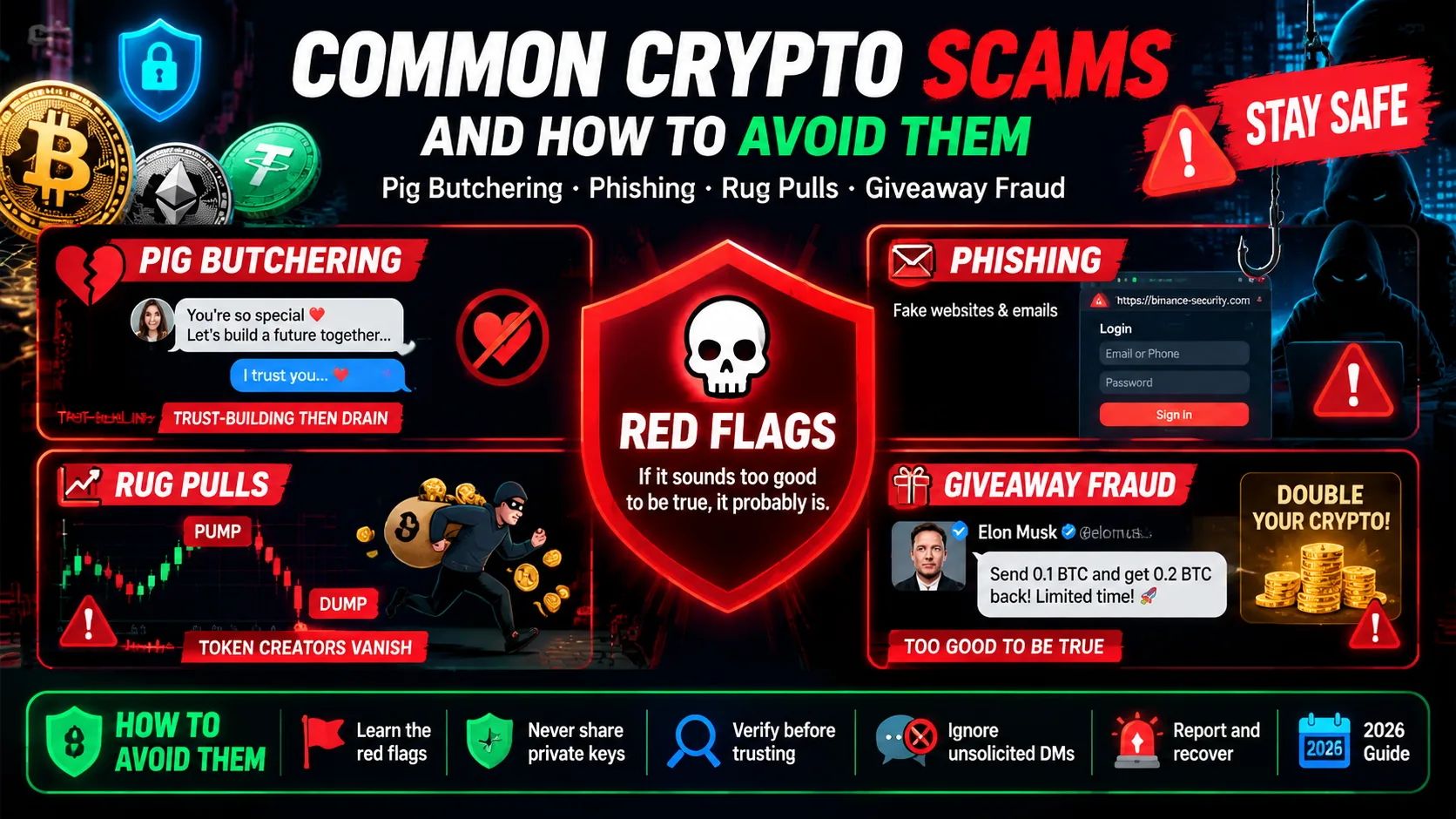
Common Crypto Scams and How to Avoid Them
The most common crypto scams — pig butchering, phishing, rug pulls, and giveaway fraud — how each works, the red flags, and what to do if scammed.

What Is DeFi? Decentralized Finance Explained
DeFi is financial services — lending, trading, and earning — rebuilt on blockchains instead of banks. Learn how it works and the risks.