
Crypto slang
What Is FOMO in Crypto?
Short answer
FOMO is 'fear of missing out' — the anxiety that a coin is leaving without you, which pushes you to buy because the price is rising rather than because you've done the research. It's the single most expensive emotion in crypto: it peaks exactly when an asset is most crowded, so FOMO buyers tend to enter near the top and hold the bag on the way down. The countermove is a rule written before the green candles — a target, a plan, and a price you'd be happy to walk away at.
Key takeaways
- FOMO = 'fear of missing out' — buying because the price is rising, not because you researched it.
- It's strongest at the exact moment an asset is most crowded, which is why FOMO buyers tend to buy near the top.
- Social feeds manufacture it: screenshots of gains show the wins and hide the exits.
- The fix is a rule written in advance — a position size, a target, and a reason that still holds if the chart reverses.
Where the word comes from
FOMO isn’t crypto’s — it entered the Oxford English Dictionary in 2013 as a general term for the anxiety of being absent from something good. Crypto adopted it wholesale and turned it into the market’s most reliable engine: the reason a coin that was ignored for months suddenly gets bought hand over fist once its chart goes vertical. The word does useful descriptive work because it names a feeling with real mechanical consequences — it’s the demand side of a mania, the thing that turns a rising price into a self-reinforcing one.
Why FOMO buys the top
The trap is structural, not personal. The moment FOMO is loudest — when every feed is screenshots of gains, when the coin is up 300% in a week — is also the moment the asset is most crowded, the sellers are most eager to take profit, and the remaining upside is thinnest. Buying then isn’t just late; it’s buying from exactly the people who bought early and are now distributing into your enthusiasm. This is why the same psychology shows up at every cycle’s peak, whether the asset is a memecoin or a “revolutionary” altcoin: the crowd doesn’t chase value, it chases the feeling of being left out — and that feeling peaks at the top.
What it looks like from the inside
FOMO rarely announces itself. It arrives as urgency disguised as analysis: “this is moving, I’ll research it after I’m in.” The red flags are specific. You’re refreshing the chart instead of reading the project. Your position size is suddenly bigger than anything you’d planned, because “this one is different.” You’re afraid the window closes in the next hour. None of those survive contact with the one question that actually matters — would I buy this if it had fallen 20% this week? — because the answer, honestly, is usually no. When the reason for buying is the chart itself, the chart is running the trade, not you.
How do you trade FOMO for a plan?
The fix isn’t suppressing the feeling; it’s deciding before it arrives, when you’re calm. Three rules do most of the work. Write your entry before the move — a price or a narrative you’d act on whether or not anyone else is. Size for the loss, not the gain — a position small enough that being wrong is annoying, not life-changing; our position-sizing frame applies here unchanged. And pre-commit to an exit — a level at which you take profit, written down, so the decision was already made before the chart started talking.
The alternative most beginners actually land on — dollar-cost averaging — exists precisely to make FOMO structurally impossible. A fixed amount on a fixed schedule buys whether you feel euphoric or terrified, which removes the single variable FOMO needs: the chance to buy more right when you feel the loudest. Our DCA guide walks through why the unglamorous version is the one that survives contact with a market that is, above all, patient about punishing impatience.
Frequently asked questions
Is FOMO always a bad reason to buy?
How do you tell if you're buying out of FOMO?
What's the opposite of FOMO?
Related terms

Editor-in-Chief & Lead Researcher
Editor of MyCryptoStart. Independent researcher of cryptocurrency exchanges, focused on fees, security, KYC, and onboarding — publishes step-by-step guides in plain English for beginners.
View author page →Some links on this page are affiliate links: we may earn a commission at no extra cost to you. This content is educational and is not financial, investment, or legal advice. Affiliate disclosure · Disclaimer.
Learn more about FOMO
Our full guides that cover this term in depth.
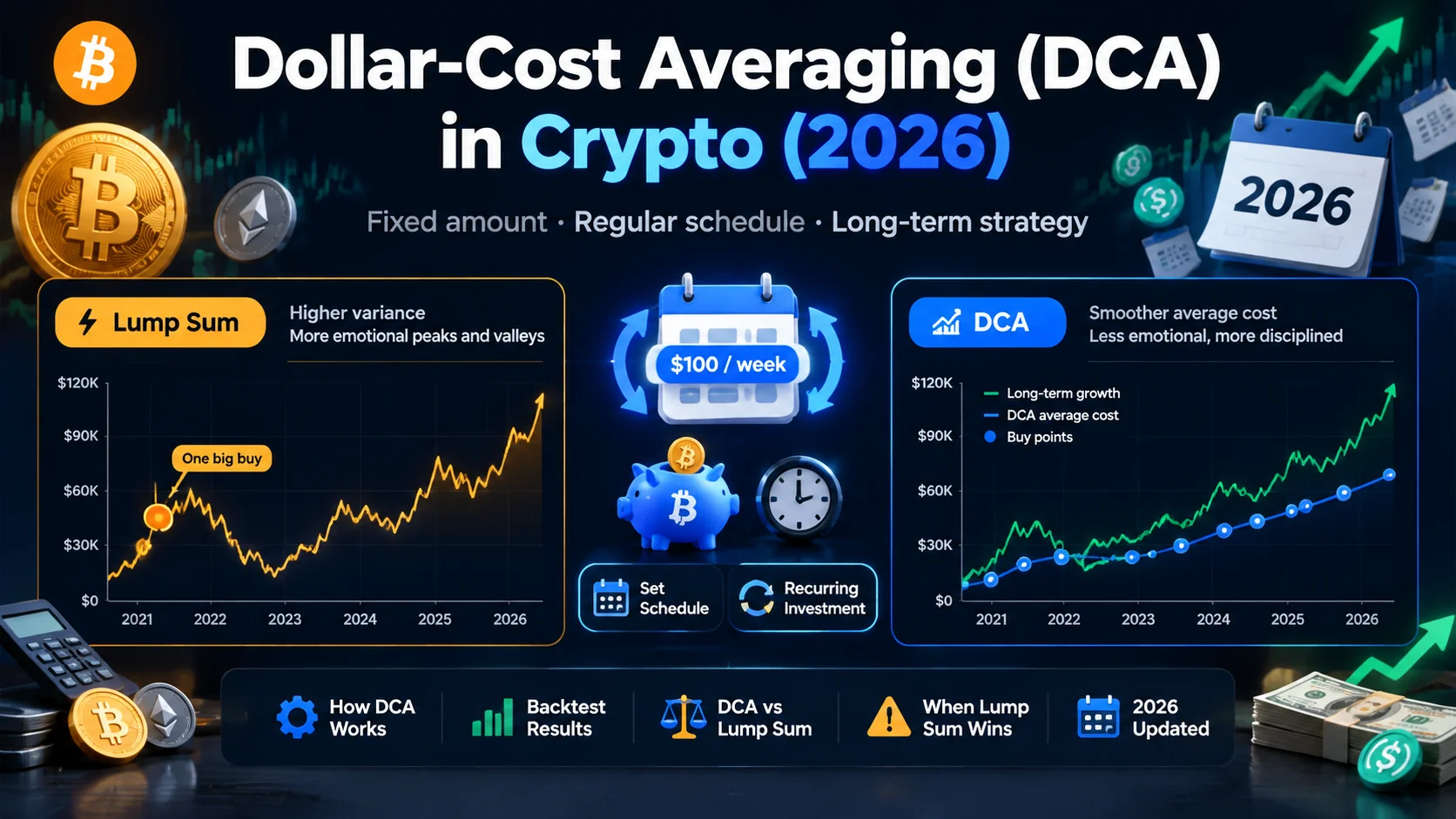
Dollar-Cost Averaging (DCA) in Crypto (2026)
Dollar-cost averaging buys a fixed dollar amount of crypto on a set schedule. Learn how DCA works, what backtests show, and when lump sum wins.
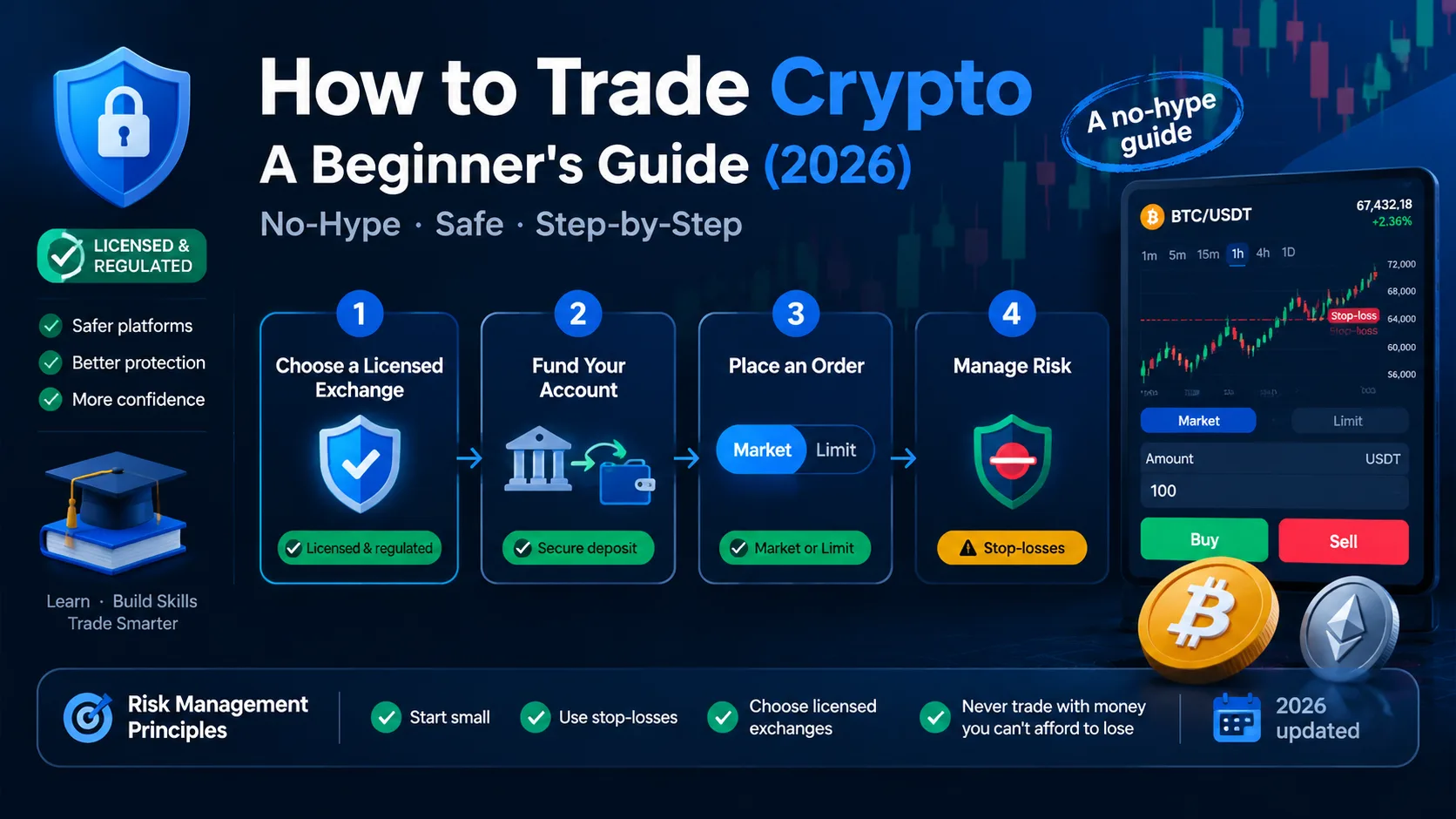
How to Trade Crypto: A Beginner's Guide (2026)
How to trade crypto safely: choose a licensed exchange, fund your account, place a market or limit order, and manage risk with stop-losses. A no-hype guide.